
About North Cyprus · Famagusta
Famagusta and Varosha: what the sources say
As of 23 October 2026: Varosha (Turkish: Maraş) is an abandoned former seaside town in Famagusta, North Cyprus, closed to its former residents since 1974; it is not the Turkish city of Kahramanmaraş. UN Security Council resolution 550 (1984) considers settlement of any part of it by people other than its inhabitants inadmissible. Part of the area has been open to visitors since 8 October 2020, and the Council called for that step to be reversed in statements of 9 October 2020 and 23 July 2021. The Turkish Cypriot and Turkish sides and the Republic of Cyprus hold opposing positions, set out below with dates and sources.
Checked 23 October 2026 against the sources named in the text and listed below. Positions of parties are attributed to them.

What Varosha is and where it lies
According to the Cyprus Mail, Varosha is the modern sector of the walled medieval port city of Famagusta, which became a tourist centre of beaches and hotels before 1974; the newspaper names film stars among its visitors. The Turkish name is Maraş. The United Nations Peacekeeping Force in Cyprus (UNFICYP) describes it as the former resort town near Famagusta, now under the control of the Turkish military, and lists it among areas the UN does not control. The old walled city, ancient Salamis and the siege of 1570-71 are covered in Salamis and Famagusta.
According to the Cyprus Mail, Varosha's Greek Cypriot residents left in 1974, and the Turkish military then surrounded the empty town with fencing, which kept it closed for decades. The UN Secretary-General's report of 5 January 2026 states that access to the entire area by UNFICYP patrols has remained significantly constrained since 1974. For the wider sequence of events from 1571 to today, see the history timeline. This page gives no population or displacement figures, because the UN texts used here do not state them.
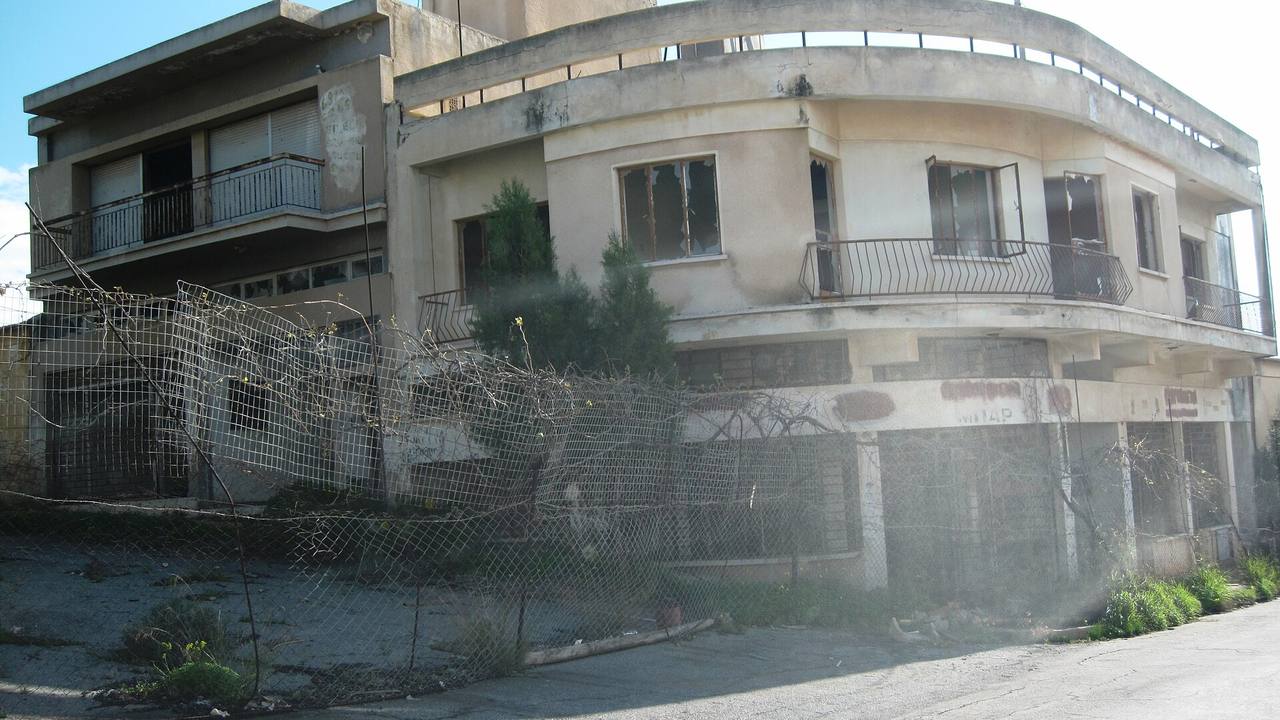
Dickelbers · CC BY-SA 3.0 · Wikimedia Commons place
Varosha (Maraş), Famagusta
A quarter of Famagusta that the Cyprus Mail describes as the modern tourist sector of the walled port city. UNFICYP describes it as under Turkish military control and outside the areas the UN controls.
Source: unficyp.unmissions.org
1 / 1

Status since 1974: what Security Council resolutions 550 and 789 say
Resolution 550 (1984) was adopted on 11 May 1984. Its text states that the Council was "deeply concerned about recent threats for settlement of Varosha by people other than its inhabitants". In paragraph 5 the Council "considers attempts to settle any part of Varosha by people other than its inhabitants as inadmissible and calls for the transfer of that area to the administration of the United Nations". The quotations are from the official UN record of the resolution.
Resolution 789 (1992) was adopted on 25 November 1992. In paragraph 8 the Council urged all concerned to commit to a list of confidence-building measures. Item (c) on that list reads: "With a view to the implementation of resolution 550 (1984), the area at present under the control of the Force be extended to include Varosha". In its 2026 reports the Secretary-General recalls both resolutions and states that the position of the United Nations on Varosha remains unchanged (S/2026/9, 5 January 2026).

The partial reopening of October 2020
According to Hürriyet Daily News, on 6 October 2020 Ersin Tatar, then prime minister on the Turkish Cypriot side, announced at a joint news conference in Ankara with Turkish President Recep Tayyip Erdoğan that the Varosha coastline would be open to the public from the morning of 8 October. The paper reports Tatar calling Varosha a national cause above political debates, and Erdoğan saying Varosha is Turkish Cypriot territory and that Turkey was ready to help open the town fully. The announcement came days before the Turkish Cypriot presidential election of 11 October.
Al Jazeera reported on 7 October 2020 that the Republic of Cyprus government spokesman, Kyriakos Kousios, called the move "a pre-election stunt created in Ankara", and that EU foreign policy chief Josep Borrell said the bloc was "very concerned". On the Turkish Cypriot side, the same report says Kudret Özersay resigned and his People's Party left the governing coalition, and that then leader Mustafa Akıncı described the decision as interference in the elections.
The Security Council met on 9 October 2020; Security Council Report says the Republic of Cyprus had requested the meeting. Its president read statement S/PRST/2020/9, which reaffirmed "the status of Varosha as set out in previous United Nations Security Council resolutions", expressed "deep concern regarding the announcement in Ankara on 6 October to open the coastline of Varosha", and called "for the reversal of this course of action, and for the avoidance of any unilateral actions that could raise tensions on the island".

July 2021: the second step and the Council's statement
On 20 July 2021, Euronews and Al Jazeera report, Turkish Cypriot leader Ersin Tatar announced that part of the fenced area would move from military to civilian control. The Secretary-General's report of 5 January 2026 refers to 3.5 per cent of the area of Varosha, for which it was announced in July 2021 that military status had been lifted in preparation for renovation. Euronews quotes Republic of Cyprus President Nicos Anastasiades as calling the move "illegal and unacceptable".
On 23 July 2021 the Council issued S/PRST/2021/13. It "condemns the announcement in Cyprus by Turkish and Turkish Cypriot leaders on 20 July 2021 on the further reopening of a part of the fenced-off area of Varosha" and calls "for the immediate reversal of this course of action and the reversal of all steps taken on Varosha since October 2020". It also reiterates that any attempt to settle any part of Varosha by people other than its inhabitants is inadmissible.
Turkey's Foreign Ministry issued press release No. 260 on 23 July 2021. The Anadolu Agency reports that it rejected the Presidential Statement, said Maraş "has not been opened to settlement" and said the relevant Security Council resolutions "are not violated". Anadolu also reports the Turkish Cypriot Foreign Ministry calling the Council's wording "misleading". These are the positions of those ministries; the Council's statement and the Republic of Cyprus hold the opposite view.
Positions of the parties and the United Nations since then
The Secretary-General's report on UNFICYP (S/2026/8, 5 January 2026) says no steps were taken on the Council's call for reversal of action taken since October 2020. It says UNFICYP observed no significant change in the 3.5 per cent area but did observe renovation of facilities, and that many visitors continued to visit parts of the town made progressively accessible. It adds: "The United Nations continues to hold the Government of Türkiye responsible for the situation in Varosha."
The Famagusta municipality, which according to its website has temporary offices in Limassol, speaks through Mayor Simos Ioannou. The Cyprus Mail reported on 23 October 2021 that after a council visit to the fenced area he said the aim was to show that the city belongs to the Famagustans, who he said were ready to live with Turkish Cypriots. On 8 October 2022 the paper quoted him asking to meet ambassadors of the five permanent members of the Security Council.
The same Cyprus Mail report of 8 October 2022 says Tatar, by then Turkish Cypriot leader, announced that municipal and government buildings in Varosha would open in the coming months, and said Varosha was no longer a ghost town. Ownership claims in the area are disputed between the parties and are a legal matter; see title deeds in North Cyprus. No 2026 statement of the Turkish Cypriot side was found for this page.
Visiting the opened area: what sources state
A Cyprus Mail guide by Iacovos Constantinou, dated 13 October 2026, states that visitors must follow designated routes and the instructions given at the entrance, and carry an original passport. It says EU citizens should check whether a national ID card is accepted and other nationalities should confirm their own eligibility. According to the same guide, photography is permitted in visitor areas but restricted near military locations and where signs or personnel prohibit it, and drones were prohibited when access began.
The guide warns against passing barriers, entering abandoned buildings or trying to reach closed streets. The UN reports of January 2026 describe parts of the town as progressively accessible, and the Council statements above call for the 2020 steps to be reversed. Arrangements have changed since 2020 and may change again. No official Turkish Cypriot page with entry rules was found, so confirm current conditions with official sources before planning; this page does not advise on routes to the area.
1 / 1
Famagusta beyond Varosha: Sinan Pasha Mosque
The walls, Othello Castle, the Lala Mustafa Pasha Mosque and Salamis are in Salamis and Famagusta. One further building inside the old city is the Sinan Pasha Mosque. According to Visit North Cyprus (the page does not name its owner), it was built as the Church of Saint Peter and Saint Paul, with foundations laid under King Peter I (1358-1369) and funded by the merchant Simon Nostrano. The page says it was not damaged in the Ottoman bombardment of 1571 because it was already out of use, and that a minaret was added after the conquest.
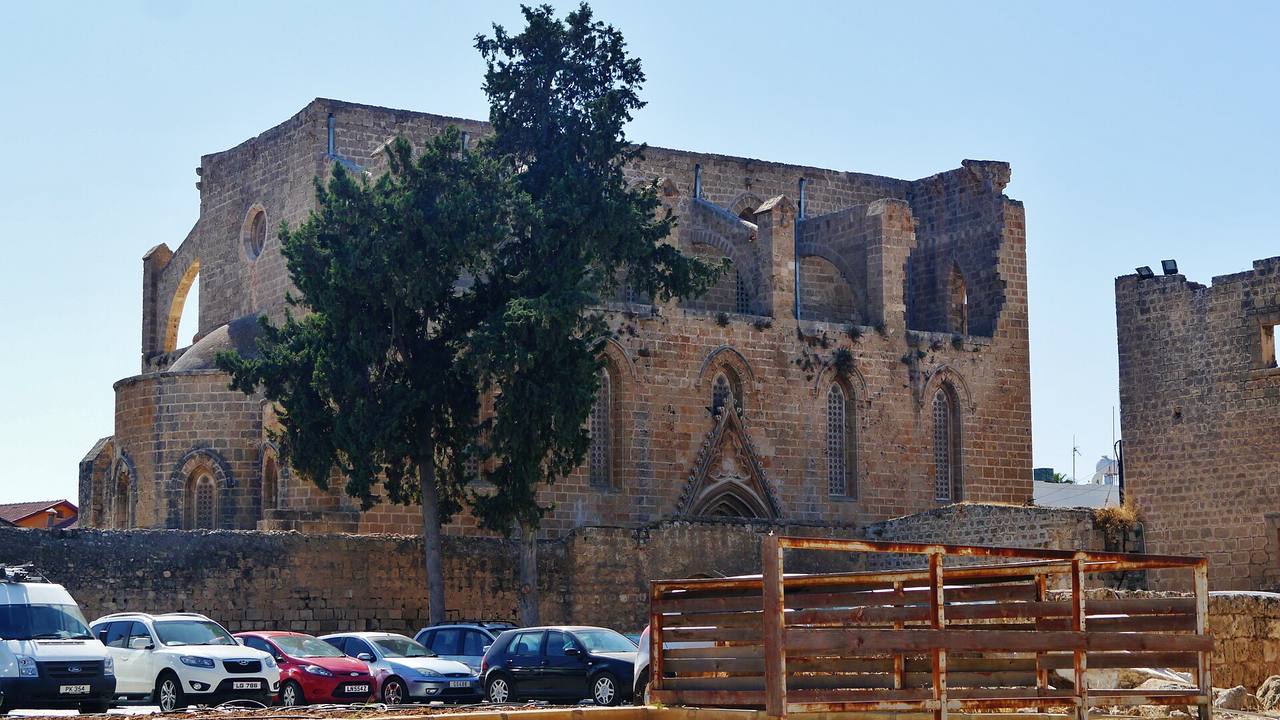
Zairon · CC BY-SA 4.0 · Wikimedia Commons site
Sinan Pasha Mosque, Famagusta
Former Church of Saint Peter and Saint Paul, begun under Peter I (1358-1369). Visit North Cyprus says it was used as a grain store in the British period and is still called the wheat mosque locally.
Source: visitncy.com
1 / 1
Practical notes
- Status and positions on this page are dated 23 October 2026; each claim is attributed to the party or document that makes it.
- Entry arrangements come from a newspaper guide dated 13 October 2026, not from an official page; confirm with official sources.
- The guide says photography is restricted near military locations and where signs prohibit it, and that drones were prohibited when access began.
- The guide warns against passing barriers, entering abandoned buildings or reaching closed streets.
- UN Security Council texts quoted here are from the official UN document record; press reports are attributed by outlet and date.
Frequently asked questions
Can you visit Varosha?
Parts of Varosha have been open to visitors since 8 October 2020. A Cyprus Mail guide of 13 October 2026 says visitors follow designated routes, carry an original passport and stay away from barriers and abandoned buildings. The UN and the Turkish Cypriot side take opposing positions. Entry rules change; check official sources.
Why is Famagusta a ghost town?
"Ghost town" is a press label for Varosha, the Famagusta quarter whose Greek Cypriot residents left in 1974 and which the Turkish military then fenced off, according to the Cyprus Mail. Varosha is one quarter of Famagusta; the walled city and Salamis are covered in our other guide.
What is Varosha?
Varosha (Maraş in Turkish) is the modern sector of Famagusta that the Cyprus Mail describes as a tourist centre of beaches and hotels before 1974. Since 1974 it has been fenced off, with parts opened to visitors from 8 October 2020. Its status is the subject of UN Security Council resolutions.
Where is Varosha?
Varosha is a quarter of Famagusta (Gazimağusa), a port city of Cyprus. The Cyprus Mail states it lies in the north of the island, outside the effective control of the Republic of Cyprus. UNFICYP describes it as under the control of the Turkish military.
Is Famagusta ghost town open?
Part of it is. Since 8 October 2020 sections have been opened, and the UN Secretary-General's report of 5 January 2026 says many visitors continued to visit parts progressively made accessible, while still referring to the fenced-off part of the town. Conditions change; check official sources.
What does the UN say about Varosha?
Resolution 550 (1984) calls attempts to settle Varosha by anyone but its inhabitants inadmissible and calls for transfer of the area to UN administration. Statements of 9 October 2020 and 23 July 2021 call for reversal of the openings. In January 2026 the Secretary-General said the UN position remains unchanged.
Sources
- UN Security Council, resolution 550 (1984), official record (UN Documents)
- UN Security Council, resolution 789 (1992), official record (UN Documents)
- UN Security Council, S/PRST/2020/9, 9 October 2020 (copy hosted by Security Council Report)
- UN Security Council, S/PRST/2021/13, 23 July 2021 (UN Documents)
- UN Secretary-General, report on UNFICYP, S/2026/8, 5 January 2026 (UN Documents)
- UN Secretary-General, good offices report, S/2026/9, 5 January 2026 (UN Documents)
- Security Council Report (independent NGO), What's in Blue, 9 October 2020
- UN News, 23 July 2021
- UNFICYP (UN Peacekeeping), About the buffer zone
- Hürriyet Daily News, 6 October 2020
- Al Jazeera, 7 October 2020
- Al Jazeera, 20 July 2021
- Euronews, 20 July 2021
- Anadolu Agency (Turkish state news agency), 24 July 2021
- Turkish Ministry of Foreign Affairs, press release No. 260, 23 July 2021 (mission site)
- Cyprus Mail, Varosha explainer, 13 October 2026
- Cyprus Mail, Varosha: the forbidden city (undated)
- Cyprus Mail, 23 October 2021
- Cyprus Mail, 8 October 2022
- Famagusta Municipality (Republic of Cyprus, temporary offices)
- Visit North Cyprus, Sinan Pasha Mosque (owner not named)
Questions about North Cyprus?
Write to NORTHEA for a private conversation about areas, hotels or property.