
About North Cyprus · İskele and Karpaz
Places to see in İskele and the Karpaz Peninsula
As of 24 October 2026, official, academic and tourism sources describe İskele district and the Karpaz (Karpas) peninsula through Kantara Castle, Early Christian and Byzantine churches at Sipahi, Ayios Philon and Aphendrika, the Apostolos Andreas monastery, Bronze Age sites such as Nitovikla and Kral Tepesi, the town of İskele (Trikomo), and the protected beaches and free-roaming donkeys of the peninsula tip. This page summarises what the Department of Antiquities and Museums, the Environmental Protection Department, the Technical Committee on Cultural Heritage, UNDP, universities and dated reports say about each place, with a link to every source. It gives no opening hours, fees or coordinates.
Checked 24 October 2026 against the sources named in the text and listed below. Positions of parties are attributed to them.

İskele (Trikomo), Boğaz and the Bafra coast
According to Visit North Cyprus, İskele was formerly called Trikomo and has two churches of historical importance: Panagia Theotokos, built in the 12th century and now a museum, and the small cruciform church of Ayios Iakovos (St James), put up in the 15th century. The same page names the fishing harbour of Boğaz next to İskele and describes Bafra, further north on the road from Famagusta to the Karpaz, as a former village that has become a hotel area.
The Department of Antiquities and Museums (Eski Eserler ve Müzeler Dairesi) says the Panagia Theotokos church opened as the İskele Icon Museum on 23 May 1991. The Department also runs the İskele Archaeology Museum, which it says occupies the former market building known as the Bandabuliya, built in the British colonial period, converted in 2017 and opened in 2018.
Beaches, beach rules and the protected coast are covered on the beaches and coast guide; the district map is on the districts, towns and map page. Salamis and the other sites near Famagusta are on the Famagusta places to see page.
Nikolay Kazak · CC BY-SA 4.0 · Wikimedia Commons Town
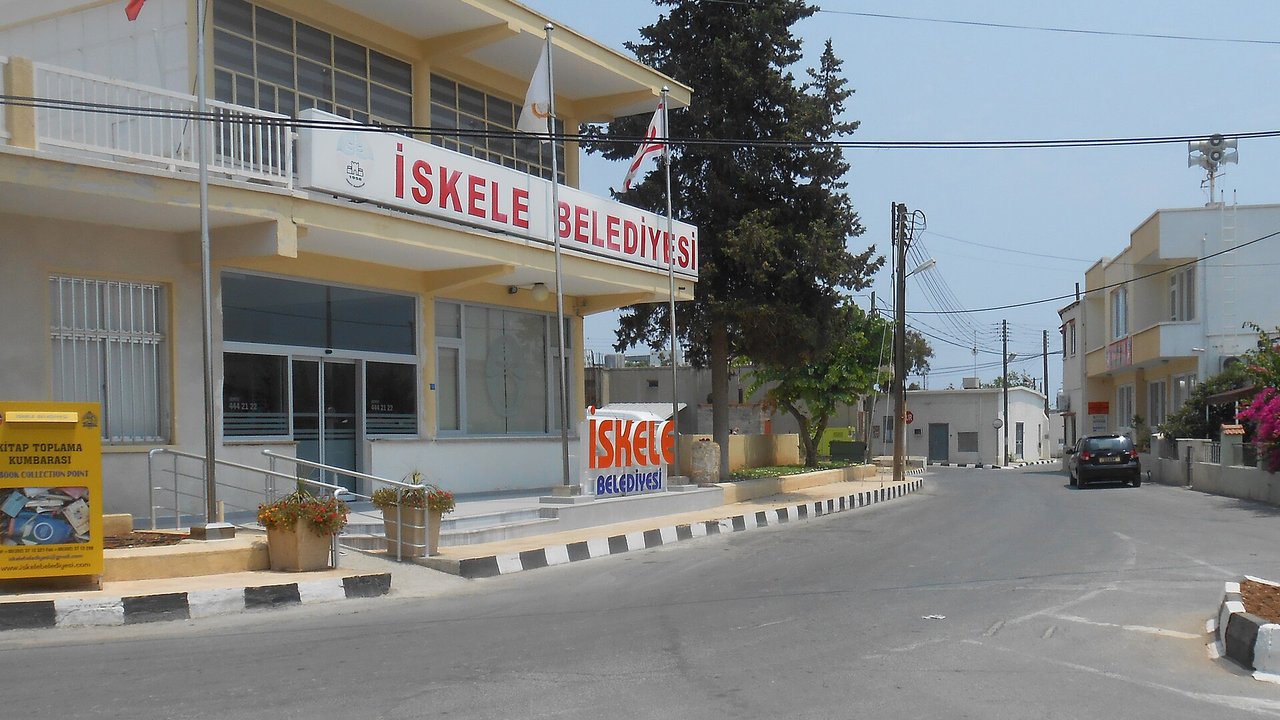
İskele (Trikomo)
Visit North Cyprus describes İskele as one of the larger towns in the north, formerly called Trikomo, with beaches and fish restaurants nearby. It repeats a legend that Aphrodite brought the first fruit to Cyprus here.
Source: visitncy.com
Nikolay Kazak · CC BY-SA 4.0 · Wikimedia Commons Museum
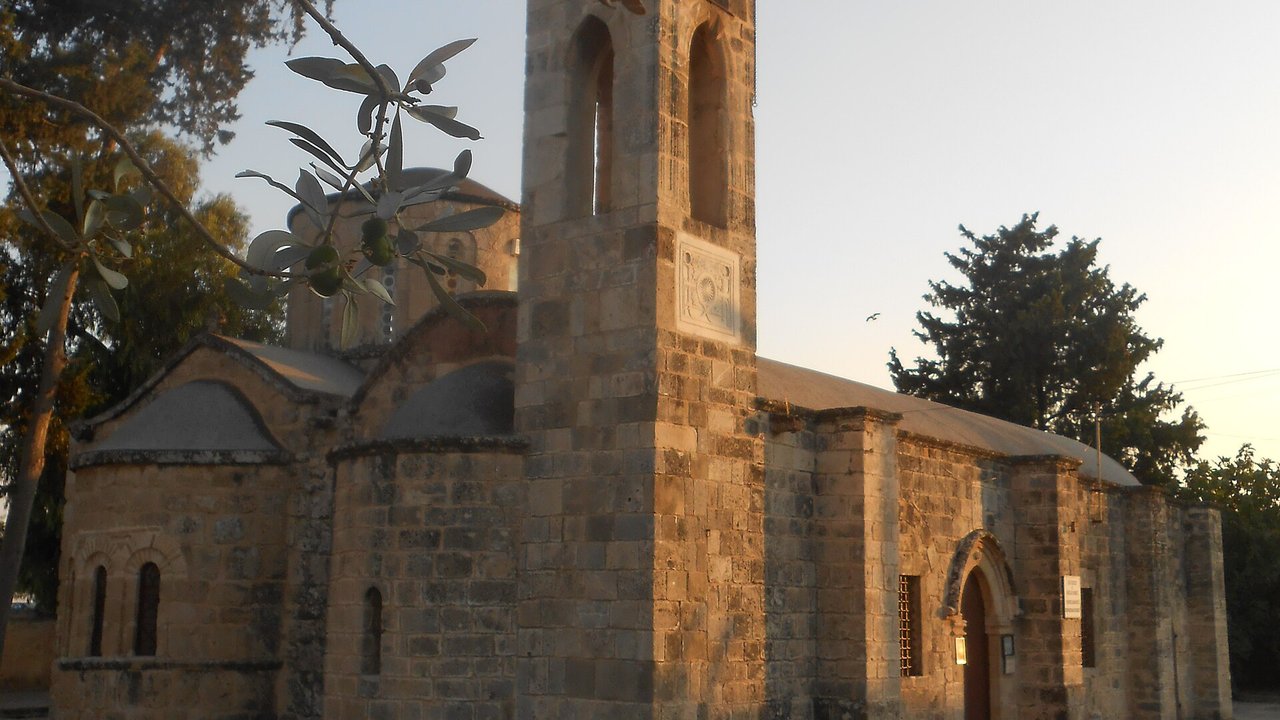
Panagia Theotokos church, İskele Icon Museum (İkon Müzesi)
The Department of Antiquities and Museums dates the church to the 12th century, with a vaulted north aisle added in the 15th century and repairs in 1804. It says most of the early 12th-century wall paintings survive; they were cleaned in 1966 and further paintings were uncovered in November 1967.
Source: eemd.gov.ct.tr
Ddovah · CC BY-SA 4.0 · Wikimedia Commons Museum
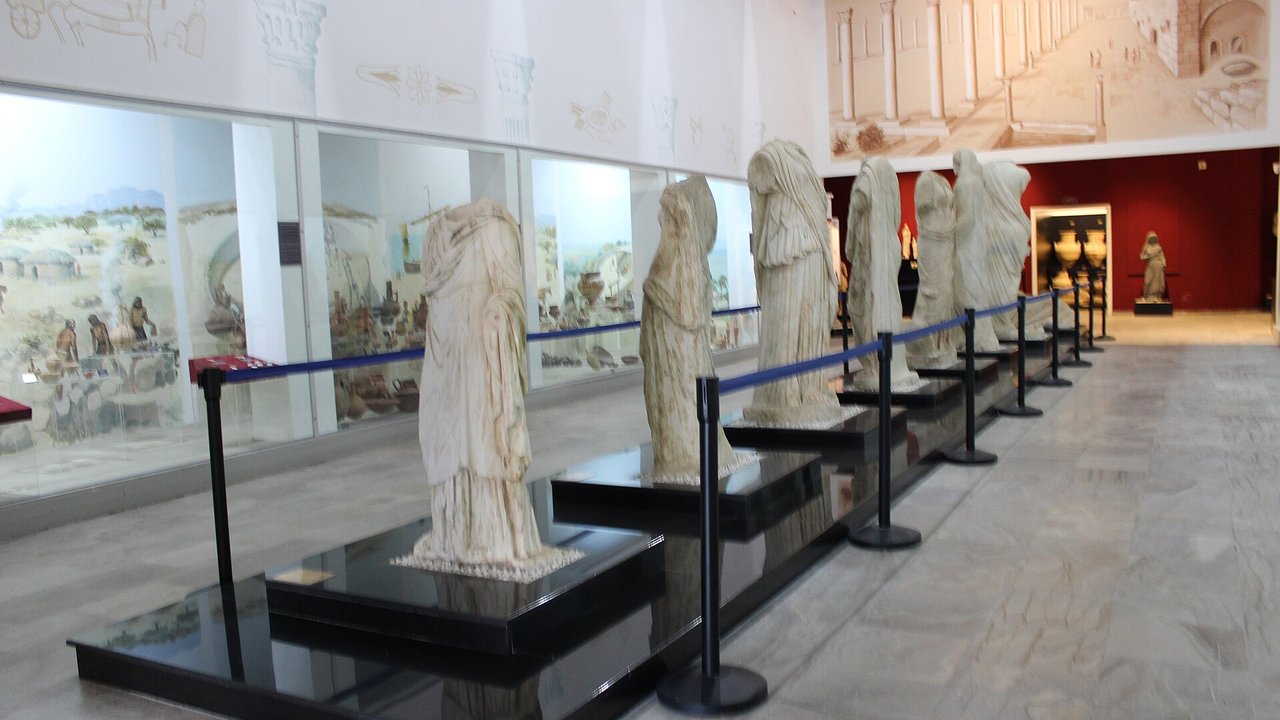
İskele Archaeology Museum (İskele Arkeoloji Müzesi)
The Department says the museum, opened in 2018, shows objects from eight periods from the Neolithic to the Roman era, selected from its archaeological stores. It notes a distinctive Middle Bronze Age pottery made on the Karpaz peninsula.
Source: eemd.gov.ct.tr
Wakowlk · CC BY-SA 3.0 · Wikimedia Commons Harbour village
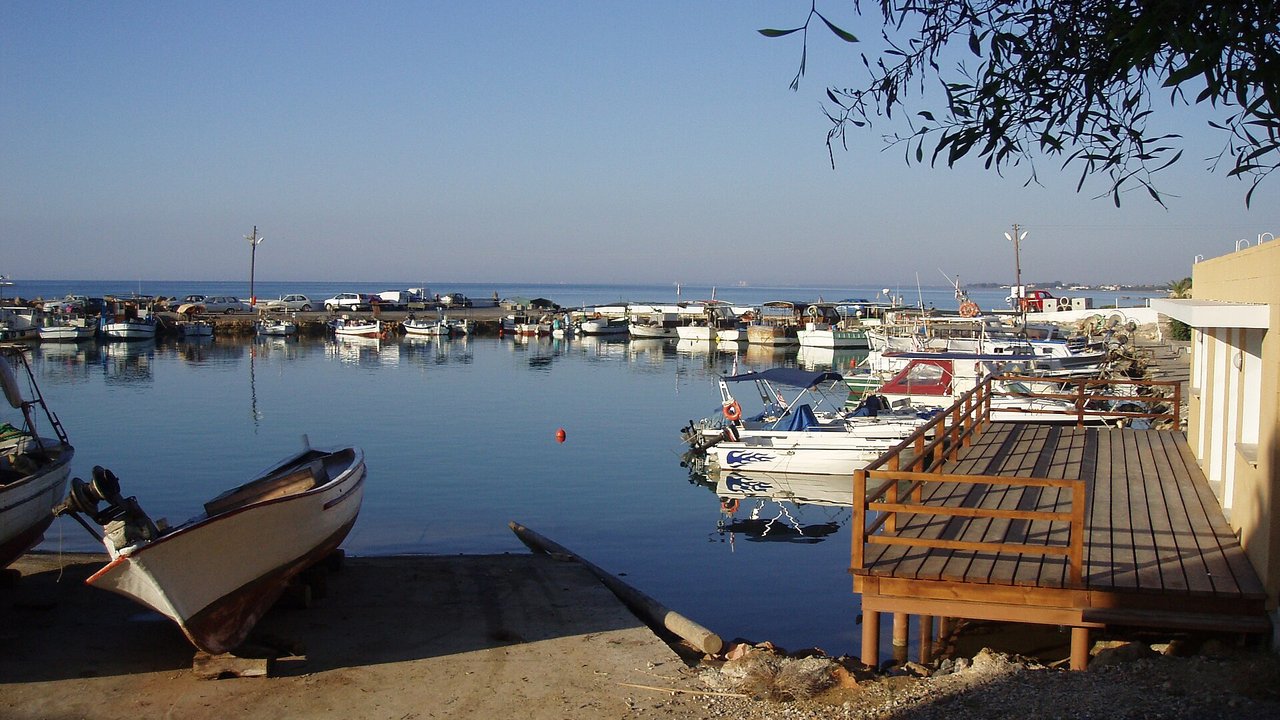
Boğaz
Visit North Cyprus describes Boğaz, next to İskele, as a fishing village with fish restaurants around its harbour.
Source: visitncy.com
Seksen iki yüz kırk beş · CC0 · Wikimedia Commons Coast
Bafra
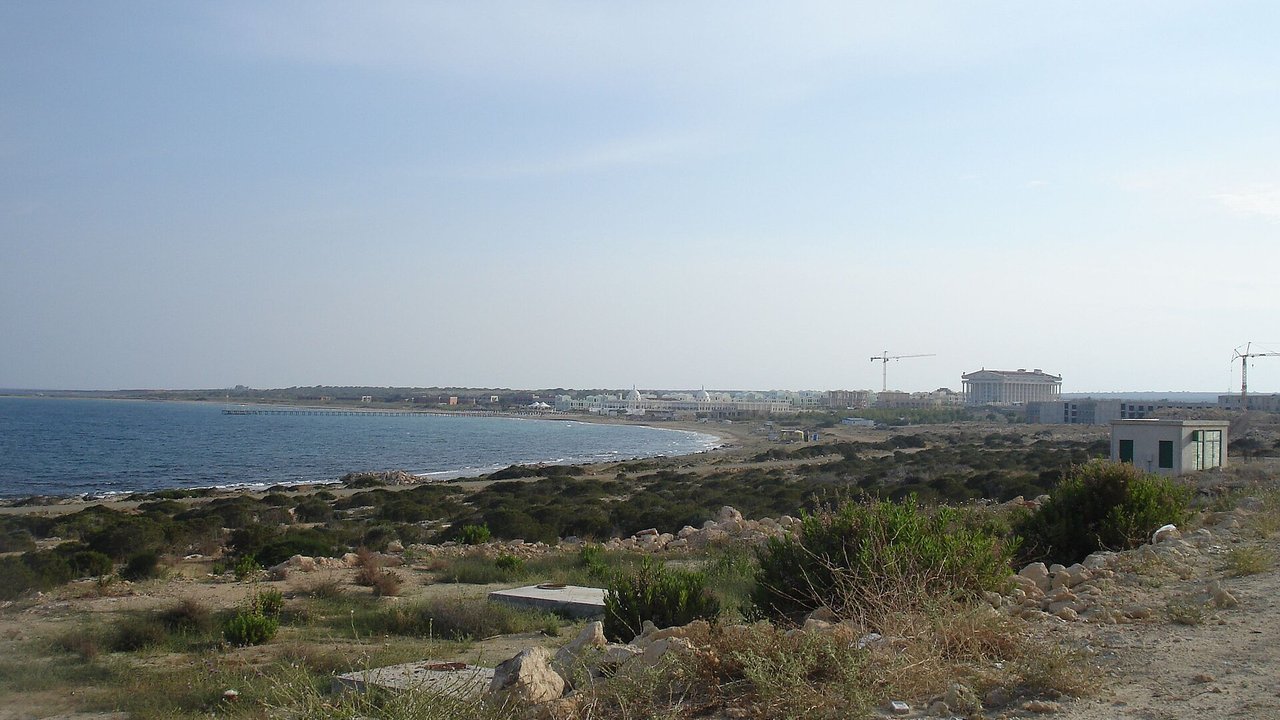
Visit North Cyprus describes Bafra as a former village on the main road from Famagusta to the Karpaz that has been developed with large hotels, and mentions its sandy shore.
Source: visitncy.com
1 / 6

Kantara Castle and Bronze Age sites
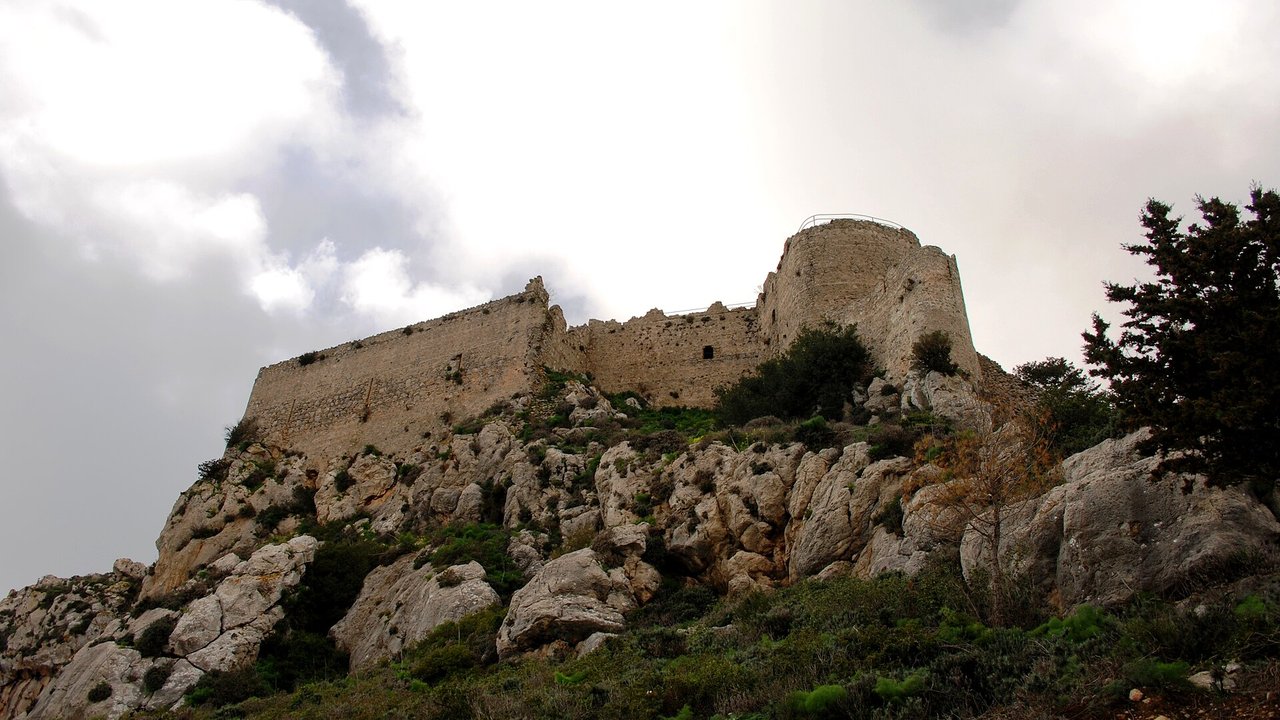
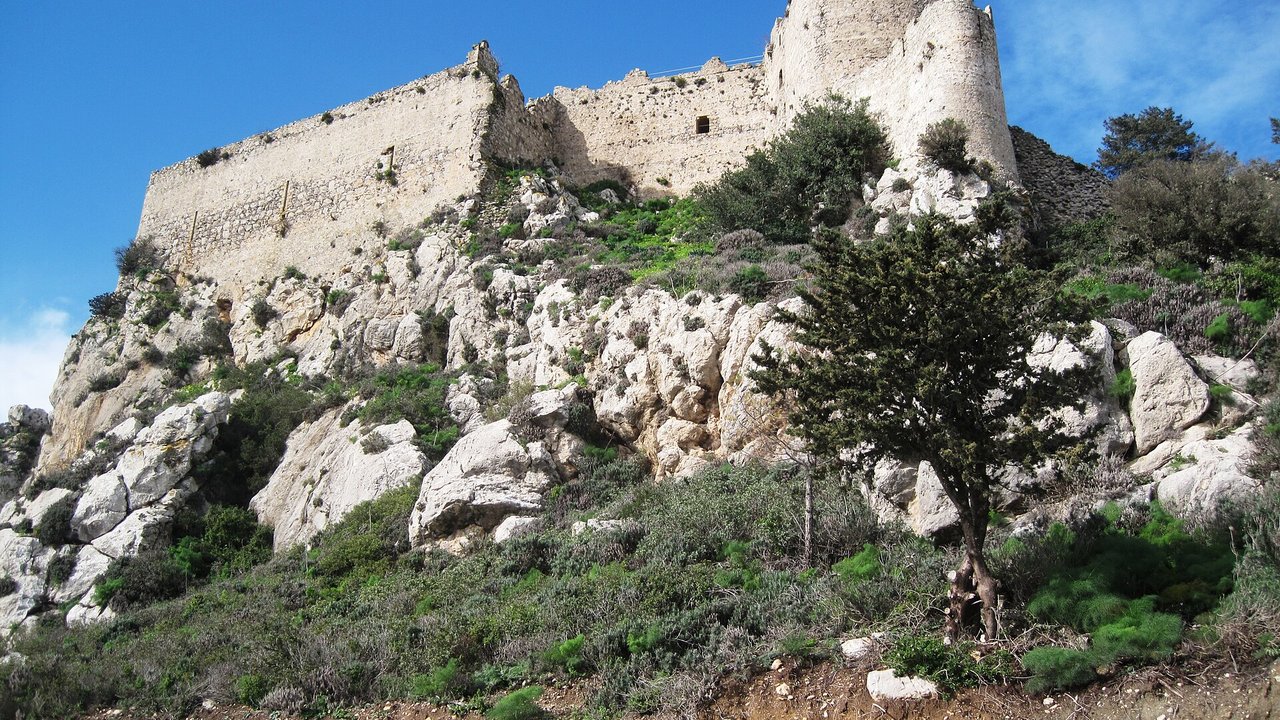
According to the Department of Antiquities and Museums, Kantara is one of the castles built to hold the passes of the Kyrenia (Beşparmak) mountains and stands on a rock outcrop at about 700 metres. The Department says it was probably first built as a lookout in the 10th century, is first mentioned in 1191, when Isaac Komnenos took refuge there, and was refortified by King James I (1382 to 1398); most of the ruins visible today date from his work. Visit North Cyprus says Kantara lies furthest east of the three mountain castles. The three castles are compared on the castles guide.
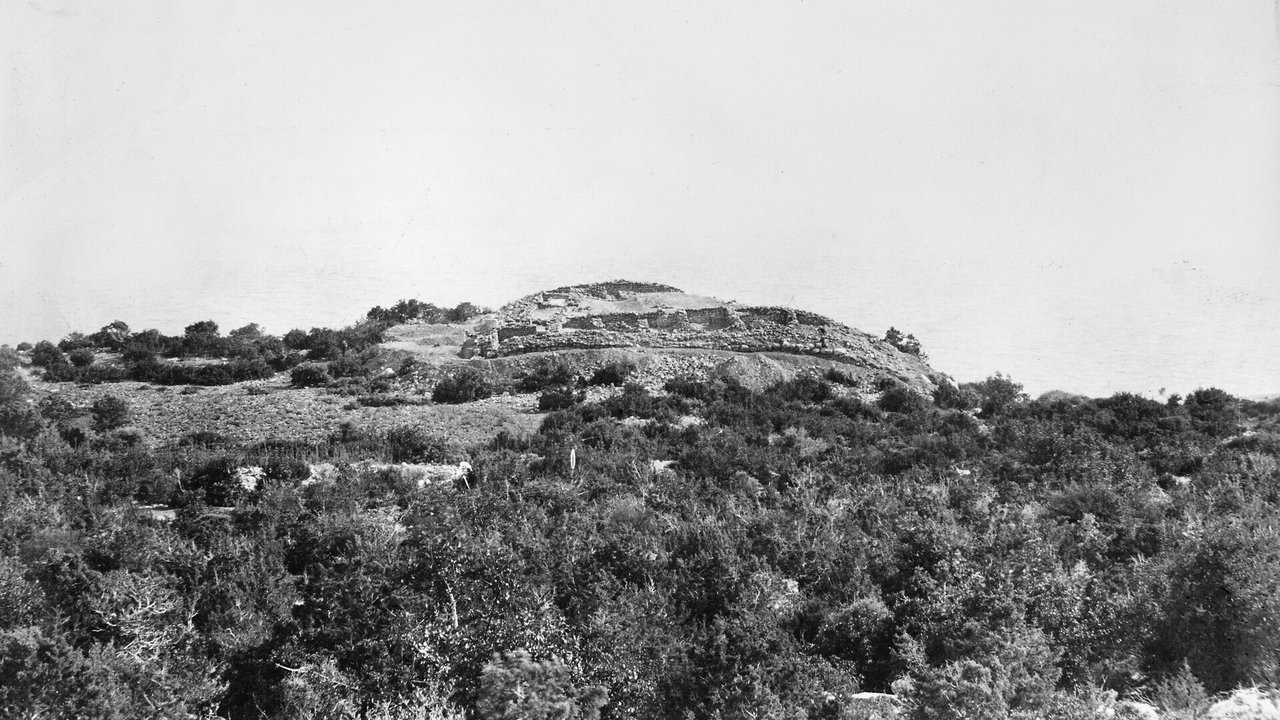
The peninsula also has Bronze Age sites. An article published by the Aegeus Society says most archaeological information on the Bronze Age Karpas comes from sites excavated by the Swedish Cyprus Expedition, including the fortress at Korovia-Nitovikla, near Kuruova, and describes a rescue excavation of a tomb at Galinoporni (Kaleburnu) in 1956.
At Kral Tepesi (Vasili) above Kaleburnu, the Eastern Mediterranean University DAKMAR research centre says two academics found a pithos holding bronze objects in June 2004, and that a rescue excavation recovered 26 bronze objects. It reports a first excavation phase from 2005 to 2009 and a second from 2014, and says erosion, farming and illegal digging threaten the site.
George Groutas from Idalion, Cyprus · CC BY 2.0 · Wikimedia Commons Castle
Kantara Castle (Kantara Kalesi)
The Department of Antiquities and Museums describes a barbican with two towers at the eastern entrance, cliffs on three sides, vaulted rooms, a former prison room, cisterns and a tower at the summit for signalling to Buffavento. It says the castle was used until 1525 and then left by the Venetians.
Source: eemd.gov.ct.tr
Dickelbers · CC BY-SA 3.0 · Wikimedia Commons Castle
Kantara Castle in tourism sources
Visit North Cyprus says the castle was re-fortified by King James in 1391 and remained a garrison after the Venetians took over in 1489. It lists defensive emplacements, soldiers' quarters, cisterns, vaulted rooms and watch towers among the ruins.
Source: visitncy.com
John Lindros · CC0 · Wikimedia Commons Fortress
Nitovikla fortress, near Kuruova (Korovia)
Wikipedia, citing the Swedish Cyprus Expedition publication of 1935, says the expedition investigated the site in 1929. It describes a square fortress of Cyclopean masonry with towers and a courtyard cistern, used between about 1725 and 1450 BC.
Source: en.wikipedia.org
1 / 6

Early Christian and Byzantine churches: Sipahi, Ayios Philon and Aphendrika
According to the Department of Antiquities and Museums, the Ayia Trias basilica at Sipahi was found by chance in 1957 and has been partly excavated. The Department describes a three-aisled basilica with mosaic floors, a narthex and atrium, and a baptistery with a cross-shaped font, and dates the mosaics to the late 5th or early 6th century, before AD 535. Visit North Cyprus notes an inscription naming a deacon, Heraclos, as having paid for part of the building.
Near Dipkarpaz (Rizokarpaso), the ruined church of Ayios Philon stands on the site of ancient Karpasia. The Technical Committee on Cultural Heritage says excavations from 1935 to 1938 uncovered part of a 5th-century episcopal complex beneath the 12th-century church, and that EU-funded conservation took place between May 2018 and January 2019. Visit North Cyprus dates the church to the 10th century.
On the north coast, the Technical Committee on Cultural Heritage says the ruins at Aphendrika were identified as the ancient city of Ourania by David George Hogarth (1889) and Ieronymos Peristianis (1910). It describes three ruined churches and reports emergency conservation work from October 2020 to December 2020, funded by the European Union and implemented by UNDP.
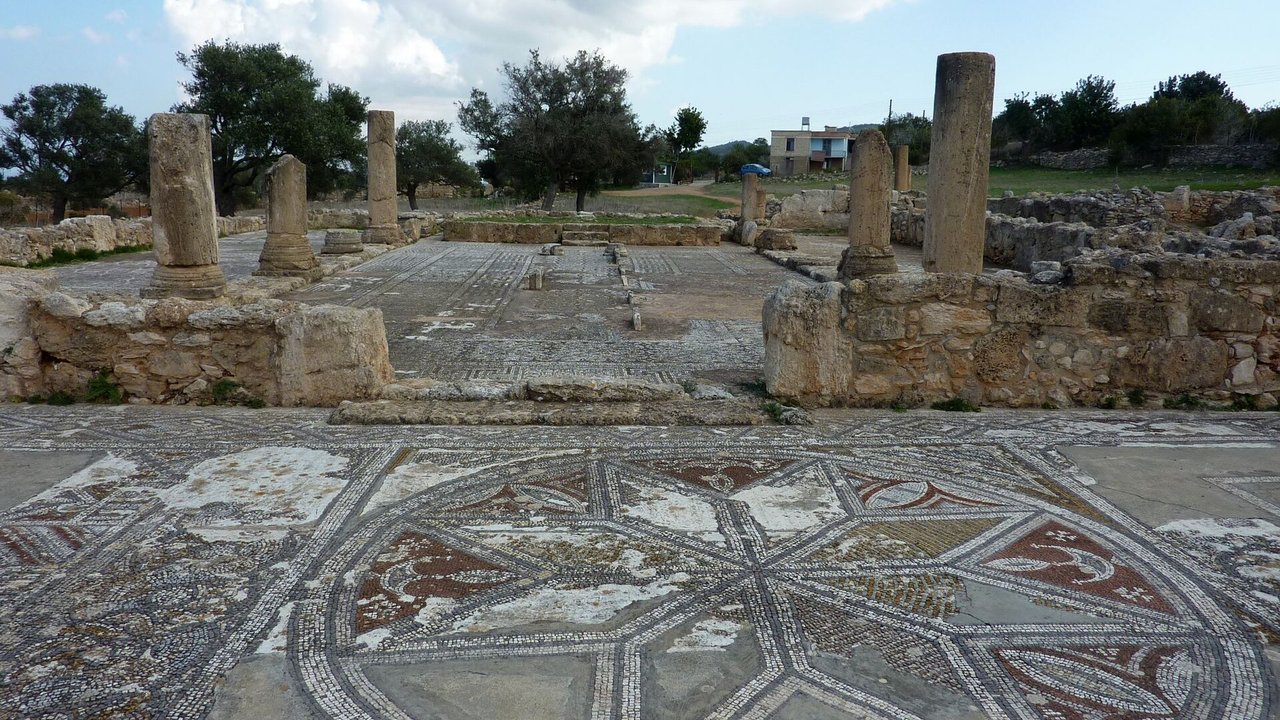
Chris06 · CC BY-SA 4.0 · Wikimedia Commons Basilica
Ayia Trias basilica, Sipahi (Ay Trias Bazilikası)
The Department says the basilica was probably destroyed during Arab raids around the mid-7th century, after which a small church was built to its south; when that was destroyed in the 9th or 10th century the site went out of use. The mosaics show geometric, leaf and cross motifs.
Source: eemd.gov.ct.tr
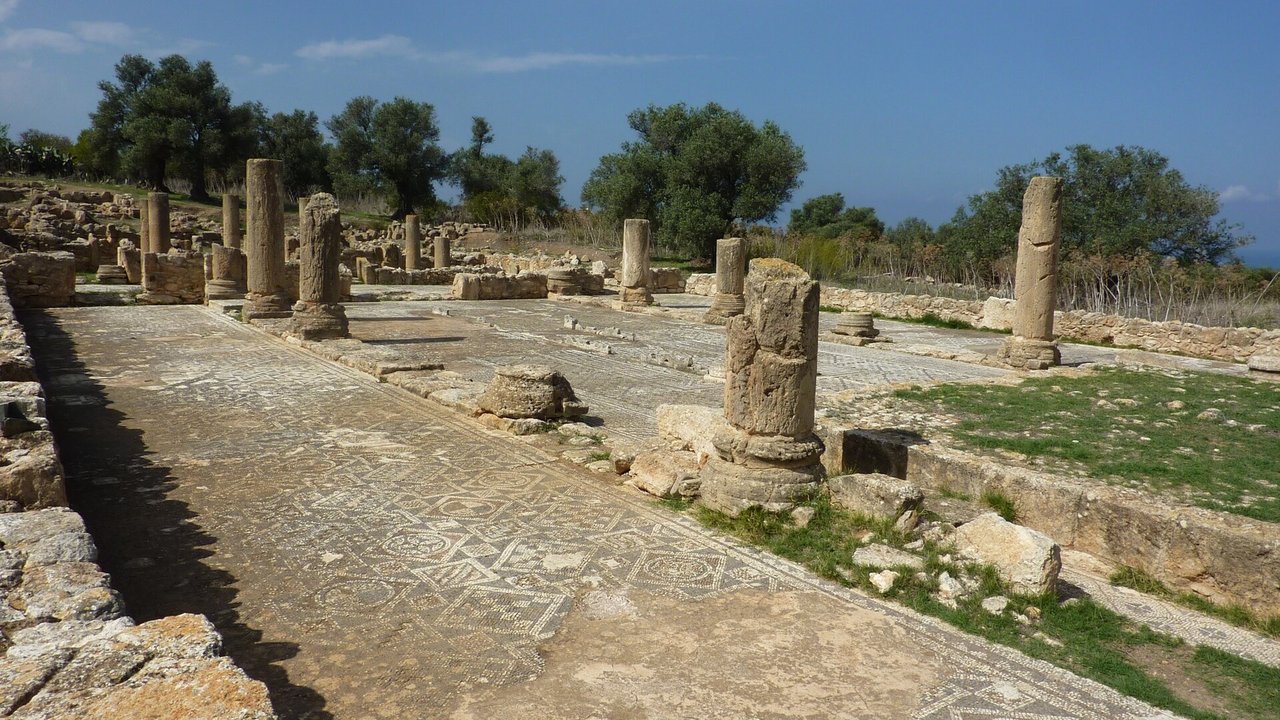
Chris06 · CC BY-SA 4.0 · Wikimedia Commons Basilica
Ayia Trias basilica in tourism sources
Visit North Cyprus places the basilica north of the village of Sipahi, dates it to the end of the 5th century and says it was discovered by accident in 1957. It quotes the inscription in front of the main apse crediting the deacon Heraclos.
Source: visitncy.com
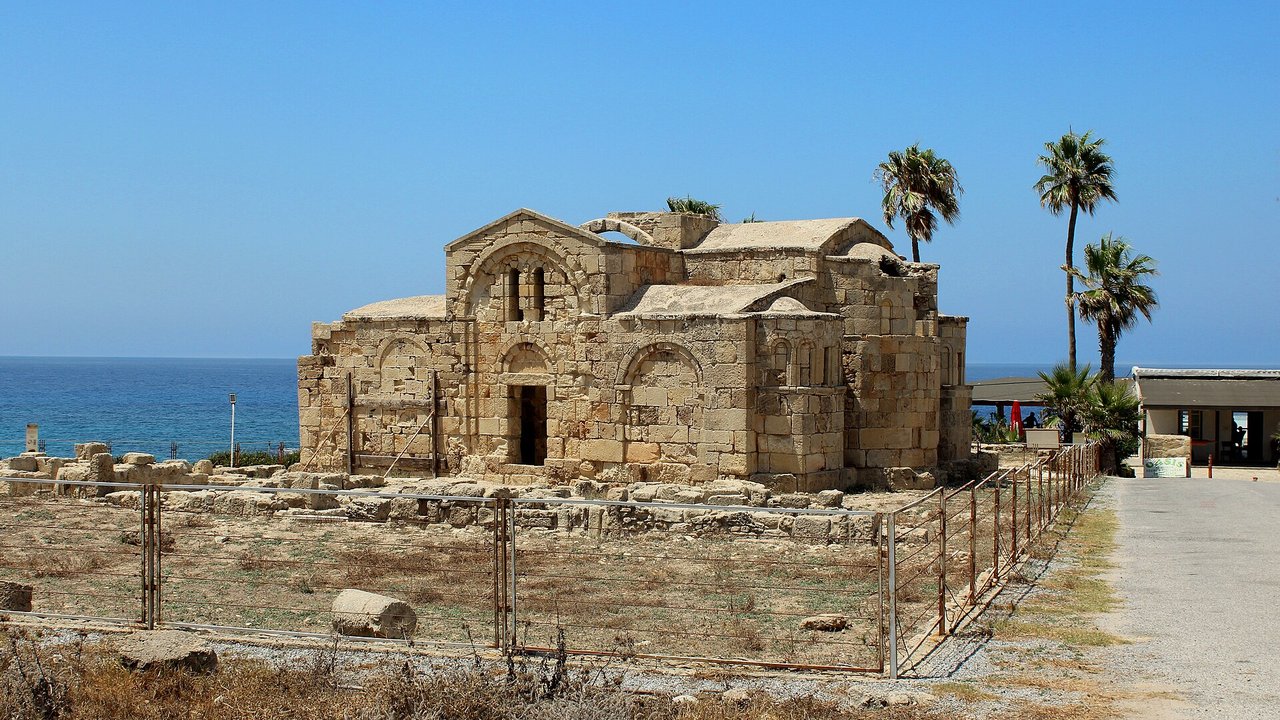
Ruben Holthuijsen · CC BY 2.0 · Wikimedia Commons Archaeological site
Ayios Philon and ancient Karpasia
The Technical Committee on Cultural Heritage places ancient Karpasia about 3.5 km north-east of Dipkarpaz. It describes a colonnaded basilica, a baptistery with a cruciform font, opus sectile floors, and a domed cross-in-square church built over the basilica in the 12th century.
Source: tcchcyprus.com
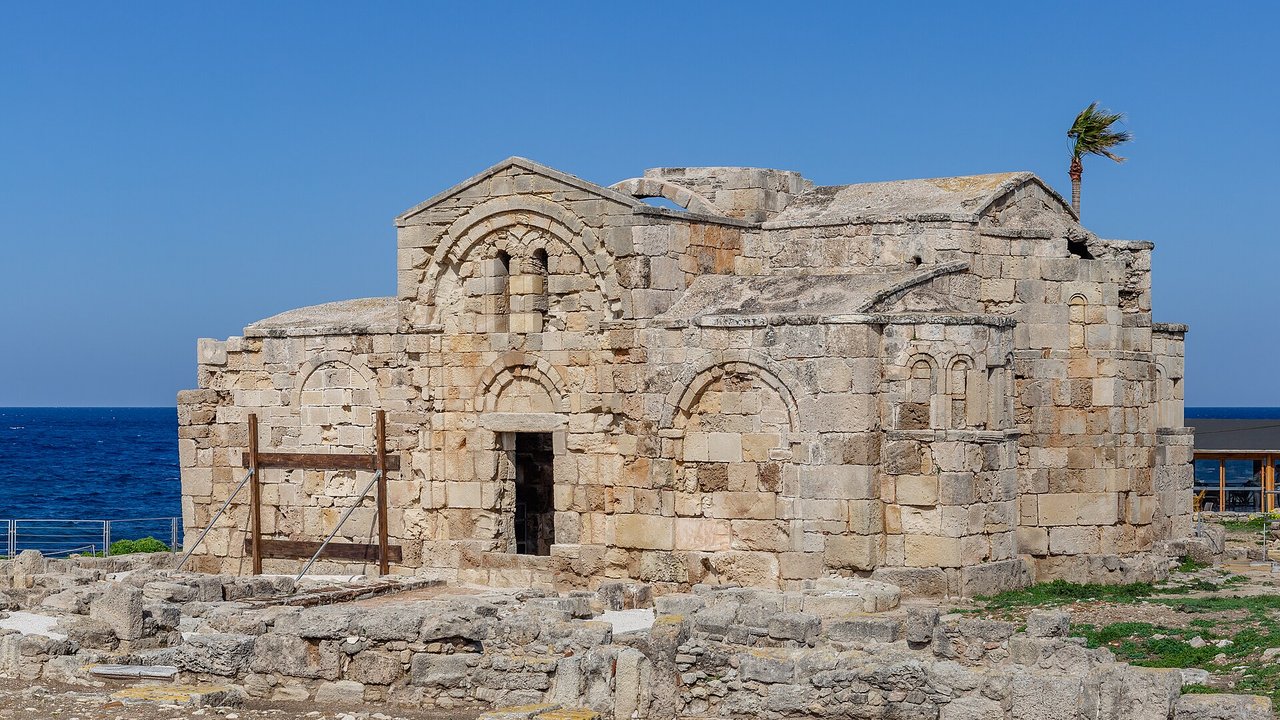
Michal Klajban · CC BY-SA 4.0 · Wikimedia Commons Church
Ayios Philon church in tourism sources
Visit North Cyprus says the church is dedicated to the saint who converted the people of the Karpaz to Christianity in the 4th century and dates it to the 10th century. It mentions a cistern, a baptistery and coloured mosaics.
Source: visitncy.com
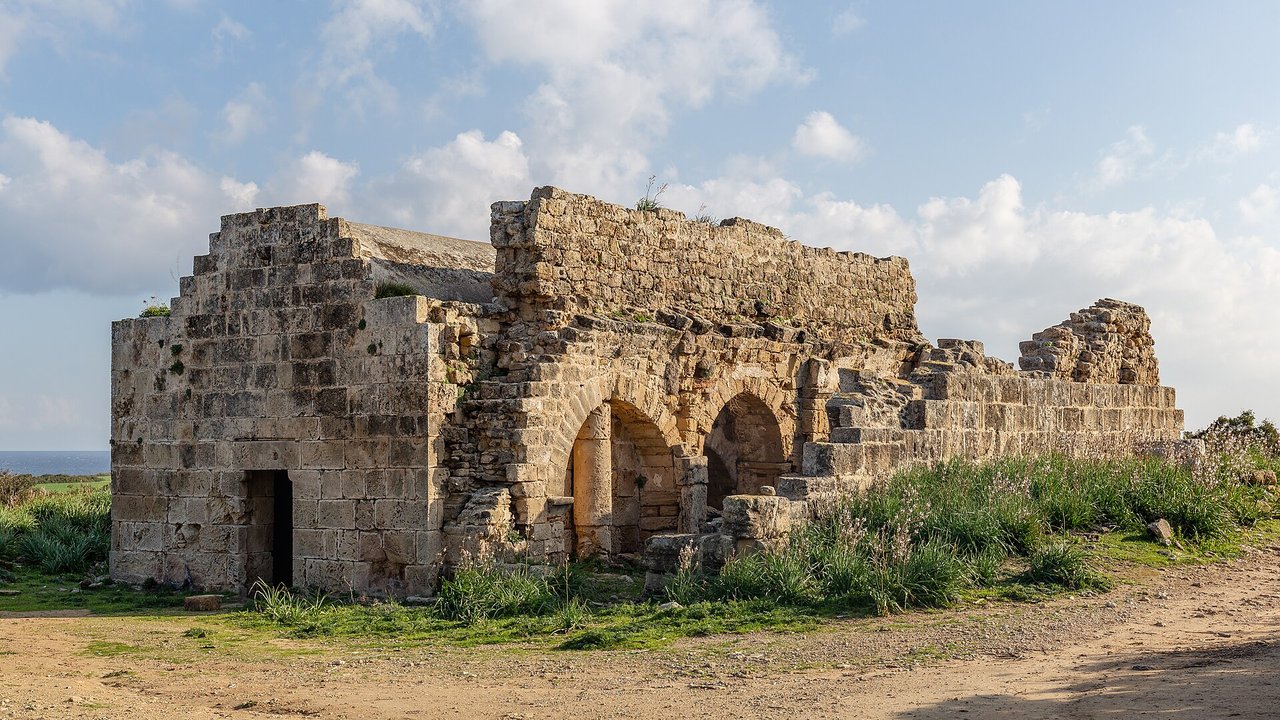
Michal Klajban · CC BY-SA 4.0 · Wikimedia Commons Church
Panagia Aphendrika
The Technical Committee on Cultural Heritage describes a 16th-century single-aisled vaulted chapel built inside the west part of an 8th-century basilica, which in turn replaced a 6th-century timber-roofed basilica. The original floor has never been uncovered.
Source: tcchcyprus.com
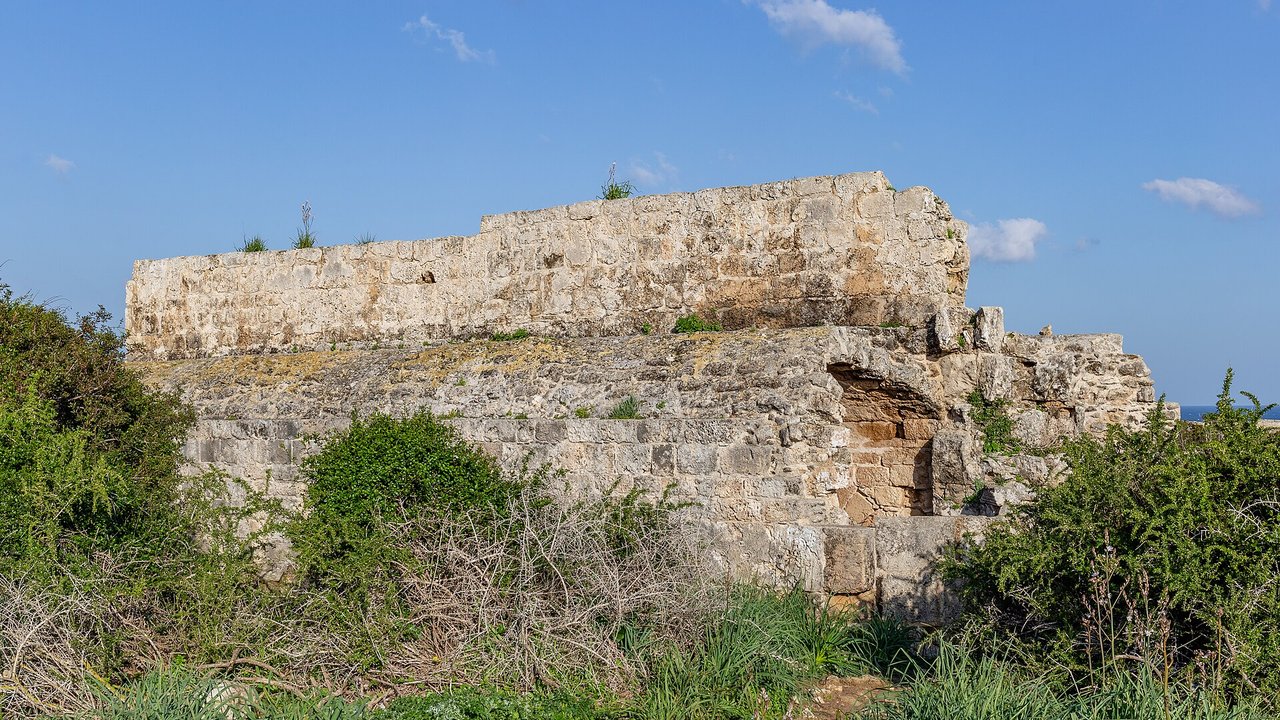
Michal Klajban · CC BY-SA 4.0 · Wikimedia Commons Church
Asomatos church, Aphendrika
The same source says Asomatos, about 30 m south of Panagia Aphendrika, began as a 6th-century three-aisled basilica and was converted into a vaulted basilica at the end of the 8th century. The synthronon is the only liturgical furnishing still in place.
Source: tcchcyprus.com
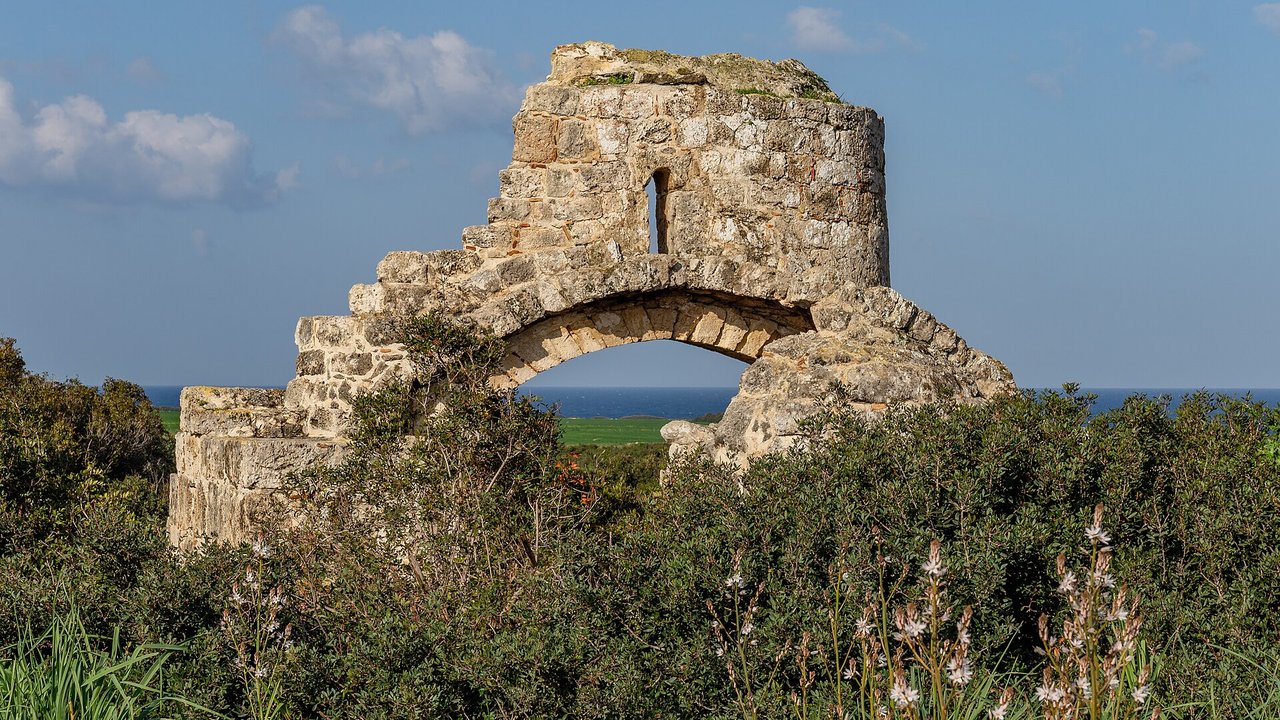
Michal Klajban · CC BY-SA 4.0 · Wikimedia Commons Church
Agios Georgios, Aphendrika
The Committee describes a small single-aisled church with a twin apse, one of two such churches in Cyprus. It notes a suggestion that it is the earliest surviving domed building on the island, dated between the 9th and 10th centuries.
Source: tcchcyprus.com
1 / 7

Panagia Kanakaria and Apostolos Andreas: history and restoration
The church of Panagia Kanakaria stands in Boltaşlı (Lythrangomi). Cyprus Mail reported on 15 August 2025 that restoration of the monastery and church had been completed, funded by the European Union under the technical guidance of UNDP, with Greek Cypriot and Turkish Cypriot experts working through the bicommunal Technical Committee on Cultural Heritage. The report says the church stands on a 5th-century basilica and that its apse once held an early 6th-century mosaic of the Virgin enthroned.
A case note by the University of Geneva ArThemis database records that four mosaics were removed from the apse between August and October 1976 and bought by a US art dealer in 1988. It records that a US District Court in Indianapolis ordered their return to the Church of Cyprus and the Republic of Cyprus on 3 August 1989, that the Court of Appeals affirmed this on 24 October 1990, and that the mosaics were returned to Cyprus in 1991 and are held by the Byzantine Museum of the Archbishop Makarios III Foundation.
The monastery of Apostolos Andreas is near the tip of the peninsula. UNDP says its restoration was funded by the Church of Cyprus and the EVKAF Administration, with a further contribution from USAID, and calls it the first heritage conservation project in Cyprus fully funded by both communities. Cyprus Mail reported on 7 November 2016 that the first phase had been handed over to the Technical Committee on Cultural Heritage, and on 20 March 2026 that further conservation works were progressing under the Committee's monitoring.
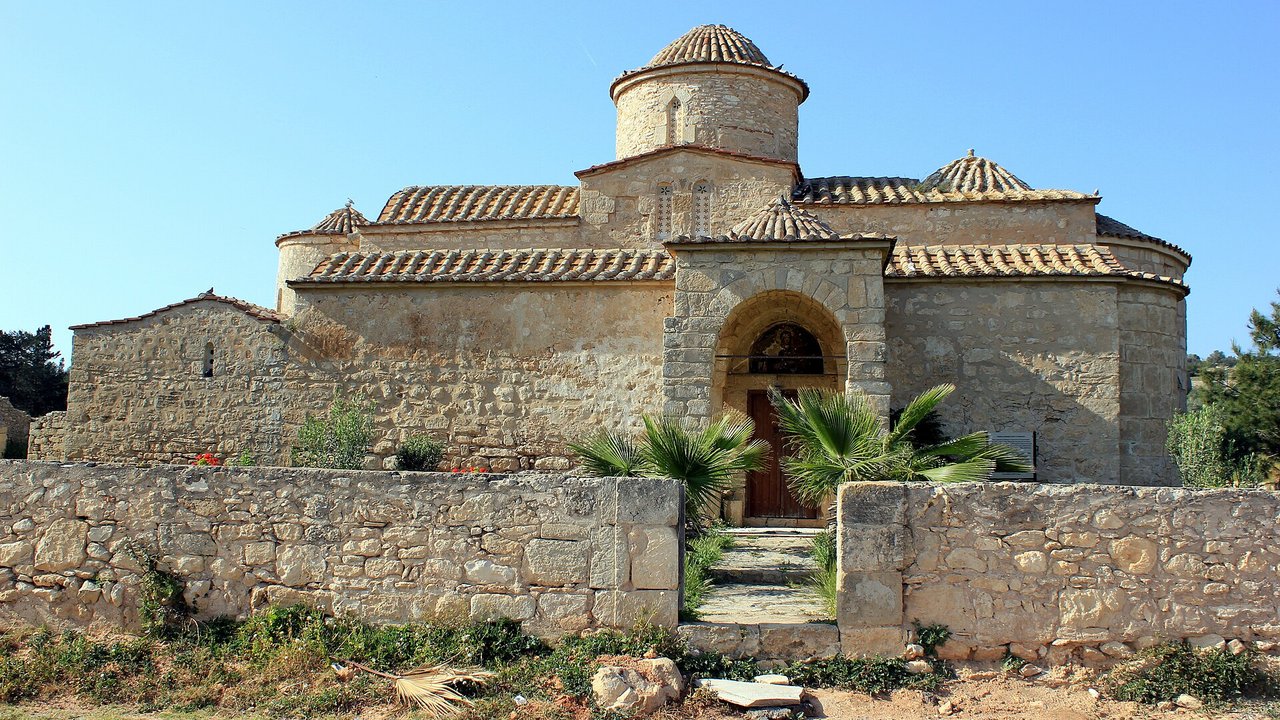
Julian Nyča · CC BY-SA 3.0 · Wikimedia Commons Church
Panagia Kanakaria, Boltaşlı (Lythrangomi)
Cyprus Mail, reporting on the August 2025 completion, says the first timber-roofed church became a barrel-vaulted three-aisled basilica in the 8th century and was rebuilt with a dome and apse in the 12th century. It quotes the Greek Cypriot co-chair of the Committee describing the project as an example of cooperation.
Source: cyprus-mail.com
Michal Klajban · CC BY-SA 4.0 · Wikimedia Commons Monastery
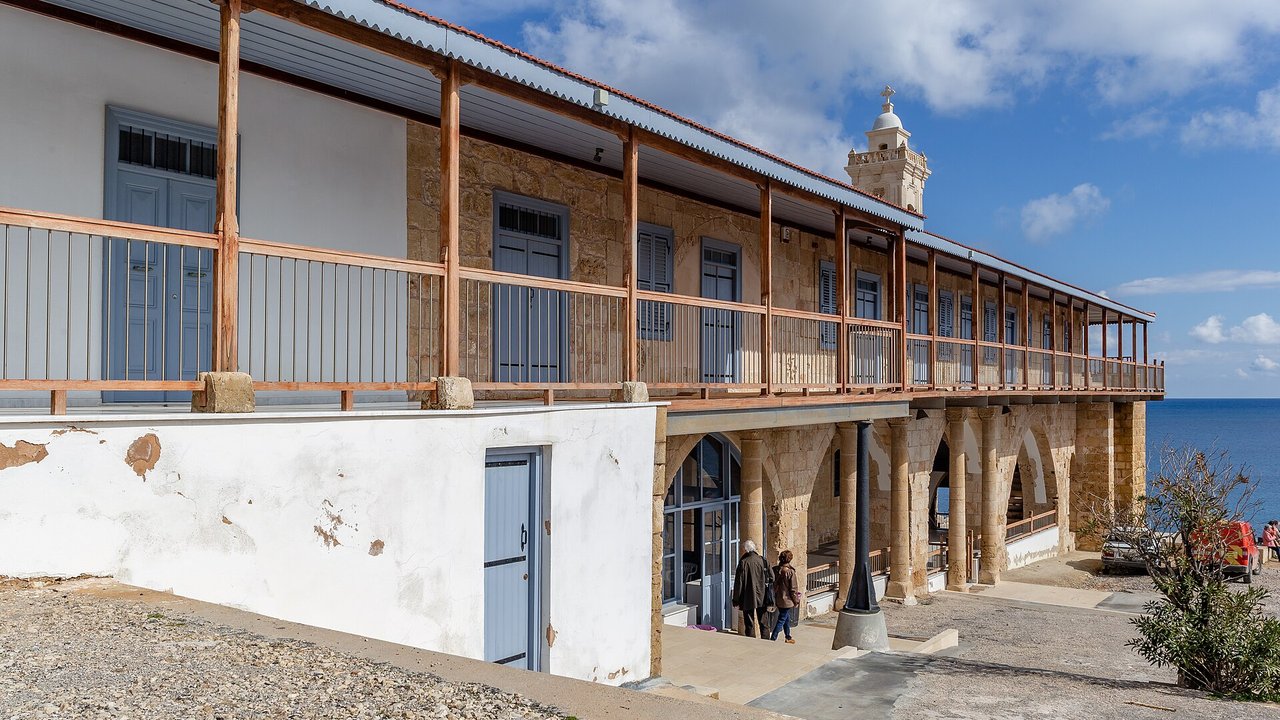
Apostolos Andreas monastery: buildings
UNDP dates the neoclassical church to 1867, with annexes up to 1914, and says the medieval chapel below it was most likely built in the 15th century. It dates the belfry to before 1906 and notes a 1930 repair with cement plaster on the side facing the sea.
Source: undp.org
Michal Klajban · CC BY-SA 4.0 · Wikimedia Commons Restoration
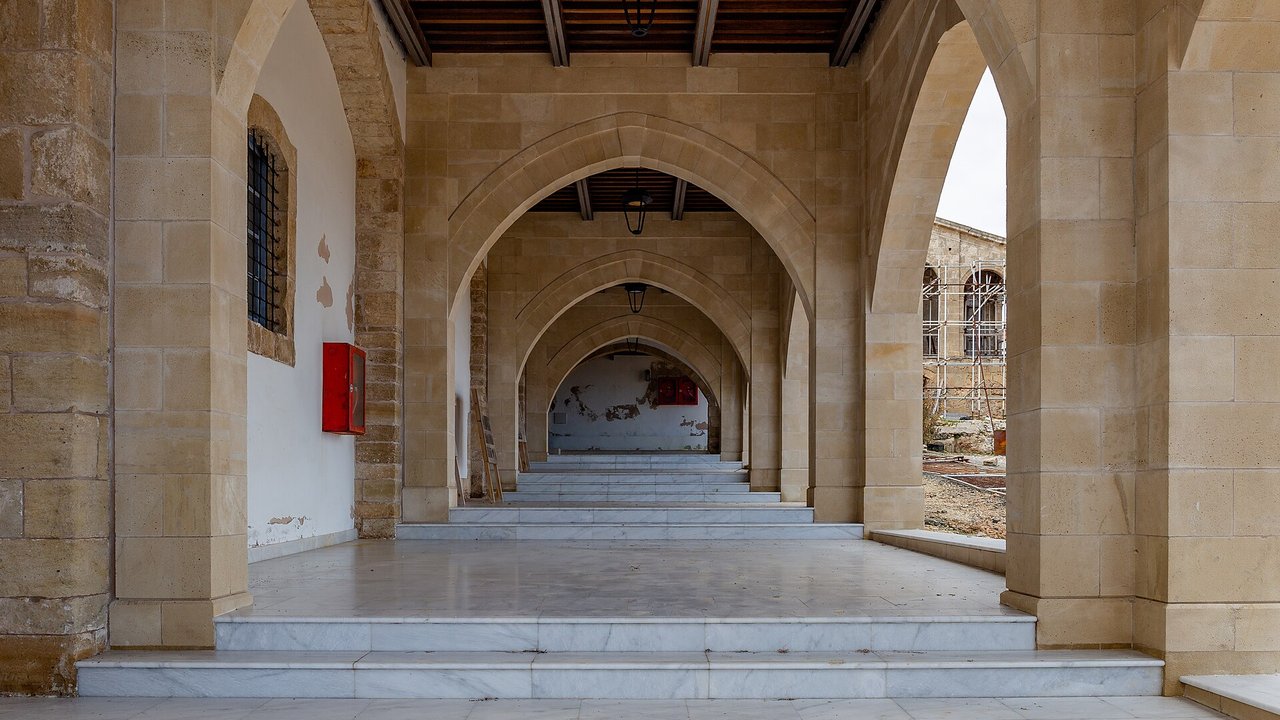
Apostolos Andreas: phase A (2014 to 2016)
UNDP says works began in September 2014 and phase A, covering the church and adjacent buildings, was completed on 30 November 2016. Cyprus Mail adds that the designs were drawn up by the University of Patras and the work was done by one Greek Cypriot and one Turkish Cypriot construction company.
Source: archive.cyprus-mail.com
Michal Klajban · CC BY-SA 4.0 · Wikimedia Commons Pilgrimage site
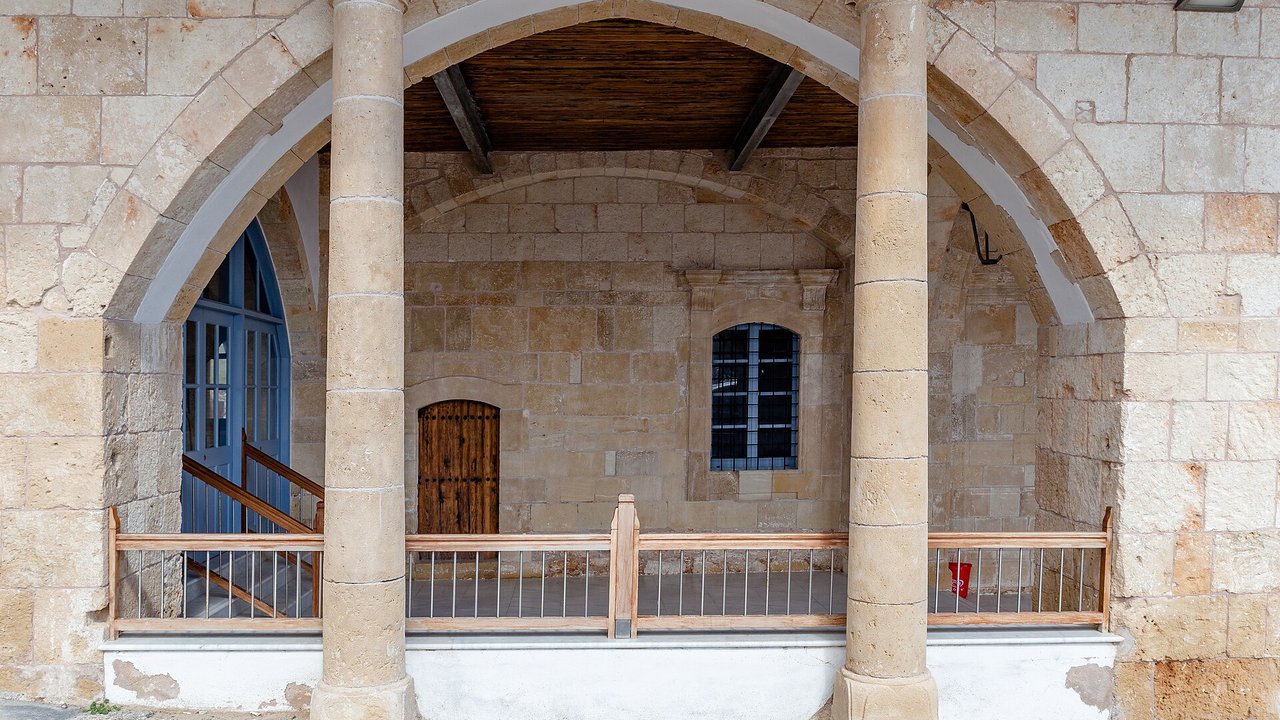
Apostolos Andreas in tourism sources
Visit North Cyprus describes the monastery as a long-standing resting place for Orthodox pilgrims and says the small 15th-century chapel by the shore has a spring whose water is said to have been brought forth by St Andrew.
Source: visitncy.com
1 / 6

The peninsula tip: Golden Beach, protected areas and the donkeys
Visit North Cyprus describes the Karpaz as a peninsula almost 80 kilometres long, sparsely populated, with maquis, cypress and pine and hills rising to about 1,000 metres, and says the whole area has been declared a reserve. Its beaches page describes Golden Beach (Altın Kumsal) as kilometres of sand with no facilities on site.
A 2019 seminar contribution from the University of Hohenheim says the boundaries of a Karpaz National Park of 9,486 ha were defined in 2004, that three Special Environmental Protection Areas (SEPA) were designated on the peninsula (Tatlısu, Karpaz and South Karpaz), and that the Karpaz Ordinance limits development there. A 2010 management plan for the South Karpaz SEPA, published on the website of the Environmental Protection Department (Çevre Koruma Dairesi), describes that area as lying between Dipkarpaz and Kaleburnu, with 1,464 ha of land and 12.2 km of coast.
According to Visit North Cyprus, donkeys were used to carry olives and cereals on the Karpaz until tractors replaced them in the 1970s; abandoned donkeys were later gathered on the peninsula and many moved into the national park area. Cyprus Mail reported on 12 June 2025 that a man was fined after a video showed him feeding cigarettes to a donkey, and described a Karpasia donkeys management plan. Wildlife of the island is covered on the flora and fauna page.
Michal Klajban · CC BY-SA 4.0 · Wikimedia Commons Peninsula
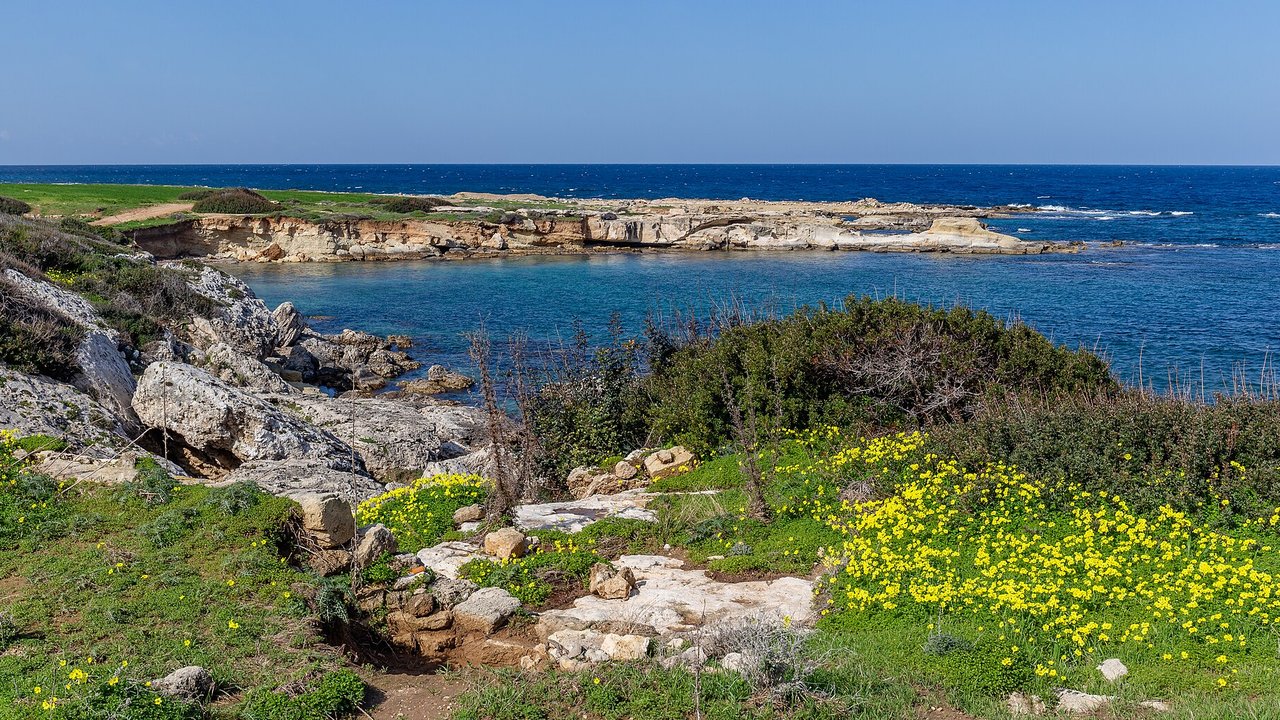
Karpaz (Karpas) peninsula
Visit North Cyprus says farmers on the peninsula still use horse-drawn implements, that loggerhead and green turtles nest there and that migrating birds pass through. It names Kantara Castle and the Apostolos Andreas monastery among the sights.
Source: visitncy.com
Julian Nyča · CC BY-SA 3.0 · Wikimedia Commons Beach
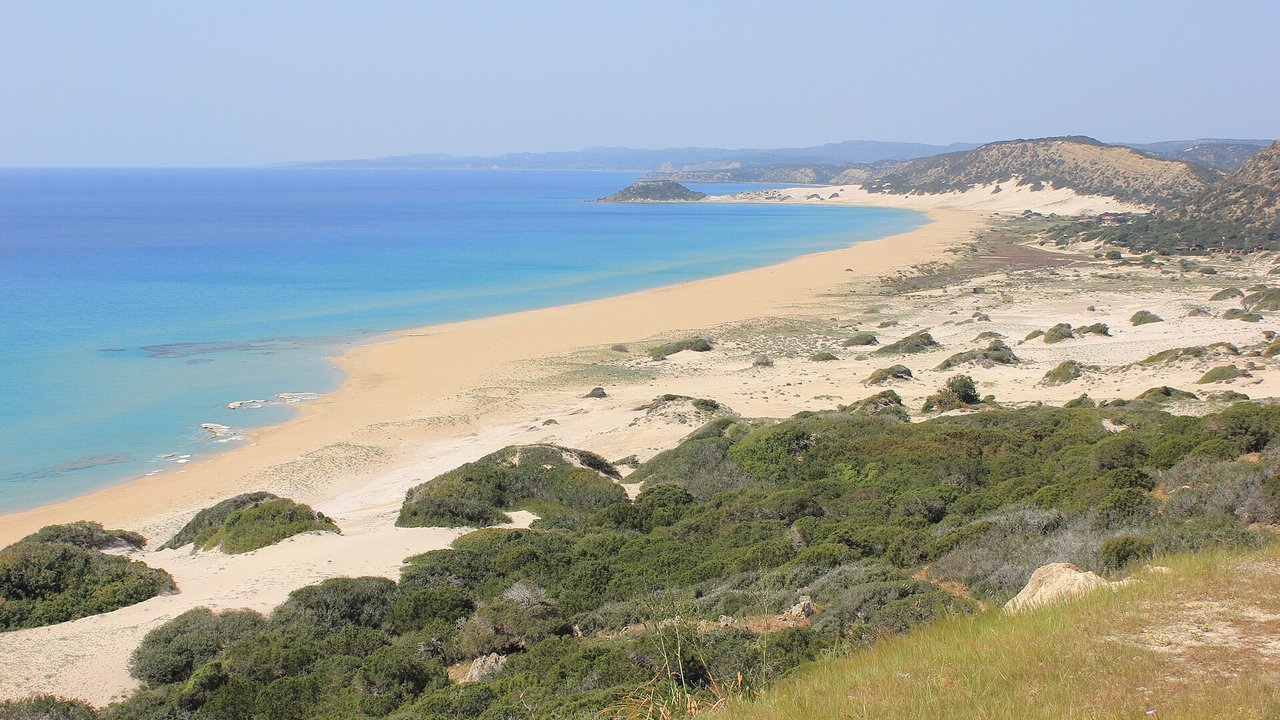
Golden Beach (Altın Kumsal)
Visit North Cyprus describes the beach as kilometres of sand at the far tip of the island and says there are no facilities, so visitors bring their own supplies. The beach is also a turtle nesting site, covered below.
Source: visitncy.com
Aivar Ruukel · CC BY 3.0 · Wikimedia Commons Protected area
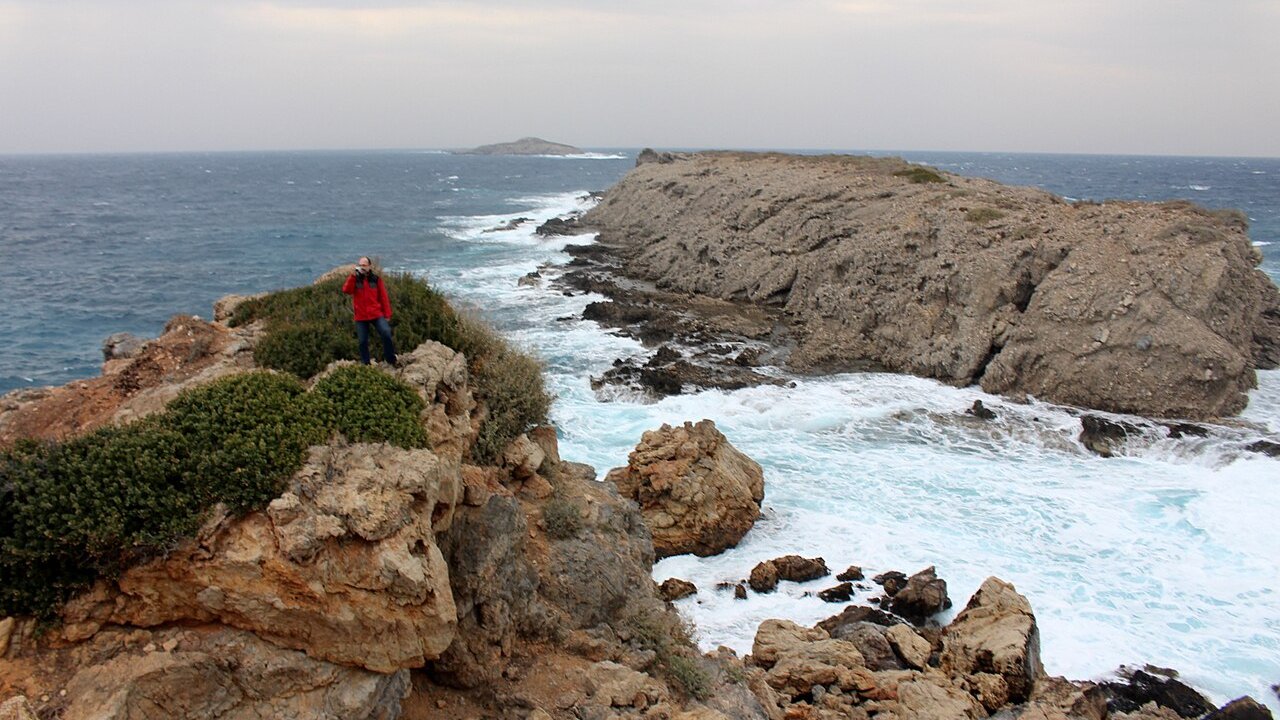
Karpaz SEPA and national park area
The University of Hohenheim seminar contribution says the Karpaz SEPA covers the tip of the peninsula, includes the projected national park and is a sea turtle rookery of national and international importance. It notes pressure to lift development restrictions.
Source: botanik.uni-hohenheim.de
Seksen iki yüz kırk beş · Public domain · Wikimedia Commons Wildlife
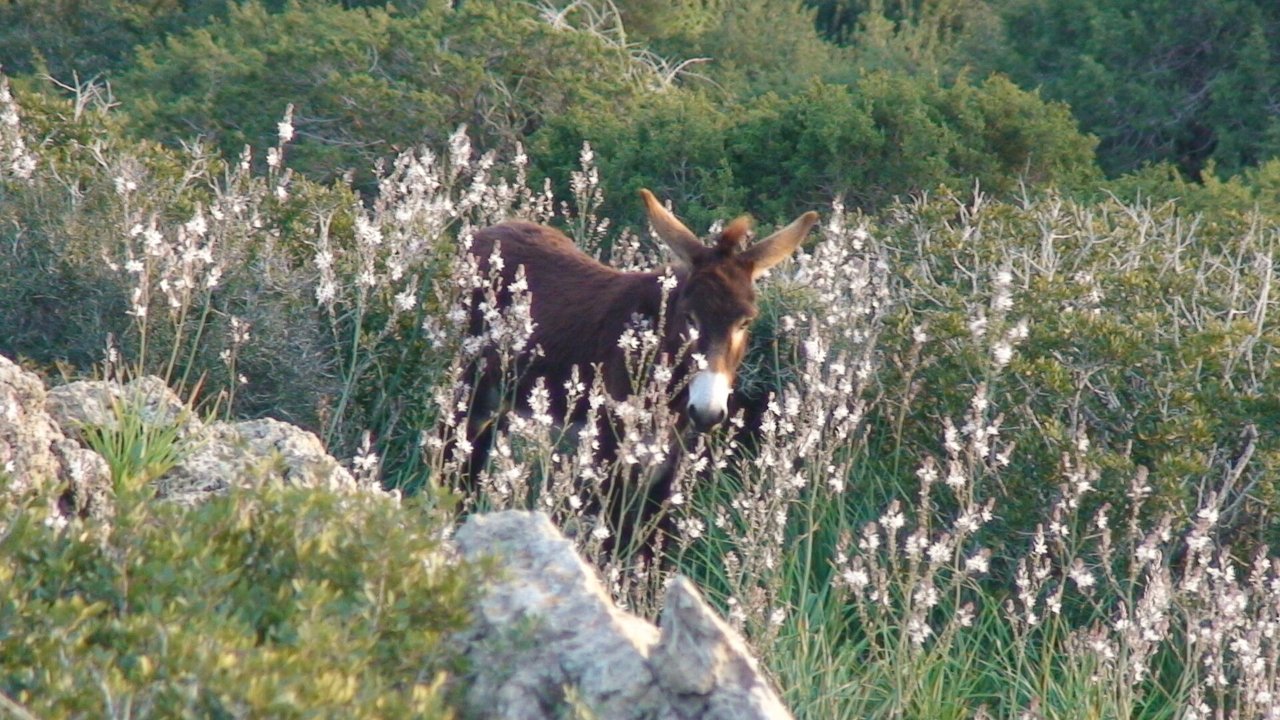
Karpaz donkeys
Visit North Cyprus describes two main strains: a large dark type with a pale belly, probably of European origin, and a small grey African type. It says farmers have fenced crops against the donkeys.
Source: visitncy.com
Michal Klajban · CC BY-SA 4.0 · Wikimedia Commons Management
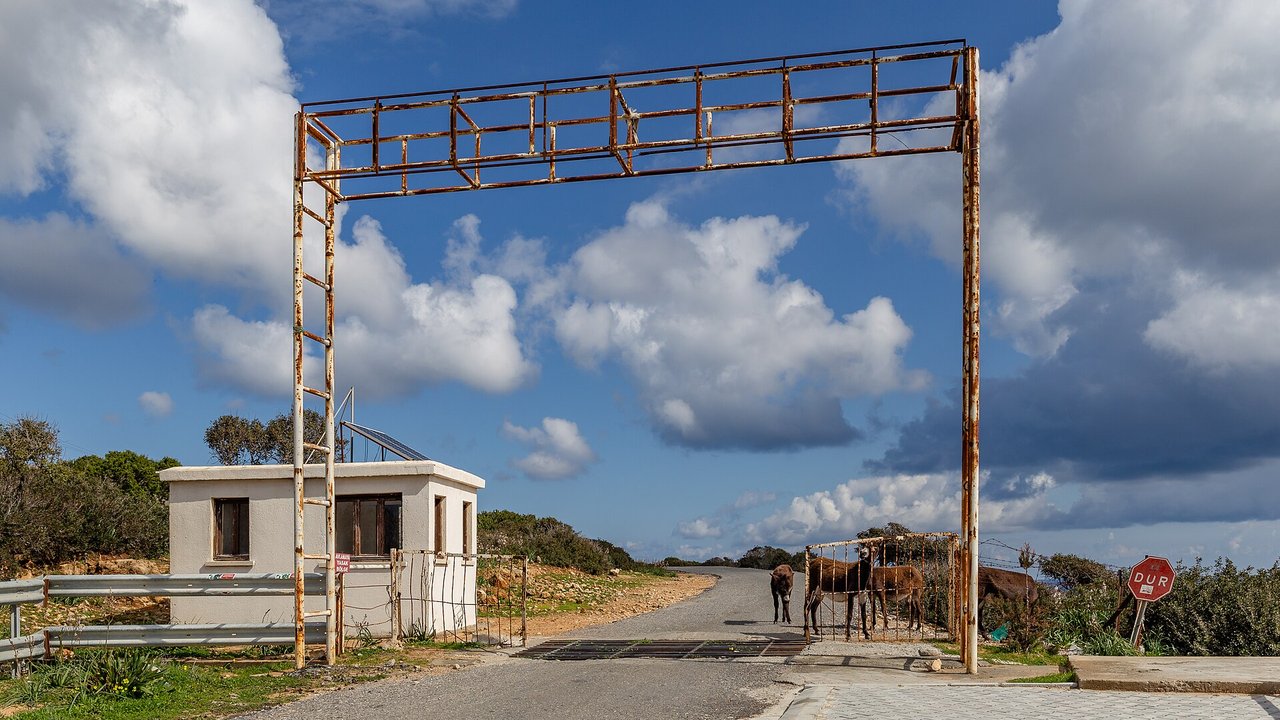
Karpasia donkeys management plan
Cyprus Mail reports that the plan involves counting, catching, health-checking and registering the donkeys, and placing feed and water troughs in the national park area. It names the Taşkent nature park director as one of its main drivers.
Source: cyprus-mail.com
1 / 6

Sea turtle nesting beaches
The Environmental Protection Department reported on 9 December 2024 that 1,834 sea turtle nests were recorded on the southern and northern beaches of the Karpaz in 2024: 1,726 (94.1%) of green turtles (Chelonia mydas), 20 (1.1%) of loggerheads (Caretta caretta) and 88 that could not be identified. It says the first nest was laid on 11 May 2024 and the last on 14 August 2024, and that in 2023 it had recorded 1,214 green turtle and 28 loggerhead nests on the Karpaz.
The same Department says Ronnas beach had the most turtle activity in 2024 and Ayfilon beach the most nests, and that nesting beaches are part of the biodiversity network set up under the Environment Law. Visit North Cyprus names Golden Beach and Ronnas Beach on the Karpaz among the nesting grounds.
During the May to October nesting season, the Department asks people on nesting beaches to follow its rules, listed in the card below. Turtle season elsewhere on the coast is covered on the beaches and coast guide.
P.Lindgren · CC BY-SA 3.0 · Wikimedia Commons Species
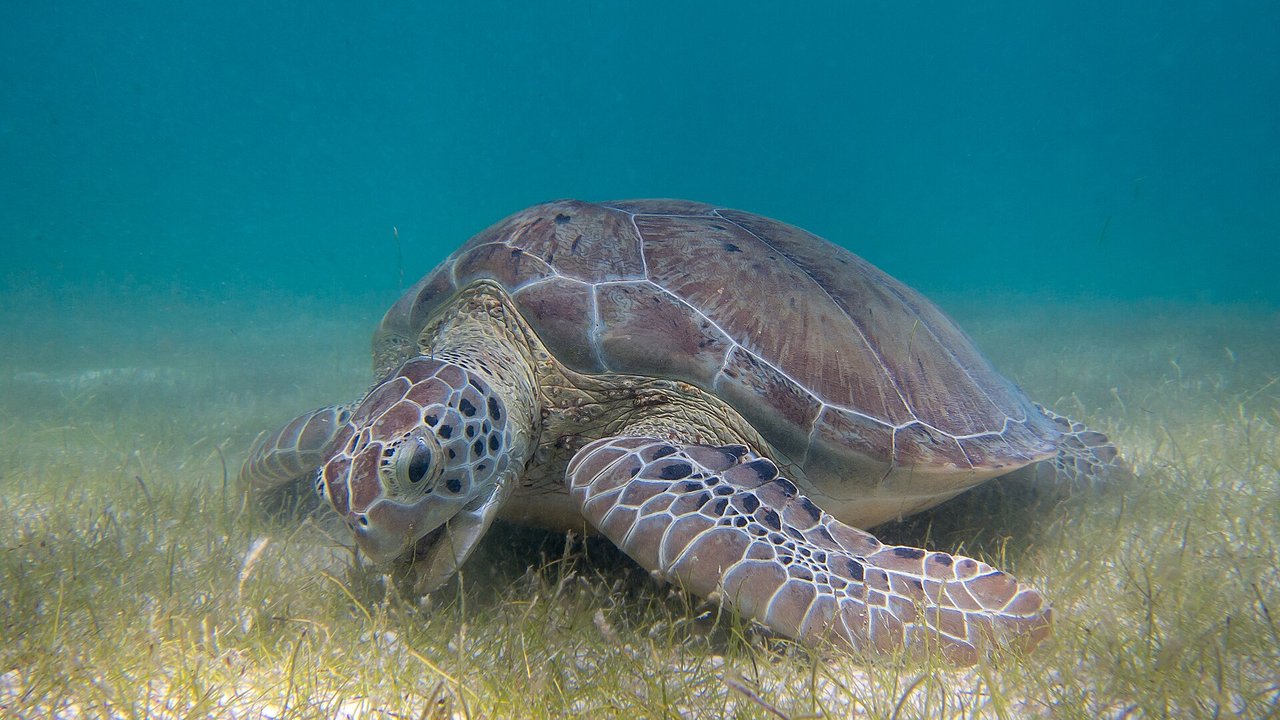
Green and loggerhead turtles
The Department says the IUCN lists the loggerhead as vulnerable and the green turtle as endangered. It says a nest holds about 100 eggs on average and hatchlings head for the sea at first light after about two months.
Source: cevrekorumadairesi.org
Amanda Slater from Coventry, West Midlands, UK · CC BY-SA 2.0 · Wikimedia Commons Season
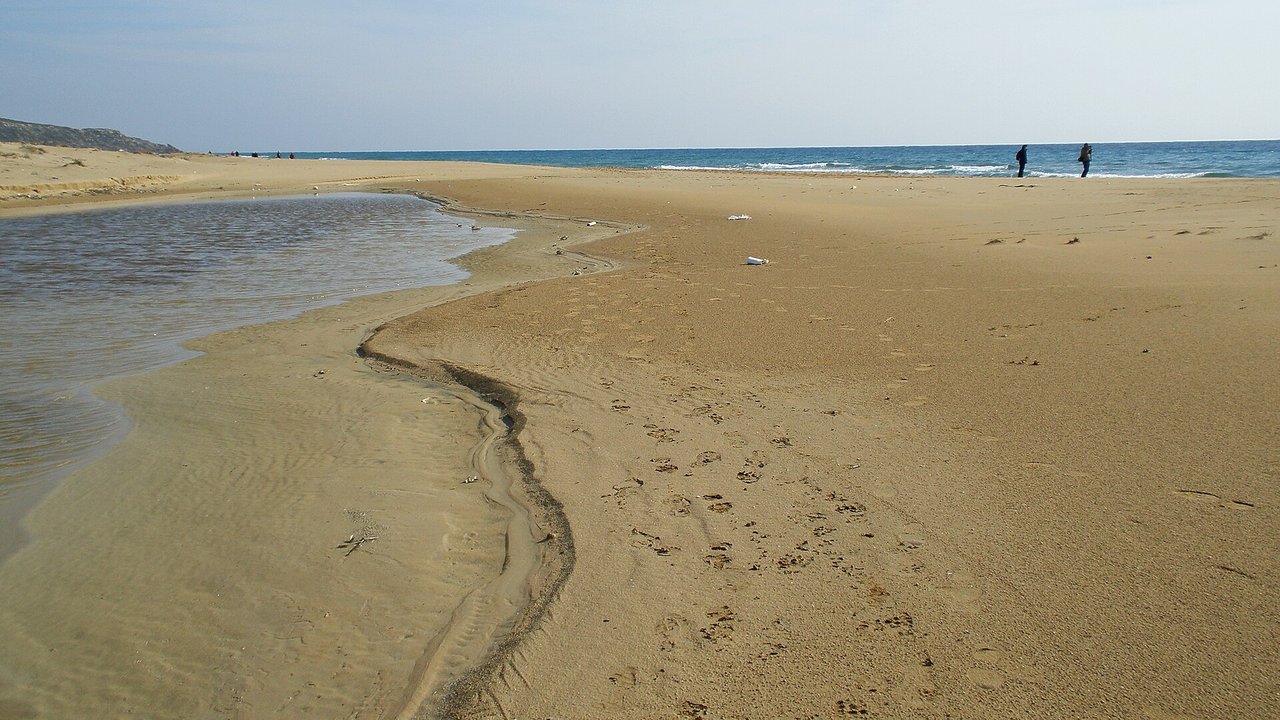
Nesting season in tourism sources
Visit North Cyprus gives the nesting season on Golden Beach, Ronnas Beach and Alagadi as late May to the end of September, with hatching in late August and early September.
Source: visitncy.com
1 / 6
Practical notes
- The Department of Antiquities and Museums publishes visiting hours for Kantara Castle, the Ayia Trias basilica, the İskele Archaeology Museum and the İskele Icon Museum. This page gives no hours or fees; check the Department before visiting.
- When checked on 24 October 2026, the Department's visiting hours page listed the İskele Icon Museum (Yeni İskele İkon Müzesi) as closed, and stated that the Apostolos Andreas monastery does not belong to the Department, so permission is a matter for the relevant body.
- Sources differ on some dates. Visit North Cyprus dates the Ayios Philon church to the 10th century, while the Technical Committee on Cultural Heritage gives the 12th century. UNDP lists the Apostolos Andreas project as ending in June 2025, while Cyprus Mail reported conservation works still in progress in March 2026.
- Visit North Cyprus says both turtle species are endangered on the IUCN Red List; the Environmental Protection Department lists the loggerhead as vulnerable and the green turtle as endangered.
- Place names appear in Turkish and Greek forms: Sipahi (Ayia Trias), Dipkarpaz (Rizokarpaso), Boltaşlı (Lythrangomi), Kaleburnu (Galinoporni), Kuruova (Korovia) and İskele (Trikomo).
Frequently asked questions
What are the main places to see on the Karpaz peninsula?
Official, academic and tourism sources name Kantara Castle, the Ayia Trias basilica at Sipahi, Ayios Philon and ancient Karpasia, the churches at Aphendrika, the Apostolos Andreas monastery, Panagia Kanakaria at Boltaşlı, the Bronze Age sites of Nitovikla and Kral Tepesi, Golden Beach and the protected area at the tip of the peninsula.
When was Kantara Castle built?
The Department of Antiquities and Museums says Kantara was probably first built as a lookout in the 10th century and is first mentioned in 1191. It says King James I (1382 to 1398) refortified it and that most visible ruins date from his work. The castle was used until 1525.
What is special about the Ayia Trias basilica at Sipahi?
The Department of Antiquities and Museums says the basilica was found by chance in 1957 and has mosaic floors dated to the late 5th or early 6th century, with geometric, leaf and cross motifs. An inscription names Heraclos, a deacon, as the person who paid for part of the work.
Who restored the Apostolos Andreas monastery?
UNDP says the restoration was funded by the Church of Cyprus and the EVKAF Administration, with a USAID contribution, and implemented by UNDP. Cyprus Mail reported that the first phase was handed to the bicommunal Technical Committee on Cultural Heritage on 7 November 2016, and that further conservation works were being monitored in March 2026.
What happened to the Kanakaria mosaics?
A University of Geneva case note records that four mosaics were removed from the apse of Panagia Kanakaria in 1976 and later bought by a US dealer. US courts ordered their return in 1989 and 1990; they were returned to Cyprus in 1991 and are held by the Byzantine Museum of the Archbishop Makarios III Foundation.
Why are there donkeys roaming free in the Karpaz?
Visit North Cyprus says donkeys were working animals on the Karpaz until tractors replaced them in the 1970s; abandoned donkeys were gathered on the peninsula and many moved into the national park area. Cyprus Mail reported in 2025 on a management plan to count, register and health-check them.
Do sea turtles nest on Golden Beach?
Yes. Visit North Cyprus names Golden Beach and Ronnas Beach as nesting grounds. The Environmental Protection Department recorded 1,834 nests on the Karpaz beaches in 2024, mostly of green turtles, and asks visitors to follow its beach rules during the May to October season.
What is there to see in İskele town?
Visit North Cyprus names the 12th-century Panagia Theotokos church, now a museum, and the 15th-century church of Ayios Iakovos. The Department of Antiquities and Museums also runs the İskele Archaeology Museum, opened in 2018 in a former market building.
What was found at Kral Tepesi near Kaleburnu?
Eastern Mediterranean University's DAKMAR centre says a pithos with bronze objects was found in 2004 and a rescue excavation recovered 26 bronze objects. Later excavations uncovered a Late Bronze Age building on the summit and a fragment with a three-line Cypro-Minoan inscription.
Sources
- Department of Antiquities and Museums: Visiting hours page
- Department of Antiquities and Museums: Kantara Castle
- Department of Antiquities and Museums: Ayia Trias Basilica (Sipahi)
- Department of Antiquities and Museums: Icon Museum (Yeni İskele)
- Department of Antiquities and Museums: İskele Archaeology Museum
- Environmental Protection Department (Çevre Koruma Dairesi): Sea turtle monitoring and protection 2024 (9 December 2024)
- Environmental Protection Department / EU Natura 2000 technical assistance: South Karpaz Coast SEPA management plan (2010)
- Visit North Cyprus: İskele
- Visit North Cyprus: Kantara Castle
- Visit North Cyprus: Ayios Trias Basilica
- Visit North Cyprus: Ayios Philon Church
- Visit North Cyprus: Apostolos Andreas Monastery
- Visit North Cyprus: Karpaz
- Visit North Cyprus: Beaches
- Visit North Cyprus: Cyprus Donkey
- Visit North Cyprus: Turtles
- Technical Committee on Cultural Heritage: Three Churches in Afendrika Archaeological Site (project sheet)
- Technical Committee on Cultural Heritage: Agios Philon Archaeological Area (project sheet)
- UNDP Cyprus: Restoration of the Monastery of Apostolos Andreas
- Cyprus Mail: Renovated Apostolos Andreas a 'symbol of peace and unity' (7 November 2016)
- Cyprus Mail: Restoration works progress at Apostolos Andreas monastery (20 March 2026)
- Cyprus Mail: Restoration works completed at Panayia Kanakaria monastery (15 August 2025)
- Cyprus Mail: Man fined for feeding Karpasia donkey cigarettes (12 June 2025)
- University of Geneva, ArThemis: Case note, Kanakaria Mosaics, Autocephalous Greek-Orthodox Church of Cyprus and Cyprus v. Goldberg
- Aegeus Society: Tomb 1 (1956) at Galinoporni and the Middle-Late Cypriot transition in the Karpas Peninsula
- Wikipedia: Nitovikla (secondary source)
- Eastern Mediterranean University, DAKMAR: The Kral Tepesi salvage excavation
- Kızılduman, B. (2017). A remarkable Late Bronze Age building at Kaleburnu-Kral Tepesi/Galinoporni-Vasili in Cyprus. Eastern Mediterranean University repository
- Krämer, M. (2019). Nature conservation in Northern Cyprus: The Karpaz Peninsula. Seminar contribution, Institute of Botany, University of Hohenheim
Questions about North Cyprus?
Write to NORTHEA for a private conversation about areas, hotels or property.