
About North Cyprus · Nature
Flora and fauna of North Cyprus
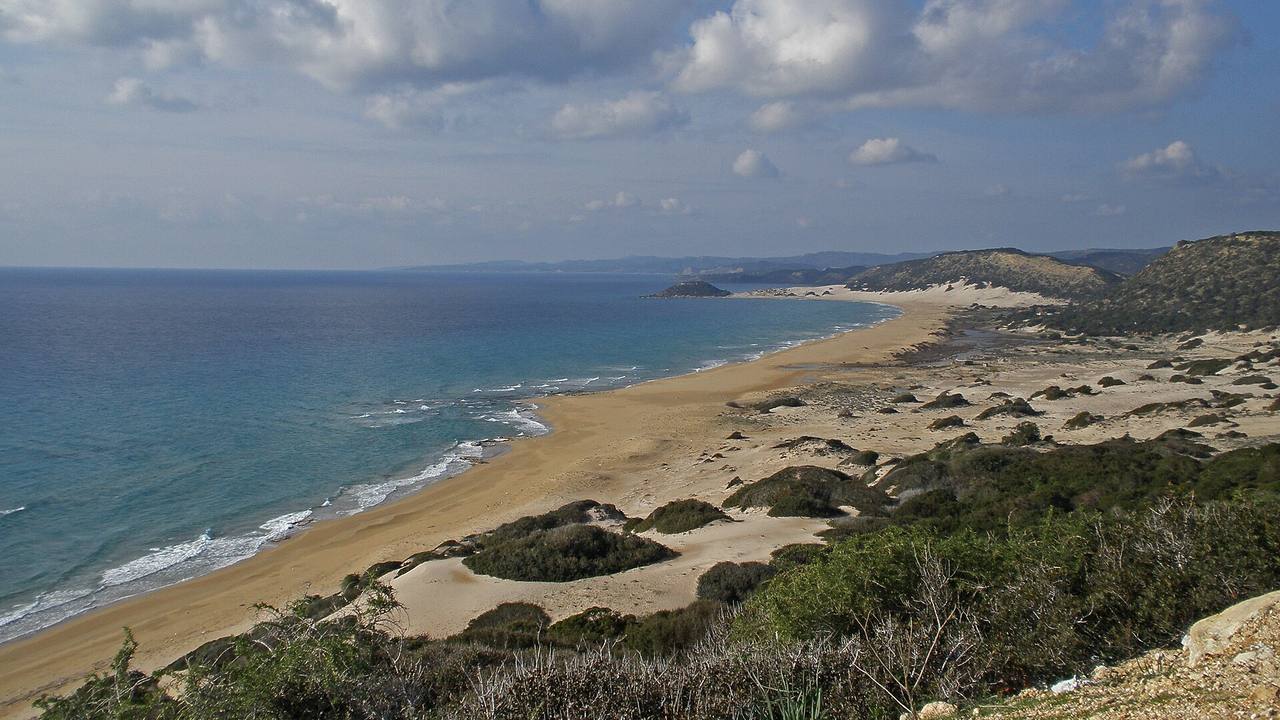
As of 23 October 2026, the sources reviewed describe North Cyprus as a mix of maquis shrubland, open dwarf scrub, pine and cypress woodland on the Kyrenia (Beşparmak) range, and dunes and coastal lagoons on the Karpaz peninsula. Maquis, called maki in Turkish, is a Mediterranean vegetation of shrubs and small trees. This page lists plants, flowers and animals that university, conservation and encyclopedic sources report for the north or for Cyprus as a whole, and it says which sources place a species in the north.
Checked 23 October 2026 against the sources named in the text and listed below. Positions of parties are attributed to them.

Maquis and the vegetation zones of North Cyprus
The University of Hohenheim's Institute of Botany (seminar slides, January 2019) describes maquis as vegetation made mostly of shrubs and small trees that does not grow higher than about 3 to 5 metres, with Greek strawberry tree, Styrax officinalis and Pistacia species as typical members. Turkish Wikipedia defines maki as shrubland of Mediterranean-climate regions, usually 1 to 2 metres tall, that develops where forest is degraded by cutting, burning and grazing.
For the north, the same Hohenheim material says the drier southern side of the Kyrenia (Beşparmak) range carries mainly maquis or phrygana, while the wetter northern side has more extensive woodland that degrades to maquis after fires or clearing. The One Earth ecoregion profile (UNEP-WCMC authors, 2020) places garrigue and maquis of olive, carob and Phoenician juniper in the dry lowlands of Cyprus.
Hohenheim also lists the Mesaoria plain, now mostly cultivated with olive, carob or citrus terraces at its edges, sandy coasts, and the Karpaz peninsula with dunes, coastal lagoons and Posidonia beds. Where grazing continues, forest can degrade to maquis and then to phrygana, a cover of small shrubs and herbs about half a metre high.
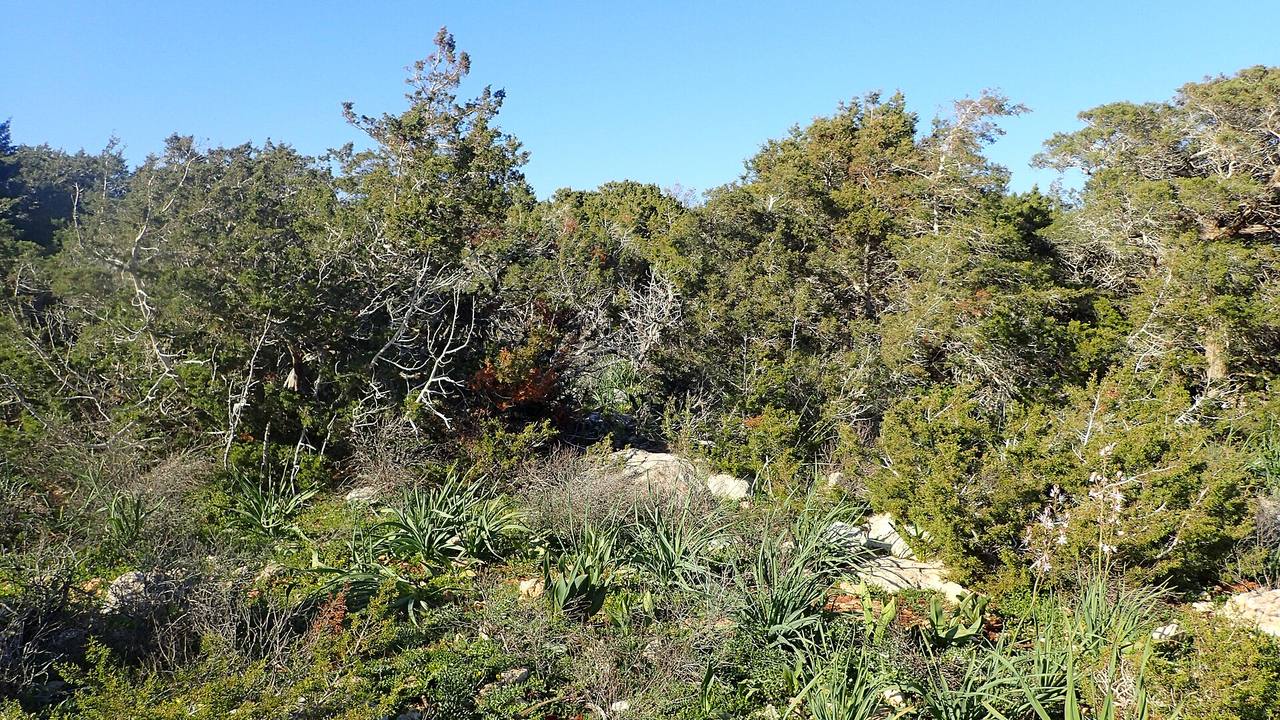
Krzysztof Ziarnek, Kenraiz · CC BY-SA 4.0 · Wikimedia Commons Habitat
Maki (maquis)
Hohenheim (2019): vegetation of mostly shrubs and small trees, up to about 3 to 5 metres, found in the lower parts of the mountains of Cyprus; it can occur naturally or follow grazing.
Source: botanik.uni-hohenheim.de
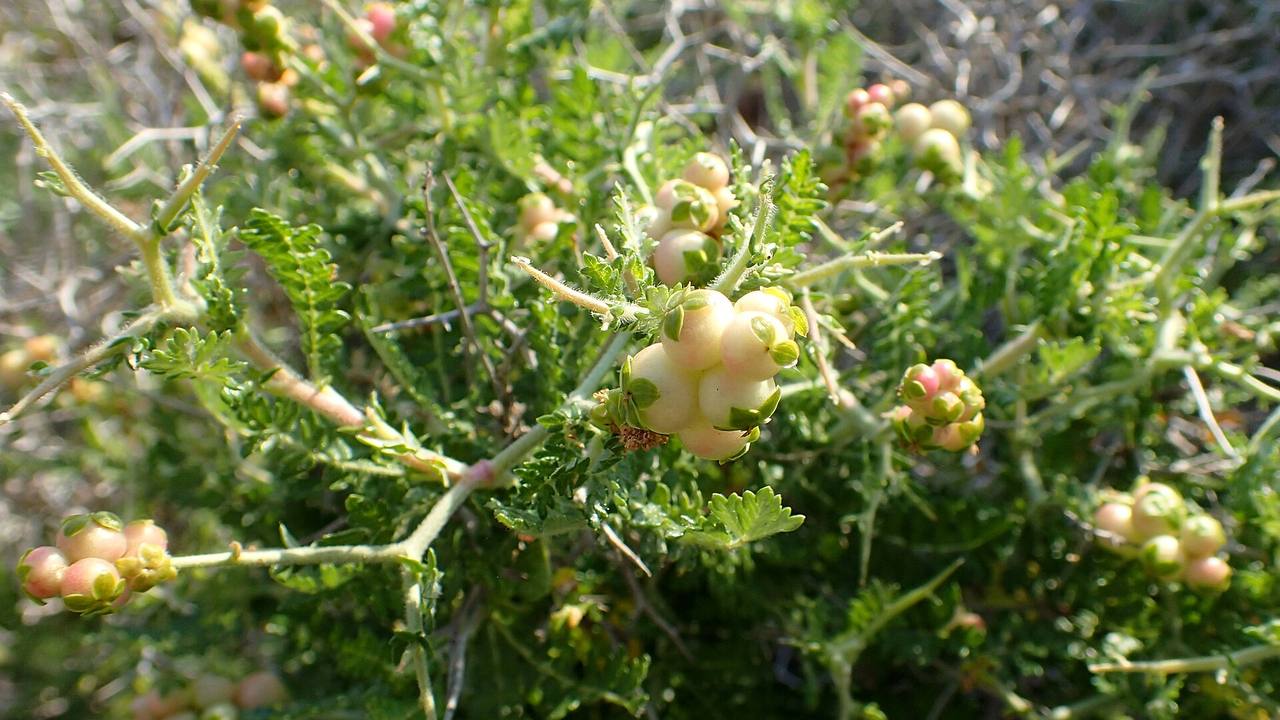
Krzysztof Ziarnek, Kenraiz · CC BY-SA 4.0 · Wikimedia Commons Habitat
Garig and phrygana (phrygana)
Turkish Wikipedia describes garig as a sparser type on limestone soils. Hohenheim (2019) uses phrygana for a cover about half a metre high, with small shrubs and herbs such as Sarcopoterium spinosum and Cistus species.
Source: tr.wikipedia.org
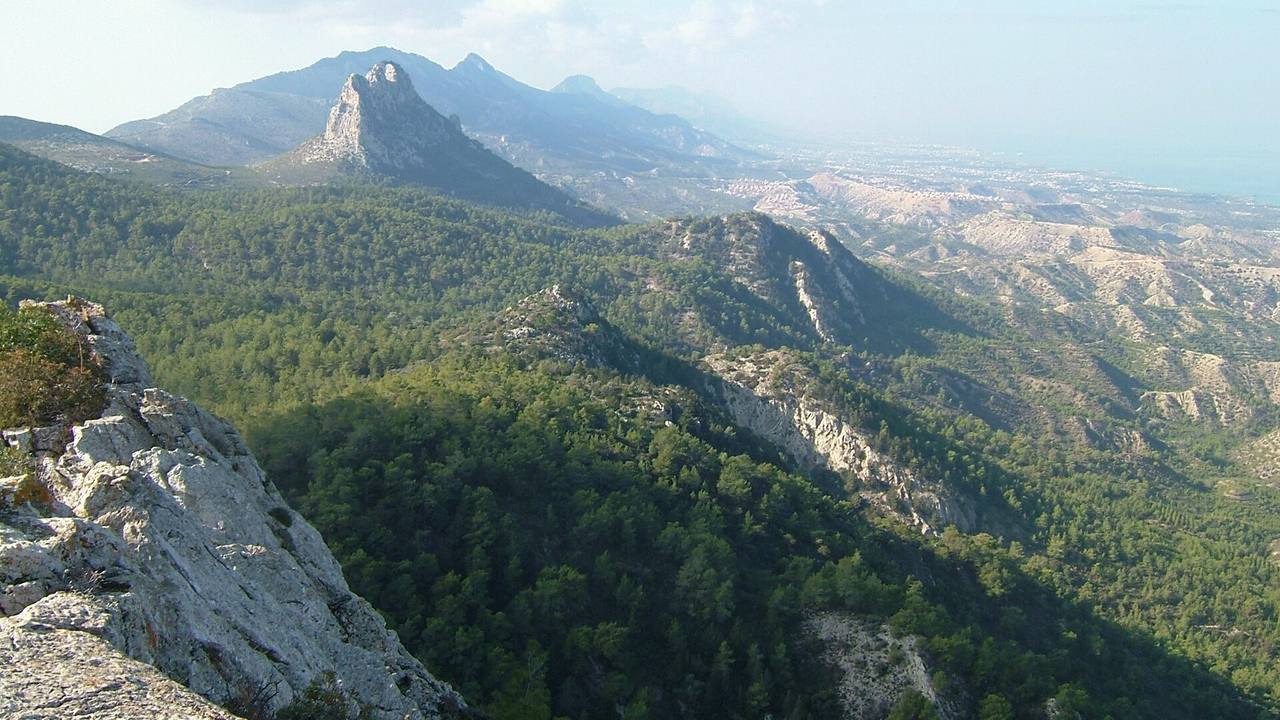
Chneophytou at Greek Wikipedia · CC BY-SA 3.0 · Wikimedia Commons Habitat
Kyrenia range pine and cypress woodland (Kızılçam ormanı)
Hohenheim (2019): Turkish pine is today's main tree of the Beşparmak forests and Mediterranean cypress the second most frequent; oak forests of Palestine oak and Aleppo oak covered the northern slopes until about 500 years ago.
Source: botanik.uni-hohenheim.de
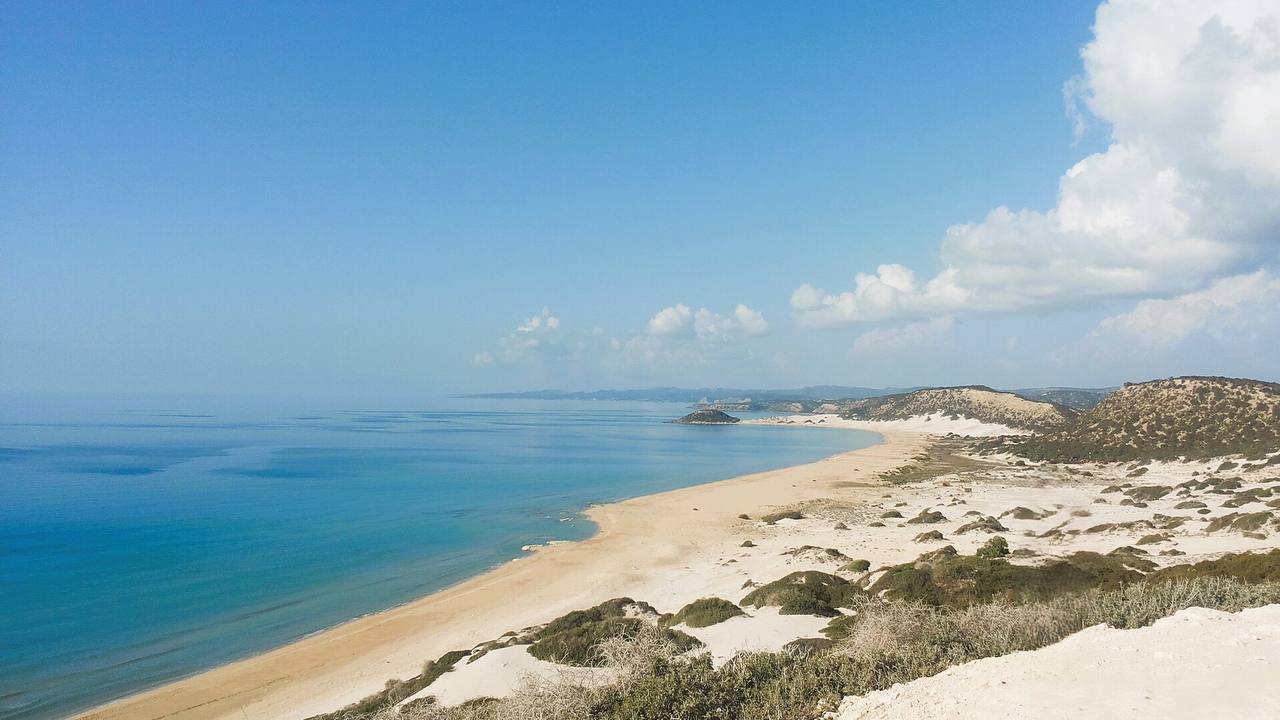
Chris06 · CC BY-SA 4.0 · Wikimedia Commons Habitat
Karpaz coastal and dune vegetation
Şekerciler and Ketenoğlu (Phytocoenologia, 2019) describe perennial dune vegetation, phrygana on semi-stable dunes, cliff vegetation and coastal maquis on the Karpaz peninsula, and recommend monitoring against agriculture, tourism and urban expansion.
Source: avesis.ankara.edu.tr
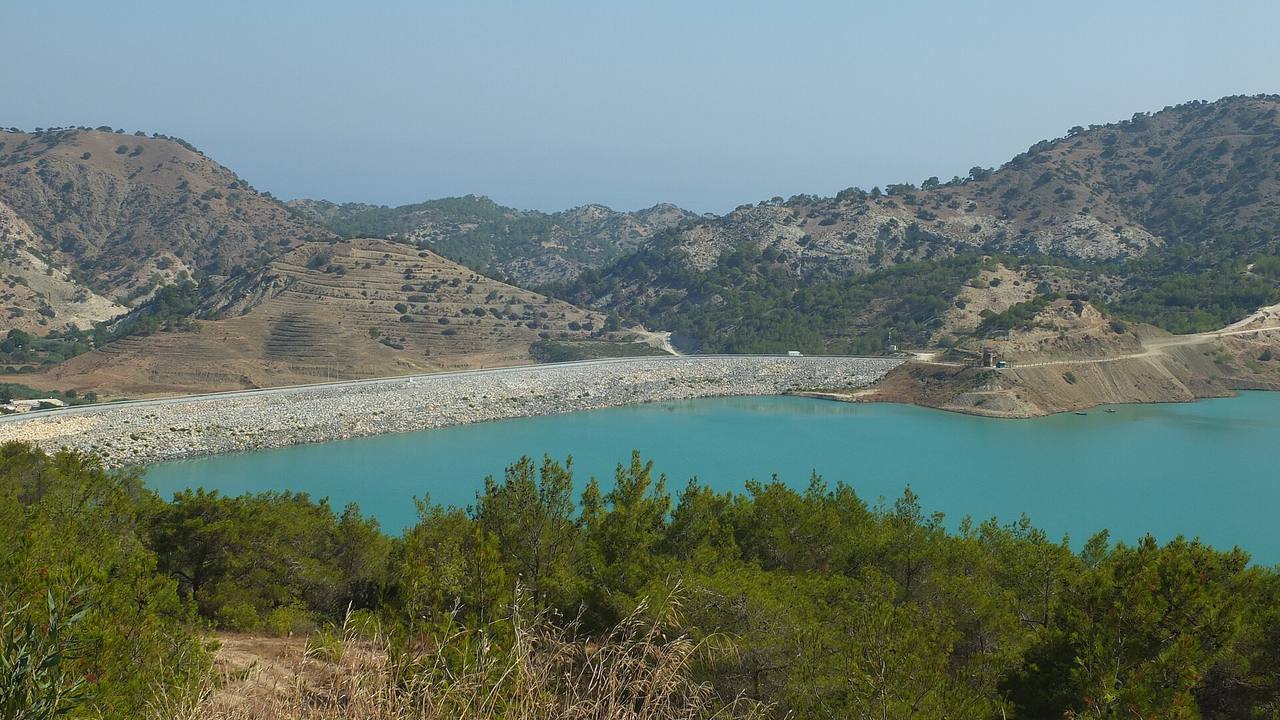
Ad Meskens · CC BY-SA 4.0 · Wikimedia Commons Habitat
Beşparmak range wetlands
Hohenheim (2019) reports 35 wetlands along the Beşparmak range, of which only 6 are of natural origin, and describes them as habitat for plant and animal life.
Source: botanik.uni-hohenheim.de
1 / 5

Trees and shrubs
Hohenheim (2019) names Turkish pine, Pinus brutia, as the main tree of the Beşparmak forests. It is spread across the island, grows from low ground up to about 1,300 metres, reaches 12 to 25 metres on dry calcareous soil and flowers from March to May. The One Earth profile (2020) uses the name Calabrian pine for the main pine and says Mediterranean cypress grows mainly in the Kyrenia range.
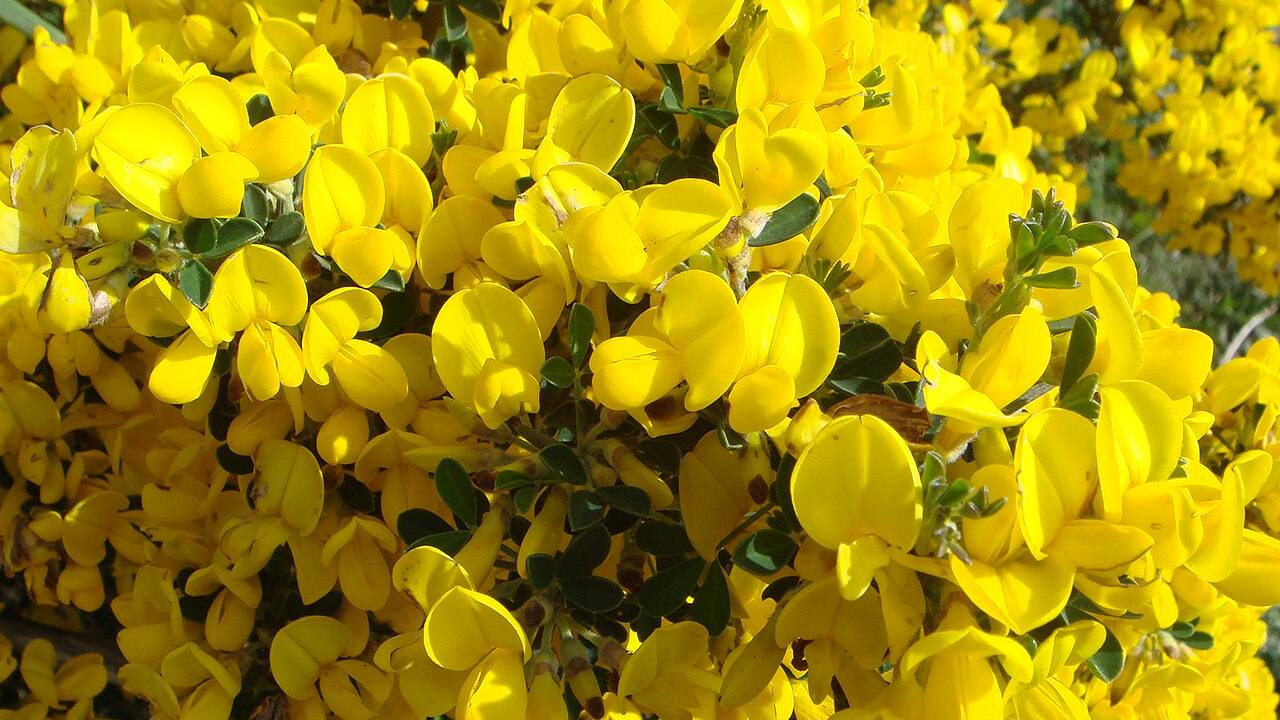
Hohenheim lists companion shrubs and small trees of the Beşparmak forests and maquis: Greek strawberry tree, terebinth, Styrax officinalis, azarole and Mediterranean buckthorn. It adds that Calicotome villosa grows on soils exposed by deforestation or fire. Şekerciler and Ketenoğlu (2019) describe a juniper maquis community on the Karpaz peninsula. Places such as St Hilarion and Buffavento are covered in castles of North Cyprus.
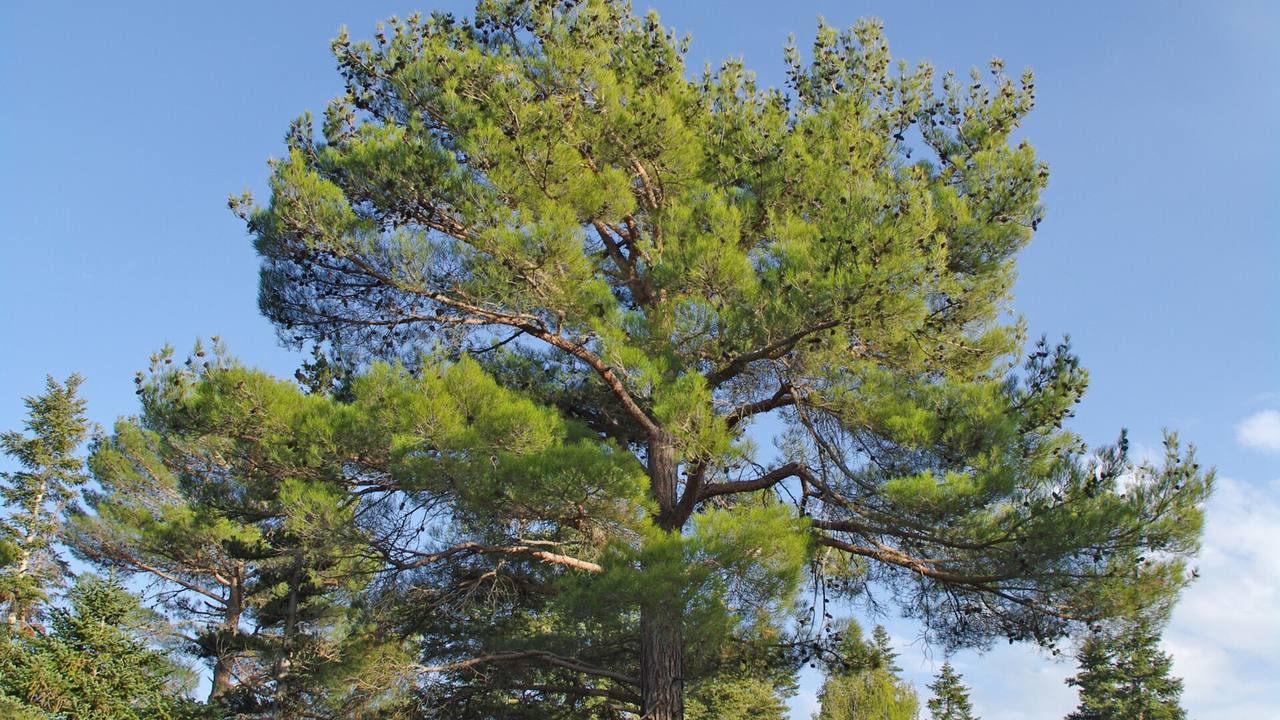
Zeynel Cebeci · CC BY-SA 4.0 · Wikimedia Commons Tree
Kızılçam, Türk çamı (Turkish pine, Pinus brutia)
Hohenheim (2019): evergreen, the main tree species of the Beşparmak forests, found up to about 1,300 m, 12 to 25 m tall on dry calcareous soil, flowering from March to May. Turkish Wikipedia gives the names Kızılçam and Türk çamı.
Source: botanik.uni-hohenheim.de
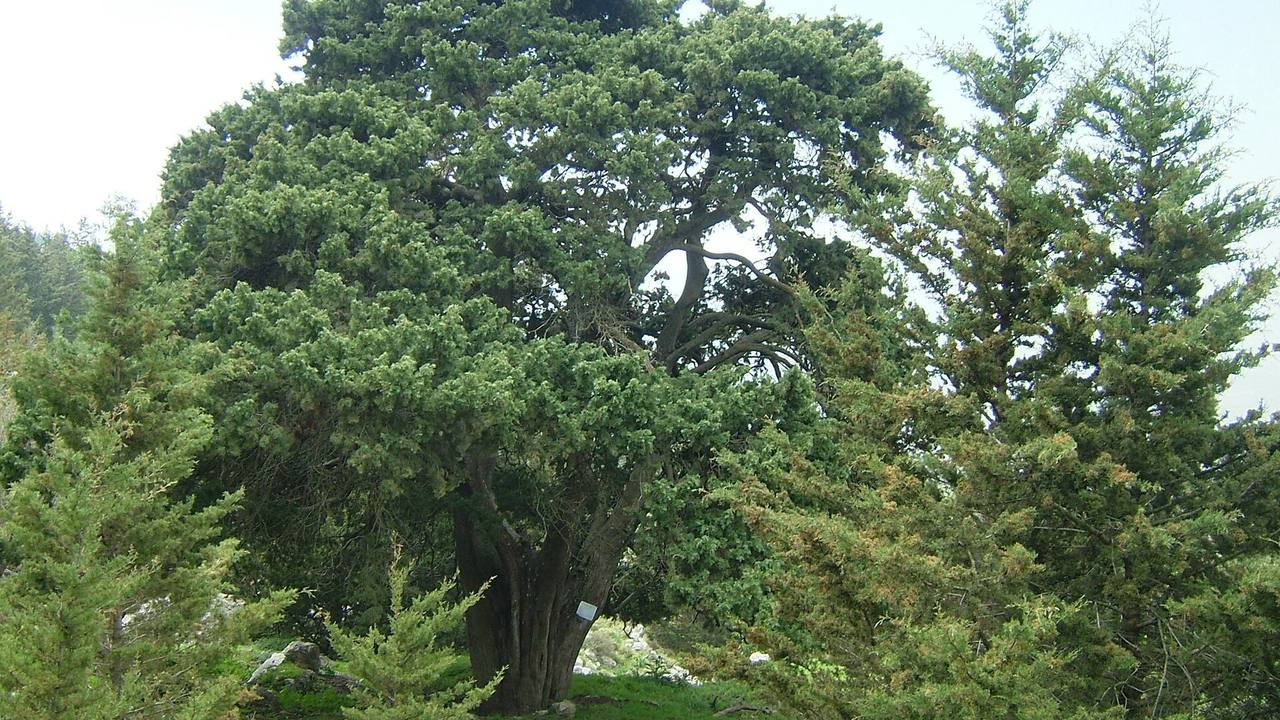
Chneophytou · CC BY-SA 3.0 · Wikimedia Commons Tree
Akdeniz servisi (Mediterranean cypress, Cupressus sempervirens)
Hohenheim (2019): second most frequent tree of the Beşparmak forests, on dry sites and mainly the southern slopes, 20 to 30 m tall on limestone, flowering March to April.
Source: botanik.uni-hohenheim.de
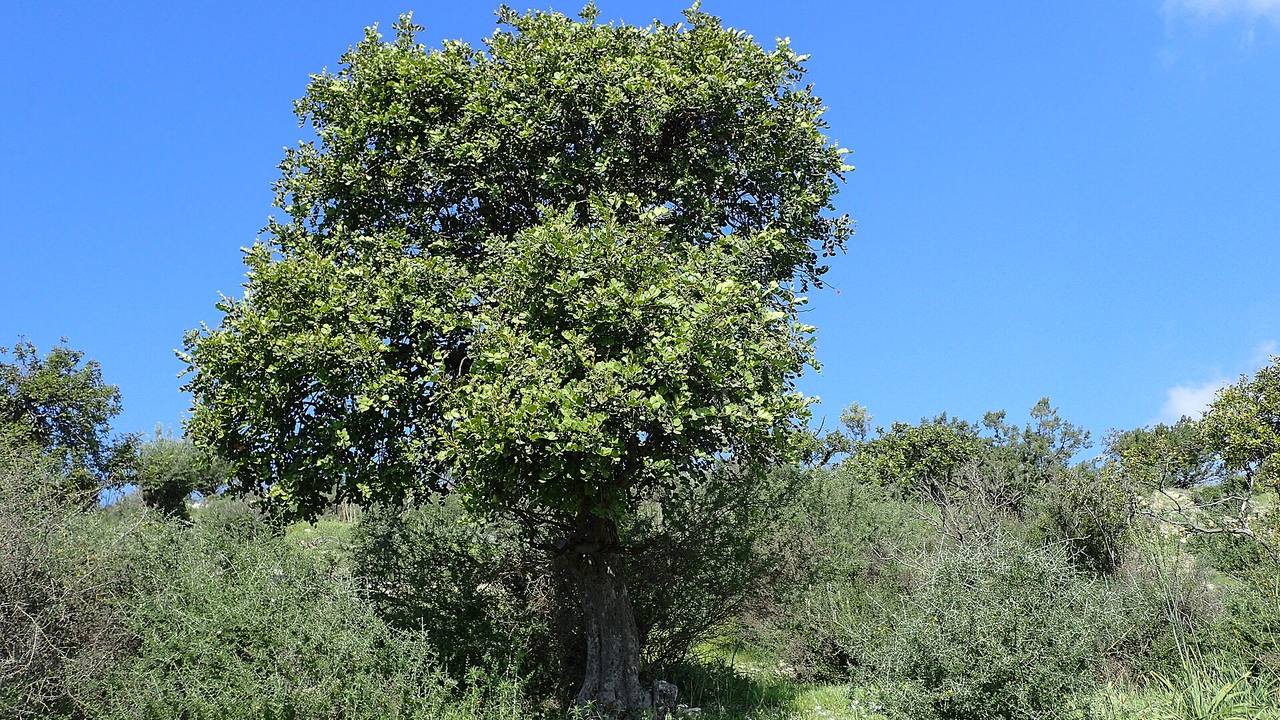
Krzysztof Ziarnek, Kenraiz · CC BY-SA 4.0 · Wikimedia Commons Tree
Keçiboynuzu, harnup (carob, Ceratonia siliqua)
One Earth (2020) lists carob among the maquis shrubland species of the dry lowlands of Cyprus. Hohenheim (2019) notes carob terraces at the edges of the Mesaoria plain.
Source: oneearth.org
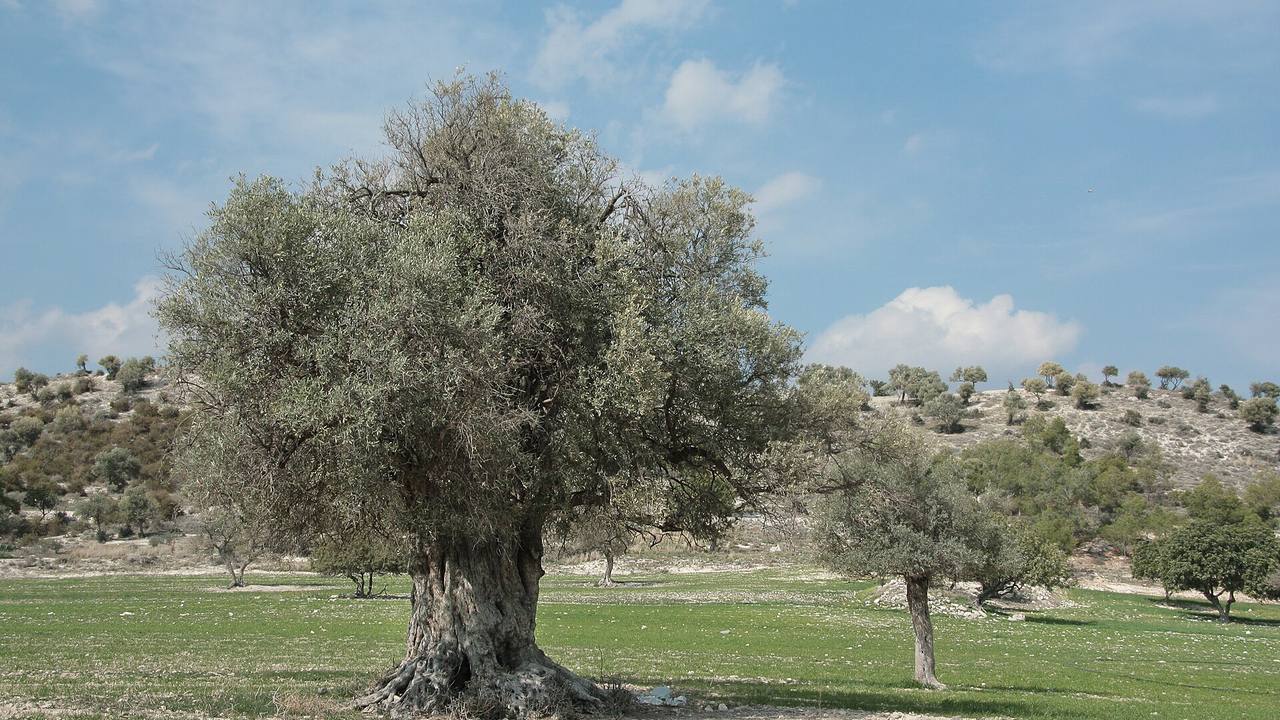
Anna Anichkova · CC BY-SA 3.0 · Wikimedia Commons Tree
European olive
One Earth (2020) names European olive with carob and Phoenician juniper in the maquis shrubland of the dry Cyprus lowlands. Hohenheim (2019) mentions olive terraces at the edges of the Mesaoria plain.
Source: oneearth.org
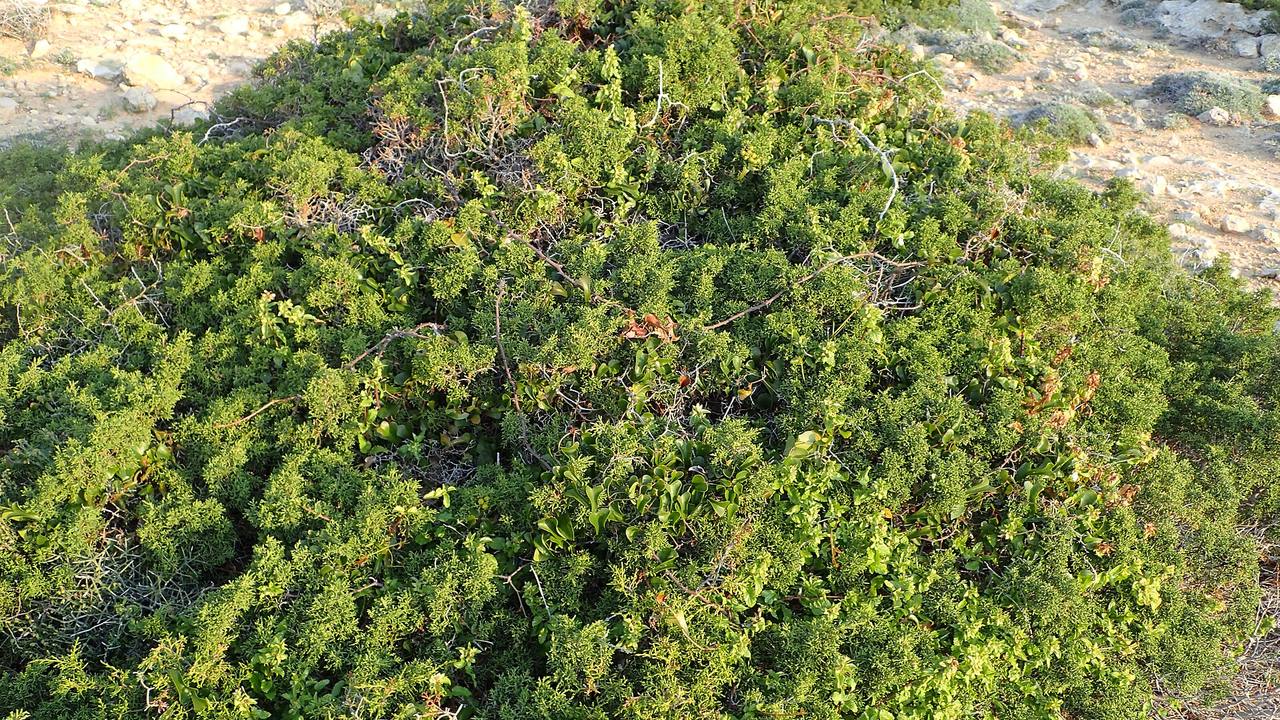
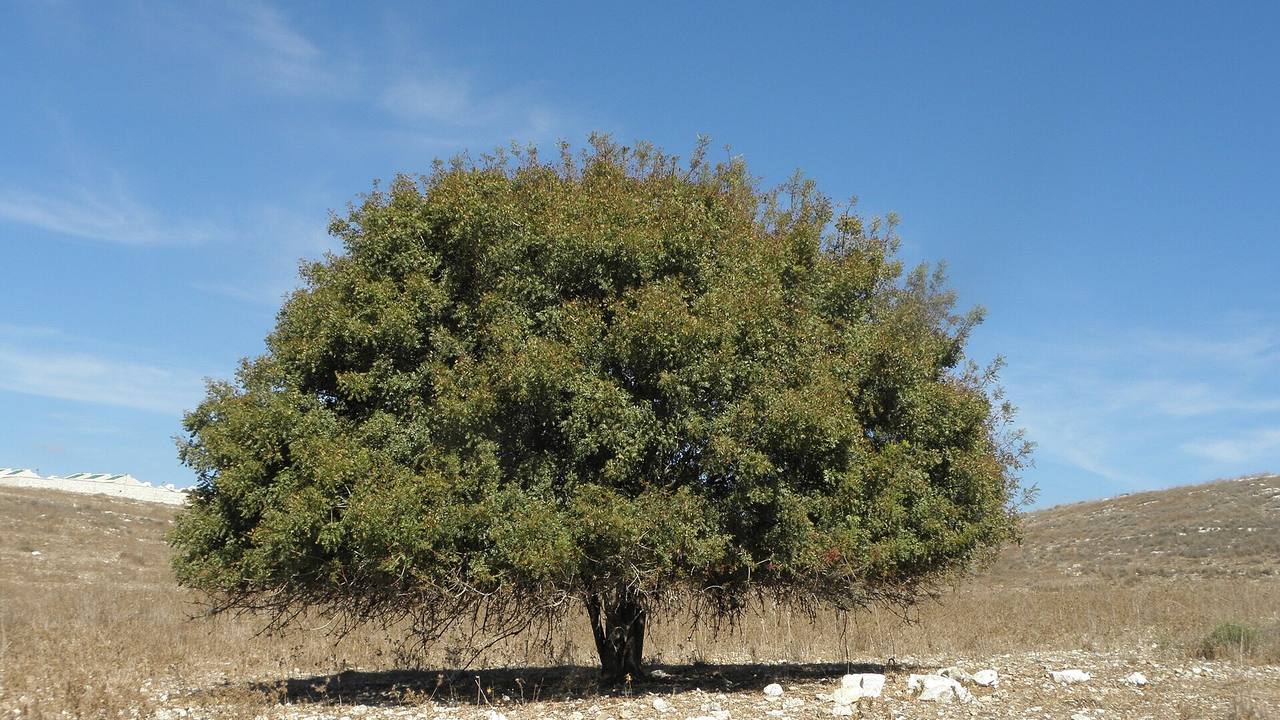
Krzysztof Ziarnek, Kenraiz · CC BY-SA 4.0 · Wikimedia Commons Shrub
Phoenician juniper
One Earth (2020) lists Phoenician juniper in the lowland maquis of Cyprus. Şekerciler and Ketenoğlu (2019) describe a maquis community with juniper on the Karpaz peninsula.
Source: oneearth.org
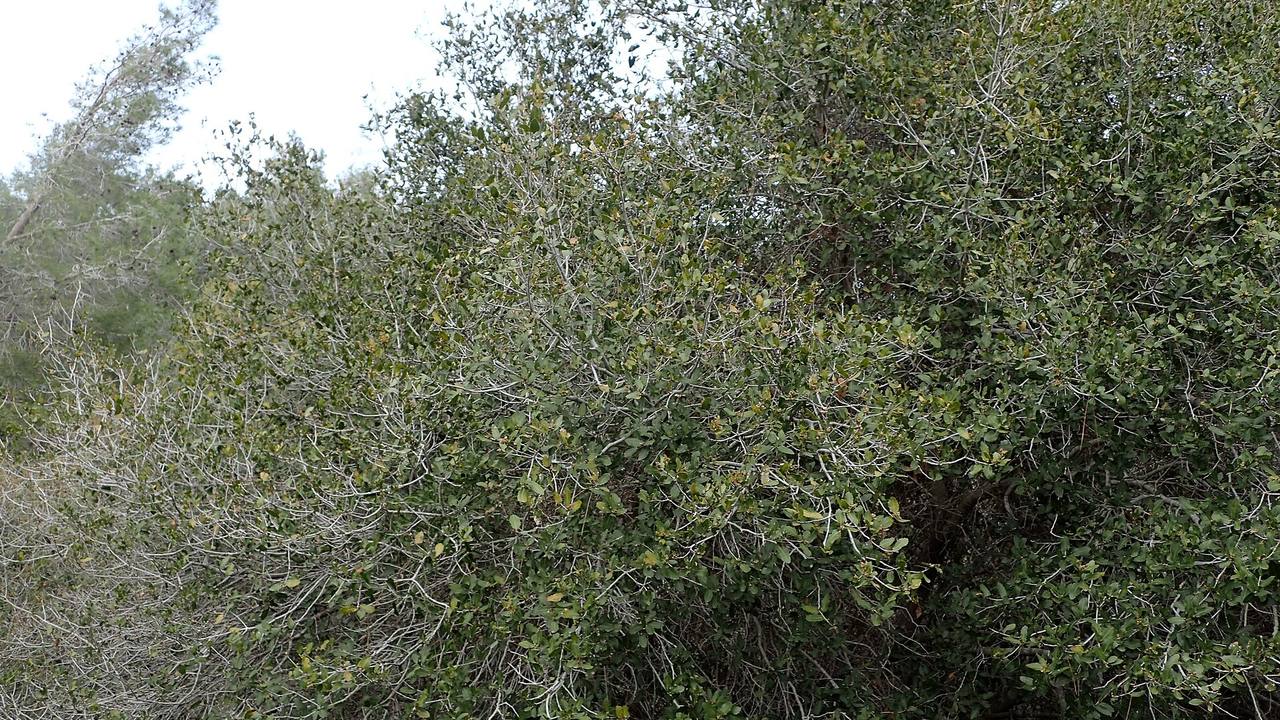
Krzysztof Ziarnek, Kenraiz · CC BY-SA 4.0 · Wikimedia Commons Tree
Palestine oak and Aleppo oak (Quercus coccifera subsp. calliprinos, Quercus infectoria subsp. veneris)
Hohenheim (2019): these oaks covered the northern slopes of the Beşparmak range until about 500 years ago; human use and fires reduced them, and only small populations remain in North Cyprus.
Source: botanik.uni-hohenheim.de
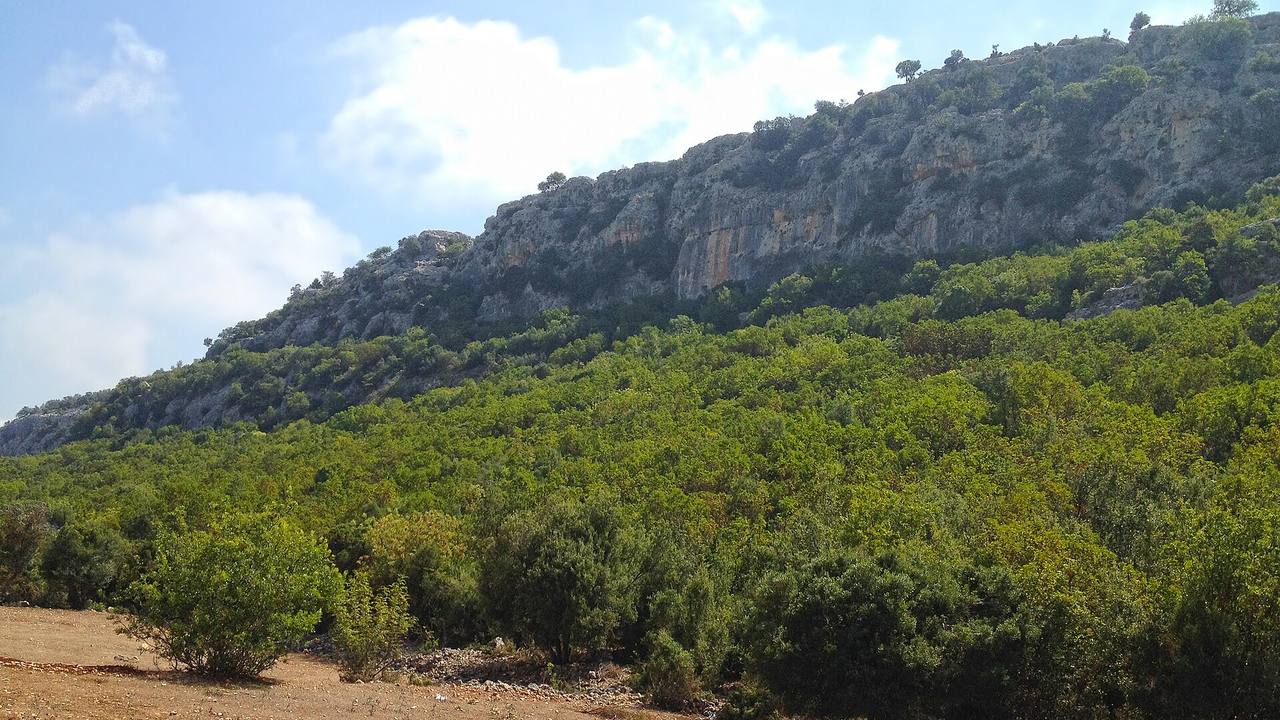
Zeynel Cebeci · CC BY-SA 4.0 · Wikimedia Commons Tree
Greek strawberry tree (Arbutus andrachne)
Hohenheim (2019): evergreen companion species of the Beşparmak forests and maquis, 3 to 5 m tall, preferring lime-poor soils, with white or yellowish-green flowers in spring.
Source: botanik.uni-hohenheim.de
איתן פרמן · CC BY-SA 3.0 · Wikimedia Commons Shrub
Menengiç (terebinth, Pistacia terebinthus)
Hohenheim (2019): aromatic evergreen shrub or small tree, 2 to 6 m, in the undergrowth of sparse forests and maquis; flowering April to June. Turkish Wikipedia gives menengiç as the Turkish name.
Source: botanik.uni-hohenheim.de
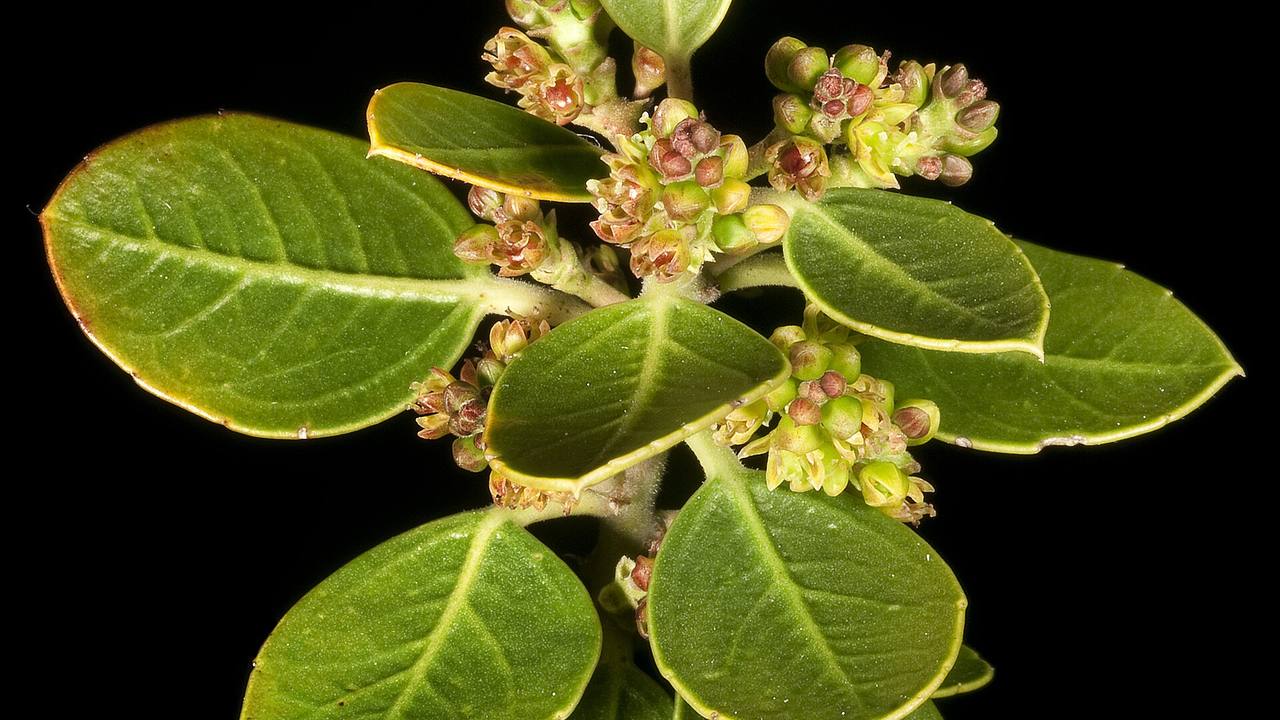
Kevin Thiele from Perth, Australia · CC BY 2.0 · Wikimedia Commons Shrub
Mediterranean buckthorn (Rhamnus alaternus)
Hohenheim (2019): evergreen shrub of 1 to 4 m on calcareous soil in forests; it states that all individuals in Cyprus have four-part blossoms and two-part fruits.
Source: botanik.uni-hohenheim.de
1 / 9

Wild flowers and orchids
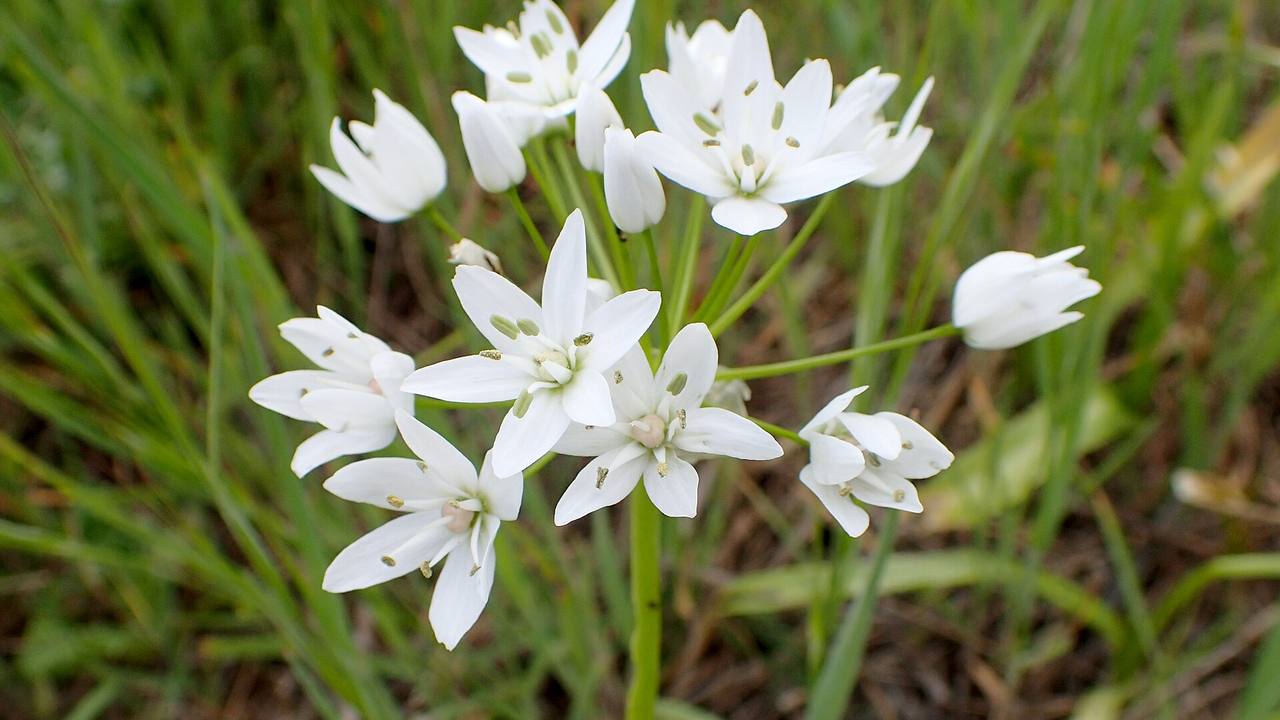
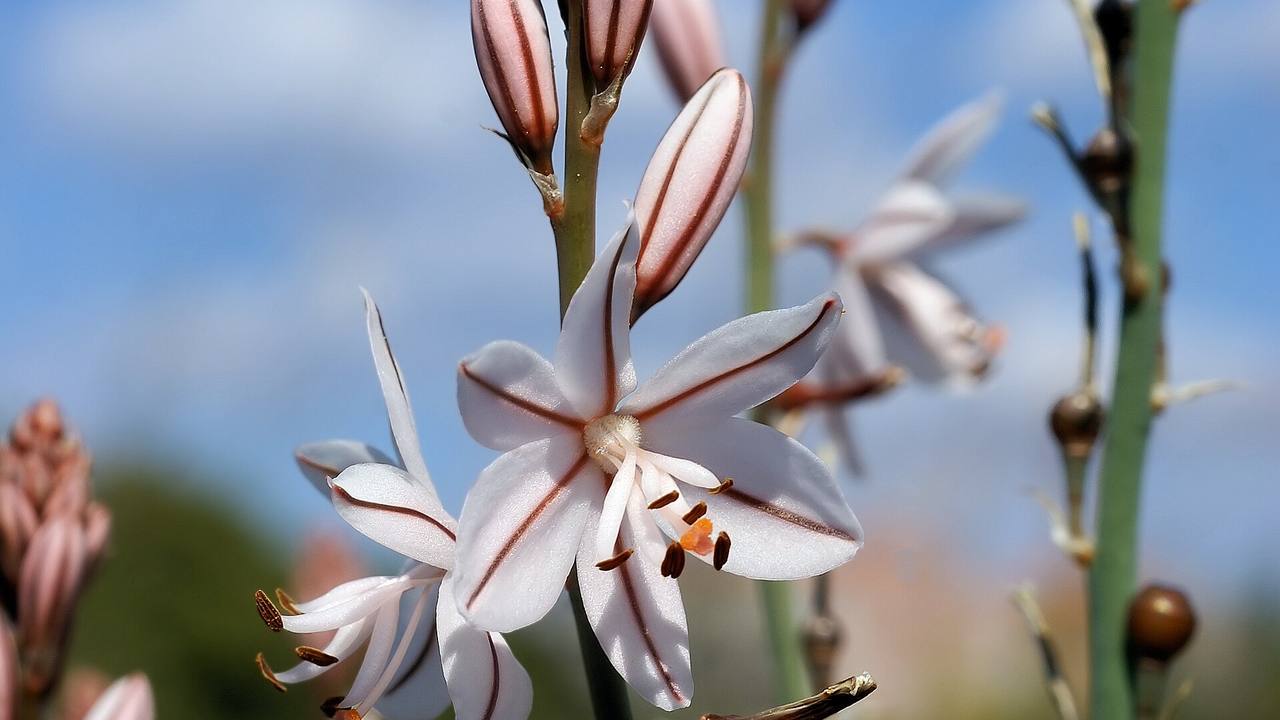
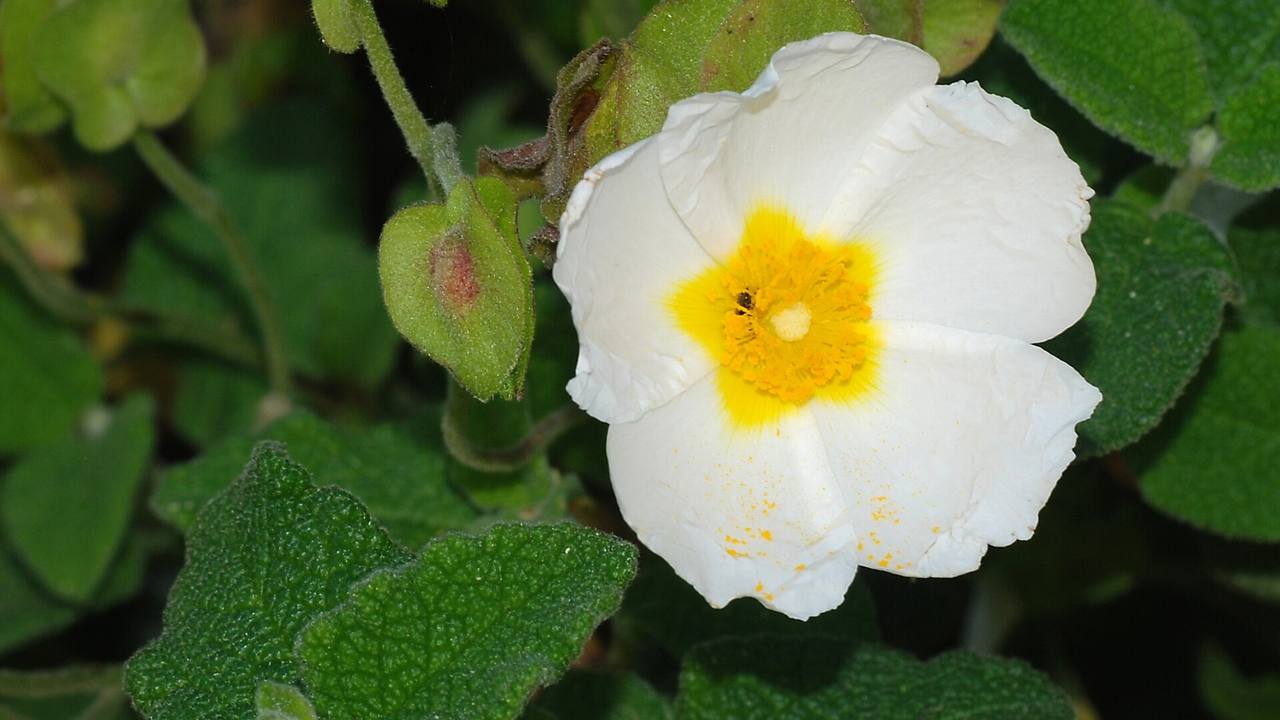
Hohenheim (2019) lists Ornithogalum divergens, Allium neapolitanum and the Persian buttercup, Ranunculus asiaticus, as spring plants of the Beşparmak phrygana. It says all three occur on plains and in higher regions. It also names hollow-stemmed asphodel on cultivated or fallow land, and a shrub of the family Cistaceae, Cistus salviifolius, that spreads fast after fires.
Orchids are mentioned for the Karpaz peninsula: the management-plan summary in the Hohenheim presentation lists Ophrys kotschyi among 22 endemic plant species of the Karpaz protected area. On sandy shores the same university lists Eryngium maritimum, Medicago marina, Cakile maritima and Pancratium maritimum as typical plants. Seasonal weather context is on weather and seasons.
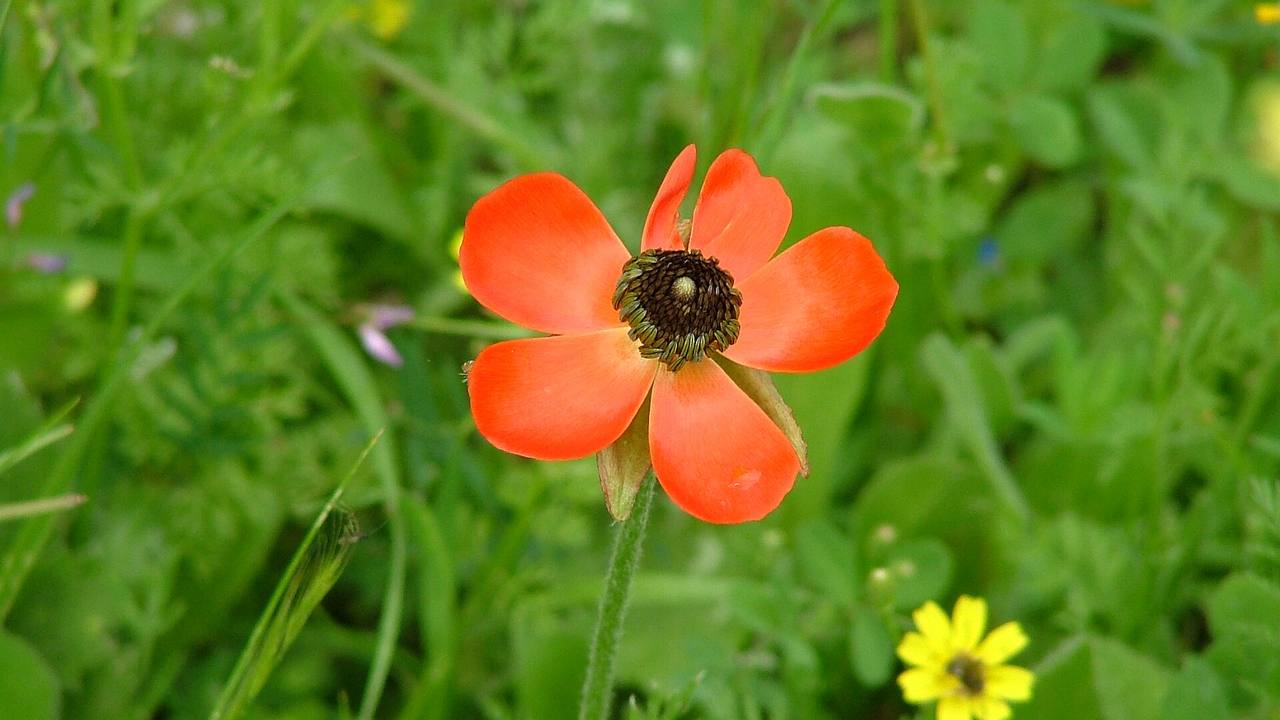
SuperJew · CC BY-SA 3.0 · Wikimedia Commons Flower
Persian buttercup (Ranunculus asiaticus)
Hohenheim (2019) lists the Persian buttercup, family Ranunculaceae, among the plants often belonging to the Beşparmak phrygana in spring, and says it can occur on plains as well as in higher regions.
Source: botanik.uni-hohenheim.de
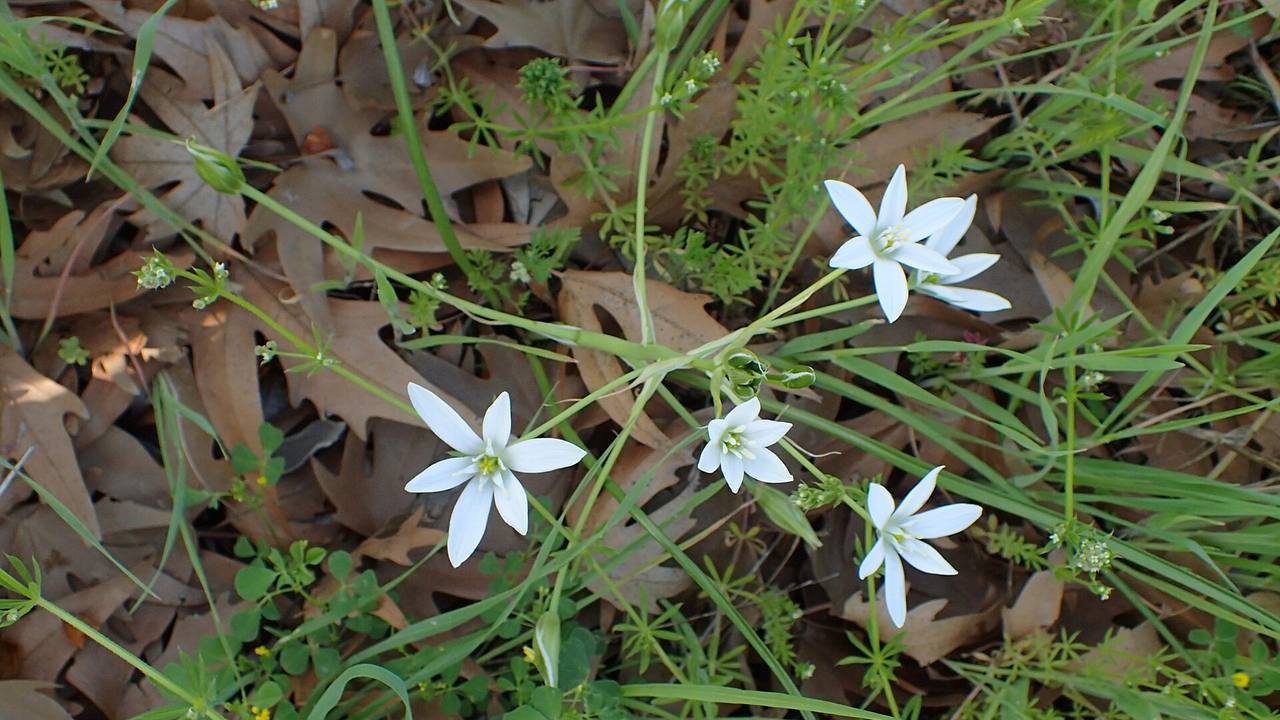
Krzysztof Ziarnek, Kenraiz · CC BY-SA 4.0 · Wikimedia Commons Flower
Ornithogalum divergens
Hohenheim (2019) lists this plant of the family Asparagaceae among the plants often belonging to the Beşparmak phrygana in spring, and says it can occur on plains as well as in higher regions.
Source: botanik.uni-hohenheim.de
Krzysztof Ziarnek, Kenraiz · CC BY-SA 4.0 · Wikimedia Commons Flower
Allium neapolitanum
Hohenheim (2019) lists this leek, family Amaryllidaceae, among the plants often belonging to the Beşparmak phrygana in spring, and says it can occur on plains as well as in higher regions.
Source: botanik.uni-hohenheim.de
Hans Hillewaert · CC BY-SA 3.0 · Wikimedia Commons Flower
Hollow-stemmed asphodel (Asphodelus fistulosus)
Hohenheim (2019): an annual or short-lived perennial growing up to 70 cm, usually found on cultivated or fallow land and listed among the phrygana plants of the Beşparmak range.
Source: botanik.uni-hohenheim.de
Alvesgaspar · CC BY-SA 3.0 · Wikimedia Commons Shrub
Adaçayı yapraklı laden, salvia cistus (Cistus salviifolius)
Hohenheim (2019): an aromatic-smelling shrub of the family Cistaceae, called salvia cistus, that spreads fast especially after fires. Turkish Wikipedia gives the Turkish name adaçayı yapraklı laden and a Mediterranean range.
Source: botanik.uni-hohenheim.de
User:Xemenendura · CC BY-SA 2.1 es · Wikimedia Commons Shrub
Calicotome villosa
Hohenheim (2019): a thorny shrub or small tree of up to 3 m, usually on acid soils exposed by deforestation or forest fires, listed among the phrygana plants of the Beşparmak range.
Source: botanik.uni-hohenheim.de
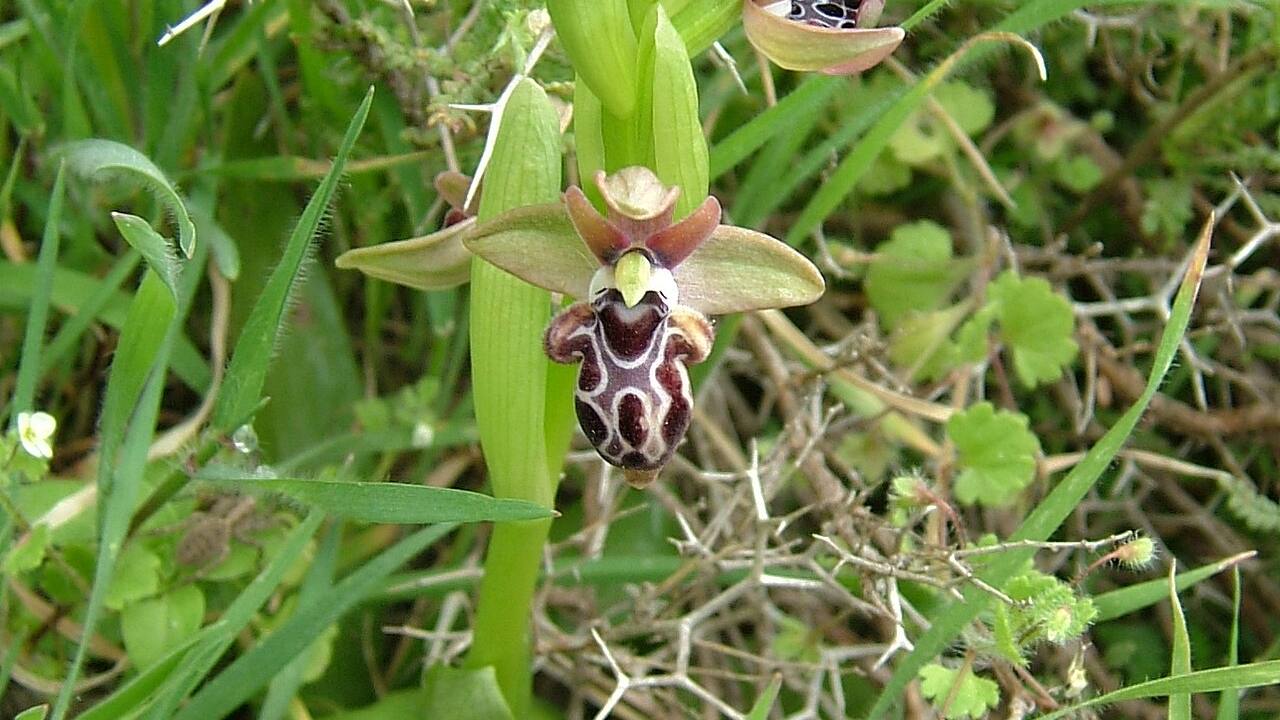
Chneophytou. Original uploader was Chneophytou at el.wikipedia · CC BY-SA 3.0 · Wikimedia Commons Flower
Ophrys kotschyi (orchid)
Hohenheim (2019), citing Karpaz management plans: one of 22 endemic plant species of the Karpaz protected area, the only one listed in Annex II of the Habitats Directive, and one of five species rare for the island, rated Vulnerable.
Source: botanik.uni-hohenheim.de
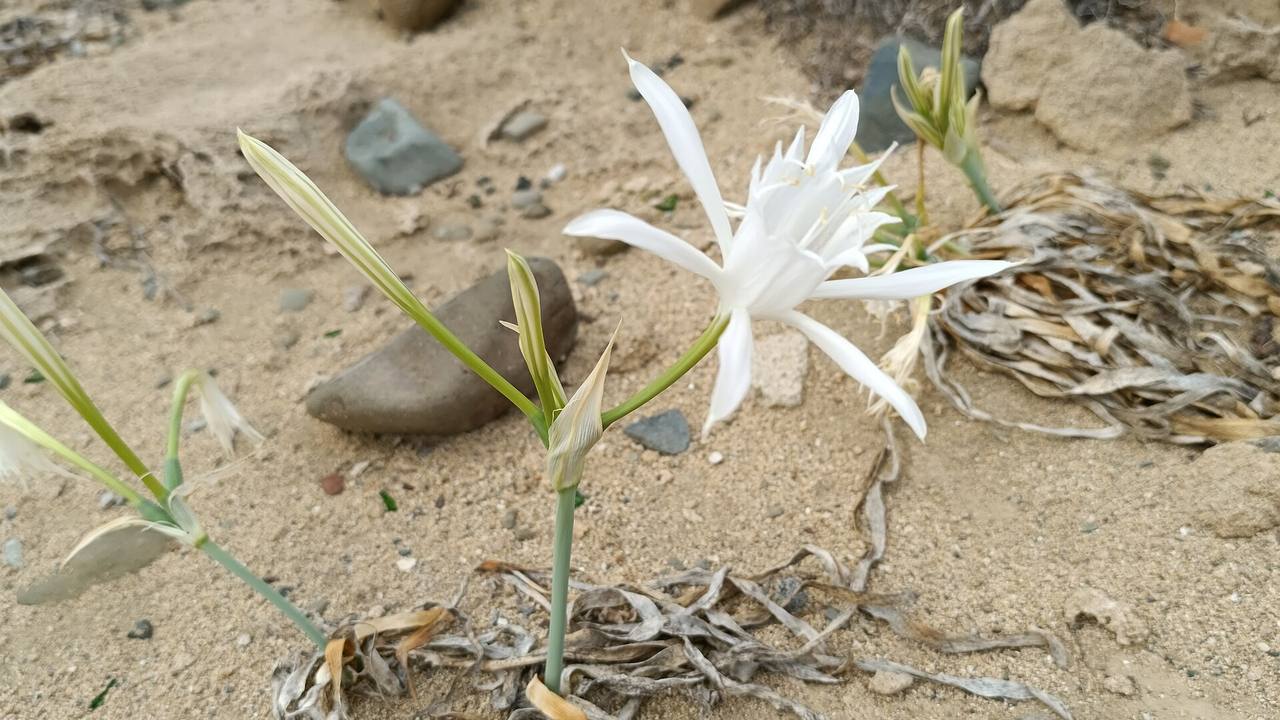
ToprakM · CC BY-SA 4.0 · Wikimedia Commons Plant
Sandy-coast plants (Eryngium maritimum, Medicago marina, Cakile maritima, Pancratium maritimum)
Hohenheim (2019) shows these four as typical plants of the sandy coast of Cyprus. Turkish Wikipedia gives kum zambağı as the Turkish name of Pancratium maritimum, flowering August to October.
Source: botanik.uni-hohenheim.de
1 / 8

Plants endemic to Cyprus
Endemic means found on Cyprus and nowhere else; the sources below place the plants on the island as a whole, and the records cited here are mostly from the Kyrenia range. Gücel and Yıldız (Near East University, Pakistan Journal of Botany, 2008) cite 121 endemic species for Cyprus, 19 of which they describe as endemic to North Cyprus, citing Meikle and Viney. Hohenheim (2019) gives a different count for the island, about 142, and the figures are not from the same year.
Hohenheim (2019) names Arabis cypria, Delphinium caseyi and Brassica hilarionis on the Beşparmak range. Gücel and Yıldız (2008) describe ten further endemic taxa from the range as under threat from habitat degradation, forest fires and quarrying. Cyprus cyclamen is treated by the Cyprus Center for Environmental Research and Education (2017) as occurring from the Akamas and Troodos to Pentadaktylos.
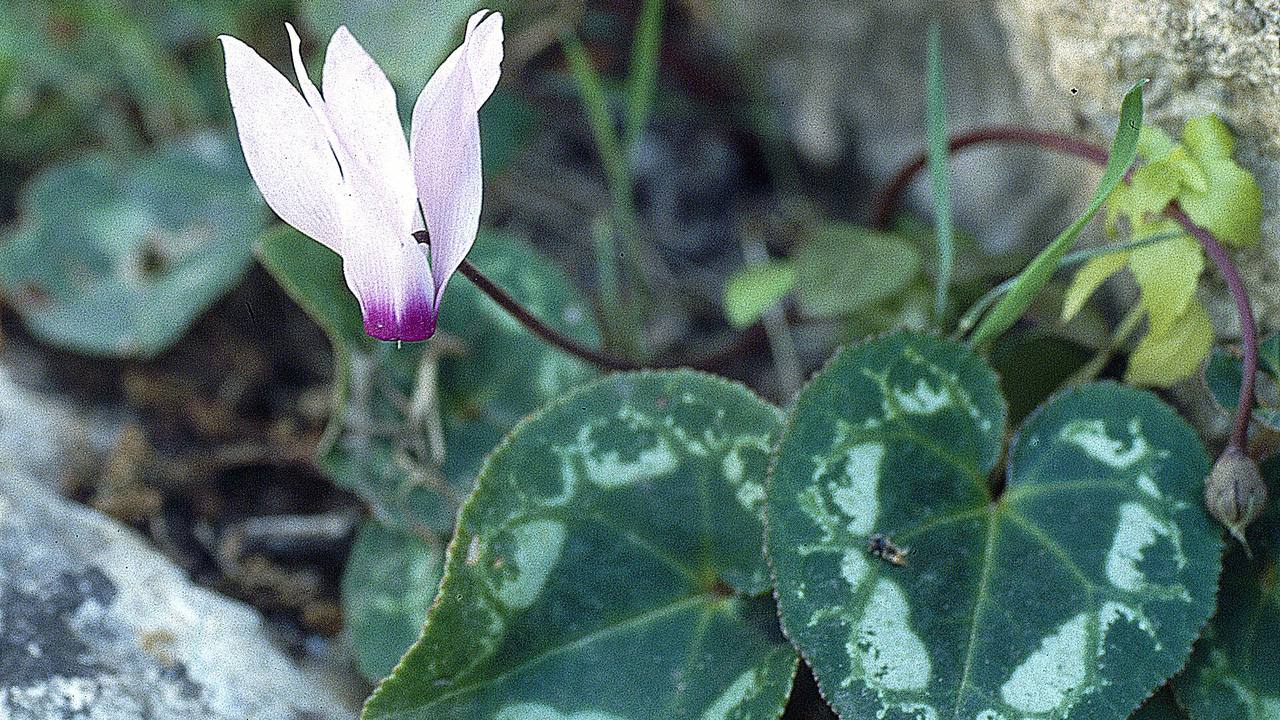
Ziegler175 · CC BY-SA 3.0 · Wikimedia Commons Flower
Kıbrıs siklameni (Cyprus cyclamen, Cyclamen cyprium)
CYCERE (2017): the only one of three Cyprus cyclamens endemic to the island, found from Akamas and Troodos to Pentadaktylos at 50 to 1,100 m. The Cyclamen Society gives wild flowering as September to January.
Source: kykpee.org
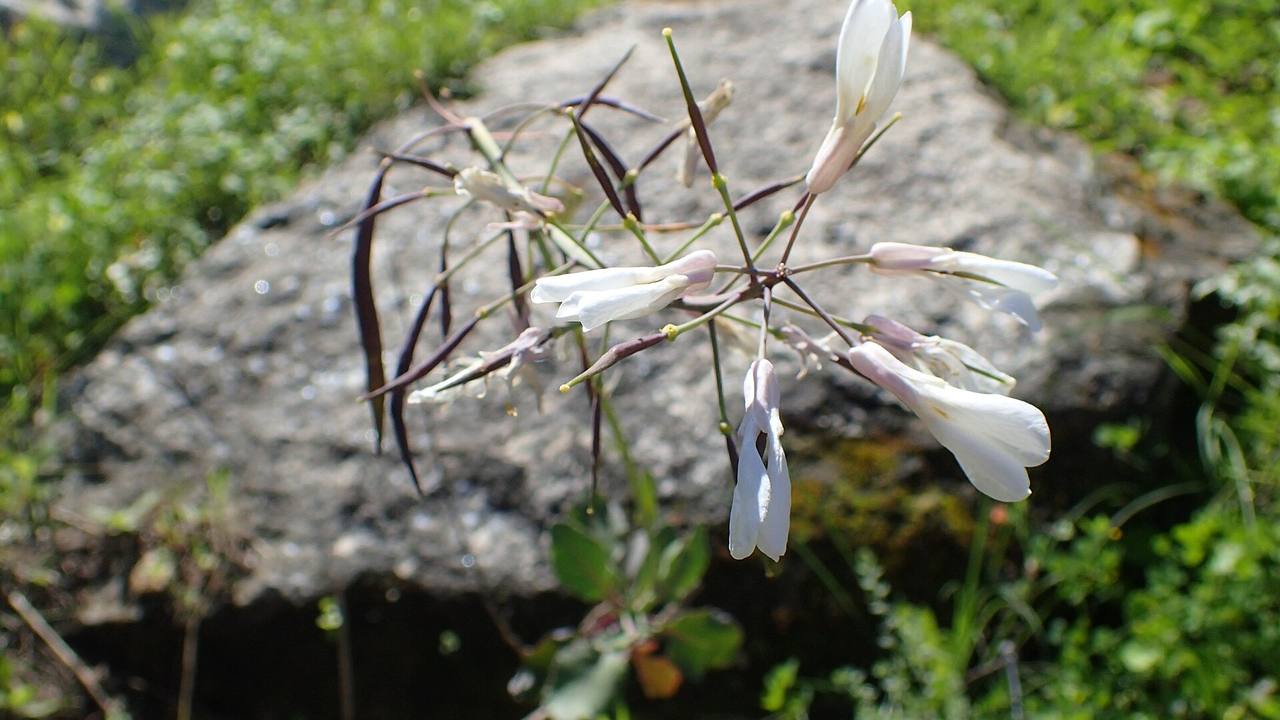
Krzysztof Ziarnek, Kenraiz · CC BY-SA 4.0 · Wikimedia Commons Plant
Brassica hilarionis
Hohenheim (2019): a hairless perennial of calcareous rocky slopes, strictly protected, described as endemic to the western Beşparmak mountains, growing on rock faces at 400 to 850 m.
Source: botanik.uni-hohenheim.de
Krzysztof Ziarnek, Kenraiz · CC BY-SA 4.0 · Wikimedia Commons Plant
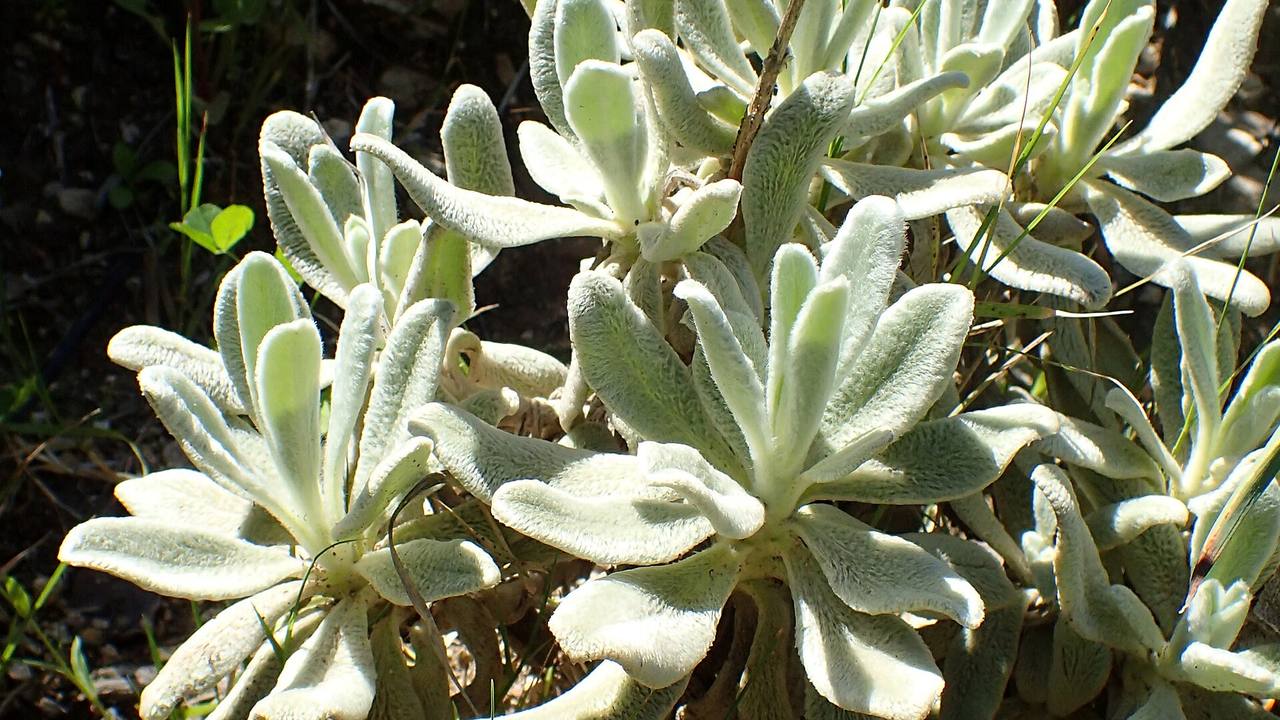
Sideritis cypria
Gücel and Yıldız (2008) collected it on rocky places at 700 to 850 m near Alevkayası, Buffavento castle and St Hilarion castle, and name it among the taxa threatened by habitat degradation.
Source: pakbs.org
Aliosha Bielenberg · CC BY-SA 4.0 · Wikimedia Commons Flower
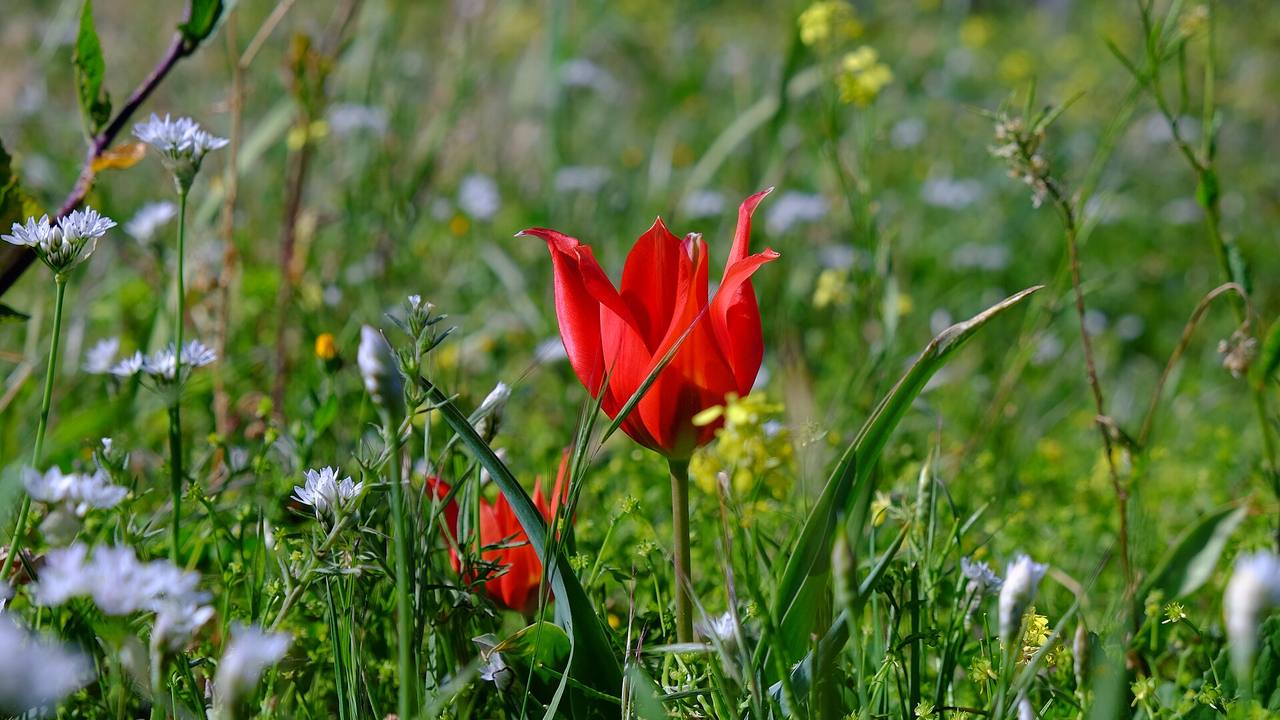
Cyprus tulip and Loch's glory-of-the-snow
One Earth (2020) names both, with Cyclamen cyprium, as endemic flora of the Cyprus ecoregion. The source does not say whether they occur in the north.
Source: oneearth.org
1 / 9
Mammals, reptiles and insects
Benda and colleagues (National Museum, Prague, and Near East University; Lynx, 2018) report at least 451 records of 21 bat species from Northern Cyprus, from fieldwork mainly in 2018. They state that the complete known bat fauna of the island, except for one doubtful species, was documented in the north, and that the Egyptian fruit bat roosts were smaller than in the mid-2000s. Roaming donkeys of the Karpaz are covered on family days out.
The Cyprus spiny mouse, described from the Kyrenia Mountains, has a population there. For snakes, a 2009 study in Animal Biology (Göçmen and colleagues) examined 66 specimens of eleven species from northern Cyprus. Hohenheim (2019) lists two endemic butterflies in the Karpaz protected area. The sources opened report no Cyprus whip snake from the Kyrenia range.
Turkish Cypriot media use the name Gufi for the viper of Cyprus. Kıbrıs Postası (15 May 2019) quotes Assoc. Prof. Dr. Nazım Kaşot of the Environmental Protection Foundation (ÇEKOVA), who says it occurs in Northern Cyprus, is the only one of three venomous snake species considered potentially dangerous to people, and that killing snakes is an offence. Gündem Kıbrıs (2024) reports a Taşkent Nature Park statement describing the Cyprus viper, Macrovipera lebetina lebetina, as a subspecies endemic to the island. English Wikipedia lists kufi as a common name, from the Greek word for deaf.
Sources describe the viper's range at different scales. Wikipedia lists the Cypriot subspecies simply as Cyprus. A 2018 paper (Jestrzemski and Kuzyakova, Journal of Venomous Animals and Toxins) states that the nominate subspecies occurs only on Cyprus and was surveyed near Polis Chrysochous in the Republic's Paphos district. A 2006 case report in the Turkish Journal of Parasitology (Göçmen and colleagues) describes a specimen collected in northern Cyprus. Cyprus Mail (26 April 2025) reports eight snake species on the island, three venomous.
The Cyprus mouflon is described as endemic to the island of Cyprus, not to the north. English Wikipedia places it in the mountains of Paphos District and reports about 1,200 animals counted in 1997. Gündem Kıbrıs (3 April 2025), citing Cyprus Mail, gives an estimate of about 3,000 and credits breeding programmes. Wikipedia gives Ovis gmelini a species-level IUCN rating of Near Threatened (Michel and Ghoddousi, 2020), not a rating for Cyprus alone, and notes CITES Appendix I listing since November 2019. Yenidüzen (2015) and Kıbrıs Postası (2022) report occasional animals in the north.
מינוזיג - MinoZig · CC BY-SA 4.0 · Wikimedia Commons Mammal
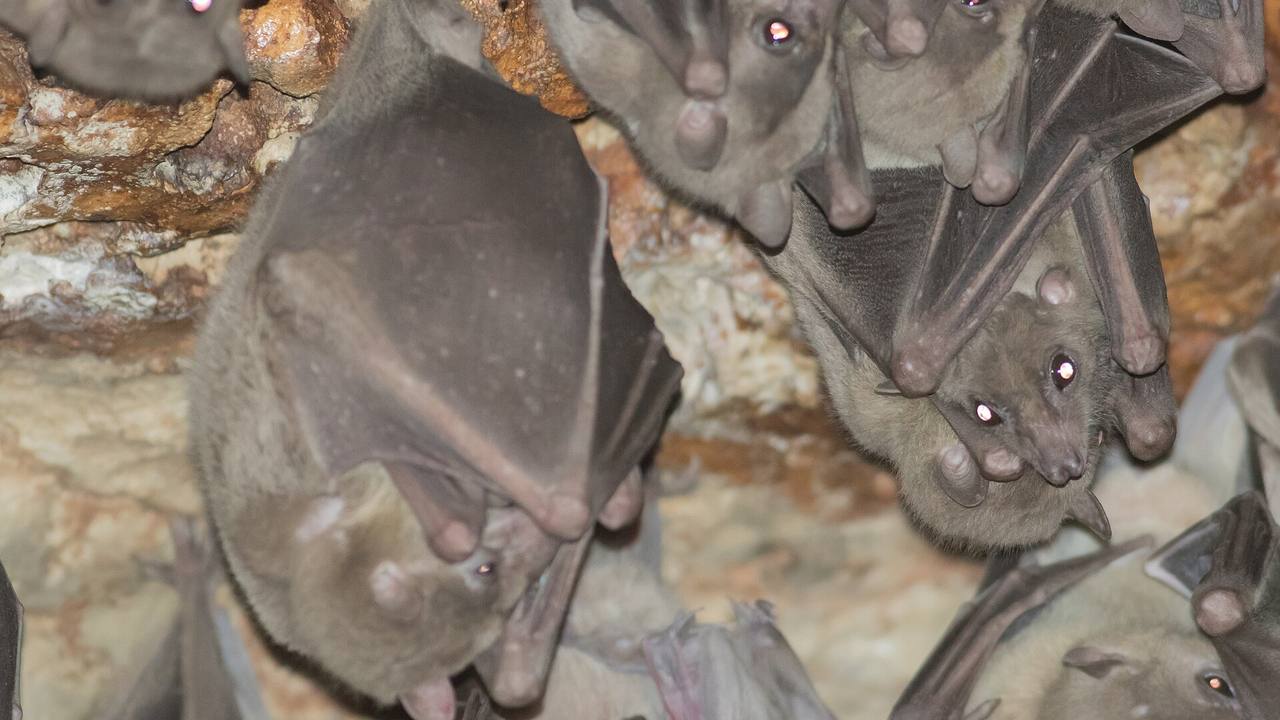
Bats of Northern Cyprus (21 species, including Rousettus aegyptiacus)
Benda et al. (2018): at least 451 records of 21 bat species from the north, with Rousettus aegyptiacus recorded at 26 localities and smaller colonies than in the mid-2000s.
Source: publikace.nm.cz
WoodsAndrew · CC BY-SA 4.0 · Wikimedia Commons Mammal
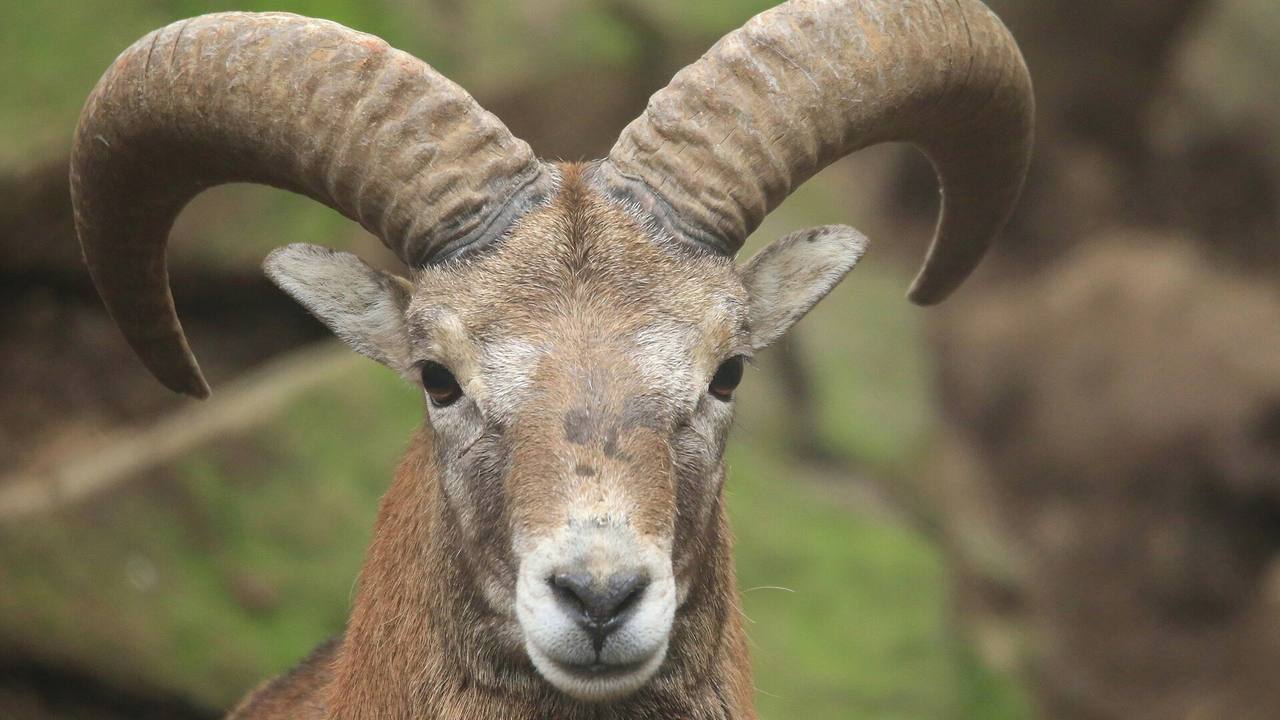
Kıbrıs muflonu (Cyprus mouflon, Ovis gmelini ophion; Greek Cypriot name agrino)
English Wikipedia calls it endemic to Cyprus and gives the name agrino. Turkish Cypriot press (Yenidüzen, 2015; Kıbrıs Postası, 2022) reports single animals at Yeşilırmak and Lefke, while Gündem Kıbrıs (2025) places mouflons in the Troodos mountains and near Paphos.
Source: yeniduzen.com
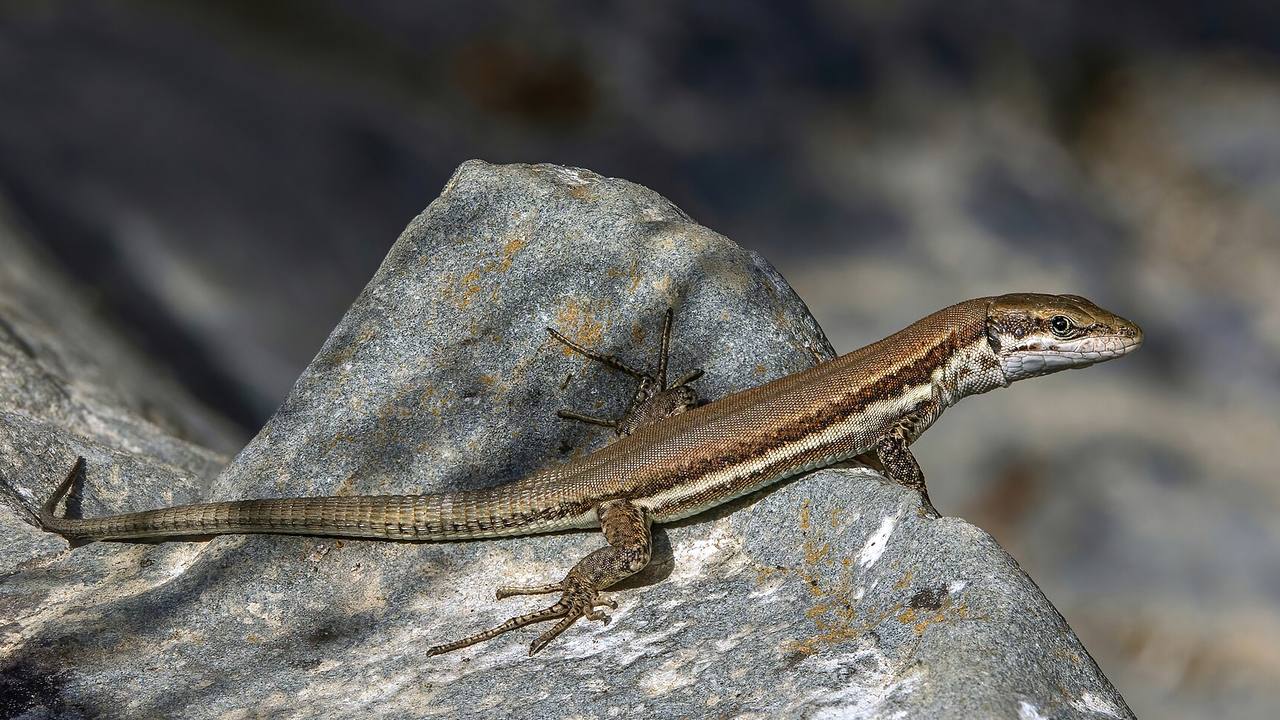
Charles J. Sharp · CC BY-SA 4.0 · Wikimedia Commons Reptile
Cyprus endemic lizards (Laudakia cypriaca, Phoenicolacerta troodica)
Svana et al. (Ecologia Balkanica, 2025) record eleven lizard species on Cyprus, two of them endemic species and four endemic subspecies. The text read does not place these two species specifically in the north.
Source: eb.bio.uni-plovdiv.bg
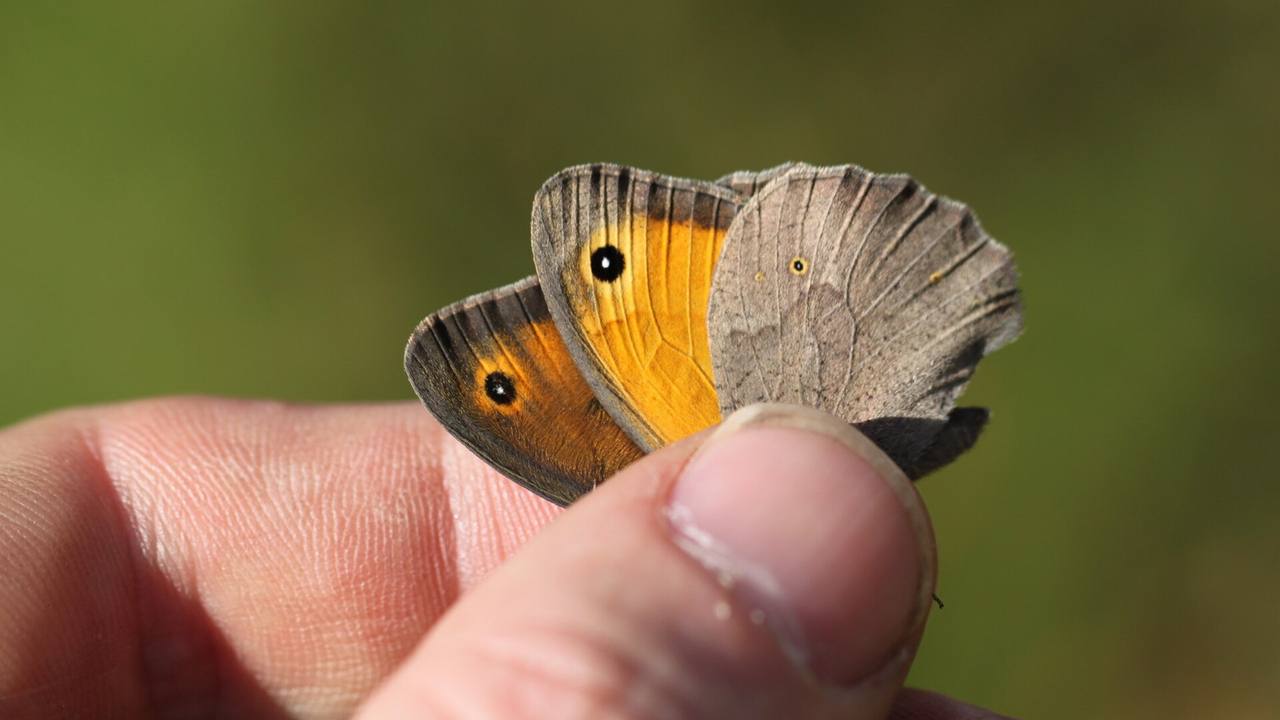
purperlibel · CC BY-SA 4.0 · Wikimedia Commons Insect
Cyprus Meadow Brown (Maniola cypricola) and Paphos Blue (Glaucopsyche paphos)
Hohenheim (2019), citing management plans: both are listed as endemic butterflies in the fauna of the Karpaz protected area, which covers the tip of the Karpaz peninsula.
Source: botanik.uni-hohenheim.de
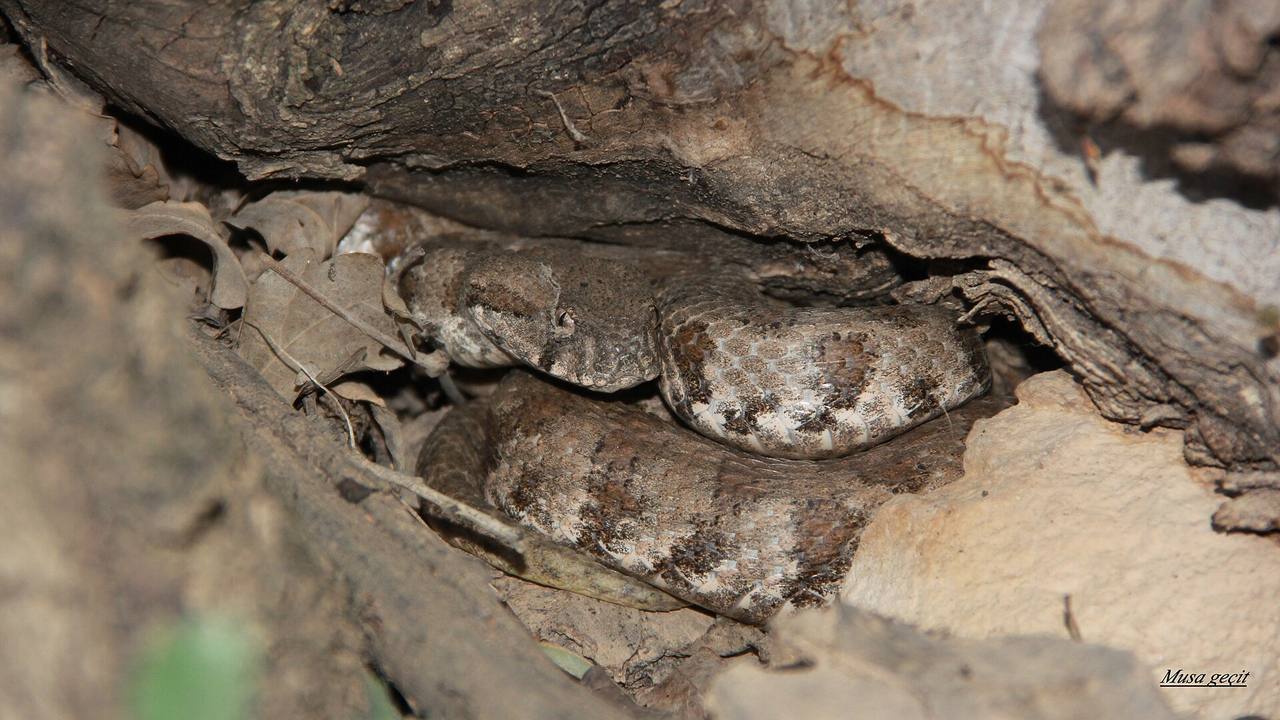
Musa geçit · CC BY-SA 3.0 · Wikimedia Commons Reptile
Gufi (küt burunlu engerek; Cypriot blunt-nosed viper, Macrovipera lebetina lebetina; also written kufi)
Turkish Cypriot press uses the name Gufi for the Cyprus viper. A Çekova speaker quoted in Kıbrıs Postası (2019) says it occurs in Northern Cyprus and that snakes are protected by law. Taşkent Nature Park calls it a subspecies endemic to the island of Cyprus.
Source: kibrispostasi.com
1 / 8
Birds
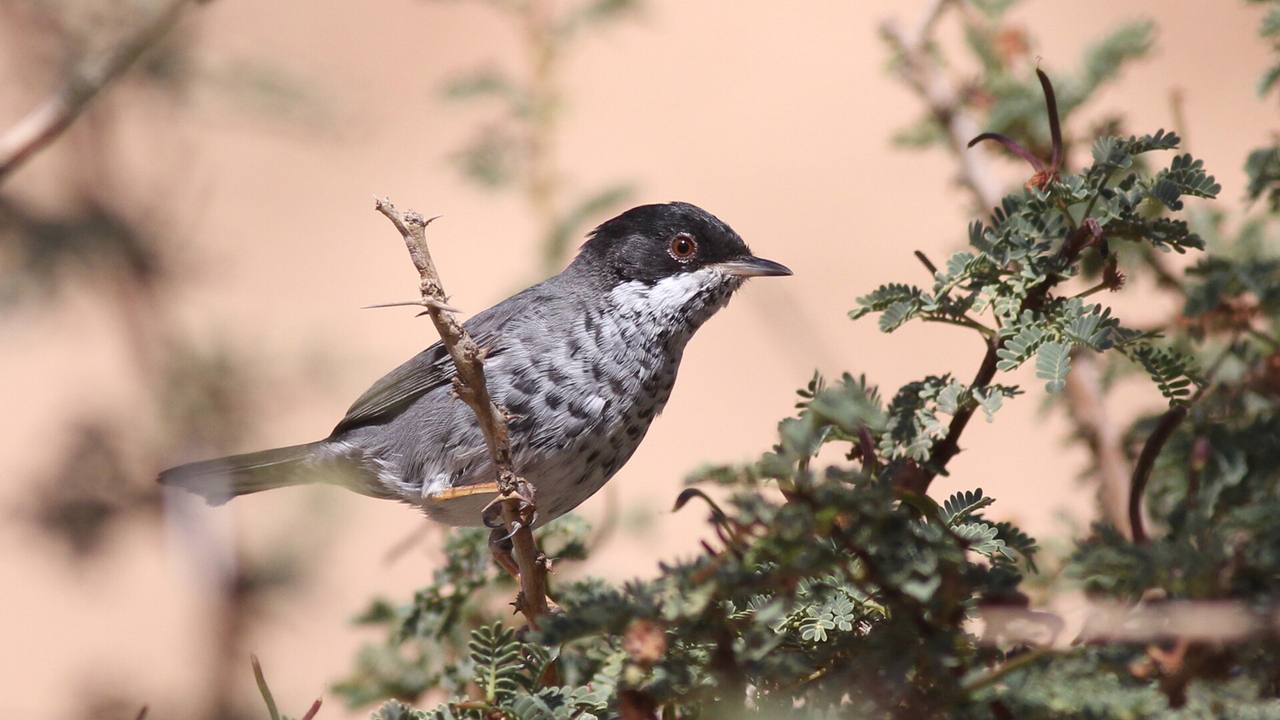
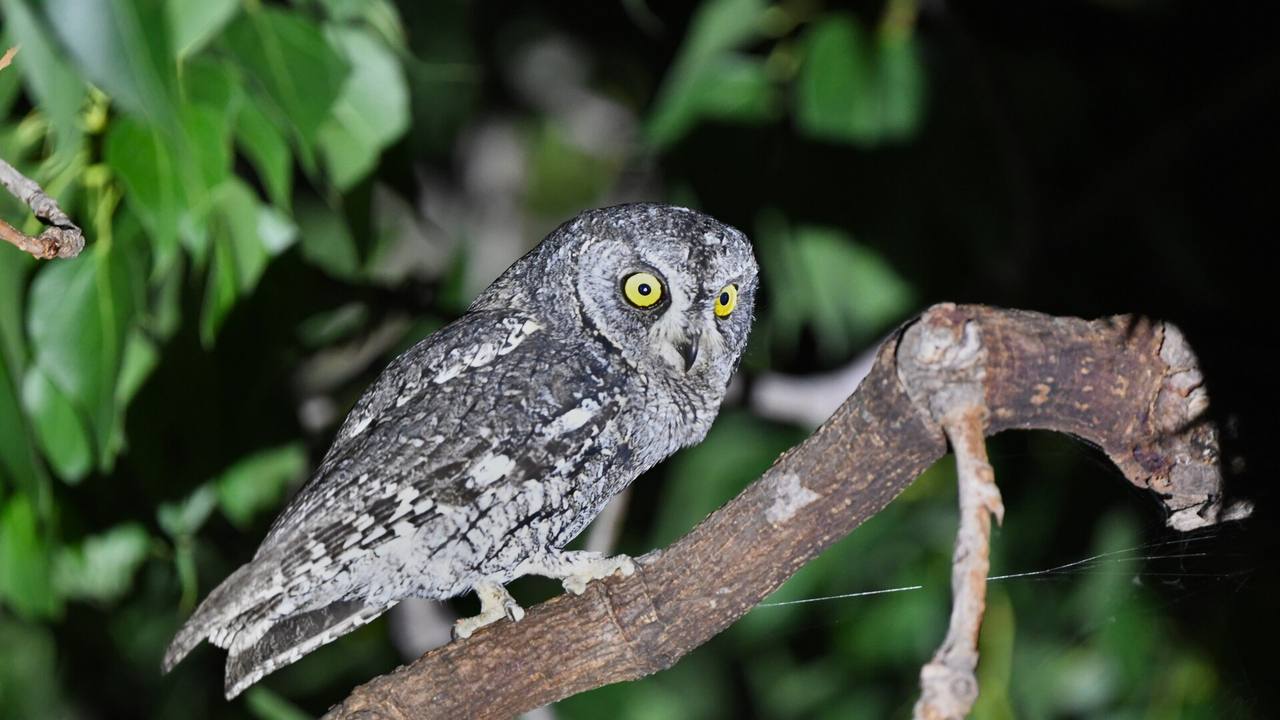
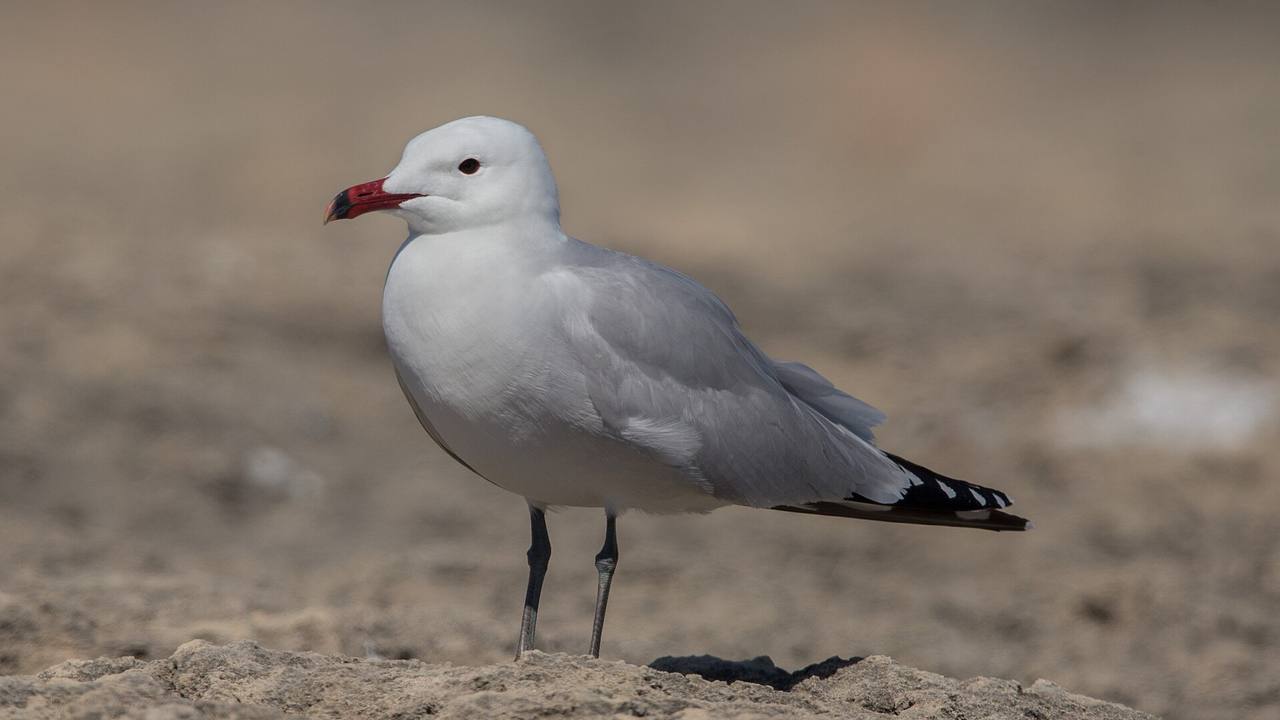
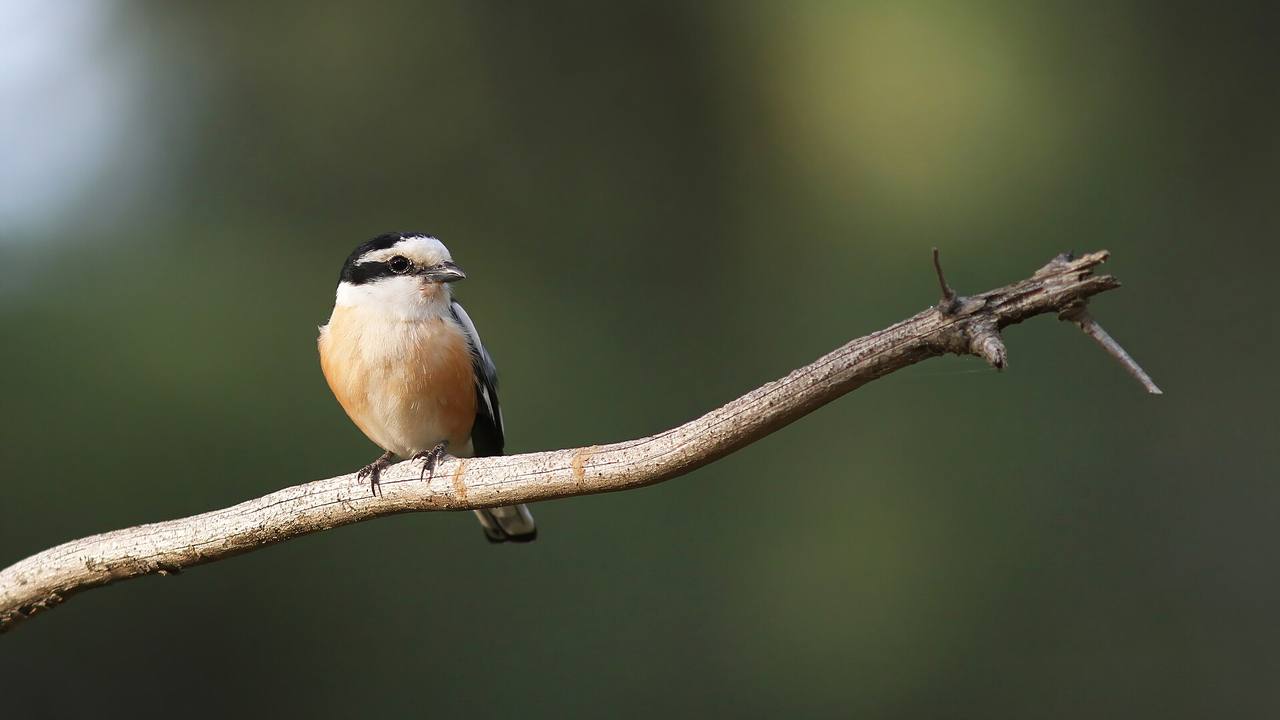
BirdLife Cyprus lists three bird species that breed only on Cyprus: the Cyprus wheatear, the Cyprus warbler and the Cyprus scops owl, plus endemic subspecies mostly in the Troodos forests. The Hohenheim presentation (2019) reports important nesting colonies of the wheatear and warbler in the Karpaz protected area, and nesting colonies of Audouin's gull, the Mediterranean shag subspecies, the roller and the masked shrike.
The Wikipedia article on wildlife of Cyprus describes the island as lying on migration routes between Africa, Europe and western Asia and gives more than 380 recorded species. Hohenheim adds that some species listed in EU annexes pass through the Karpaz area in spring and autumn.
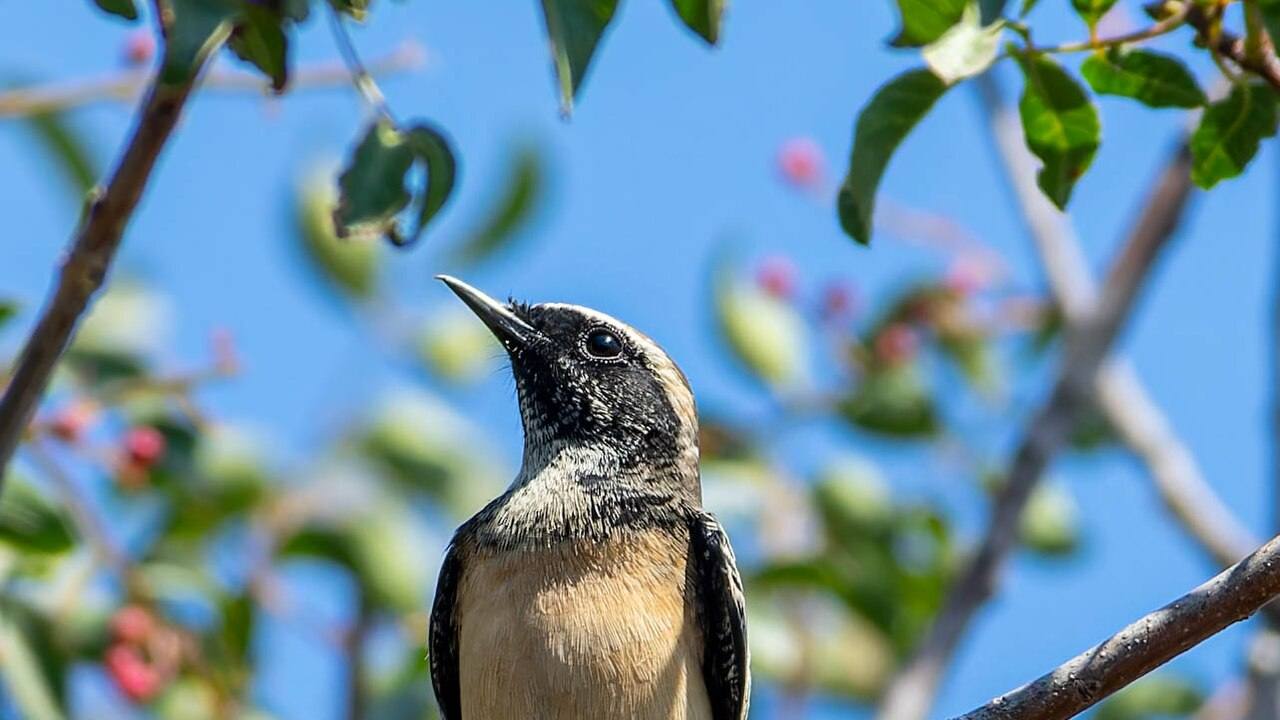
Hobbyfotowiki Camera location35° 03′ 22″ N, 32° 20′ 42.96″ E View this and other · CC0 · Wikimedia Commons Bird
Cyprus wheatear (Oenanthe cypriaca)
BirdLife Cyprus lists it as breeding only on Cyprus. Hohenheim (2019) reports important nesting colonies of it in the Karpaz protected area, one of two bird endemics the presentation names.
Source: birdlifecyprus.org
Jan Ebr & Ivana Ebrová · CC BY 4.0 · Wikimedia Commons Bird
Cyprus warbler (Sylvia melanothorax)
BirdLife Cyprus lists it as breeding only on Cyprus. Hohenheim (2019) reports important nesting colonies of it in the Karpaz protected area, one of two bird endemics the presentation names.
Source: birdlifecyprus.org
Julien Renoult · CC BY 4.0 · Wikimedia Commons Bird
Cyprus scops owl
BirdLife Cyprus lists it among the three bird species breeding only in Cyprus. The page read does not say where on the island it occurs, so no claim is made for the north.
Source: birdlifecyprus.org
Andreas Trepte · CC BY-SA 2.5 · Wikimedia Commons Bird
Audouin's gull (Larus audouinii)
Hohenheim (2019), citing Karpaz management plans, lists nesting colonies of Audouin's gull in the Karpaz protected area, among several seabird and songbird colonies the presentation names for that area.
Source: botanik.uni-hohenheim.de
Bouke ten Cate · CC BY 4.0 · Wikimedia Commons Bird
Masked shrike and roller (Lanius nubicus, Coracias garrulus)
Hohenheim (2019), citing Karpaz management plans, lists nesting colonies of both species in the Karpaz protected area, alongside the shag subspecies Phalacrocorax aristotelis desmarestii and Audouin's gull.
Source: botanik.uni-hohenheim.de
1 / 5
Sea and coast life
Hohenheim (2019), citing Karpaz management plans, says green turtles and loggerhead turtles nest on nine beaches in the Karpaz protected area and that monk seals are resident. It lists coastal lagoons, Posidonia beds and coastal dunes with juniper as three priority habitats of the EU Habitats Directive in that area, among 17 habitat types.
Turtle season and the protected coast are covered on beaches and coast. The coastal zones and districts are described area by area on the areas page, and these listings stay general because the sources read do not give beach-by-beach species records.
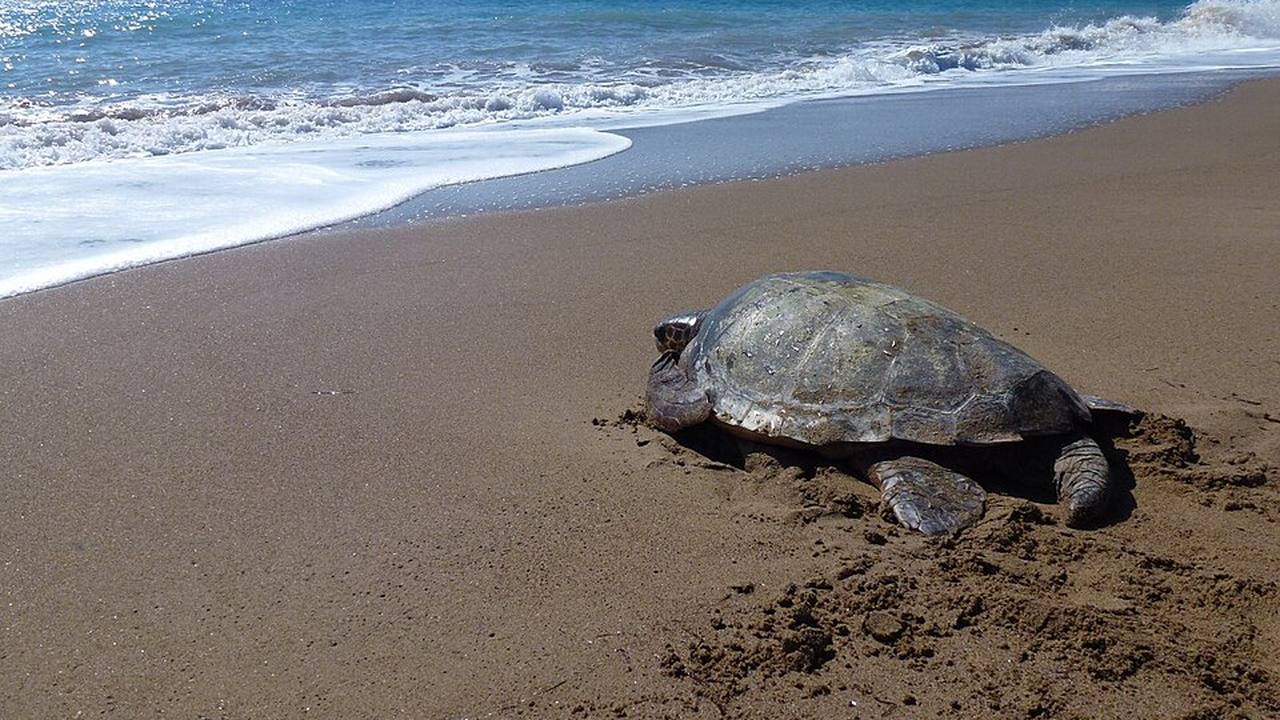
Savvas Michaelides · CC BY-SA 4.0 · Wikimedia Commons Marine
İribaş deniz kaplumbağası (loggerhead turtle, Caretta caretta)
Hohenheim (2019) lists it as nesting in the Karpaz protected area, where a conservation project involves local groups, university research and volunteers who monitor beaches. Turkish Wikipedia gives the name İribaş deniz kaplumbağası.
Source: botanik.uni-hohenheim.de
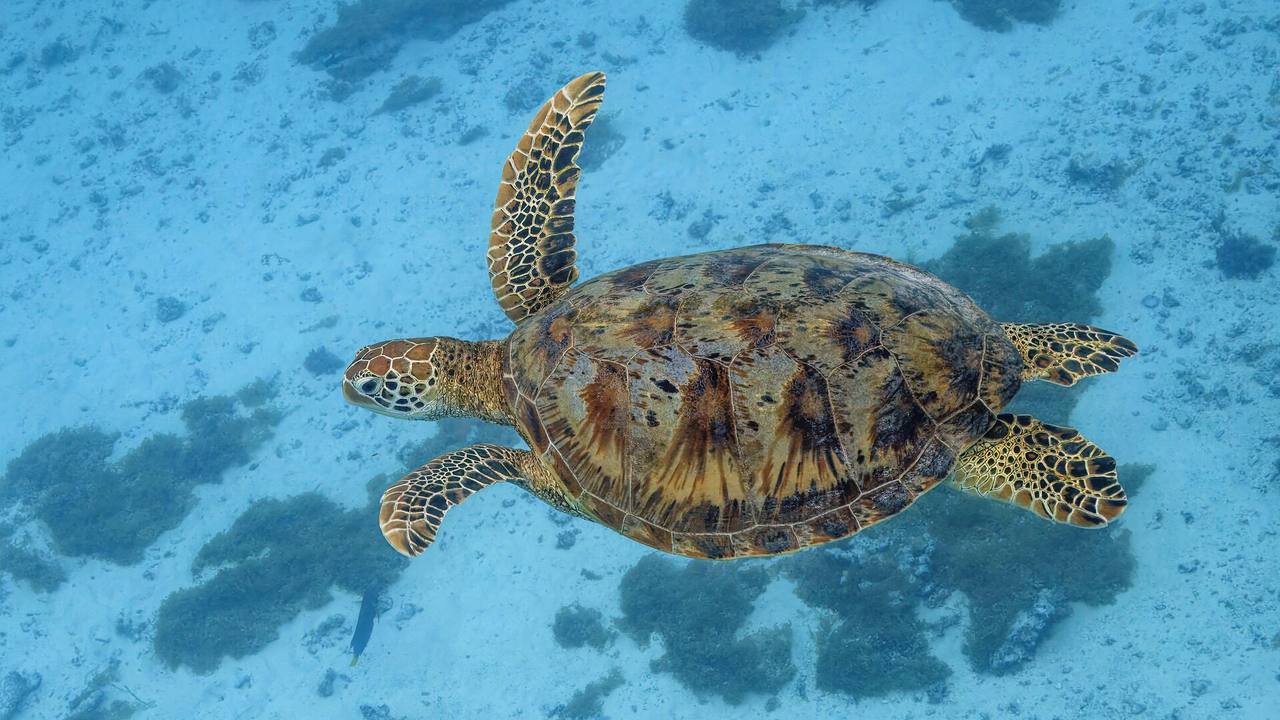
Charles J. Sharp · CC BY-SA 4.0 · Wikimedia Commons Marine
Green turtle (Chelonia mydas)
Hohenheim (2019) lists it with the loggerhead as nesting on nine beaches in the Karpaz protected area, and describes both as highly endangered species covered by a conservation project.
Source: botanik.uni-hohenheim.de
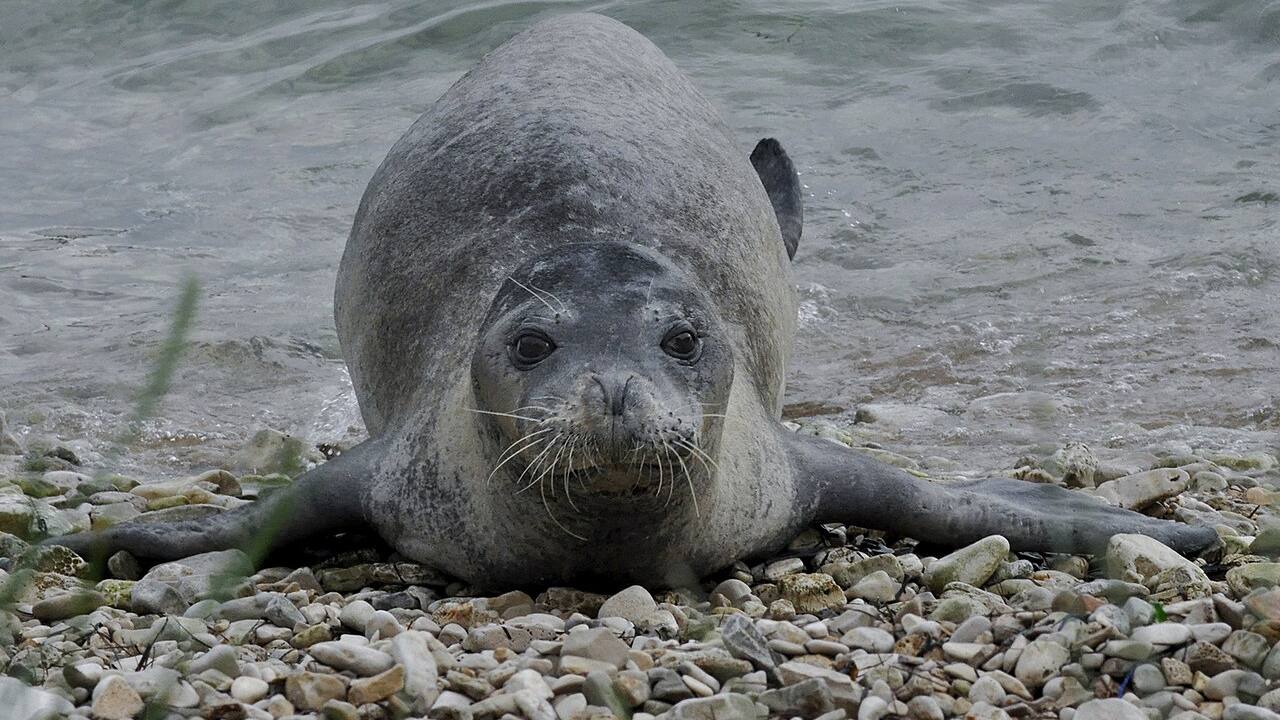
Marinko Babić · CC BY-SA 4.0 · Wikimedia Commons Marine
Mediterranean monk seal (Monachus monachus)
Hohenheim (2019), citing management plans, lists resident monk seals in the Karpaz protected area. Wikipedia gives the IUCN status as Vulnerable, updated in 2023 from Endangered. The page read does not say where in the north seals are seen.
Source: botanik.uni-hohenheim.de
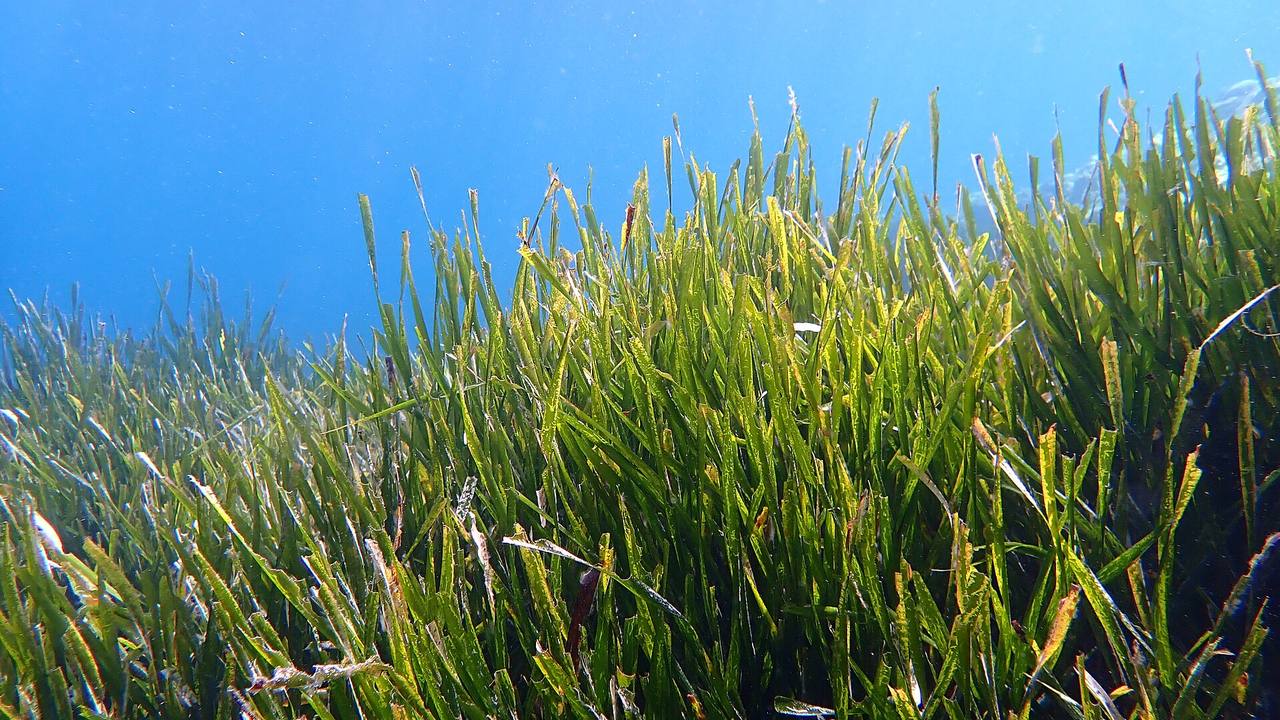
Frédéric Ducarme · CC BY-SA 4.0 · Wikimedia Commons Habitat
Posidonia beds
Hohenheim (2019) names Posidonia beds as one of three priority habitats of the Habitats Directive recorded in the Karpaz protected area, with coastal lagoons and coastal dunes with juniper.
Source: botanik.uni-hohenheim.de
1 / 4
Protected areas and visiting responsibly
Hohenheim (2019) summarises the framework: boundaries for a Karpaz National Park of 9,486 hectares were defined in 2004, but the presentation says the legal basis is insufficient and the area is not treated as a national park. The Karpaz protected area covers the tip of the peninsula and is one of three Special Environmental Protected Areas, with Tatlısu and South Karpaz.
The same presentation says there are seven potential Natura 2000 sites in the north that cannot be designated while Natura 2000 is limited to EU countries, and that there were no official conservation areas within the Beşparmak mountains. Gücel and Yıldız (2008) suggest the area between St Hilarion and Yayla mount as a special protection area. Check the current status of any area with the responsible authority.
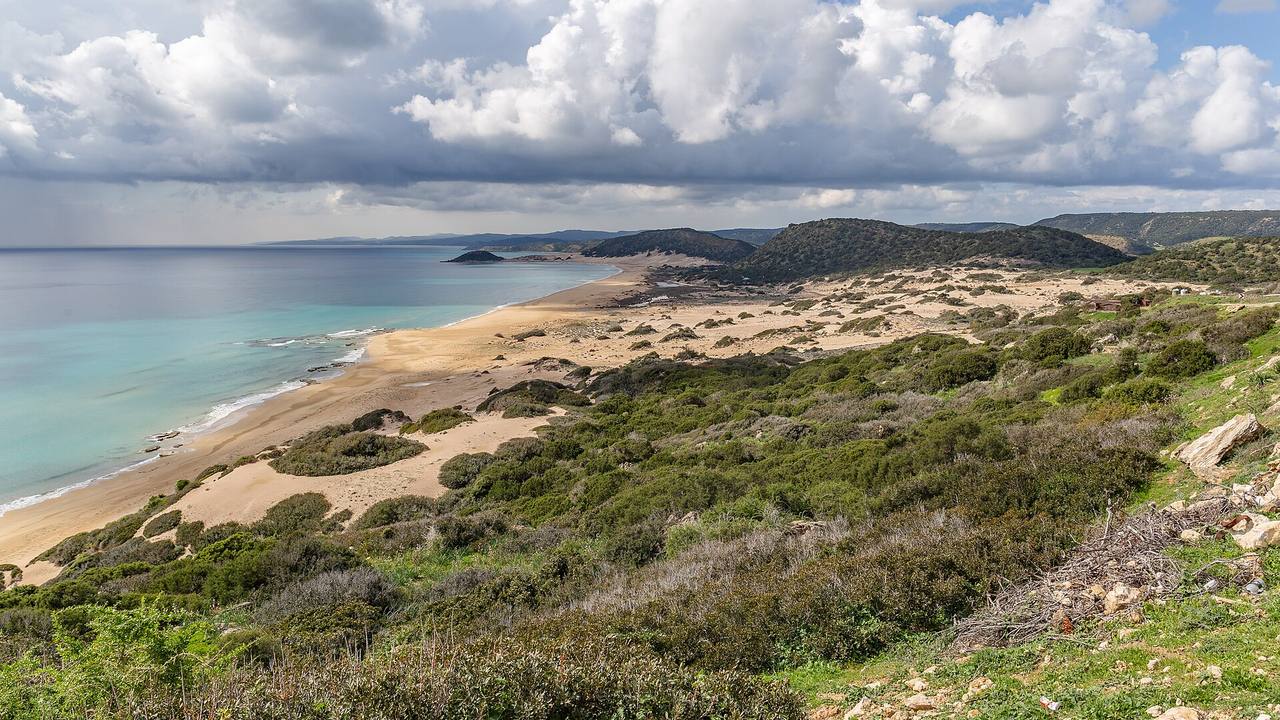
Michal Klajban · CC BY-SA 4.0 · Wikimedia Commons Protected area
Karpaz protected area (SEPA Karpaz)
Hohenheim (2019): one of the three Special Environmental Protected Areas, 19,230 ha (9,645 terrestrial and 9,485 marine), covering the tip of the peninsula and including the projected Karpaz National Park.
Source: botanik.uni-hohenheim.de
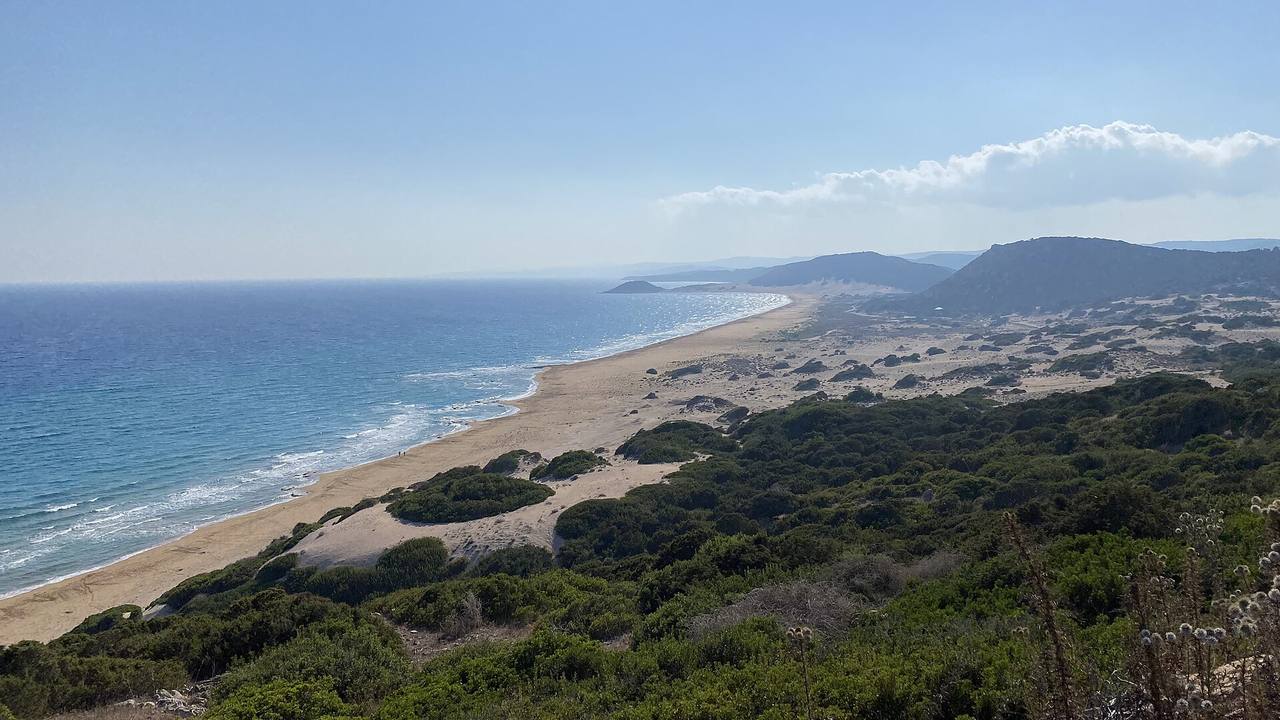
Seksen iki yüz kırk beş · CC BY-SA 4.0 · Wikimedia Commons Protected area
Karpaz National Park (projected)
Hohenheim (2019): boundaries defined in 2004 over 9,486 ha, including the Natural and Archaeological Site and the Ancient Carpasia site; the presentation says the area is not treated as a national park.
Source: botanik.uni-hohenheim.de
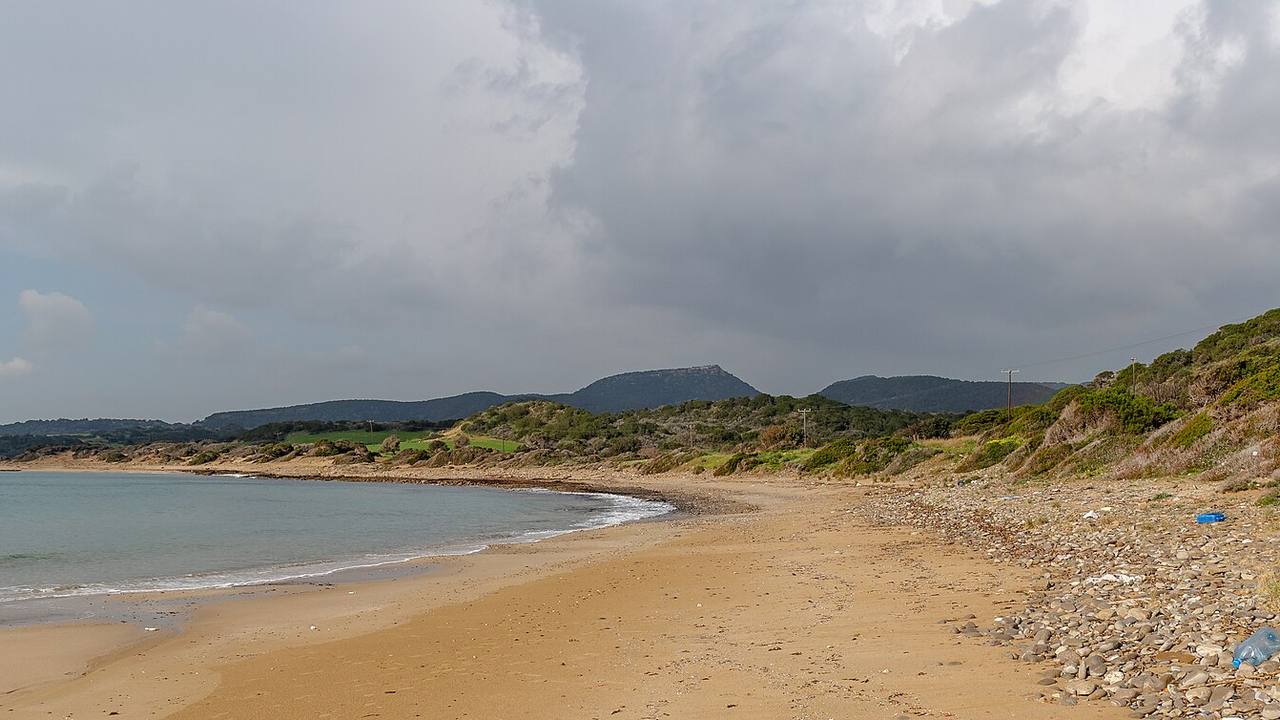
Michal Klajban · CC BY-SA 4.0 · Wikimedia Commons Protected area
Tatlısu and South Karpaz protected areas
Hohenheim (2019): with Karpaz, these are the three Special Environmental Protected Areas on the Karpaz peninsula; all three are described as affected by agriculture or tourism despite the Karpaz Ordinance.
Source: botanik.uni-hohenheim.de
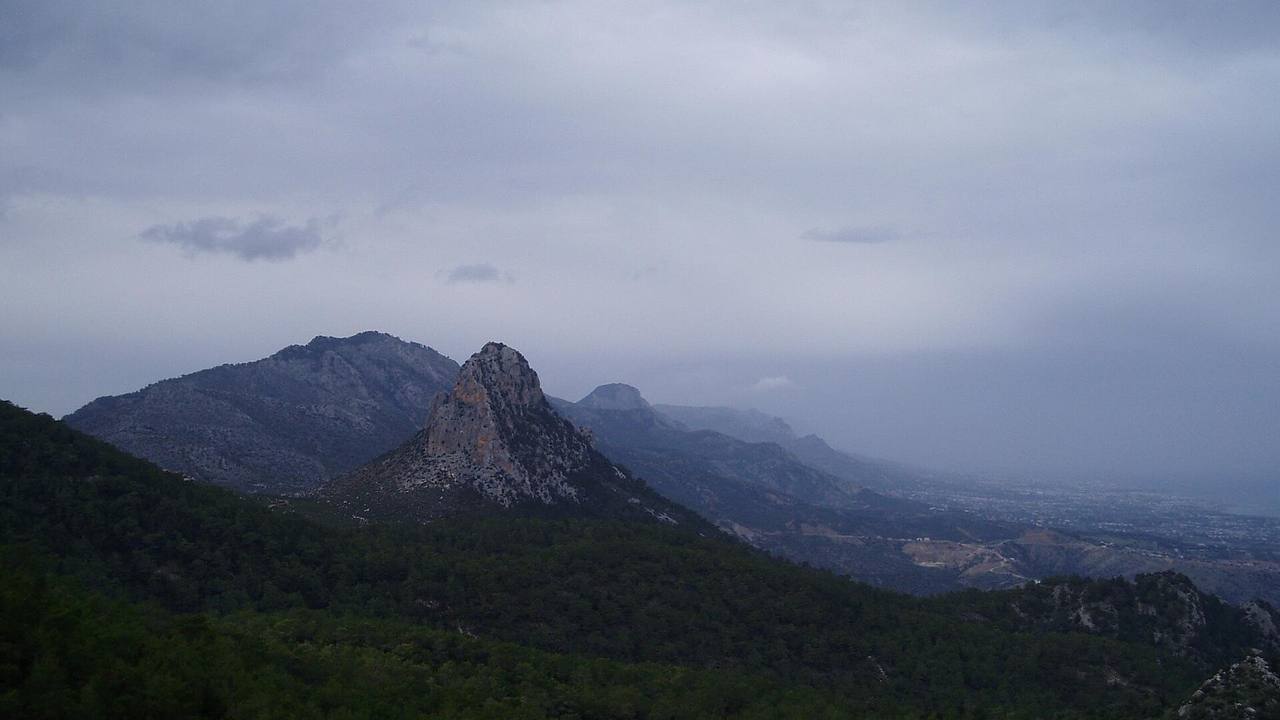
Atak at English Wikipedia · Public domain · Wikimedia Commons Protected area
Beşparmak (Kyrenia) range
Hohenheim (2019): almost the whole range is a possible Natura 2000 area, yet the presentation states there are no official conservation areas in the Beşparmak mountains today.
Source: botanik.uni-hohenheim.de
Amanda Slater from Coventry, West Midlands, UK · CC BY-SA 2.0 · Wikimedia Commons Habitat
Sea turtle conservation project, Karpaz
Hohenheim (2019) describes direct protection by volunteers, who observe beaches, mark and cover nests and bar beaches during hatching season, alongside a monitoring programme and educational work for residents and tourists.
Source: botanik.uni-hohenheim.de
1 / 5
Practical notes
- The Hohenheim Institute of Botany sources are student seminar presentations from January 2019 that cite management plans and floras; protection statuses may have changed since.
- Endemic counts differ by source and date: 121 for Cyprus (Gücel and Yıldız, 2008), about 142 (Hohenheim, 2019) and about 128 (Wikipedia, undated); this page quotes none as current.
- Maquis height differs: about 3 to 5 metres (Hohenheim, 2019) versus usually 1 to 2 metres (Turkish Wikipedia).
- Turkish names are shown only where a source opened gives them (Turkish Wikipedia, FAO AGROVOC); many species have no Turkish name in those sources.
- The One Earth profile (2020) calls the main pine Calabrian pine, while Hohenheim (2019) calls Pinus brutia Turkish pine.
- Sources describe the Gufi (Cyprus viper) and the Cyprus mouflon as endemic to the island of Cyprus, not to the north.
- Gufi in the north: ÇEKOVA (2019) says it occurs in Northern Cyprus without naming districts; a 2006 case report describes a specimen collected in northern Cyprus.
- Mouflon: sources place it mainly in the Troodos and Paphos area; occasional single animals are reported in the north (Yeşilırmak 2015, Lefke 2022).
- Protection wording differs between sources: ÇEKOVA (2019) says snakes are protected by law in Northern Cyprus; a 2018 paper says the viper was not legally protected in Cyprus.
- Snake species counts depend on the territory (Cyprus Mail: eight on the island; ÇEKOVA: nine by literature and six by records for Northern Cyprus).
- The mouflon's scientific name is written Ovis orientalis ophion in one source and Ovis gmelini ophion in others.
Frequently asked questions
What is the vegetation of North Cyprus (KKTC'de bitki örtüsü nedir)?
Sources describe a mosaic: maquis and dwarf scrub on lower slopes and dry lowlands, Turkish pine and Mediterranean cypress woodland on the Kyrenia range, cultivated land on the Mesaoria plain, and dunes and lagoons on the Karpaz peninsula. The main sources are Hohenheim (2019) and One Earth (2020).
What is maquis (maki)?
Maquis, maki in Turkish, is Mediterranean shrubland of shrubs and small trees. Hohenheim (2019) gives a height up to about 3 to 5 metres, Turkish Wikipedia 1 to 2 metres. Hohenheim says it can occur naturally or follow grazing, while Turkish Wikipedia describes it as arising from degraded forest.
Which plants are endemic to Cyprus?
Sources name Cyprus cyclamen, Cyprus tulip, Arabis cypria, Delphinium caseyi, Brassica hilarionis and Pimpinella cypria, among others; the last four have records on the Kyrenia range. Gücel and Yıldız (2008) count 121 endemic species for Cyprus, 19 of them restricted to the north.
Which animals live in North Cyprus?
Sources record 21 bat species, the Cyprus spiny mouse in the Kyrenia Mountains, Cyprus wheatear and Cyprus warbler colonies on the Karpaz peninsula, green and loggerhead turtles nesting on nine beaches, resident monk seals and two endemic butterflies in the Karpaz protected area.
When do wild flowers bloom in North Cyprus?
Sources give flowering times for some species only. Hohenheim (2019) lists Ornithogalum divergens, Allium neapolitanum and Persian buttercup as spring plants of the Kyrenia range, and the Cyclamen Society gives September to January for wild Cyprus cyclamen. No source read gives a full bloom calendar.
Are there snakes in North Cyprus?
A 2009 study in Animal Biology examined 66 snakes of eleven species from northern Cyprus; three belonged to the viper family. Çekova's Nazım Kaşot (Yenidüzen, 2019) says Northern Cyprus has nine snake species by the literature and six by records, three venomous, and that only the Gufi is considered potentially dangerous to people.
Where is the Karpaz National Park?
Svana et al. (2025) place the Karpasia peninsula in the northeast of the island, and Hohenheim (2019) says the Karpaz protected area covers its tip. Park boundaries of 9,486 hectares were defined in 2004, but the presentation says the area is not treated as a national park. See [areas](/areas).
What is the gufi snake?
Gufi is the Turkish Cypriot name for the Cyprus viper, Macrovipera lebetina lebetina, according to Kıbrıs Postası and Gündem Kıbrıs. Taşkent Nature Park calls it a subspecies endemic to the island of Cyprus. Çekova says it is the one snake in Northern Cyprus considered potentially dangerous to people and that snakes are protected by law.
Is the Cyprus mouflon found in North Cyprus?
Sources describe it as endemic to the island of Cyprus, not to the north. Yenidüzen (2015) and Kıbrıs Postası (2022) report occasional animals at Yeşilırmak and Lefke, and Turkish Wikipedia says mouflons live mostly in the Troodos Mountains and sometimes cross to the north. Gündem Kıbrıs (2025) places them in Troodos and near Paphos.
Are there venomous snakes in North Cyprus?
Çekova's Nazım Kaşot (Yenidüzen, 2019) says three of the snake species in Northern Cyprus are venomous, and that only the Gufi is considered potentially dangerous to people. Cyprus Mail (26 April 2025) reports eight snake species on the island, three of them venomous. The two counts refer to different territories and are not combined here.
Sources
- University of Hohenheim, Institute of Botany: Cyprus vegetation overview (seminar, January 2019)
- University of Hohenheim, Institute of Botany: The Beşparmak mountains (seminar, January 2019)
- University of Hohenheim, Institute of Botany: Nature conservation in Northern Cyprus, the Karpaz peninsula (seminar, January 2019)
- One Earth / UNEP-WCMC: Cyprus Mediterranean Forests ecoregion (2020)
- Gücel and Yıldız, Pakistan Journal of Botany 40(4), 2008: endemic species of Northern Cyprus
- Benda et al., Lynx 49, 2018: Distribution of bats in Northern Cyprus
- Şekerciler and Ketenoğlu, Phytocoenologia 49(3), 2019: Karpaz peninsula vegetation
- CYCERE: Cyprus cyclamen, species of December 2017
- Cyclamen Society: Cyclamen cyprium
- FAO AGROVOC: Cyclamen cyprium
- BirdLife Cyprus: Cyprus birds
- Wikipedia: Wildlife of Cyprus (secondary)
- Wikipedia: Cyprus spiny mouse (secondary)
- Wikipedia: Cyprus mouflon (secondary)
- Wikipedia: Mediterranean monk seal (secondary)
- Wikipedia: Cyclamen cyprium (secondary)
- Baier, Nicolaou and Rödder, Herpetological Journal 24(3), 2014: Cyprus whip snake
- Göçmen et al., Animal Biology 59(1), 2009: snakes of Northern Cyprus (abstract page)
- Svana et al., Ecologia Balkanica 17(1), 2025: Cyprus lizards
- Turkish Wikipedia: Maki (secondary)
- Turkish Wikipedia: Kızılçam (secondary)
- Turkish Wikipedia: Akdeniz servisi (secondary)
- Turkish Wikipedia: Harnup (secondary)
- Turkish Wikipedia: Menengiç (secondary)
- Turkish Wikipedia: Cistus salviifolius (secondary)
- Turkish Wikipedia: Pancratium maritimum (secondary)
- Turkish Wikipedia: Caretta caretta (secondary)
- Kıbrıs Postası: Çevre Koruma Vakfından 'yılan' açıklaması, Gufi (engerek) (15 May 2019)
- Yenidüzen: 'Gufi üstüne basmadıkça ısırmaz' (15 May 2019)
- Gündem Kıbrıs: 'Gufi' hakkında bilinmesi gerekenler (Taşkent Doğa Parkı, 25 May 2024, updated 4 April 2025)
- Haber Kıbrıs: Kıbrıs'ta yılanlarla yaşam, Gufi'yi tanıyın (26 June 2025)
- Wikipedia: Macrovipera lebetinus (secondary source)
- Jestrzemski and Kuzyakova (2018), Journal of Venomous Animals and Toxins: Cypriot blunt-nosed viper, morphometric characteristics
- Göçmen et al. (2006), Turkish Journal of Parasitology: bite by Macrovipera lebetina lebetina
- Cyprus Mail: Viper bites leave two in hospital (26 April 2025)
- Wikipedia: Mouflon (secondary source)
- Turkish Wikipedia: Muflon (secondary source)
- Yenidüzen: Muflon Yeşilırmak'a kadar geldi (20 February 2015)
- Kıbrıs Postası: Yolunu kaybeden muflon Taşkent Doğa Parkı yetkililerine teslim edildi (24 December 2022)
- Gündem Kıbrıs: Kıbrıs'taki muflon sayısı üç bine ulaştı (3 April 2025)
- Cyprus Mail: Greens urge action after mouflons mauled by dogs (17 November 2021)
Questions about North Cyprus?
Write to NORTHEA for a private conversation about areas, hotels or property.