
About North Cyprus · Lefkoşa
Places to see in North Nicosia (Lefkoşa)
As of 24 October 2026, official and tourism sources describe the northern part of walled Nicosia (Lefkoşa) through its Venetian walls and Kyrenia Gate, Gothic churches converted into mosques such as Selimiye, Ottoman hans and markets, and eight museums and sites listed by the Department of Antiquities and Museums. This page summarises what the Department, Visit North Cyprus, universities and dated reports say about each place, with a link to every source. It does not give opening hours or prices; the Department publishes visiting hours on its own website.
Checked 24 October 2026 against the sources named in the text and listed below. Positions of parties are attributed to them.

The walled city: Venetian walls, Kyrenia Gate and the Venetian Column
According to Visit North Cyprus, the Venetians began the present walls of Nicosia in 1567, to plans by the engineers Giulio Savorgnano and Francesco Barbaro, and the city was taken by Ottoman forces in 1570 before the work was complete. The same source describes eleven pentagon-shaped bastions and three gates, and says the Lusignan walls and a number of palaces, churches and monasteries were demolished to clear the line. Its Nicosia page gives the length of the wall as 4.5 km.
The city inside the walls is divided. Five bastions are on the Turkish Cypriot side and one is under United Nations control, according to Visit North Cyprus; the rest of the circuit lies on the Greek Cypriot side. A 2020 FORTMED conference paper by Zehra Ongul, held in the Eastern Mediterranean University repository, records that in 1931 the walls around Kyrenia Gate were cut back so that traffic could pass on both sides of the gate.
The Ledra Street/Lokmacı crossing in the old commercial centre connects the two sides; Al Jazeera reported on 4 April 2008 that it was the sixth crossing opened on the island since April 2003. Rules on who may cross and with which documents are covered on the government, districts and crossings page, not here.
CTHOE · CC BY-SA 4.0 · Wikimedia Commons Fortification
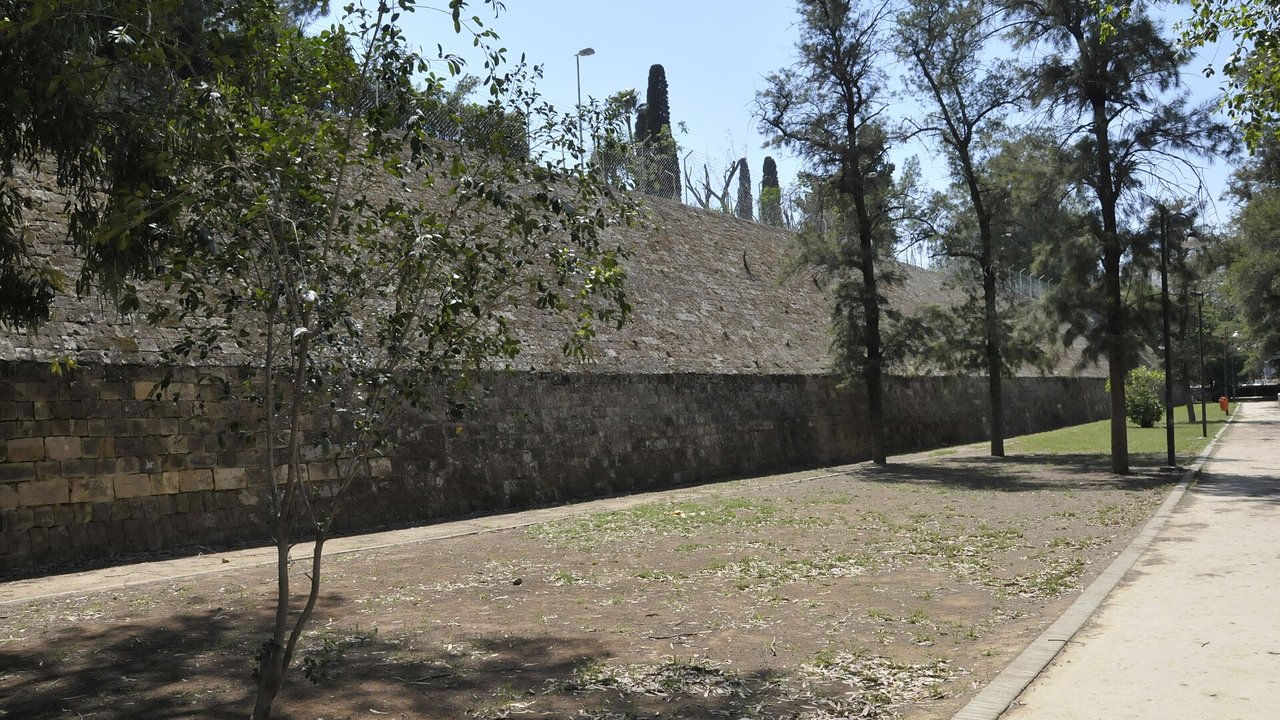
Venetian walls of Nicosia (Lefkoşa surları)
Visit North Cyprus says construction began in 1567 and was unfinished when the city fell in 1570. It describes a circuit of nearly five kilometres with eleven pentagon-shaped bastions and three gates.
Source: visitncy.com
Michal Klajban · CC BY-SA 4.0 · Wikimedia Commons Gate
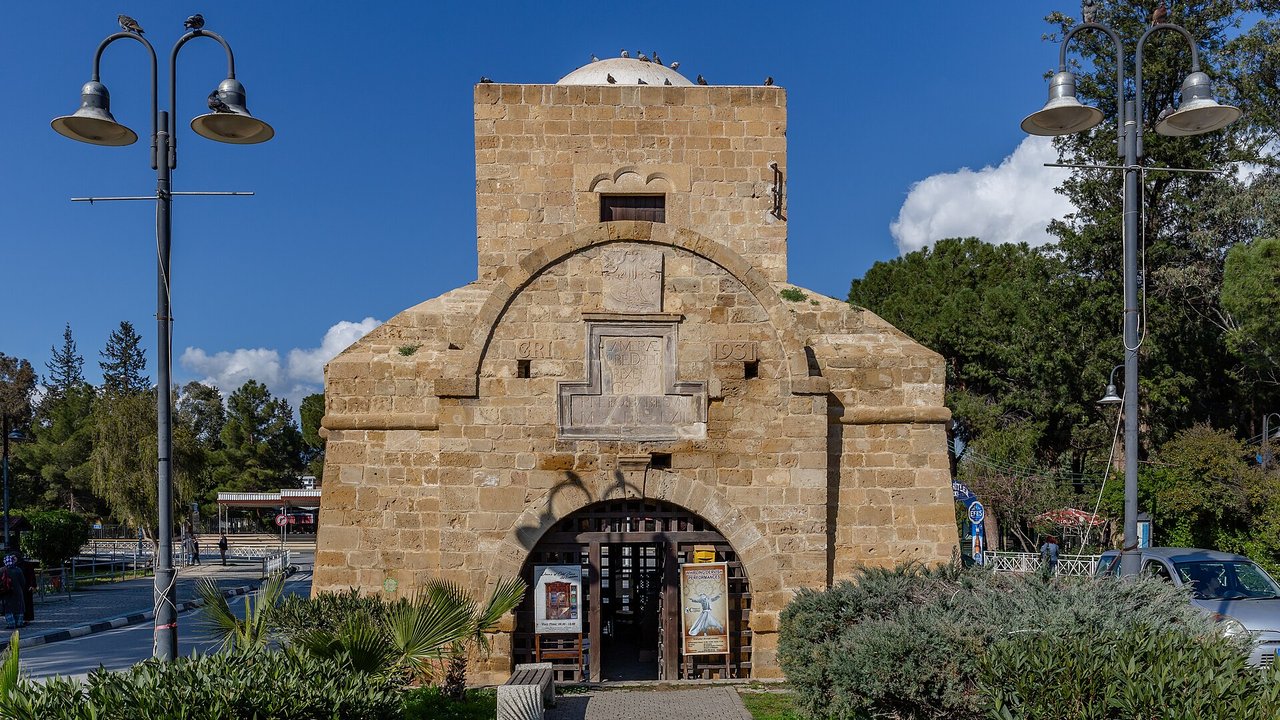
Kyrenia Gate (Girne Kapısı)
Visit North Cyprus dates the gate to around 1562 and gives its first name as Porta del Provveditore; a lion of Saint Mark is still visible. The Ottomans added Quranic inscriptions and, in 1821, a domed guard room and a plaque with the tughra of Sultan Mahmut II.
Source: visitncy.com
Seksen iki yüz kırk beş · CC BY-SA 4.0 · Wikimedia Commons Conservation
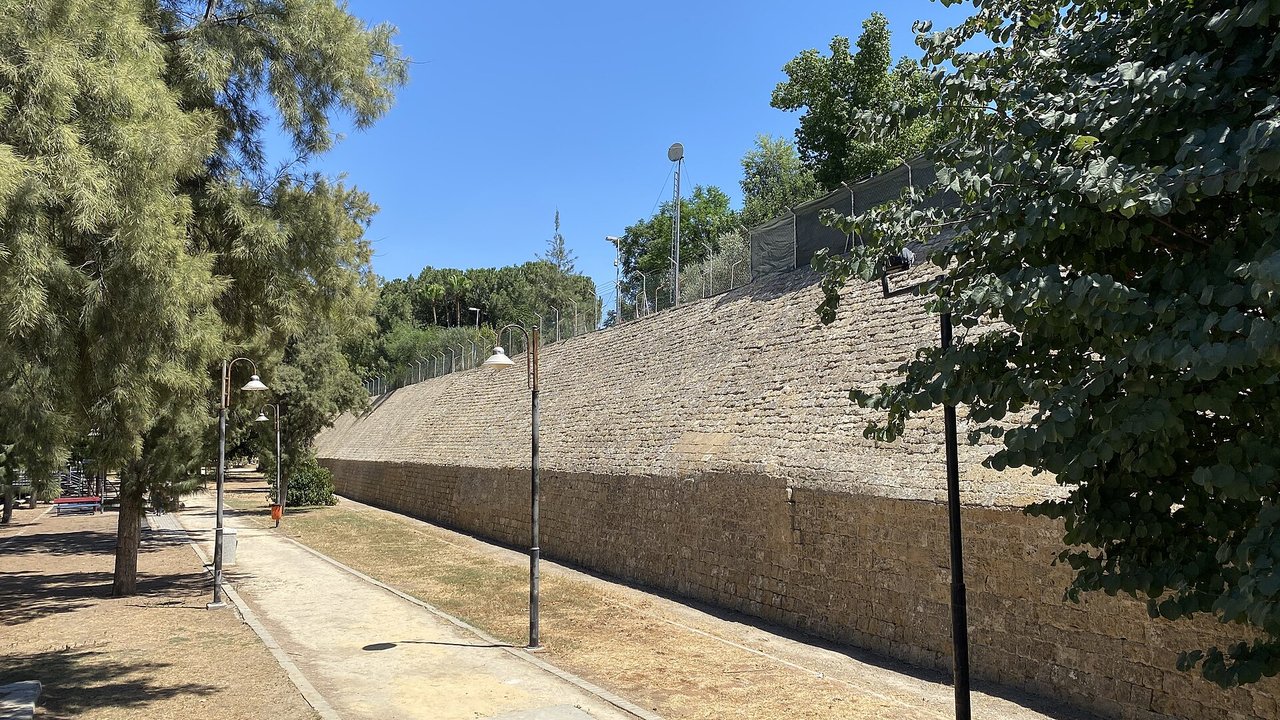
Wall sections Mula and Quirini (Kyrenia Gate to Flatro Bastion)
A UNDP factsheet says the Technical Committee on Cultural Heritage carried out emergency support and vegetation removal on 841 m of wall between November 2019 and September 2020. It states that the European Union funded the work and UNDP implemented it.
Source: files.acquia.undp.org
Diego Delso · CC BY-SA 4.0 · Wikimedia Commons Monument
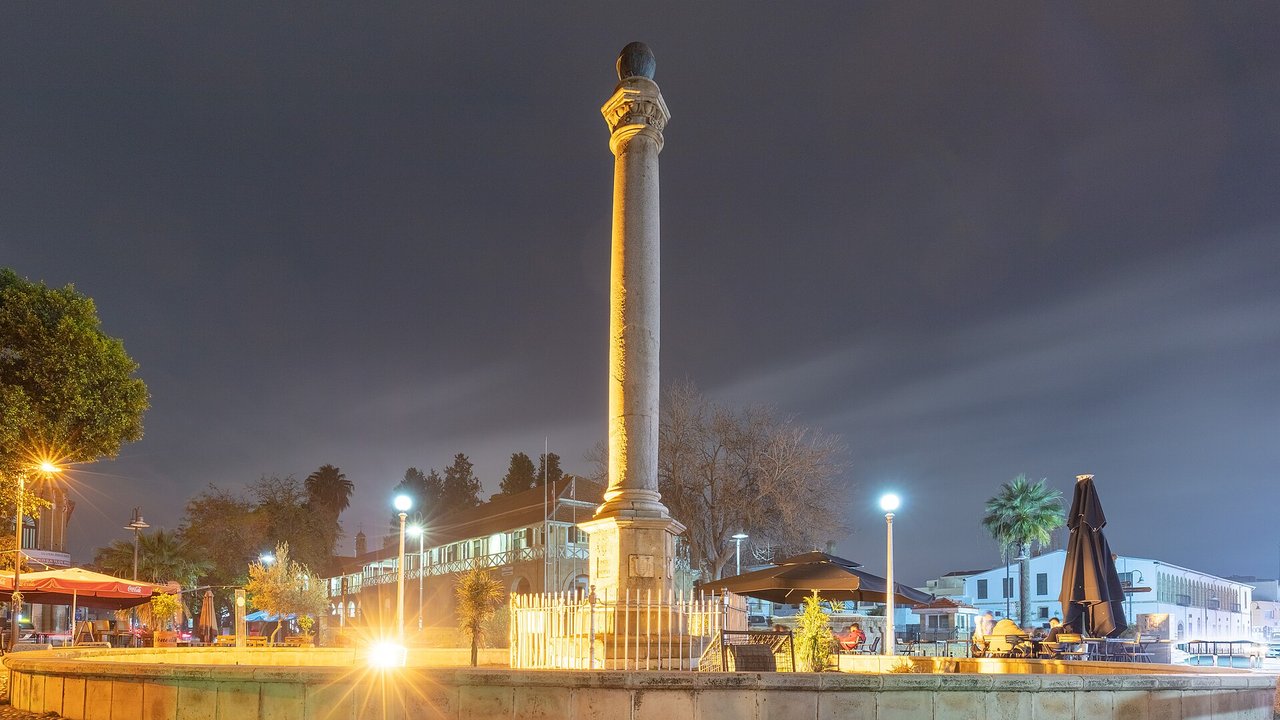
Venetian Column, Sarayönü (Venedik Sütunu)
Visit North Cyprus says the granite column came from the Temple of Zeus at Salamis and was set up in Nicosia in 1489 under Venetian rule, crowned by a lion of Saint Mark. It reports that the column was toppled in 1550 and re-erected by the British in 1915 with a bronze orb in place of the lion.
Source: visitncy.com
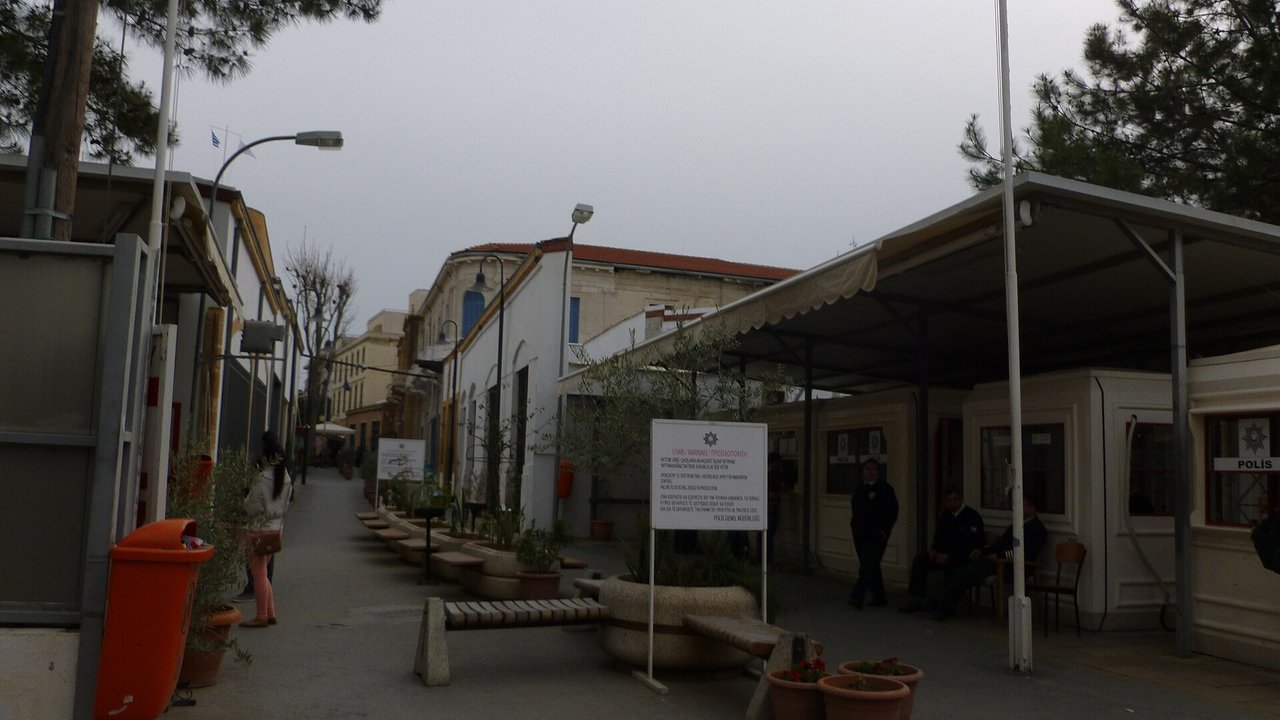
Monika · CC BY-SA 2.0 · Wikimedia Commons Crossing point
Ledra Street/Lokmacı crossing
A PRIO Cyprus Centre paper (2009) dates the opening of this crossing in the old commercial centre to 3 April 2008. Al Jazeera reported at the time that about 70 metres of the street lie inside the UN buffer zone.
Source: prio.org
1 / 7

Mosques and churches
According to Visit North Cyprus, Selimiye Mosque began as the Latin Cathedral of Saint Sophia, whose foundation stone was laid in 1209; it was consecrated in 1326 and became a mosque after the Ottoman capture of the city in 1570, with the first Friday prayer on 15 September. The name Selimiye dates from 1954. Cyprus Mail reported on 8 May 2025 that the mosque had reopened after five years of renovation.
Several other mosques in the walled city stand on or incorporate medieval churches. Visit North Cyprus describes Haydarpaşa Mosque as the 14th-century Lusignan church of St Catherine, and Yeni Cami as a later mosque built beside the ruins of a converted Gothic church. These are working places of worship; Visit North Cyprus asks visitors to remove shoes, dress modestly and avoid prayer times.
Christian heritage also remains in the northern part of the walled city. The European Heritage Awards describe the restored Armenian church and monastery in the Arab Ahmet quarter as a 14th-century Gothic building, and the Bedesten, described in the next section, was first built as a church.
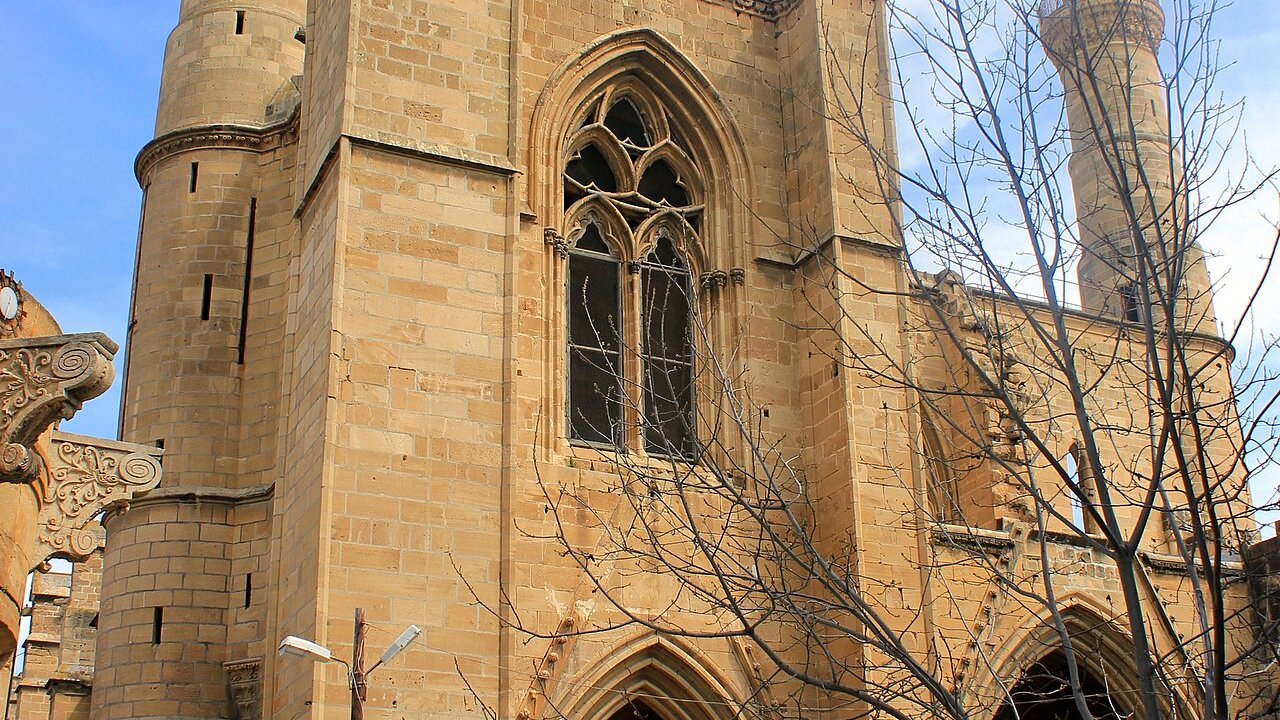
Julian Nyča · CC BY-SA 3.0 · Wikimedia Commons Mosque
Selimiye Mosque (Selimiye Camii, former St Sophia Cathedral)
Visit North Cyprus describes a Gothic cathedral begun in 1209 and consecrated in 1326, with two minarets, a mihrab and a minbar added after the conversion. It says the mosque holds about 2,500 worshippers and that visitors may go inside outside prayer times.
Source: visitncy.com
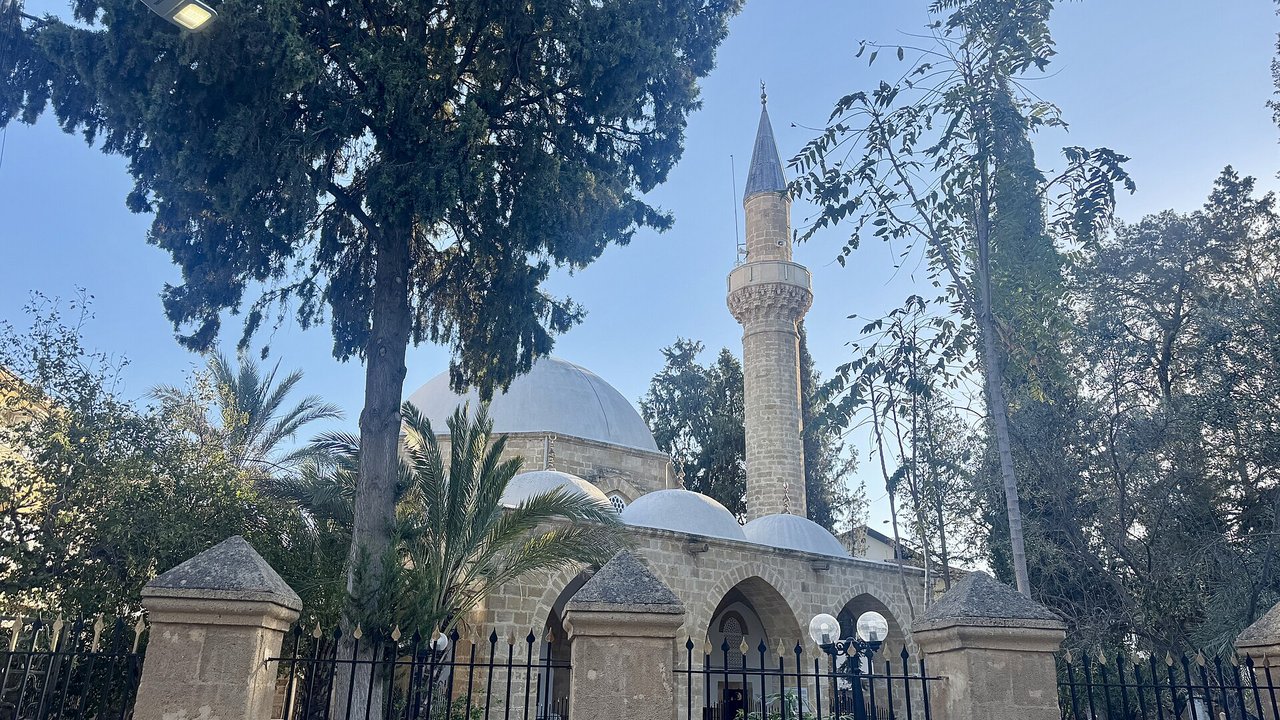
Pemav · CC BY-SA 4.0 · Wikimedia Commons Mosque
Arab Ahmet Pasha Mosque (Arabahmet Camii)
Visit North Cyprus dates the mosque to the late 16th century, on the site of a Latin church, and names it after a commander of the 1571 expedition. It describes a central dome, a garden with graves including that of Grand Vizier Mehmet Kamil Pasha, and 14th-century gravestones from the earlier church.
Source: visitncy.com
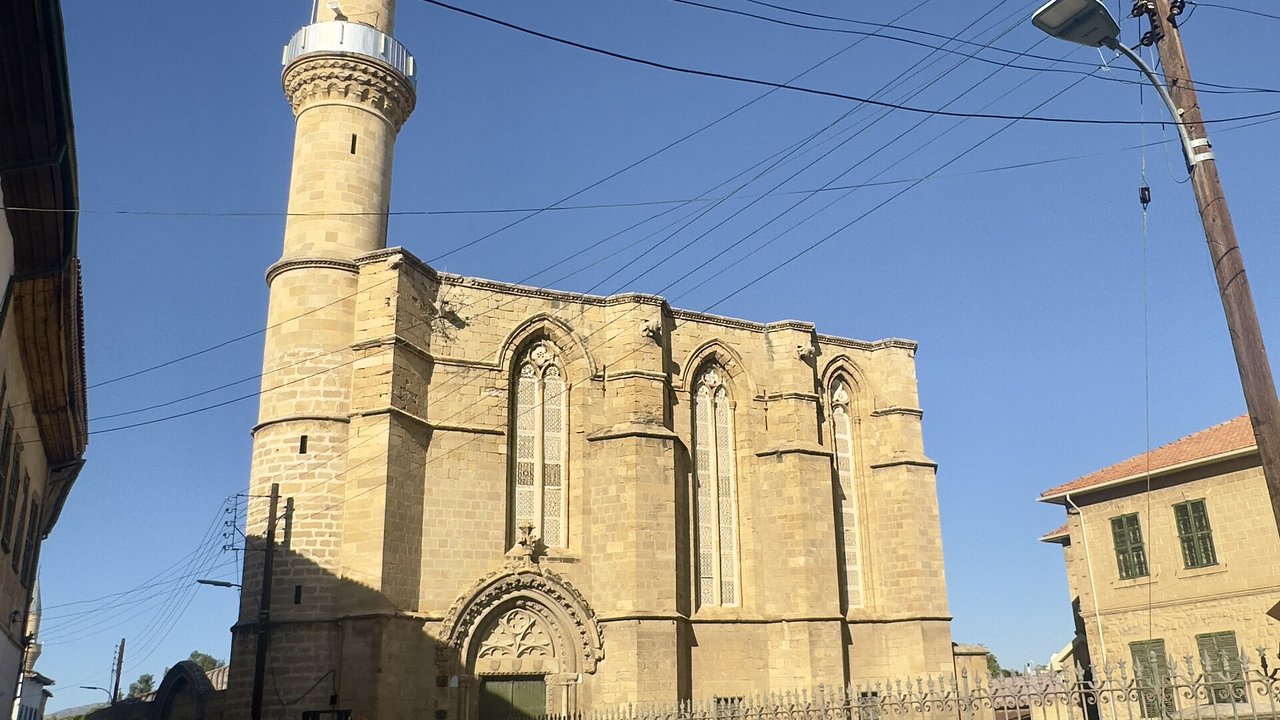
Pemav · CC BY-SA 4.0 · Wikimedia Commons Mosque
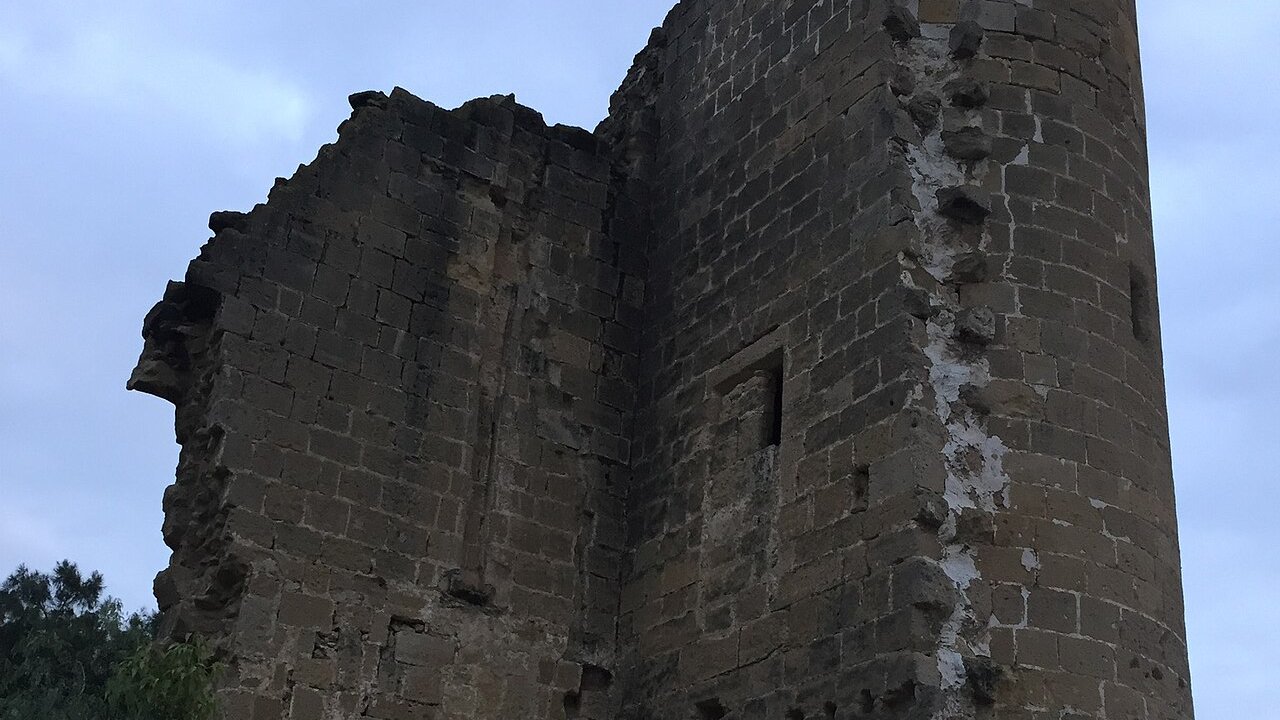
Haydarpaşa Mosque (former St Catherine's Church)
Visit North Cyprus says the Lusignans built St Catherine's Church in the 14th century in Gothic style and that it was converted into a mosque after 1570. It notes that the Ottoman minaret was struck by lightning and replaced by a shorter one.
Source: visitncy.com
Seksen iki yüz kırk beş · CC BY-SA 4.0 · Wikimedia Commons Mosque
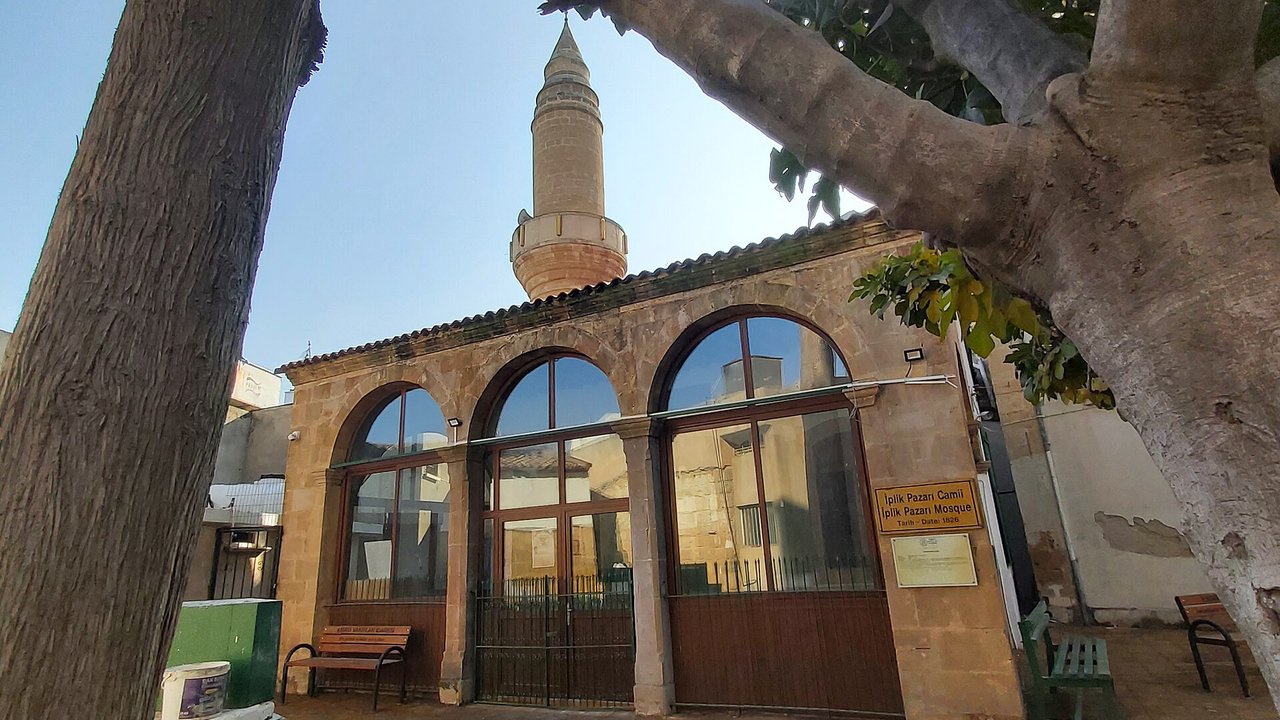
Yeni Cami (The New Mosque)
Visit North Cyprus says a 14th-century Gothic church on the site was converted into a mosque and collapsed in 1740 during a search for buried treasure. A new mosque was built nearby; an inscription over its entrance is dated 1899 and surviving parts of the original minaret stand in the old graveyard.
Source: visitncy.com
Basak · CC BY-SA 4.0 · Wikimedia Commons Mosque
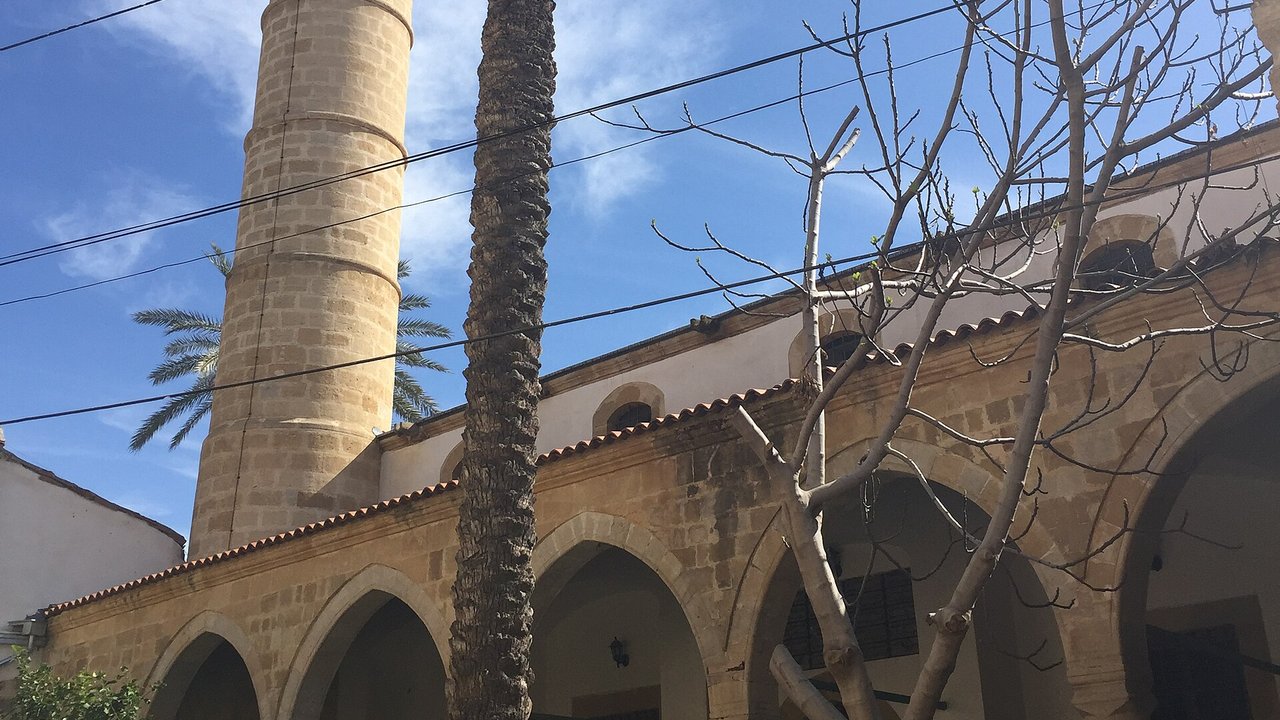
İplik Pazarı Mosque
Visit North Cyprus says the first mosque was built in 1826 by Hadji Ahmet Agha and rebuilt in 1899, keeping the 1826 minaret with its cut-stone conical top. The name comes from the cotton bazaar that operated here in the Ottoman period.
Source: visitncy.com
Seksen iki yüz kırk beş · CC BY-SA 4.0 · Wikimedia Commons Mosque
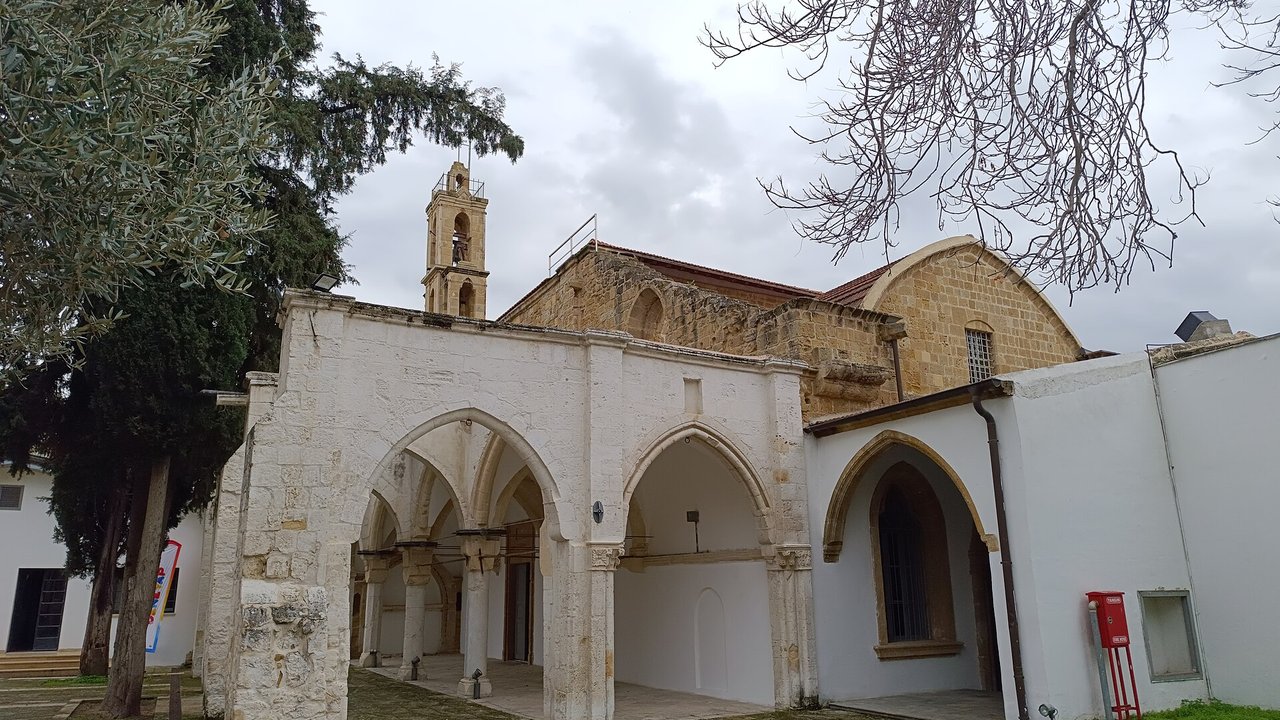
Turunçlu Mosque (Fethiye Camii)
Visit North Cyprus places the mosque at the western end of Arasta Street and says an inscription credits its rebuilding to Seyit Mehmet Emin Agha, Ottoman governor in 1825. It describes an L-shaped prayer hall, a wooden women's gallery and arcades on the north and west sides.
Source: visitncy.com
ToprakM · CC BY-SA 4.0 · Wikimedia Commons Church
Armenian Church and Monastery, Arab Ahmet quarter
The European Heritage Awards page describes a 14th-century Gothic church, misused and neglected since 1963, restored in a project begun in 2007 as part of a peace-building effort. The restoration received a European Heritage / Europa Nostra Award in 2015.
Source: europeanheritageawards.eu
1 / 7

Hans, markets, baths and old quarters
According to Visit North Cyprus, the Ottomans built Büyük Han in 1572, modelled on the Koza Han in Bursa, under Muzaffer Pasha, the first Ottoman governor of Cyprus. The TDV İslâm Ansiklopedisi entry adds that no inscription gives an exact date and that it was also known as the Alâiyeliler Hanı and Karamanlılar Hanı. The smaller Kumarcılar Hanı nearby is dated by Visit North Cyprus to the late 17th century.
The Bedesten and the Bandabulya market lie between the hans and Selimiye Mosque. Visit North Cyprus says the Bedesten served as a covered market in the Ottoman period and reopened in November 2009 as a venue and exhibition space; it says the current Bandabulya building dates from 1930 to 1932 and reopened in June 2012.
BRT reported that the Büyük Hamam reopened on 4 December 2024 after restoration led by the Cyprus Vakıflar Administration (Evkaf). Outside the hans, the Samanbahçe houses are an example of early 20th-century housing inside the walls, according to Evkaf. A few Lefkoşa stops suited to children are listed on the family days out page.
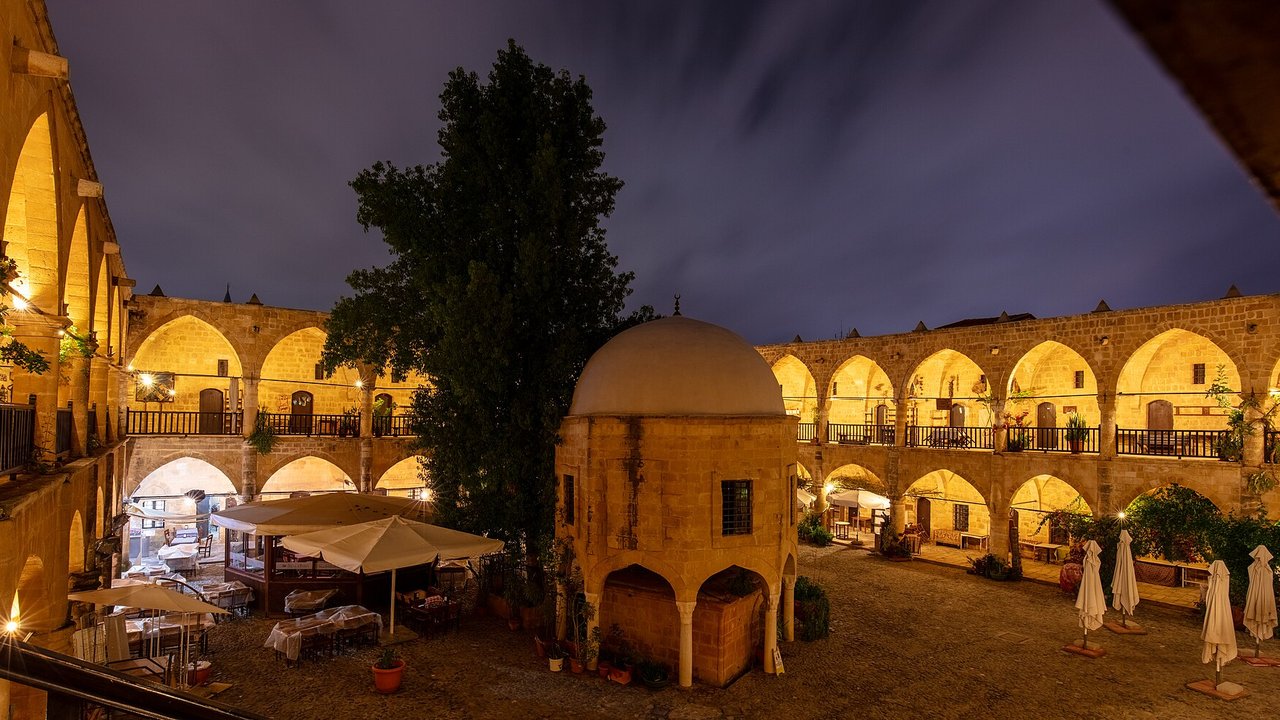
Diego Delso · CC BY-SA 4.0 · Wikimedia Commons Han (caravanserai)
Büyük Han (The Great Inn)
Visit North Cyprus describes a square two-storey inn of 68 rooms around a courtyard with a small mescit raised on six pillars over an ablution fountain. It says the building was used as Nicosia's Central Prison after 1878, was restored mainly in the 1990s and now holds galleries and workshops.
Source: visitncy.com
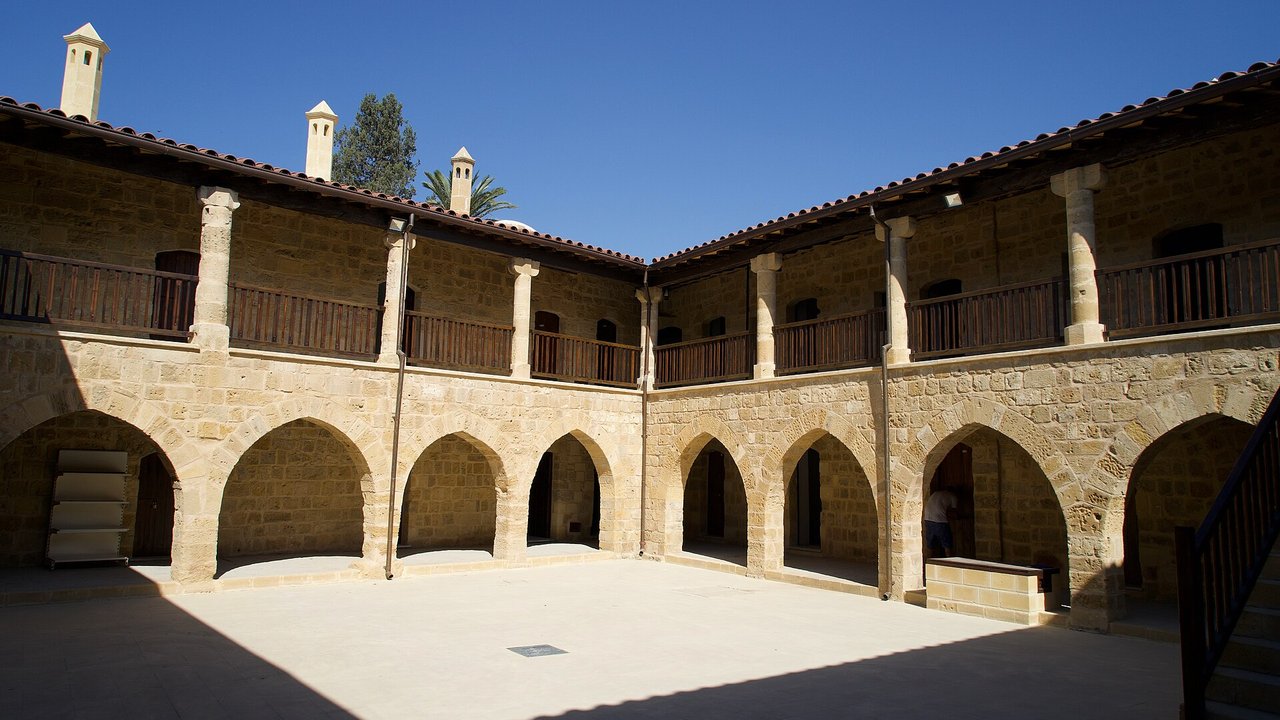
Mark Fischer · CC BY 4.0 · Wikimedia Commons Han (caravanserai)
Kumarcılar Hanı (Gambler's Inn)
Visit North Cyprus dates the inn to around the end of the 17th century and says it originally had 56 rooms on two floors around an open courtyard. It notes a carved entrance gate that predates the Ottoman conquest, and says the restored building holds cafes, restaurants and craft shops.
Source: visitncy.com
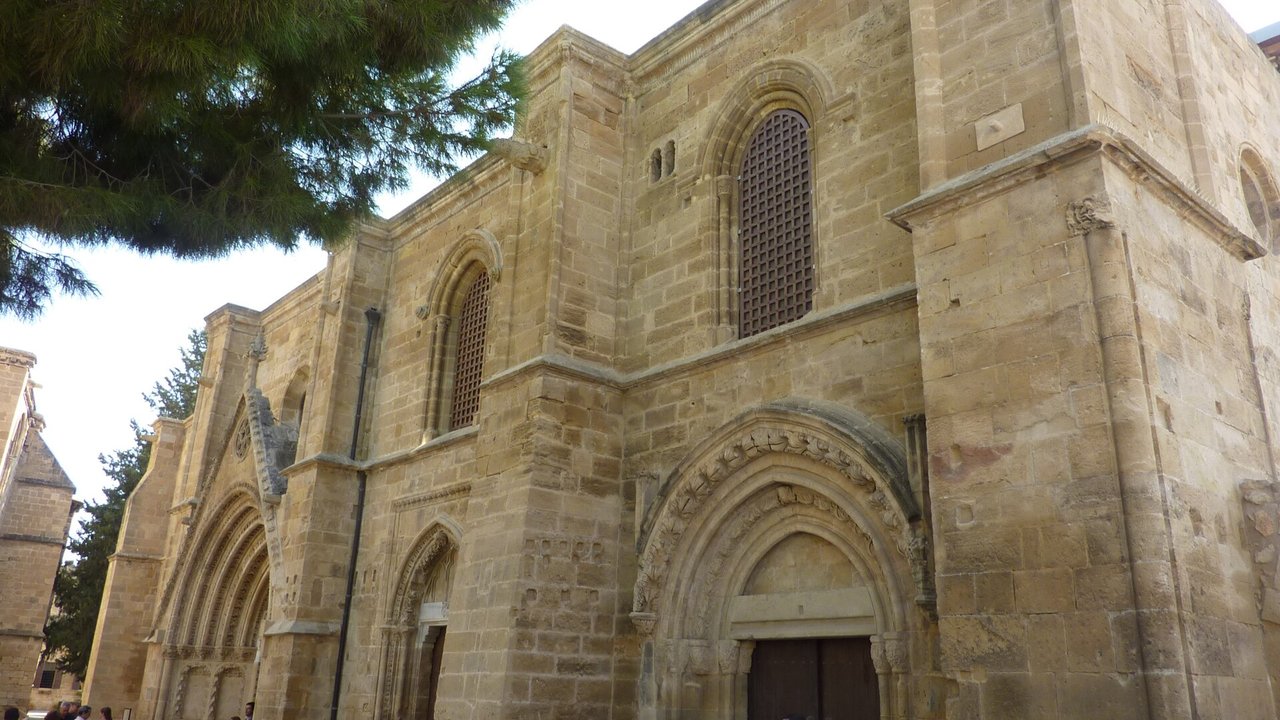
Chris06 · CC BY-SA 4.0 · Wikimedia Commons Historic building
Bedesten (former church of St Nicholas)
Visit North Cyprus says a church stood here from around the 6th century, was rebuilt in the Lusignan and Venetian periods and became an Ottoman covered market. It describes a north facade with a Gothic gate, a statuette of St Nicholas and coats of arms.
Source: visitncy.com
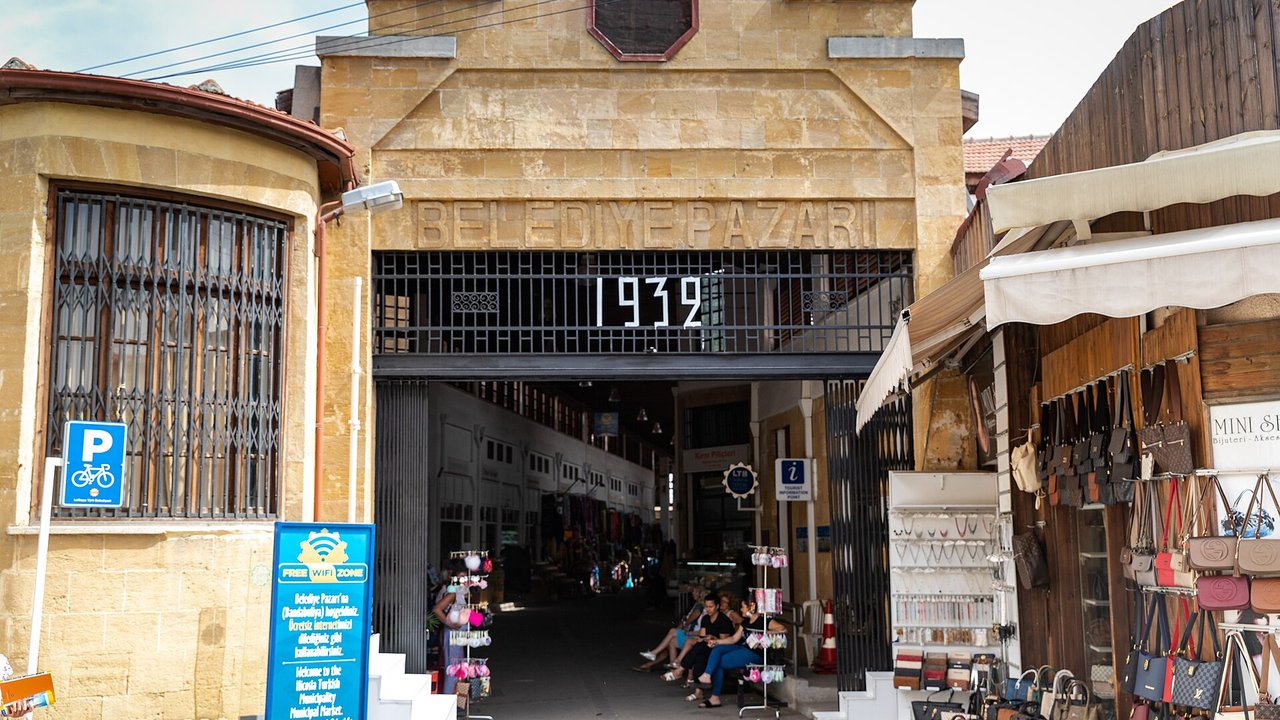
dronepicr · CC BY 2.0 · Wikimedia Commons Market
Bandabulya (Belediye Çarşısı, municipal market)
Visit North Cyprus says the covered municipal market was built between 1930 and 1932, closed in 2010 for renovation and reopened in June 2012. It lists stalls, cafes, bookshops and a small theatre.
Source: visitncy.com
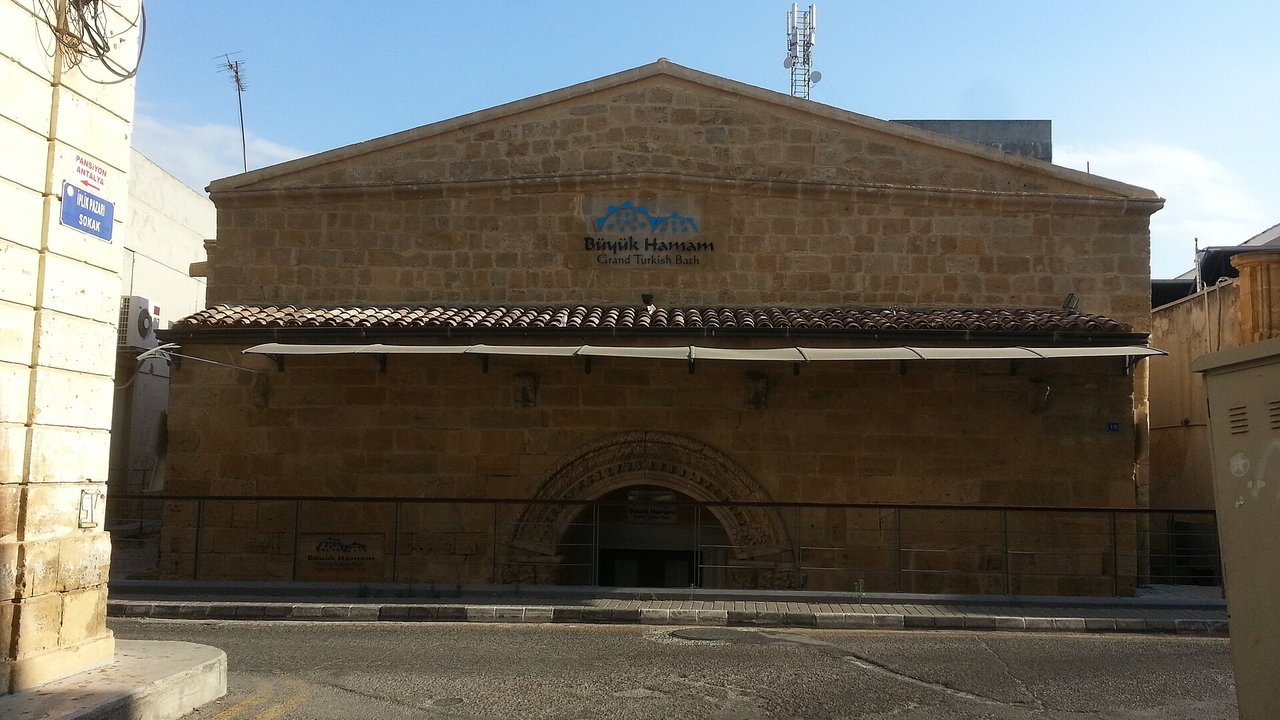
Seksen iki yüz kırk beş · CC BY-SA 4.0 · Wikimedia Commons Bath
Büyük Hamam (Great Turkish Bath)
Visit North Cyprus says the bath was built between 1571 and 1590 on the site of the 14th-century church of St George of the Poulains, whose main entrance survives. The entrance now lies about 2 metres below street level.
Source: visitncy.com
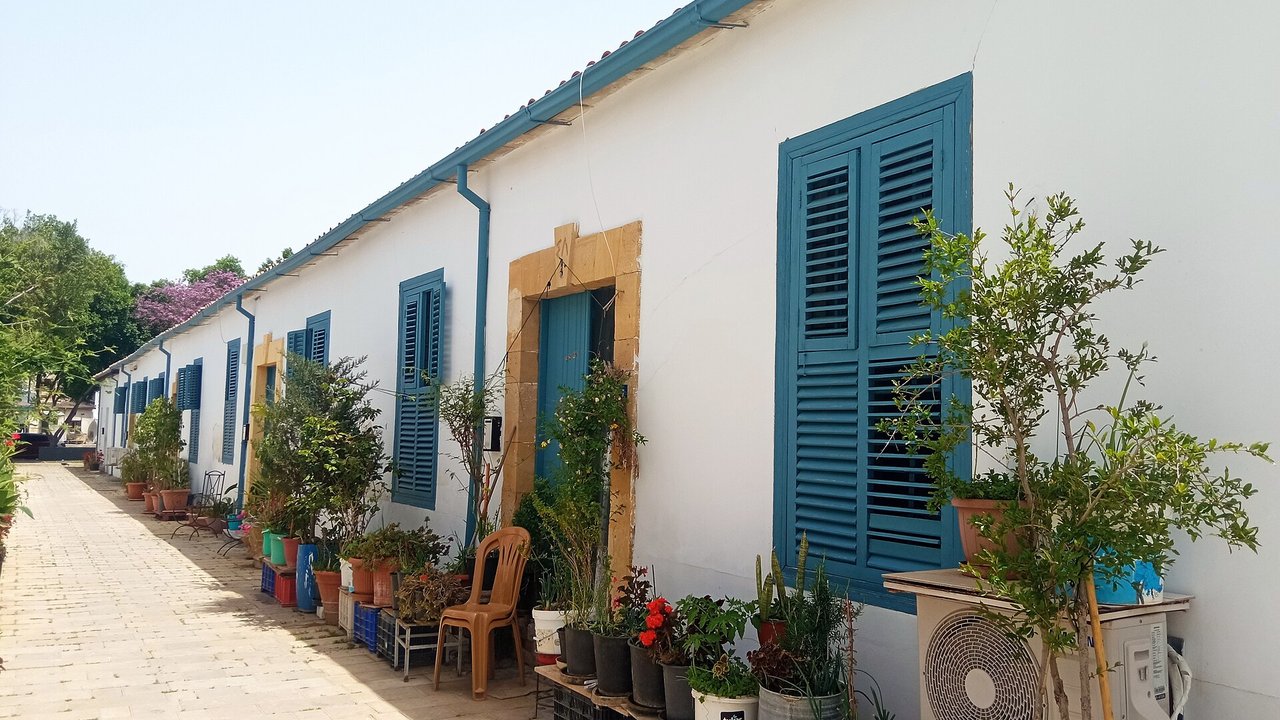
YamanB · CC BY-SA 4.0 · Wikimedia Commons Historic quarter
Samanbahçe houses
The Cyprus Vakıflar Administration says 60 houses were built in 1918 to 1925 on land of the Şaban Pasha Foundation, and more in 1955 to 1957, making 72 houses on 9 streets for rent to families in need. It reports a restoration financed by UNOPS in September 2003.
Source: evkaf.org
1 / 6

Museums run by the Department of Antiquities and Museums
The Department of Antiquities and Museums (Eski Eserler ve Müzeler Dairesi) lists eight museums and sites in the Lefkoşa region: the Mevlevi Museum, Derviş Paşa Mansion, the Lusignan House, the Lapidary Museum, the Bedesten Medieval Tombstones Museum, Saçaklı Ev, the Turkish Cypriot History, Culture and National Struggle Museum and the Museum of Barbarism. The Department publishes visiting hours separately; this page does not repeat them.
Two of the museums present the period from 1963 to 1974 from the Turkish Cypriot perspective. Their names and descriptions here are those used by the Department; Greek Cypriot accounts of the same period differ, and the island's history is covered on the About North Cyprus guide.
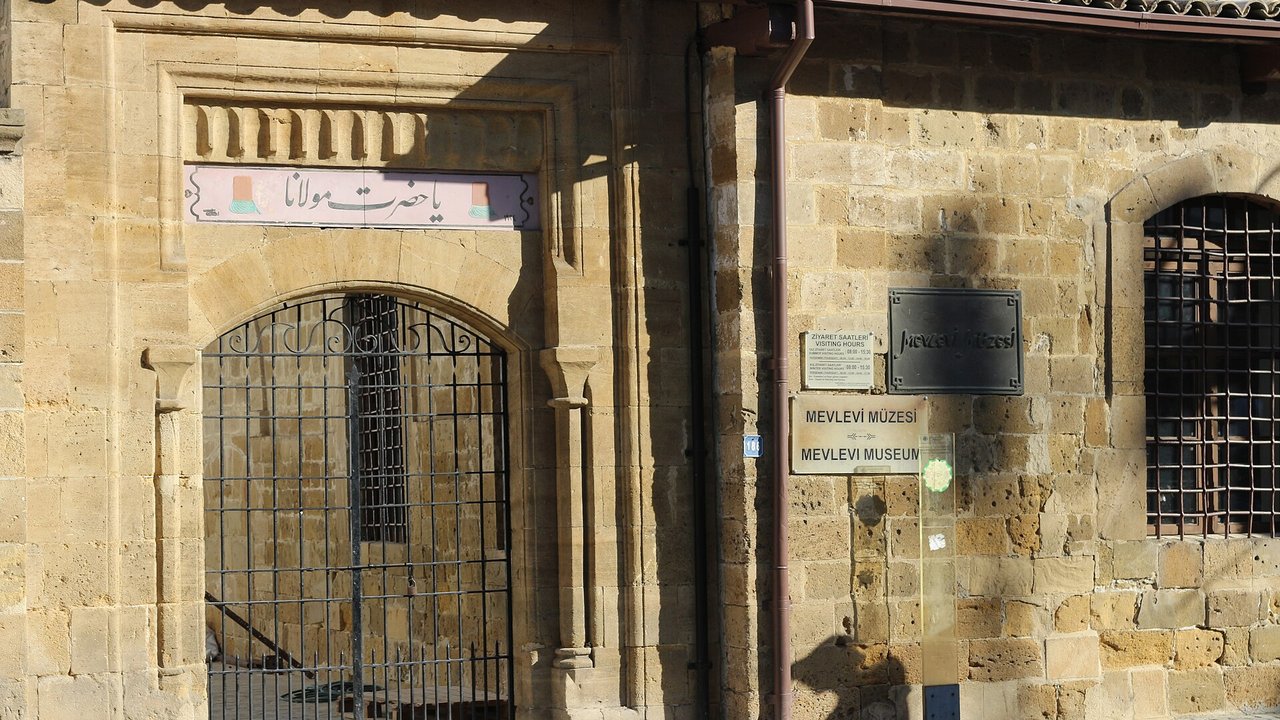
Edaislam · CC BY-SA 4.0 · Wikimedia Commons Museum
Mevlevi Museum (Mevlevi Tekkesi), by Kyrenia Gate
The Department dates the lodge to the early 17th century, on land donated by Emine Hatun, and says the first Turkish museum on the island opened here in 1963. Only the semahane and a tomb section with six domes and 16 graves survive; when checked on 24 October 2026 the Department's page stated that the museum is currently closed for restoration.
Source: eemd.gov.ct.tr
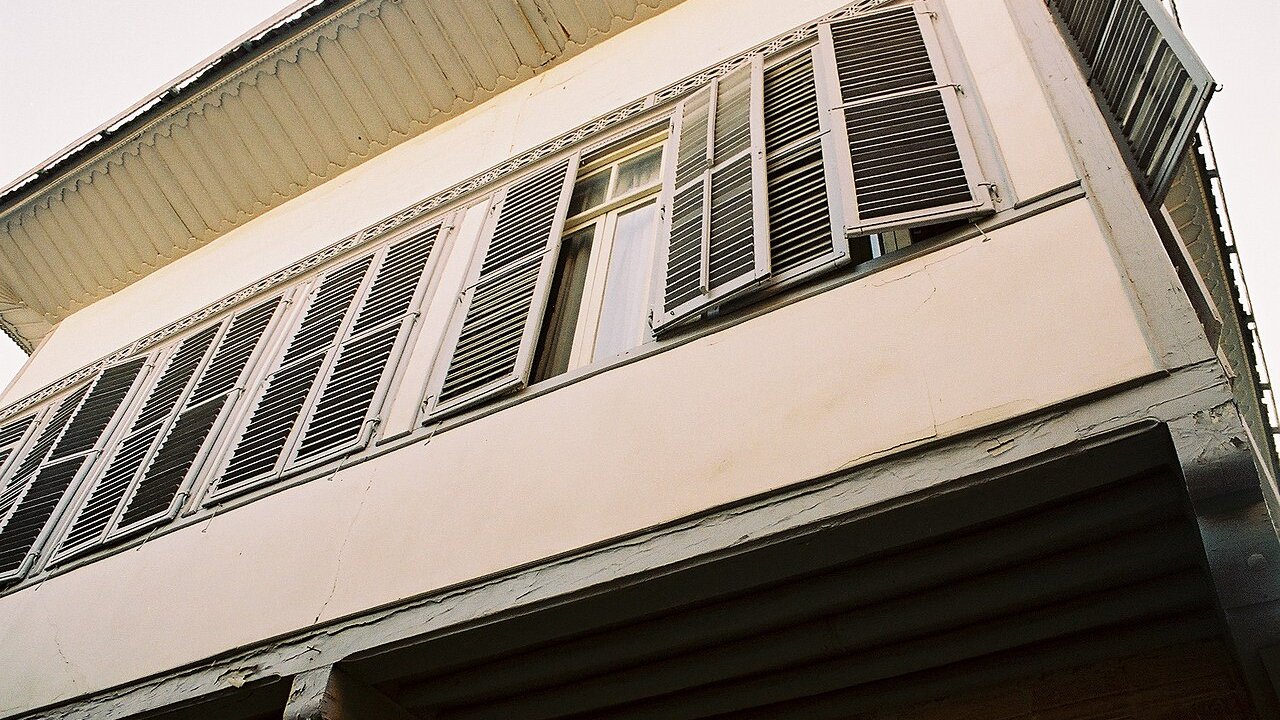
Anjadora · CC BY-SA 2.0 · Wikimedia Commons Museum
Derviş Paşa Mansion (Derviş Paşa Konağı Etnoğrafya Müzesi)
The Department says the two-storey courtyard house in the Arabahmet quarter carries an inscription dated 1807 and belonged to Derviş Paşa, publisher of Zaman, the first Turkish newspaper in Cyprus. It was restored from 1979 to 1986 and opened as an ethnography museum on 21 March 1988.
Source: eemd.gov.ct.tr
Chris06 · CC BY-SA 4.0 · Wikimedia Commons Museum
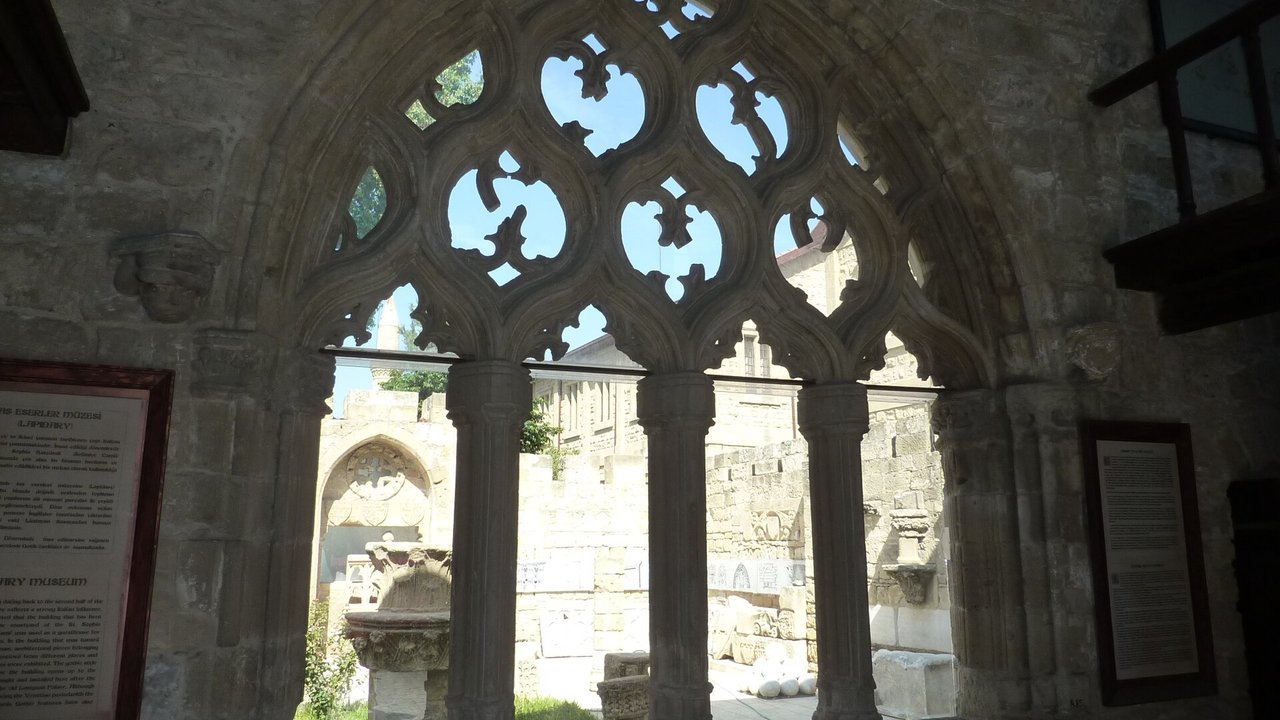
Lapidary Museum (Taş Eserler Müzesi)
Visit North Cyprus describes a two-storey Venetian-style building of the mid-15th century east of Selimiye Mosque, which reopened in 2003. It lists a Dampierre family sarcophagus, a marble lion of Saint Mark and a Gothic window taken from the Lusignan palace demolished in 1901.
Source: visitncy.com
Biologg · CC BY-SA 4.0 · Wikimedia Commons Culture house
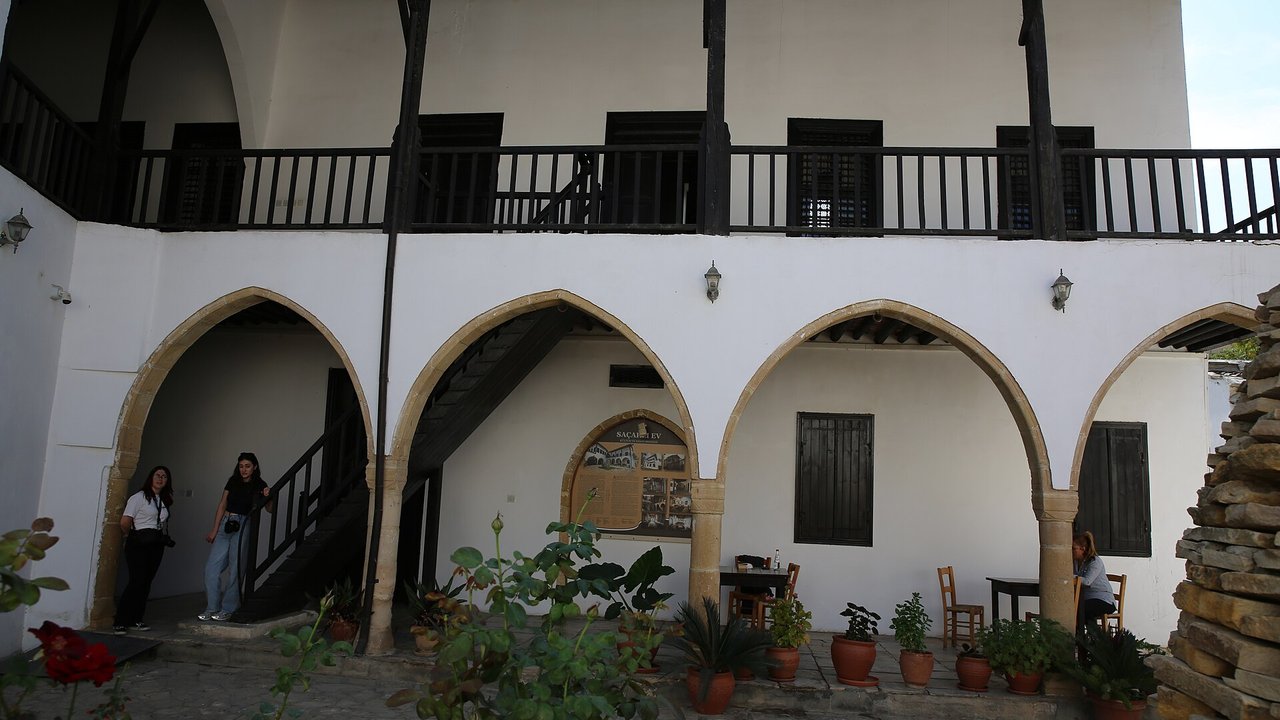
Saçaklı Ev (House with Eaves)
The Department describes an L-shaped two-storey house on Kütüphane Sokak in the Selimiye quarter, with a Gothic arch found during restoration and a 1932 inscription. It was restored in 1994 to 1996 for use as a culture and arts house; the visiting hours page lists it as closed for restoration.
Source: eemd.gov.ct.tr
Biologg · CC BY-SA 4.0 · Wikimedia Commons Museum
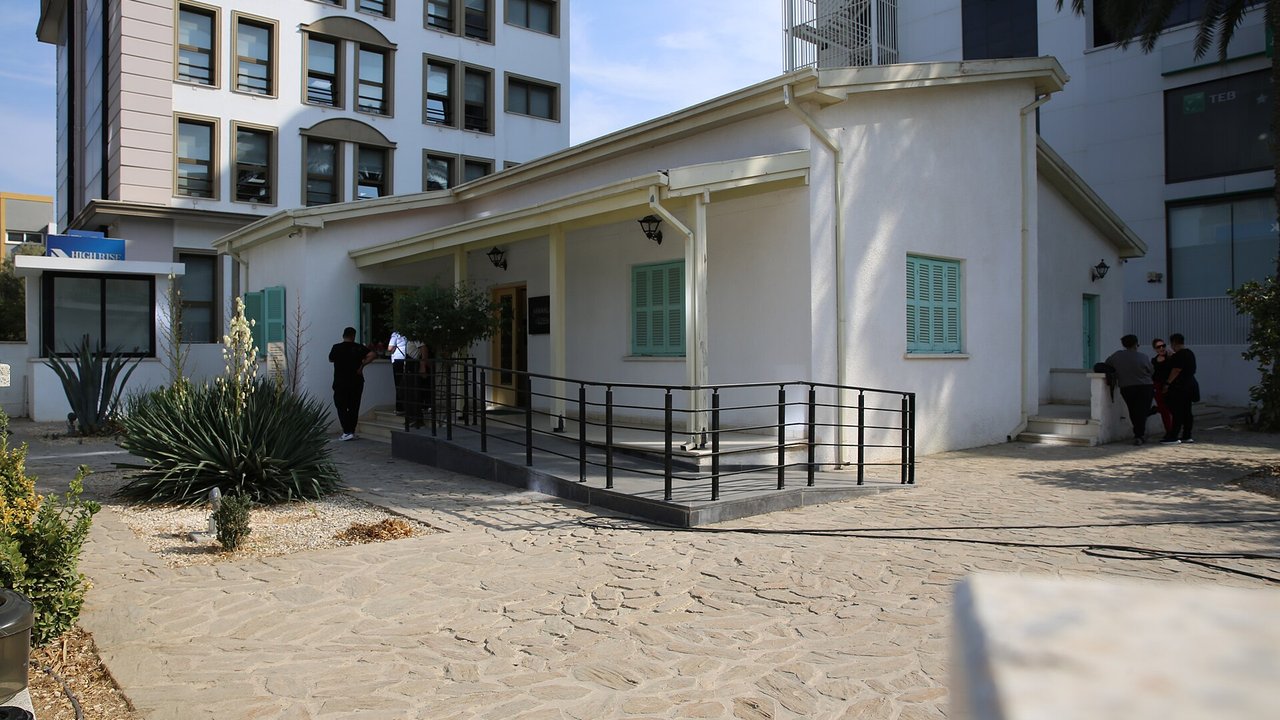
Museum of Barbarism (Barbarlık Müzesi), Kumsal
The Department describes the house where, on the night of 24 December 1963, a mother, her three children and another woman were killed. It opened as a museum on 1 January 1966 and reopened after restoration on 17 August 2022.
Source: eemd.gov.ct.tr
1 / 8
Practical notes
- The Department of Antiquities and Museums publishes visiting hours for its museums. This page states no hours, fees or ticket rules; check the Department before visiting.
- At the time of checking, the Department's visiting hours page listed Saçaklı Ev as closed for restoration and the Bedesten Medieval Tombstones Museum as closed.
- Selimiye and the other mosques listed are working places of worship. Visit North Cyprus asks visitors to remove shoes, dress modestly, keep quiet and avoid the five daily prayer times.
- Crossing at Ledra Street/Lokmacı depends on nationality and documents; see the government, districts and crossings page.
- Spellings differ between sources (Arabahmet or Arap Ahmet, Bandabulya or Bandabuliya, Kumarcılar Hanı or Gambler's Inn). Dates also vary: Visit North Cyprus gives 1572 for Büyük Han, while the TDV İslâm Ansiklopedisi says no inscription fixes the date.
Frequently asked questions
What are the main places to see in North Nicosia (Lefkoşa)?
Official and tourism sources list the Venetian walls and Kyrenia Gate, Selimiye Mosque, Büyük Han, Kumarcılar Hanı, the Bedesten, the Bandabulya market and the museums run by the Department of Antiquities and Museums, including the Mevlevi Museum, Derviş Paşa Mansion and the Lusignan House.
Was Selimiye Mosque in Nicosia a cathedral?
Yes. Visit North Cyprus says it began as the Latin Cathedral of Saint Sophia, with a foundation stone laid in 1209 and consecration in 1326. It became a mosque after the Ottoman capture of Nicosia in 1570, and was named Selimiye in 1954.
When was Büyük Han built?
Visit North Cyprus says the Ottomans built it in 1572 under Muzaffer Pasha, the first Ottoman governor of Cyprus. The TDV İslâm Ansiklopedisi notes that no inscription gives an exact date and dates it to around 1572.
How many gates and bastions do the walls of Nicosia have?
Visit North Cyprus describes three gates and eleven bastions. Kyrenia Gate is in the northern part of the city; five bastions are on the Turkish Cypriot side and one is under United Nations control, according to the same source.
What is in the Mevlevi Museum in Lefkoşa?
The Department of Antiquities and Museums says the semahane shows material on Mevlana's philosophy, musical instruments and a copy of the Mesnevi, and a dervish cell shows the Mevlevi kitchen. The tomb section has six domes and 16 graves.
What is the Museum of Barbarism (Barbarlık Müzesi)?
The Department of Antiquities and Museums describes it as the house in Kumsal where a mother, her three children and another woman were killed on the night of 24 December 1963. It opened as a museum in 1966 and reopened in 2022. The description is the Department's.
Where is the Ledra Street/Lokmacı crossing?
It is in the old commercial centre of the walled city. A PRIO Cyprus Centre paper dates its opening to 3 April 2008. Crossing rules and documents are covered on the government, districts and crossings page.
Where can I find opening hours for museums in Lefkoşa?
The Department of Antiquities and Museums publishes visiting hours for its museums and sites on its own website. This page does not repeat hours or fees, because they change; check the Department's page before visiting.
What is the Venetian Column in Sarayönü?
Visit North Cyprus says the granite column came from the Temple of Zeus at Salamis and was set up in Nicosia in 1489. It was toppled in 1550 and re-erected by the British in 1915 with a bronze orb in place of the lion of Saint Mark.
Sources
- Department of Antiquities and Museums (Eski Eserler ve Müzeler Dairesi): Museums and sites
- Department of Antiquities and Museums: Visiting hours page
- Department of Antiquities and Museums: Mevlevi Museum
- Department of Antiquities and Museums: Derviş Paşa Mansion Ethnography Museum
- Department of Antiquities and Museums: Lusignan House Museum
- Department of Antiquities and Museums: Bedesten Medieval Tombstones Museum
- Department of Antiquities and Museums: Saçaklı Ev
- Department of Antiquities and Museums: Turkish Cypriot History, Culture and National Struggle Museum
- Department of Antiquities and Museums: Museum of Barbarism
- Visit North Cyprus: Nicosia
- Visit North Cyprus: Old City Walls
- Visit North Cyprus: Kyrenia Gate
- Visit North Cyprus: The Venetian Column
- Visit North Cyprus: Selimiye Mosque
- Visit North Cyprus: Arabahmet Mosque
- Visit North Cyprus: Haydarpasha Mosque
- Visit North Cyprus: The New Mosque
- Visit North Cyprus: Iplik Bazaar Mosque
- Visit North Cyprus: Turunclu Mosque
- Visit North Cyprus: The Great Inn
- Visit North Cyprus: Gambler's Inn
- Visit North Cyprus: Bedesten
- Visit North Cyprus: Bandabulya, Nicosia
- Visit North Cyprus: Büyük Hamam (The Great Turkish Bath)
- Visit North Cyprus: Lapidary Museum
- TDV İslâm Ansiklopedisi: Büyük Han
- Cyprus Vakıflar Administration (Evkaf): Samanbahçe mass housing
- BRT: Büyük Hamam reopens (4 December 2024)
- Cyprus Mail: Nicosia's Selimiye mosque reopens after restoration work (8 May 2025)
- European Heritage Awards / Europa Nostra: Armenian Church and Monastery in Nicosia (2015)
- UNDP Cyprus: Nicosia Walls (Kyrenia Gate to Flatros Bastion) factsheet
- Ongul, Z. (2020). Venetian Walls of Nicosia: Between Kyrenia Gate - Barbaro Bastion. FORTMED 2020, Eastern Mediterranean University repository
- Üzümcüoğlu, D. (2016). Analyzing the Moat of Walled City of Nicosia as a Public Open Space. Eastern Mediterranean University master's thesis
- Jacobson, D., Musyck, B., Orphanides, S., Webster, C. (2009). The Opening of Ledra Street/Lockmaci Crossing in April 2008. PRIO Cyprus Centre
- Al Jazeera: Cyprus reopens partition crossing (4 April 2008)
Questions about North Cyprus?
Write to NORTHEA for a private conversation about areas, hotels or property.