
About North Cyprus · Culture
Turkish Cypriot culture and traditions
As of 24 October 2026, sources describing Turkish Cypriot culture cover the Cypriot Turkish dialect, folk dances and songs, wedding customs, local festivals, handicrafts, Karagöz shadow theatre and folk tales. This page summarises what the TRNC Public Information Office, the TRNC Department of Antiquities and Museums, papers from the 9th International Turkish Culture Congress held in Lefkoşa in 2021, university theses and dated BRTK reports describe. Some traditions, such as Lefkara work, belong to the whole island; each entry says which geography its source describes.
Checked 31 October 2026 against the sources named in the text and listed below. Positions of parties are attributed to them.
The Cypriot Turkish dialect (Kıbrıs Türkçesi)
According to Nurettin Demir's "Notes on Cyprus dialects", published on the Çukurova University Turcology site, Cypriot Turkish marks yes/no questions by stressing the last syllable and uses the question particle much less often than standard Turkish, so **Geldín?** means "Did you come?". Demir also describes frequent use of the predicative suffix -dir, even when people introduce themselves on the phone (**Alidir**), and the aorist used for the present tense (**çalışırık**, "we work" or "we are working").
Orhan Kabataş, writing in the 2006 Türk Dili Araştırmaları Yıllığı Belleten, argues that the dialect's sound features should be compared with Old Turkic, Old Anatolian Turkish and Anatolian dialects rather than with standard Turkish. A paper by Osman Erciyas of European University of Lefke, given at the 9th International Turkish Culture Congress, traces everyday words that came from Italian, Venetian, French, Greek and English and became local.
Kabataş calls it scientifically inaccurate to speak of a single "Kıbrıs ağzı" and describes a group of dialects. The sources accordingly describe general features and, separately, features tied to named places: Demir records sound changes in Karpaz and a /z/ development mostly heard around Gazimağusa, Mustafa Argunşah singles out Lefkoşa speech, and Elinor Payne and colleagues studied four speakers in Nicosia. A 2014 Eastern Mediterranean University master's thesis by Meryem Betmezoğlu analyses only words beginning with a vowel, taken mainly from three published dictionaries.
1 / 11

Folk music and dances
The TRNC Public Information Office says folk dances hold an important place in Turkish Cypriot culture, that they are built around themes from traditional customs and entertainment, and that TRNC folk dance teams have won awards at international festivals. Visit North Cyprus says the dances are traditionally performed by men and women together and describes karşılama and sirto, accompanied by zurna, davul, darbuka and violin.
Feyzan Göher's paper on wedding traditions in Cypriot folk songs, given at the 9th International Turkish Culture Congress (Lefkoşa, 2021; published 2024), names Kıbrıs çiftetellisi, susta, zeybek tunes, Konyalı and Köroğlu among tunes widely danced at weddings. Ilias Abdoulline of Near East University (European Journal of Arts, 2017) describes karşılama as a four-part suite on a 9/8 basis danced by men and women.
Several authors describe a repertoire shared across the island. Bugce Dikmenay (2023) concludes that Turkish Cypriot and Greek Cypriot folk dance music are largely similar after centuries in the same geography, with differences tied mainly to religion and to each community's ties with Turkey and Greece. Cem Kafkas's 2001 Istanbul Technical University thesis reports Greek Cypriot, Arab-Islamic and Mediterranean influences in Turkish folk music in Cyprus. In 1994 the editor of HASDER's journal Halkbilimi warned that dance figures were disappearing and local dances were losing their original structure.
1 / 13

Wedding customs as sources describe them
According to Göher's paper, Turkish Cypriot weddings once lasted about a week and have since become shorter; the paper follows the stages through the folk songs sung at each one. It describes mani quatrains sung when asking for the bride, quilt stitching (yorgan dikimi) for the dowry on the first day, usually a Monday, the bride's bath (gelin hamamı) on Wednesday, the henna night, and the bride being taken to the groom's house with davul and zurna.
A 2022 Near East University study by Yeşim Üstün Aksoy, Dilan Çiftçi and Şevket Öznur, based on interviews with 60 people in Lefkoşa, Gazimağusa, Girne and Güzelyurt, describes weddings as planned in three stages: before the wedding, the wedding and after the wedding. Mustafa Sever's study of Cypriot folk tales notes that tales speak of weddings lasting forty days and nights.
The sources used here describe customs remembered from earlier decades; practice today varies by family and village. Dishes served at celebrations are covered on the traditional food and sweets page.
1 / 11

Festivals and annual events
The TRNC Public Information Office lists the Girne Olive Festival (October), the Güzelyurt Orange Festival (June–July), Büyükkonuk Eco Days (May and October), the International Bellapais Music Festival (May–June), the International Mağusa Culture-Art Festival (June–July), the Cyprus Theatre Festival (September), Girne Culture and Art Days and the Lefke Date Palm Festival. It gives no exact dates and refers readers to municipal and festival pages for current information.
Dated reports describe recent editions. BRTK reported on 16 June 2026 that the 48th Güzelyurt Orange Festival had opened the previous evening with a parade to the Festival Park and would run until 21 June 2026. On 2 October 2025 BRTK reported that the 24th International Olive Festival, organised by Girne Municipality, had opened in the village square of Zeytinlik and would run until 5 October. On 20 August 2025 BRTK announced the 15th International Lefkoşa Folk Dance Festival for 28 August to 1 September at Kızılbaş Park.
Religious observances do not appear on these official festival pages. A 2022 Near East University article describes Hıdırellez as a spring festival celebrated on 6 May across the Turkish world but does not mention Cyprus, and no source checked for this page described a specific Hıdrellez event in North Cyprus. For the towns named here see districts and towns.
1 / 12

Traditional crafts: island-wide and local
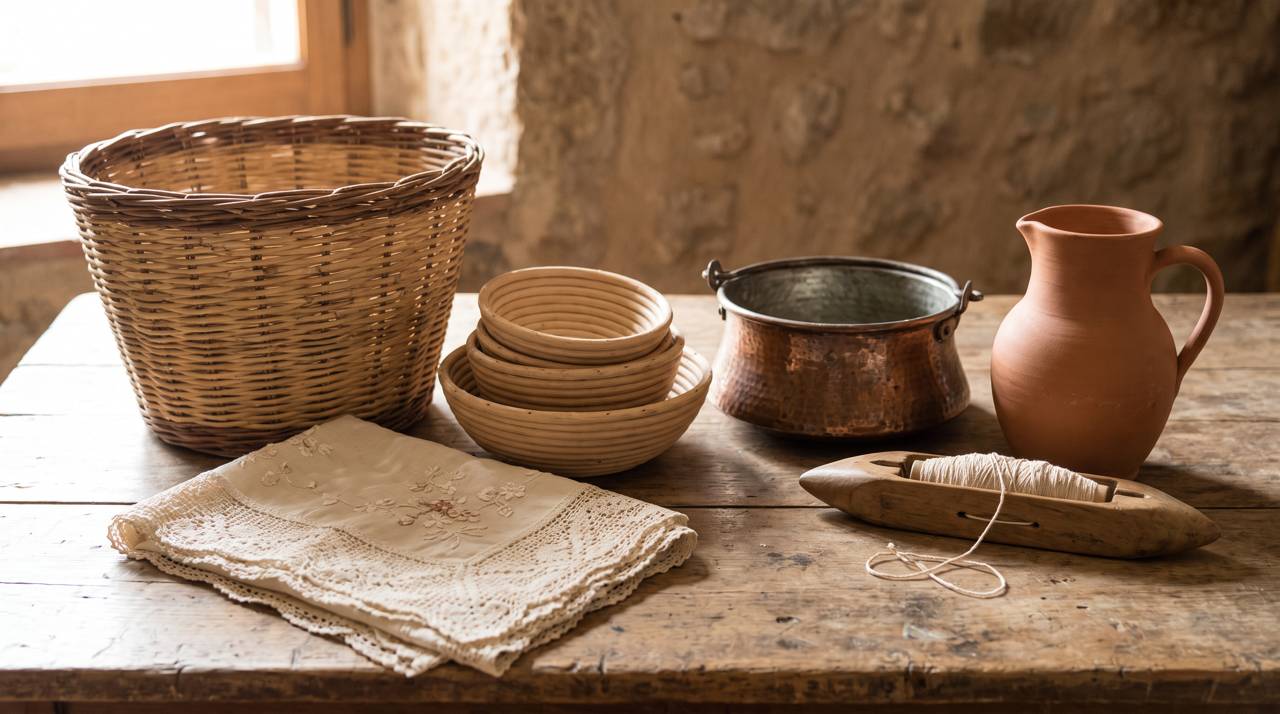
The TRNC Public Information Office lists wood carving, knitting, hand-woven fabrics, silkworm cocoon work, traditional costumes and needlework as crafts made in North Cyprus, and says some objects that once had practical uses are now mainly decorative. Aysen Soysaldı's paper on Cypriot crafts and ethnography, given at the 9th International Turkish Culture Congress and based on 2021 fieldwork, describes basketry, matting, weaving, silk and embroidery place by place.
Lefkara work is island-wide heritage. UNESCO inscribed "Lefkara laces or Lefkaritika" on its Representative List of the Intangible Cultural Heritage of Humanity in 2009 on a nomination by Cyprus (the Republic of Cyprus), and places the tradition in the village of Lefkara. Soysaldı names Lefkara and nearby villages as its production centres and writes that after the population movements of 1963–1974 the craft spread to Geçitkale, Boğaziçi and Akıncılar.
Visit North Cyprus describes ceramics, kilims from villages around Famagusta, hesap embroidery from the Lapithos (Lapta) area and silk cocoon decoration from the Karpaz Peninsula. Soysaldı states that household silkworm raising ended around 1955 and notes recent signs of revival. Copperwork appears in her paper only as kalaycılık, the tinning of copper kitchenware in Lefkoşa, and she leaves pottery outside her scope.
1 / 15

Karagöz shadow theatre, tales and beliefs
The TRNC Public Information Office says Karagöz shadow theatre has long been popular in North Cyprus, that its subject matter and style are rooted locally, and that before television shadow plays were a main entertainment, staying prominent after cinemas opened because villagers often could not reach the towns. A November 2020 University of Kyrenia report on an exhibition at Near East University says the shadow play came to Cyprus with Anatolian settlers after 1571 and developed local features.
The same report describes more than 120 original figures by Cypriot Karagöz masters, some about 100 years old, from the collection of Turkish Cypriot shadow-play artist Mehmet Ertuğ. It says the figure of Sünbül Hanım carries a crescent and star on her head, which Ertuğ reads as a sign of Turkish Cypriot attachment to these symbols under British rule.
Mustafa Sever's congress paper, based on tales in Saim Sakaoğlu's 1983 collection Kıbrıs Türk Masalları and a 2005 thesis by Türkân Özokutan, finds that Cypriot tales reflect daily life, food and beliefs, and that local words give them regional character. HASDER's journal Halkbilimi published Ertuğ's 1994 study of the goncoloz, a night creature of local tales.
1 / 9

Cultural institutions and museums
According to the TRNC Public Information Office, the Turkish Cypriot State Theatre was founded in 1963 as the "First Stage", took its present name in 1966 and has staged plays in the TRNC and abroad. HASDER (Halk Sanatları Vakfı), based in Lefkoşa, says it was founded as an association in 1977, became a foundation in 2001, has published Halkbilimi since 1986 and has held an annual folklore symposium since 1983.
The TRNC Department of Antiquities and Museums lists, among its museums in Lefkoşa, the Derviş Paşa Mansion Ethnography Museum, the Lüzinyan House Museum and the Mevlevi Museum, and in Girne the Carob Store and Cyprus House Museum (Harup Ambarı ve Kıbrıs Evi). For other sites see Girne places to see and Famagusta things to see.
Research on Turkish Cypriot culture also appears in congress proceedings: the 9th International Turkish Culture Congress, themed on Cyprus, was held in Lefkoşa on 21–24 October 2021, and its papers were published by Atatürk Kültür Merkezi Başkanlığı in Ankara in 2024.
1 / 8
Practical notes
- Spellings differ between sources (karşılama or karsilama, Hıdrellez or Hıdırellez, Lapta or Lapithos); this page gives the Turkish form first where a source uses it.
- Lefkara work is island-wide heritage: UNESCO's 2009 inscription was submitted by Cyprus (the Republic of Cyprus), and the village of Lefkara is not in the north. Soysaldı describes the craft continuing in northern villages after 1963–1974.
- Wedding customs here come mainly from Göher's study of folk songs and describe earlier practice; they are not a description of every wedding today.
- Not found in the sources checked, so left out of the body text: the yatak düzme (bed-making) custom, the sinsilli dance and any Kirazlı or other Hıdrellez event in North Cyprus (not yet verified).
- Festival dates change every year; check with the organising municipality before planning a visit. Museum visiting hours are not given here; check with the TRNC Department of Antiquities and Museums.
Frequently asked questions
What is Cypriot Turkish?
It is the speech of Turkish Cypriots, which Orhan Kabataş describes as a group of dialects rather than a single "Kıbrıs ağzı". Nurettin Demir describes yes/no questions marked by stress, with the question particle used much less often than in standard Turkish, and the aorist used for the present. Orhan Kabataş (2006) links its sounds to Old Anatolian Turkish, and Osman Erciyas lists local words from Italian, French, Greek and English, such as pisgot (biscuit) and nörs (nurse).
What are traditional Turkish Cypriot folk dances?
Visit North Cyprus describes karşılama, danced in pairs, and sirto, a circle dance. Feyzan Göher's congress paper names Kıbrıs çiftetellisi, susta, zeybek tunes, Konyalı and Köroğlu as wedding dance tunes, and dingala as a women's broomstick dance on the henna night.
Which instruments accompany Cypriot folk dances?
Visit North Cyprus lists zurna, davul, darbuka and violin, sometimes with accordion or mandolin, and notes that live performances today often use recorded music. Göher's paper mentions davul-zurna, saz and ince saz groups at weddings.
What happens at a Turkish Cypriot henna night?
According to Göher, henna was carried to the bride's home with davul-zurna or saz, received by yenge attendants and applied at around 2 a.m., with music until dawn. Women danced dingala with a broomstick, and a two-person musical play called değirmenci was performed.
How long did a traditional Turkish Cypriot wedding last?
Göher writes that weddings once lasted about a week, from quilt stitching on Monday to the bride's bath on Wednesday and later ceremonies, and have since become shorter. Mustafa Sever notes that folk tales speak of weddings lasting forty days and nights.
When is the Güzelyurt Orange Festival?
The TRNC Public Information Office lists it in June–July. BRTK reported that the 48th edition opened in June 2026 and ran until 21 June 2026. Dates for later years should be checked with the organisers.
Is Lefkara lace from North Cyprus?
Lefkara work is island-wide heritage. UNESCO inscribed Lefkara laces in 2009 on a nomination by Cyprus and places the tradition in the village of Lefkara. Aysen Soysaldı writes that after 1963–1974 the craft spread to Geçitkale, Boğaziçi and Akıncılar in the north.
What is Karagöz in Cyprus?
Karagöz is shadow theatre. The TRNC Public Information Office says it has long been popular in North Cyprus and was a main entertainment before television. A University of Kyrenia report says it came with Anatolian settlers after 1571 and developed local features, including a Sünbül Hanım figure with a crescent and star.
Where can I see Turkish Cypriot folk culture in Lefkoşa?
The TRNC Department of Antiquities and Museums lists the Derviş Paşa Mansion Ethnography Museum, the Lüzinyan House Museum and the Mevlevi Museum in Lefkoşa. HASDER says its Cyprus Folklore Archive and Library has been open to the public since 2002.
Sources
- TRNC Public Information Office: Folk Dance
- TRNC Public Information Office: Handicrafts
- TRNC Public Information Office: Festivals
- TRNC Public Information Office: Music
- TRNC Public Information Office: Theatre and Performing Arts
- TRNC Public Information Office: 11th International Lefkoşa Folk Dance Festival begins (23 August 2017)
- TRNC Department of Antiquities and Museums: Museums and sites
- TRNC Department of Antiquities and Museums: Derviş Paşa Mansion Ethnography Museum
- TRNC Department of Antiquities and Museums: Mevlevi Museum
- Demir, N. Kıbrıs Ağızları Üzerine Notlar (Çukurova University Turcology site)
- Kabataş, O. (2006). Kıbrıs Türkçesinin Ses Bilgisi Özellikleri. Türk Dili Araştırmaları Yıllığı Belleten
- Betmezoğlu, M. (2014). Kıbrıs Türk Ağızlarında Ünlülerle Başlayan Sözlükbirimler. Eastern Mediterranean University master's thesis
- 9. Uluslararası Türk Kültürü Kongresi: Kıbrıs Bildirileri (ed. O. Meşeli). Atatürk Kültür Merkezi Başkanlığı, Ankara, 2024
- Erciyas, O. Kıbrıs Türk Ağzında Yerlileşen Batı Kökenli Sözcükler (9th International Turkish Culture Congress)
- Göher, F. Kıbrıs Türkülerine Yansıyan Düğün Gelenekleri (9th International Turkish Culture Congress)
- Soysaldı, A. Kıbrıs El Sanatları ve Etnografyası (9th International Turkish Culture Congress)
- Sever, M. Kıbrıs Masallarında Gündelik Hayattan İzler (9th International Turkish Culture Congress)
- Abdoulline, I. (2017). Music of the Turkish Cypriots: yesterday, today and tomorrow. European Journal of Arts
- Dikmenay, B. (2023). An Overview on the Interaction of Turkish and Greek Cypriot Folk Dance Music. International Social Science and Art Studies (Near East University)
- Üstün Aksoy, Y., Çiftçi, D., Öznur, Ş. (2022). A Study on Turkish Cypriot Wedding Culture, Bridal Hair Stylists and Make-up Artists. International Social Science and Art Studies (Near East University)
- Kafkas, C. (2001). Geçmişten Günümüze Kıbrıs'ta Türk Müziği. Istanbul Technical University master's thesis
- Near East University: A spring festival attributed to holiness in Turkish culture, Hıdırellez (10 May 2022)
- UNESCO Intangible Cultural Heritage: Lefkara laces or Lefkaritika
- Visit North Cyprus: Folklore
- Visit North Cyprus: Traditional Handicrafts
- Visit North Cyprus: Dervis Pasha Mansion
- Visit North Cyprus: Buyuk Hamam
- Visit North Cyprus: Evil Eyes
- BRTK: 48th Güzelyurt Orange Festival began last night (16 June 2026)
- BRTK: 24th Olive Festival opens in Girne (2 October 2025)
- BRTK: International Lefkoşa Folk Dance Festival (20 August 2025)
- CIOFF: International Tatlısu Municipality Folk Dance Festival
- HASDER: Halk Sanatları Vakfı (about)
- HASDER: Halkbilimi, issue 35-36 (1994)
- University of Kyrenia: Cyprus Turkish Karagöz copies exhibition (12 November 2020)
- Payne, E., Armostis, S., Lombardo, E., Simon, R., Baltazani, M. (2023). Prosody in Contact: Polar Questions in Cypriot Varieties of Greek and Turkish. ICPhS 2023
- Argunşah, M. (2001). Kıbrıs Türk Ağzında Ünlü Değişmeleri. İlmî Araştırmalar 11
Questions about North Cyprus?
Write to NORTHEA for a private conversation about areas, hotels or property.