Guides · History and culture
North Cyprus history timeline: from the Ottoman conquest of 1571 to today
As of 18 October 2026: Ottoman forces took Nicosia in 1570 and Famagusta in 1571; British administration began in 1878; the Republic of Cyprus was founded in 1960. After intercommunal violence from 1963 and the 1974 coup and Turkish intervention, the island has been divided. The "TRNC" was declared on 15 November 1983 and is recognised only by Turkey; UN resolutions 541 and 550 call the declaration legally invalid.
As of 18 October 2026 · Published by the NORTHEA desk · Legal review: checked by a KKTC Bar-registered lawyer

AI visual concept — illustrative, not a photograph of a specific place or property.
The Ottoman conquest and Ottoman rule, 1570 to 1878
Ottoman forces landed in 1570 under Lala Mustafa Pasha. Nicosia fell on 9 September 1570 (EBSCO and Ottoman Cyprus sources agree). The siege of Famagusta began in September 1570 and ended in August 1571; the Venetian commander Marcantonio Bragadin and the Ottoman commander Lala Mustafa Pasha are named in all the accounts. Casualty and troop figures differ so widely between sources that we give none.
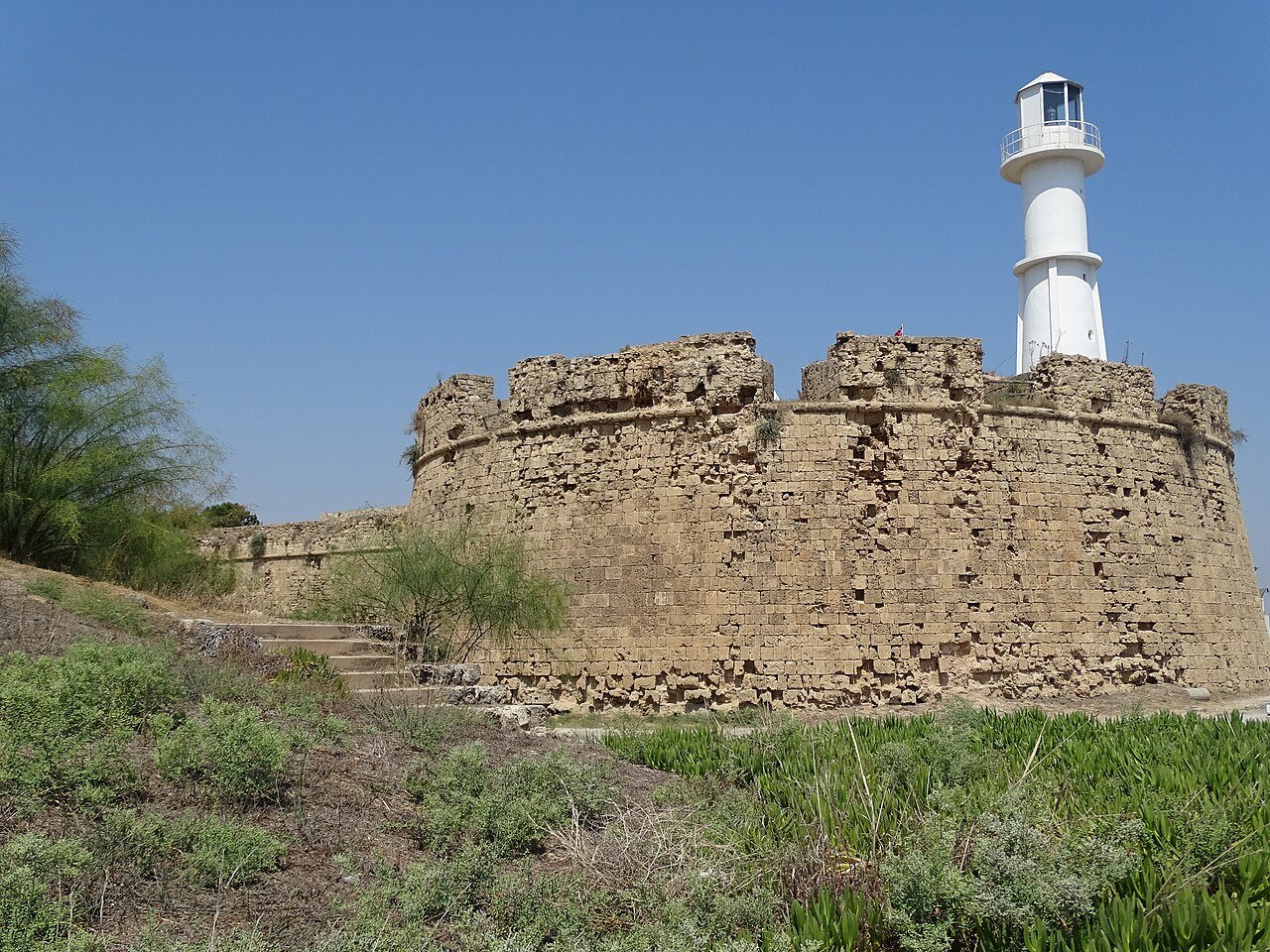
The Turkish Cypriot official account (TRNC Information Office) presents the conquest as the start of Ottoman administration; Venetian-based accounts stress the killings after the surrender. Both appear in the sources below. Ottoman rule lasted until 1878 and left the khans (inns), baths, mosques and neighbourhood layout that visitors still see in Nicosia and Famagusta.
British administration, 1878 to 1960
| Date | Event | Note |
|---|---|---|
| 4 June 1878 | Cyprus Convention between Britain and the Ottoman Empire | Britain to occupy and administer; sovereignty stays Ottoman |
| 5 November 1914 | Britain annexes Cyprus after the Ottoman Empire enters the First World War | Turkish and academic sources agree on the date |
| 24 July 1923 | Treaty of Lausanne | Turkey renounces rights over Cyprus (article 20); some Turkish Cypriots left under the option clause, roughly 6,000-7,000 according to one study |
| 1925 | Crown Colony | Sources give 10 March or 1 May; only the year is certain |
| 1 April 1955 | EOKA armed campaign begins | Greek Cypriot account: struggle for self-determination; Turkish Cypriot account: aim of union with Greece (enosis), opposed by the TMT, formed 1 August 1958 |
| 11 and 19 February 1959 | Zurich and London agreements | Accepted by both community representatives as the basis for a settlement (UN) |
The 1960 Republic, 1963-64 and 1974
The Republic of Cyprus became independent on 16 August 1960, with Britain keeping two Sovereign Base Areas (UN peacekeeping history). The constitution shared power between the two communities. On 30 November 1963 President Makarios proposed 13 constitutional amendments, and intercommunal violence began in Nicosia on 21 December 1963. UN Security Council resolution 186 of 4 March 1964 recommended a peacekeeping force (UNFICYP).
Accounts of 1963-64 differ and we attribute them: the Turkish Cypriot account says Turkish Cypriots were forced out of constitutional partnership; the Greek Cypriot account describes a constitutional crisis in which Turkish Cypriot officials withdrew. Casualty and displacement figures vary between sources, so none is given as exact.
On 15 July 1974 Greek officers commanding the National Guard overthrew President Makarios; all sides agree on this date. On 20 July Turkey landed forces near Kyrenia and UN Security Council resolution 353 was adopted the same day, calling for a ceasefire and the withdrawal of foreign military personnel. A second phase followed in mid-August; resolution 360 was adopted on 16 August. Turkey calls it the Cyprus Peace Operation and bases it on the 1960 Treaty of Guarantee. The Republic of Cyprus calls it an invasion. The European Court of Human Rights (10 May 2001) found that Turkey exercises effective overall control in the north. Displacement estimates run from about 140,000 to 200,000 Greek Cypriots and about 50,000 to 60,000 Turkish Cypriots, depending on the source.
After 1974: 1975, 1983, 2003-04 and today
| Date | Event | Source position |
|---|---|---|
| 13 February 1975 | Turkish Federated State of Cyprus declared | UN resolution 367 (12 March 1975) regrets the unilateral decision |
| 15 November 1983 | Turkish Republic of Northern Cyprus declared | Resolution 541 (18 November 1983): legally invalid; no recognition other than the Republic of Cyprus |
| 11 May 1984 | UN resolution 550 | Reaffirms 541 and calls on states not to recognise or assist |
| 23 April 2003 | First crossings open at Ledra Palace | By the first evening about 1,600 Turkish Cypriots had crossed south and 700 Greek Cypriots north (Cyprus Mail) |
| 24 April 2004 | Annan Plan referendums | Turkish Cypriots 64.9% yes; Greek Cypriots 75.8% no |
| 1 May 2004 | Republic of Cyprus joins the EU | EU law is suspended in areas where the government does not exercise effective control (Protocol 10) |
| 30 January 2026 | UN resolution 2815 | UNFICYP mandate extended to 31 January 2027 |
The TRNC is recognised as a state only by Turkey. The Turkish Cypriot side describes the 1983 declaration as an expression of self-determination; the Republic of Cyprus calls it a secessionist act; the UN calls it legally invalid. The island's political status remains disputed internationally.
Planning a visit or a purchase? Political and travel information changes. Check official travel advice and, for property, see Can foreigners buy property in North Cyprus? and our risk guide.
Exceptions and limits. Dates are taken from the sources listed and checked on 18 October 2026. Where sources disagree (for example the day of the 1925 Crown Colony proclamation or displacement figures) this page gives the range or leaves the point open.
Related service: North Cyprus areas
Last verified:
Questions buyers ask
When did the Ottomans take Cyprus?
Nicosia fell on 9 September 1570 and Famagusta surrendered in August 1571 after a siege that began in September 1570. Ottoman administration lasted until 1878.
When did British rule in Cyprus begin?
The Cyprus Convention was signed on 4 June 1878: Britain administered the island while sovereignty stayed Ottoman. Britain annexed Cyprus on 5 November 1914 and the Crown Colony began in 1925.
What happened in 1974?
A coup against President Makarios on 15 July 1974 was followed by Turkish military intervention from 20 July and a second phase in August. The Turkish side calls it a peace operation; the Republic of Cyprus calls it an invasion; UN resolutions 353 and 360 called for ceasefires and withdrawal of foreign forces.
Which countries recognise the TRNC?
Only Turkey recognises it as a state. UN Security Council resolutions 541 (1983) and 550 (1984) call the declaration legally invalid.
Is the island divided today?
Yes. A UN-patrolled buffer zone separates the two sides and UNFICYP's mandate runs to 31 January 2027 (resolution 2815, 2026).
Sources
- TRNC Information Office: history
- TRNC Central Bank: about the TRNC (timeline)
- UN Peacekeeping: UNFICYP history
- UN Security Council resolution 541 (1983)
- UN Security Council resolution 550 (1984)
- European Court of Human Rights: Cyprus v. Turkey (10 May 2001)
- EBSCO: The siege of Famagusta and the fall of Cyprus
- Britannica: Cyprus, the Republic of Cyprus
- Republic of Cyprus Ministry of Foreign Affairs: historical background
- Cyprus Mail: the 2004 Annan Plan
This page is general historical information. Positions of the parties are attributed to their sources; NORTHEA takes no side. NORTHEA does not issue legal opinions; we coordinate independent legal review and assemble due diligence dossiers. Legal review: checked by a lawyer registered with the KKTC Bar.