Guides · History and culture
Salamis and Famagusta: ancient city, Venetian walls and Gothic cathedral
As of 18 October 2026: Salamis, north of Famagusta, was a leading city of ancient Cyprus, with finds from the 11th century BC and a Roman gymnasium, theatre and agora; it was abandoned after earthquakes and Arab raids in the mid-7th century. Famagusta's Venetian walls withstood the Ottoman siege of 1570-71. Opening hours and fees are not confirmed here.
As of 18 October 2026 · Published by the NORTHEA desk · Legal review: checked by a KKTC Bar-registered lawyer

AI visual concept — illustrative, not a photograph of a specific place or property.
Ancient Salamis
Salamis lies north of Famagusta on the east coast. By tradition it was founded by Teucer, son of Telamon, after the Trojan War; Livius notes that nothing confirms this, and the earliest archaeological finds date to the 11th century BC. It grew as a successor port to Enkomi, minted its first coins in the 6th century BC, and was a major city-kingdom through the Persian period; a naval battle was fought off it in 306 BC.
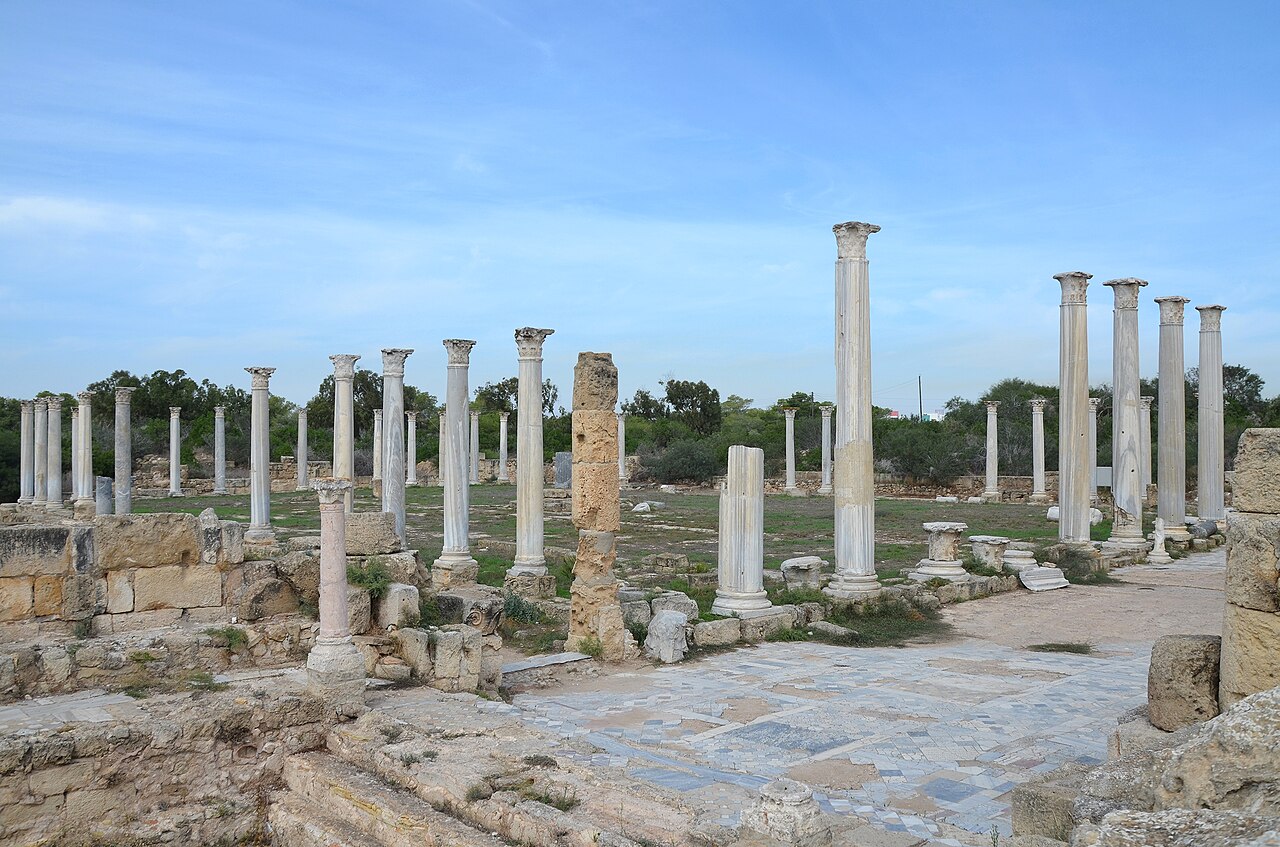
Rome took over in 58 BC. The city was badly damaged during the Jewish revolt of AD 115-117 and rebuilt; the gymnasium, with its columned courtyard, baths and statues, belongs to the Roman period (Augustan according to the University of Hertfordshire page). The theatre was reported as holding around 15,000 spectators. Earthquakes in the 4th century (331, 332 or 342) led Constantius II to refound it on a smaller scale as Constantia; bishop Epiphanios (367-403) built a basilica there. Arab raids in the mid-7th century (647 to 661, depending on the source) ended the city, and its people moved to Arsinoe, the later Famagusta.
Nearby are the Royal Tombs (burials from the Geometric to the Hellenistic period, with chariot burials), the Monastery of St Barnabas (the present building is from the 18th century and houses an icon museum; tradition says Barnabas's tomb was found in the reign of Emperor Zeno, 474-491) and Enkomi, a Late Bronze Age copper-trading town at its peak around 1340-1200 BC. Allow about two hours at Salamis (Visit NCY).
Famagusta: walls, siege and cathedral
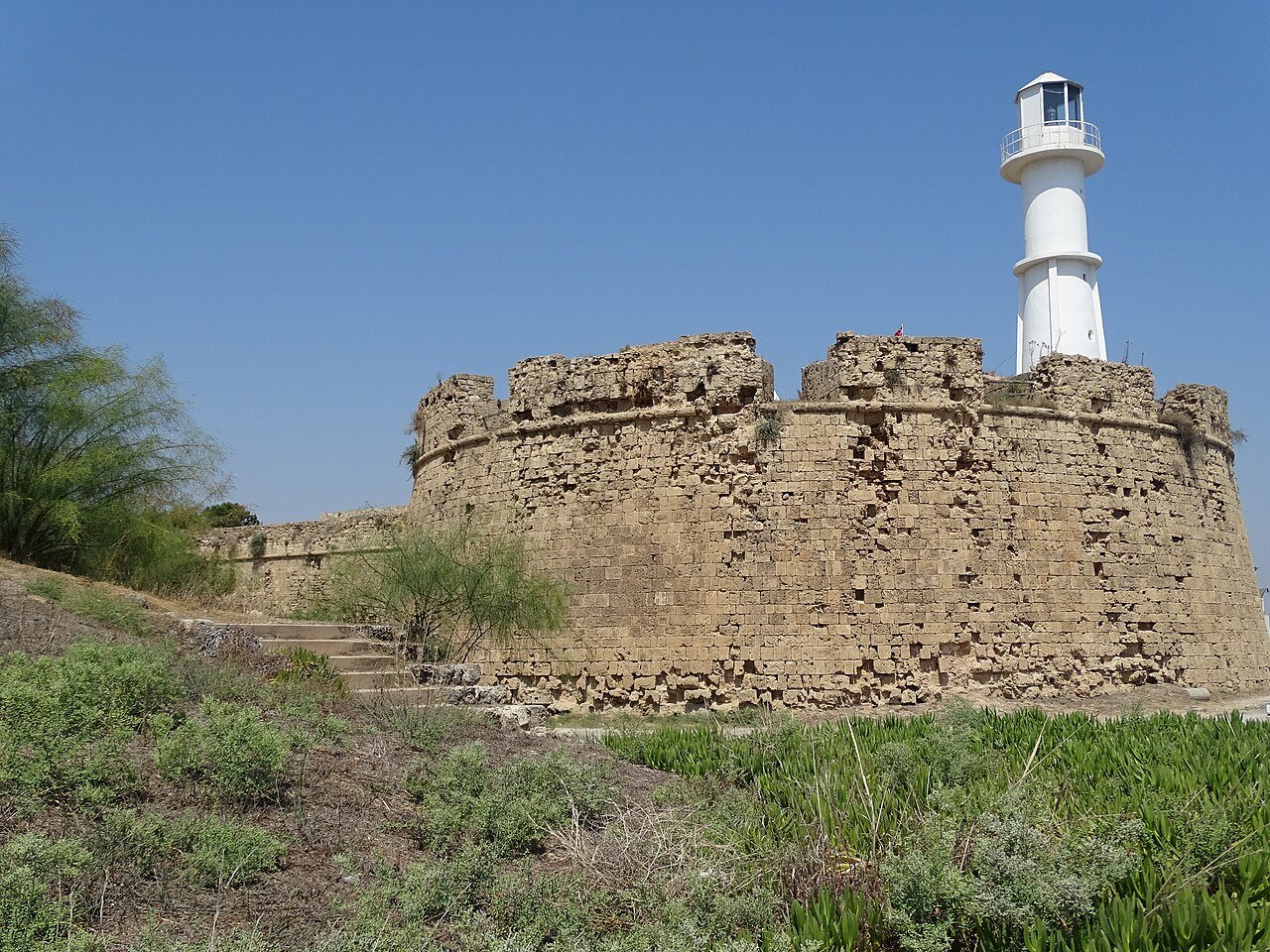
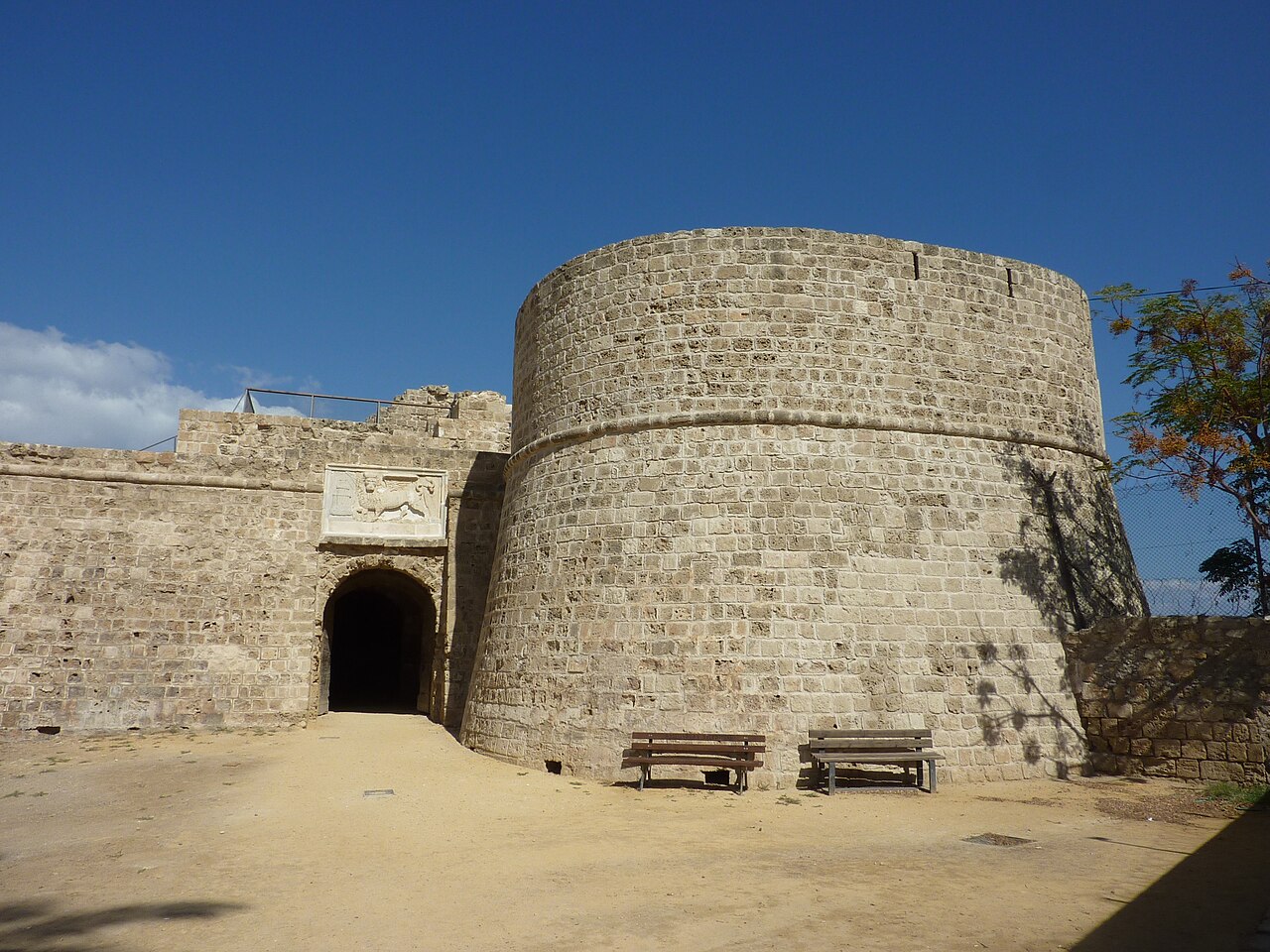
Famagusta (Gazimağusa, Ammochostos) is a walled port. The walls were reshaped mainly by Venice in the 15th and 16th centuries; the engineer Sammicheli designed the Martinengo Bastion around 1550. The Ottoman siege began in September 1570 (15 or 17 September, depending on the source) and the Venetian commander Marcantonio Bragadin asked for terms on 1 August 1571. Troop numbers vary widely between sources, so none is given. The surrender and the killings that followed are told mainly from Venetian accounts.
| Site | What it is | Dates and notes |
|---|---|---|
| Othello Castle (citadel) | Harbour fortress | Built by the Lusignans in the 14th century; rebuilt under Venice (inscription of 1492); the name comes from Shakespeare's play, with no documented historical link |
| Lala Mustafa Pasha Mosque | Former Cathedral of St Nicholas | Begun 1298, consecrated 1328; converted to a mosque after 1571 (day unknown); renamed Lala Mustafa Pasha in 1954; it is an active mosque, so check visiting rules |
| Namık Kemal Dungeon and Museum | Ottoman building at the corner of the Venetian Palace | The writer Namık Kemal was exiled here from 1873 to 1876; museum opened in 1993 after restoration |
| Venetian Palace | Ruins of the governor's palace | Date uncertain, most sources 1300-1302; Venetian renovation 1552-1554 |
Varosha (Maraş), as of 18 October 2026
Varosha, the former tourist quarter of Famagusta, has been fenced off since August 1974. UN Security Council resolution 550 (1984) calls settlement by anyone other than its former inhabitants inadmissible and calls for the area to be transferred to UN administration, and resolution 789 (1992) urges that the area under the UN force be extended to include Varosha. Parts of the area were opened to visitors on 8 October 2020. UN Security Council presidential statements of 9 October 2020 and 23 July 2021 asked for the openings to be reversed. Ownership disputes remain unresolved.
Visiting: access to the open sections is by set routes in daytime, with restrictions on photography near military areas and on drones; take your original passport. These details come from a news guide dated 13 October 2026 (Cyprus Mail), not from an official source, so confirm them locally. Do not enter fenced or abandoned private property.
Exceptions and limits. Opening hours, fees and current access are not stated because the official TRNC pages could not be read; check locally. Where sources disagree (earthquake years, the end of Salamis, siege figures) this page gives the range. Access to Varosha (Maraş) changes; the status here is as of 18 October 2026.
Related service: North Cyprus areas
Last verified:
Questions buyers ask
Where is Salamis and how old is it?
Salamis is on the east coast north of Famagusta. The earliest finds date to the 11th century BC; the city flourished under Persian and Roman rule and was abandoned in the mid-7th century AD.
Why was Salamis abandoned?
Earthquakes in the 4th century and Arab raids in the mid-7th century; the people moved to Arsinoe, later Famagusta. Sources give several different years, so we give ranges.
What is the Lala Mustafa Pasha Mosque?
The former Gothic Cathedral of St Nicholas, begun in 1298 and consecrated in 1328, converted into a mosque after the Ottoman conquest of 1571. It is an active mosque.
Why is it called Othello Castle?
The name comes from Shakespeare's play, which is set in a Cyprus port; there is no documented historical link to a particular person.
Can you visit Varosha?
Parts have been open since 8 October 2020, on set routes. The UN and the TRNC presidency take opposing positions on this. Access rules change, so confirm locally.
Are Salamis or Famagusta's walls UNESCO World Heritage Sites?
We could not confirm either as an inscribed World Heritage Site and do not describe them as such.
Sources
- Livius: Salamis (Cyprus)
- Britannica: Salamis (ancient city, Cyprus)
- Wikipedia: Salamis, Cyprus
- Wikipedia: Famagusta
- Visit NCY: Salamis ruins
- University of Hertfordshire Heritage Hub: Salamis
- CVAR (Severis Foundation): St Barnabas Monastery
- EBSCO: The siege of Famagusta and the fall of Cyprus
- Wikipedia: Varosha
- UN Security Council resolution 550 (1984)
This page is general cultural information, not an official visitor guide. Check access, opening times and conditions locally. NORTHEA does not issue legal opinions; we coordinate independent legal review and assemble due diligence dossiers. Legal review: checked by a lawyer registered with the KKTC Bar.