
About North Cyprus · Famagusta
Famagusta (Gazimağusa): places to see
As of 24 October 2026: the places to see in Famagusta (Gazimağusa) are mostly inside its walled old city, called Kaleiçi or Suriçi in Turkish, and along the coast to the north. Sources describe the Lala Mustafa Pasha Mosque, Othello Castle, the Land Gate, the Namık Kemal Dungeon and Museum and the Canbulat Museum within the walls, and Salamis, Enkomi and the St Barnabas Monastery outside them. Each claim below is attributed to its source.
Checked 23 October 2026 against the sources named in the text and listed below. Positions of parties are attributed to them.

The walled city (Kaleiçi / Suriçi)
According to Wikipedia, a secondary source, the historic centre of Famagusta sits inside roughly rectangular fortifications built mainly by the Venetians in the 15th and 16th centuries, with some sections possibly dating to 1211. The same article says the city originally had two gates, the Land Gate and the Sea Gate, and that the Arsenal Gate was opened to land traffic in 1933 and the North Gate in 1965.
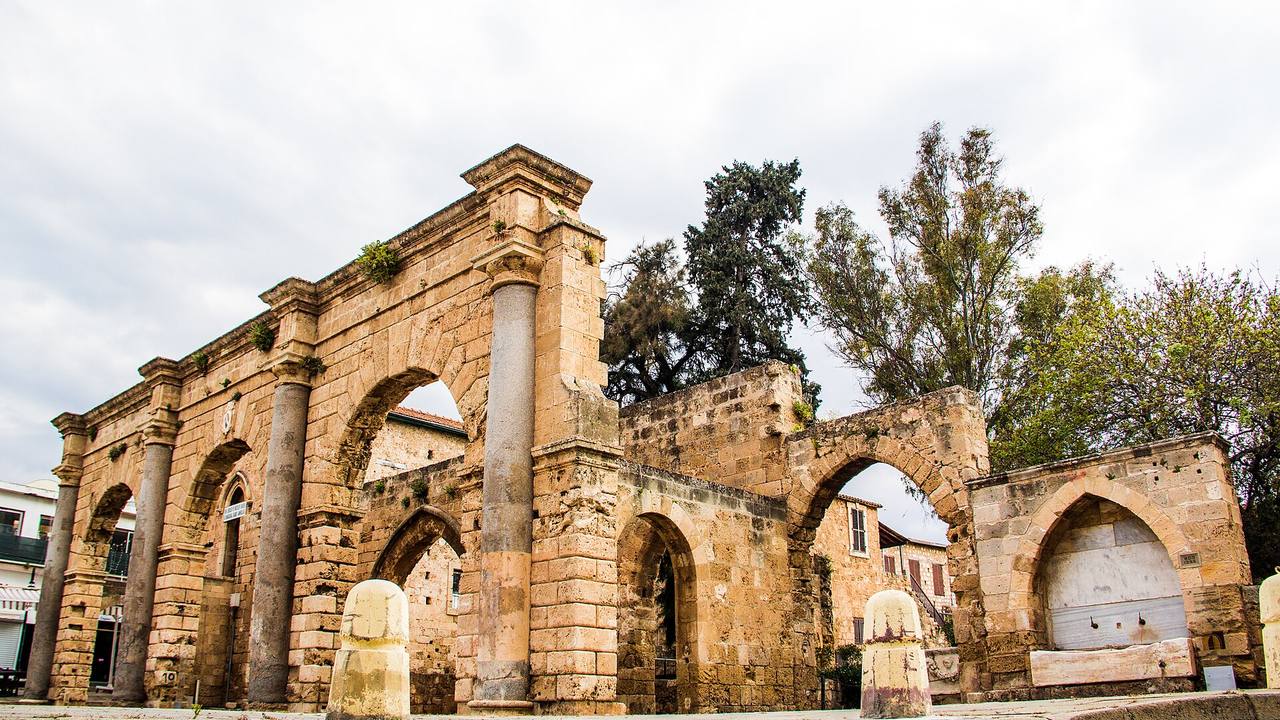
On layout, Wikipedia says Othello Castle lies inside the walls and that the Venetian governor's palace stands on the site of the earlier Lusignan royal palace. It adds that dead-end streets were introduced under Ottoman rule, with two-storey upper-class houses beside many one-storey houses. According to Visit North Cyprus, the main square, now Namık Kemal Square, was the busiest part of the city in Ottoman times, and the Cafer Pasha Hammam is near it. Cyprus Mail, on 13 October 2026, called the walled city a living urban centre with medieval streets and fortifications.
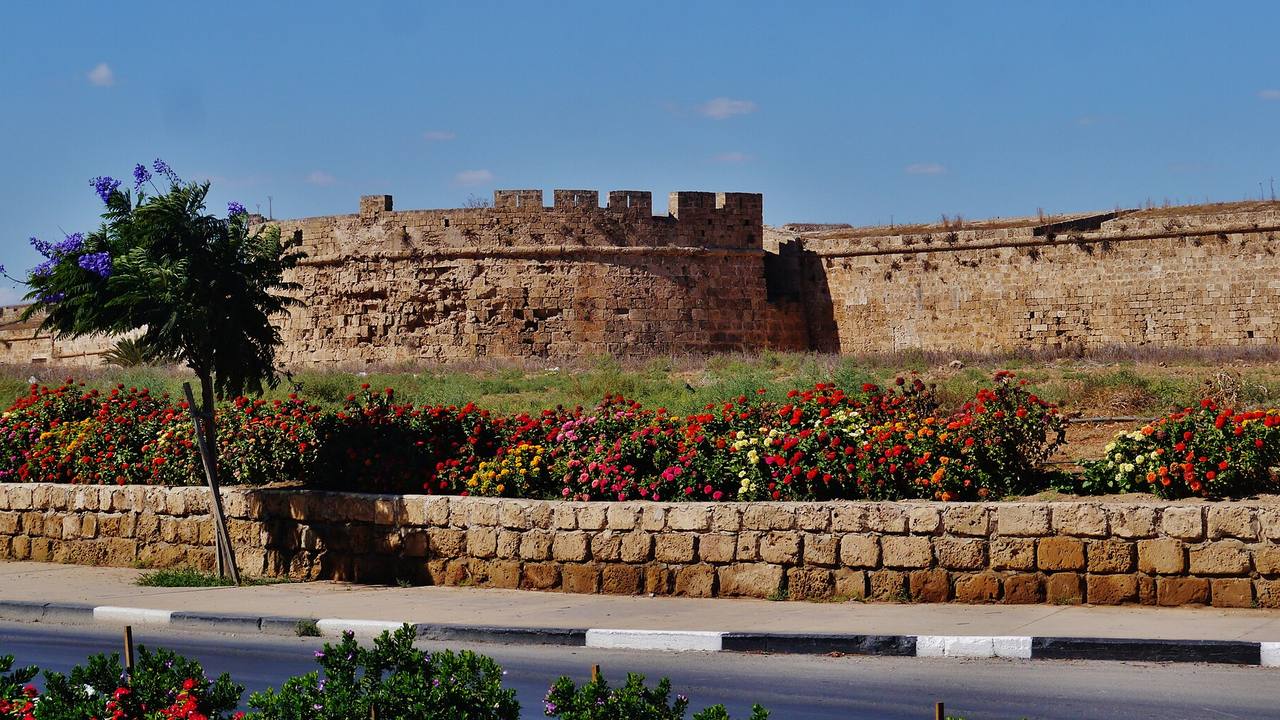
Zairon · CC BY-SA 4.0 · Wikimedia Commons Neighbourhood
Kaleiçi / Suriçi (Walled City)
Wikipedia describes a historic centre inside roughly rectangular Venetian-era fortifications, with Othello Castle and the governor's palace site within. Cyprus Mail (13 October 2026) calls it a living urban centre with medieval streets.
Source: en.wikipedia.org
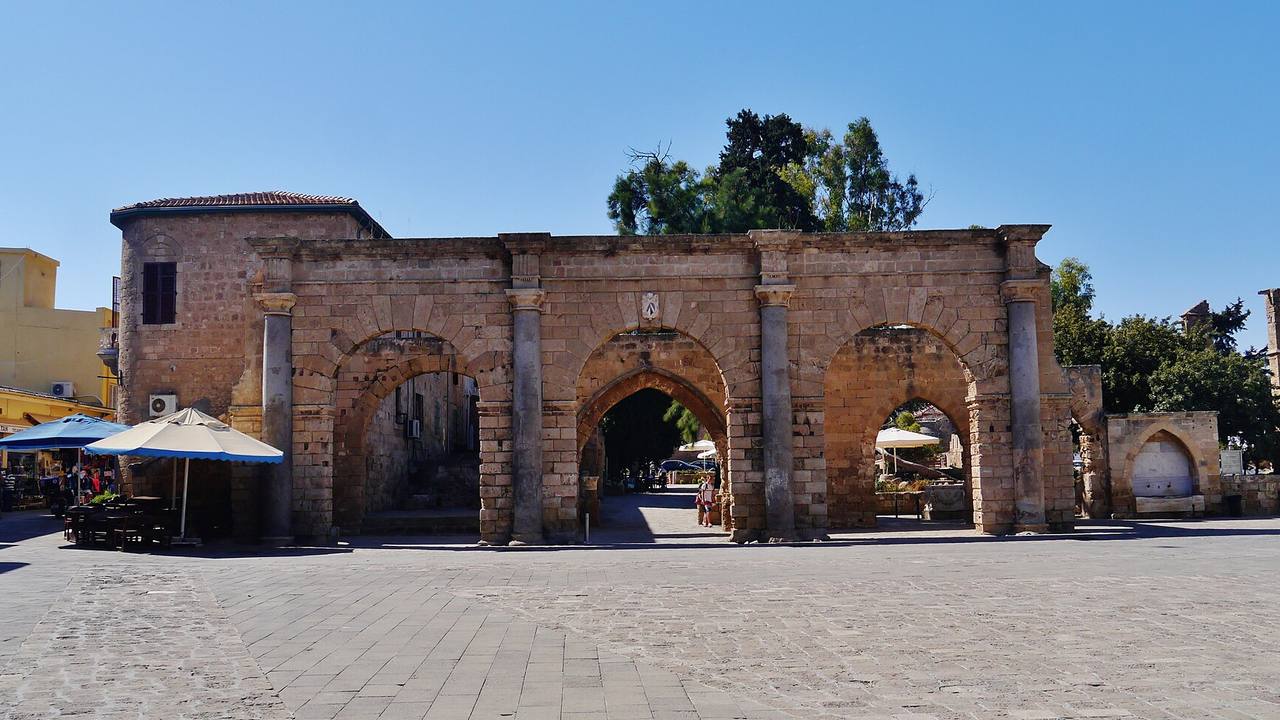
Zairon · CC BY-SA 4.0 · Wikimedia Commons Neighbourhood
Namık Kemal Meydanı (Namık Kemal Square)
Visit North Cyprus describes it as the former main square, the busiest area of the city in Ottoman times, with the Cafer Pasha Hammam nearby and the Lala Mustafa Pasha Mosque close by.
Source: visitncy.com
1 / 2

Mosques and churches
Visit North Cyprus and Cyprus Mail both identify the Lala Mustafa Pasha Mosque as the former Latin Cathedral of St Nicholas, and Visit North Cyprus adds that it later became the Saint Sophia (Ayasofya) Mosque of Famagusta. The Kültür Envanteri heritage database lists it under churches converted into mosques and gives Magosa Ayasofyası and Aziz Nikolas Katedrali as other names. Kıbrıs Postası reported on 7 July 2026 that restoration work at the mosque was under way, with drilling that closed a nearby street to vehicles for about a week.
Churches inside the walls are described differently by different sources. Wikipedia and Visit North Cyprus agree that the Church of St George the Exiler, called the Nestorian Church, was used as a camel stable under the Ottomans and was handed to Greek Cypriots in 1905. They differ on its date and position, so neither is given here. Cyprus Mail (30 December 2024) says St George of the Latins stands in the north of the old quarter near Othello's Tower, probably dates to the later 13th century, and was due to be restored with Aliph Foundation funding.
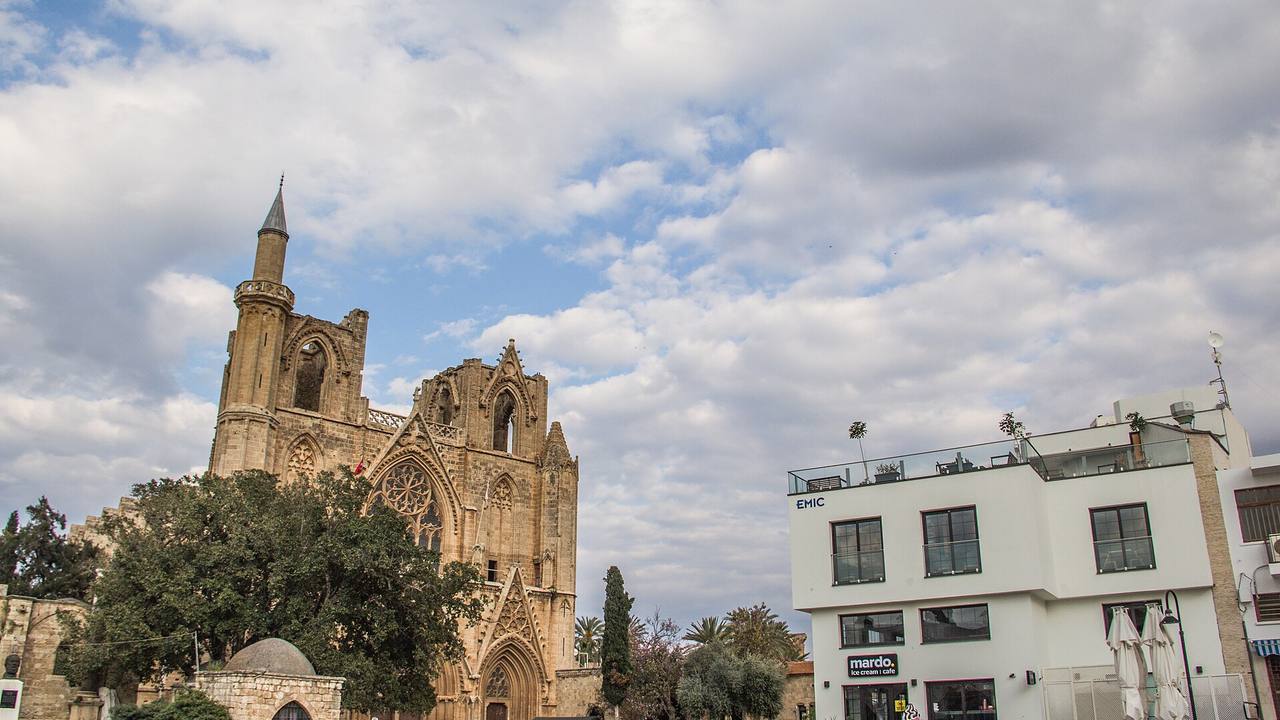
Yakubu Sabo · CC BY-SA 4.0 · Wikimedia Commons Mosque
Lala Mustafa Paşa Camii (Lala Mustafa Pasha Mosque)
Former Latin Cathedral of St Nicholas, also called Magosa Ayasofyası. Kıbrıs Postası reported restoration work at the mosque on 7 July 2026; the report does not name who is carrying it out.
Source: kibrispostasi.com
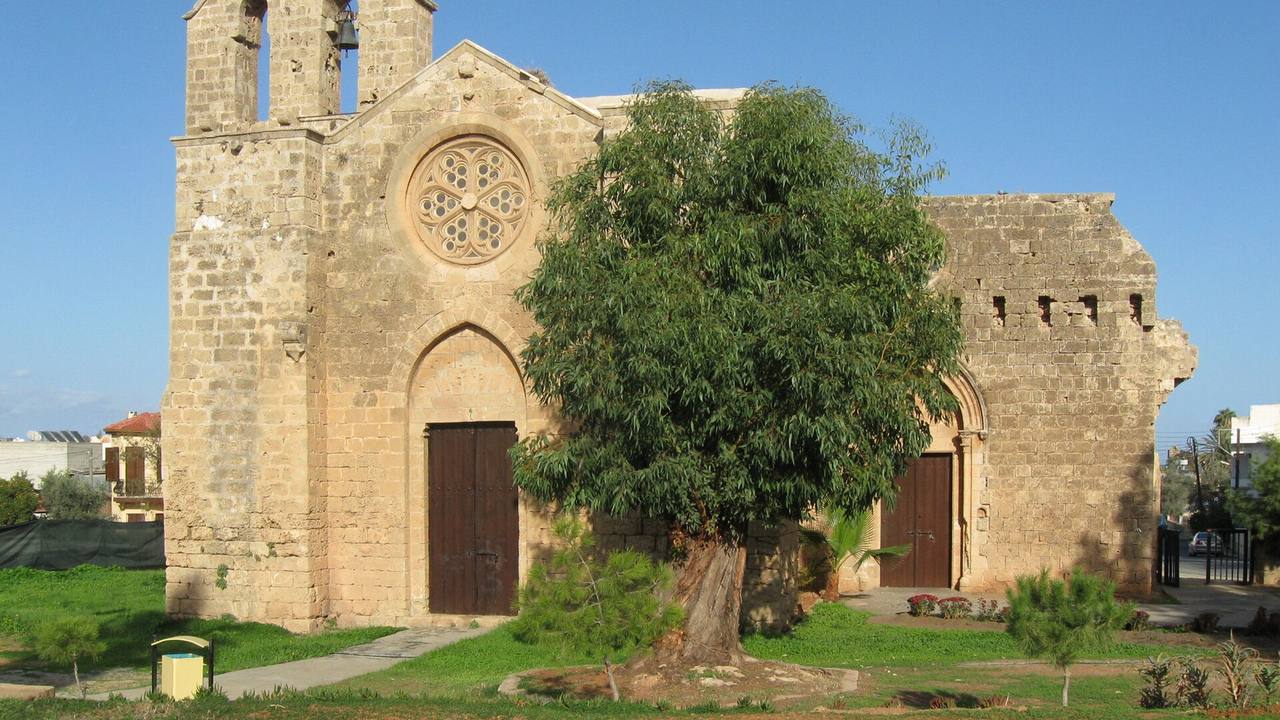
Gerhard Haubold · CC BY-SA 3.0 · Wikimedia Commons Church
Ay İkserino Kilisesi (Church of St George the Exiler, Nestorian Church)
Wikipedia and Visit North Cyprus agree that it served as a camel stable under the Ottomans and was handed to Greek Cypriots in 1905. Wikipedia adds that Eastern Mediterranean University has used it as a cultural centre since 1989.
Source: en.wikipedia.org
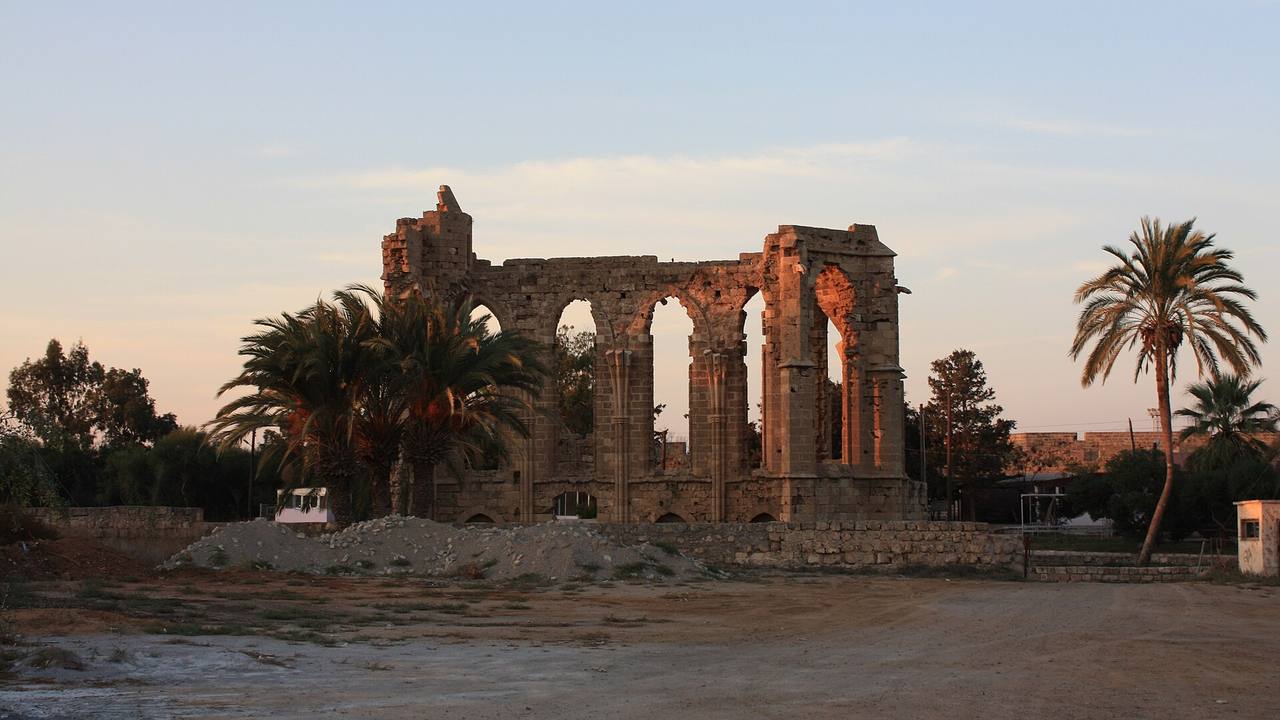
Alaexis · CC BY-SA 4.0 · Wikimedia Commons Church
St George of the Latins Church
Cyprus Mail says it stands in the north of the old quarter near Othello's Tower, likely dates to the later 13th century, and was damaged in the 1570-71 siege; only the northern and eastern walls remain.
Source: cyprus-mail.com
1 / 3

Castle, gates and walls
The Department of Antiquities and Museums of the TRNC says Othello Castle was first built by the Lusignans to defend the harbour, was surrounded by a deep moat, and guarded the Sea Gate, one of two main entrances to the walled city. It dates the Venetian conversion into an artillery bastion to 1492 and says the cannons in the courtyard are partly Ottoman and partly Spanish. Cyprus Mail and the Department give different centuries for the first castle, the 14th and the 12th, so no single date is stated here.
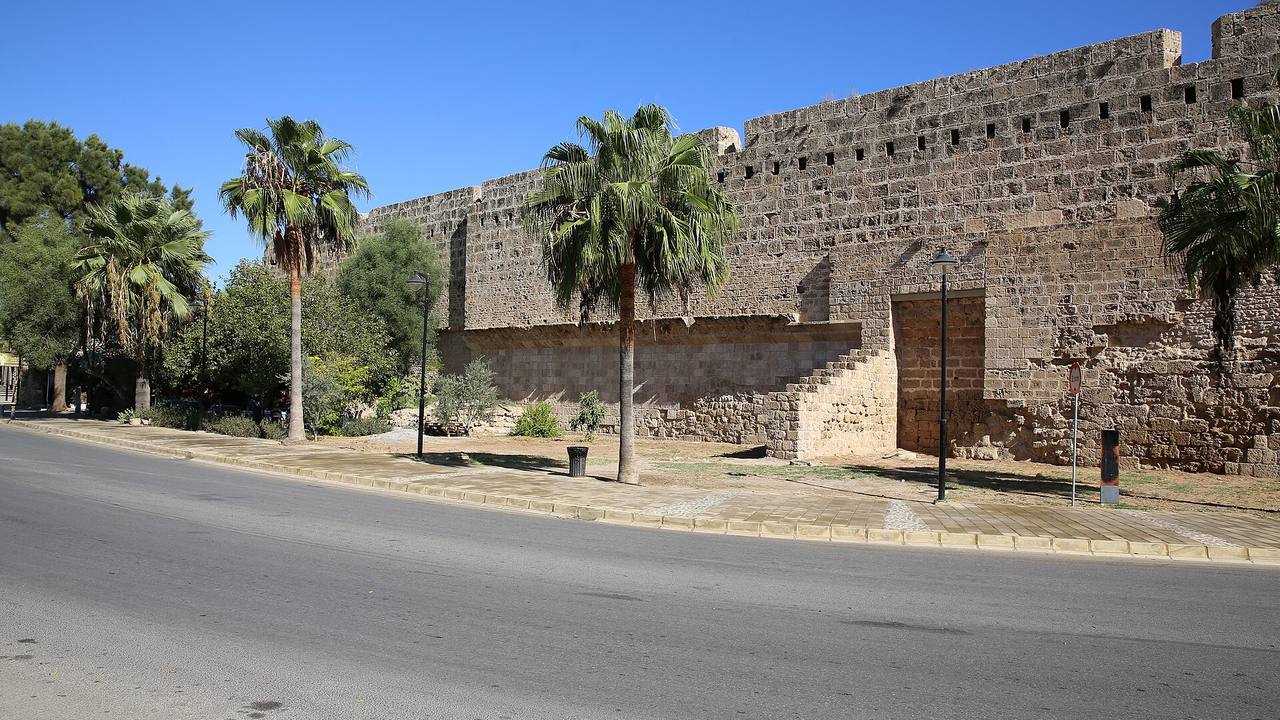
For the Land Gate, Wikipedia says the horseshoe-shaped Ravelin was designed by Marco Paulo, completed in 1529, and filled in by the Ottomans after the 1570-71 siege, with a new opening cut beside it. The Department adds that the Land Gate was protected by a Ravelin, with passages, a chapel and underground rooms used as a dungeon. Cyprus Mail reported on 19 November 2023 that the EU-funded restoration of the Arsenal (Canbulat) Bastion, carried out by UNDP, had been completed.
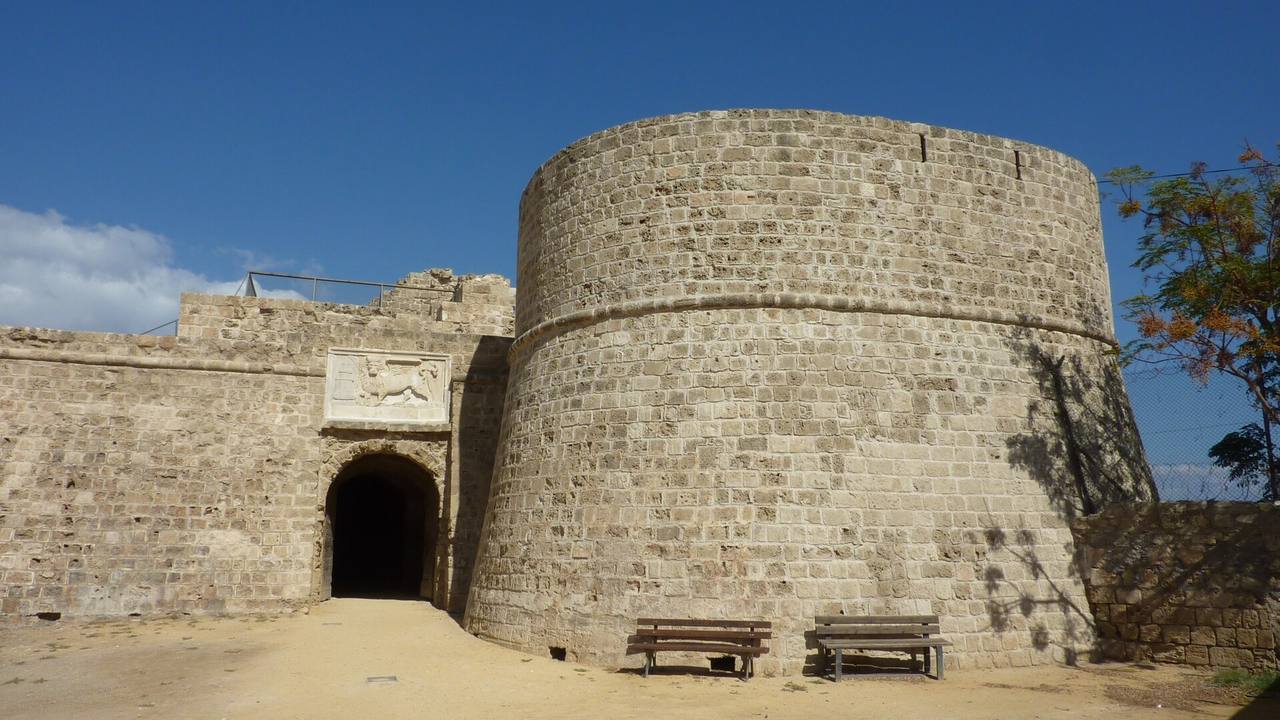
Chris06 · CC BY-SA 4.0 · Wikimedia Commons Castle
Othello Kalesi (Othello Castle)
The Department of Antiquities and Museums says the Lusignans built it to defend the harbour, it was moated, and Venice made it an artillery bastion in 1492. The name dates from British rule and comes from Shakespeare's play.
Source: eemd.gov.ct.tr
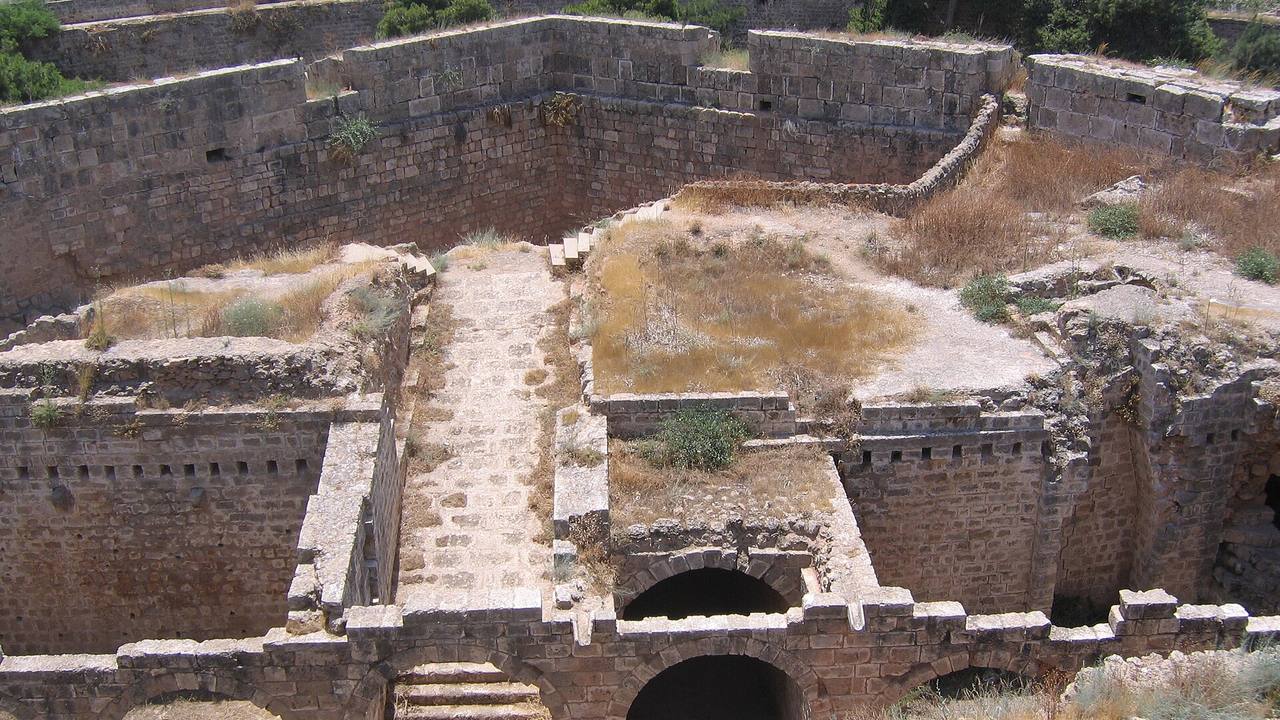
Grivagil · CC0 · Wikimedia Commons Walls
Kara Kapısı ve Ravelin (Land Gate and Ravelin)
Wikipedia says the Land Gate served land traffic, and that its Ravelin was designed by Marco Paulo and finished in 1529. After the 1570-71 siege the Ottomans filled it in and cut a new gate beside it.
Source: en.wikipedia.org
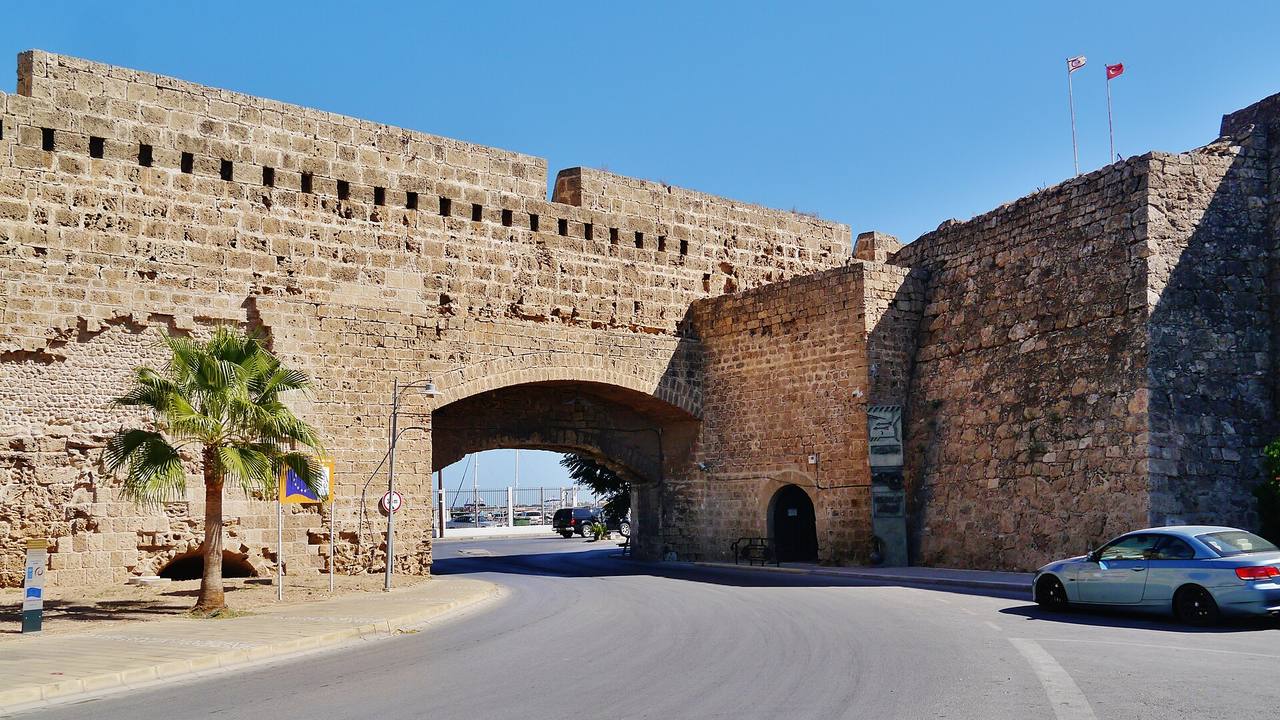
Zairon · CC BY-SA 4.0 · Wikimedia Commons Walls
Canbulat (Arsenal) Burcu (Canbulat / Arsenal Bastion)
Cyprus Mail (19 November 2023) reports that its EU-funded restoration, carried out by UNDP, was complete. It says the tower replaced a round Lusignan tower and was later modified by the Ottomans.
Source: cyprus-mail.com
Grivagil · CC0 · Wikimedia Commons Walls
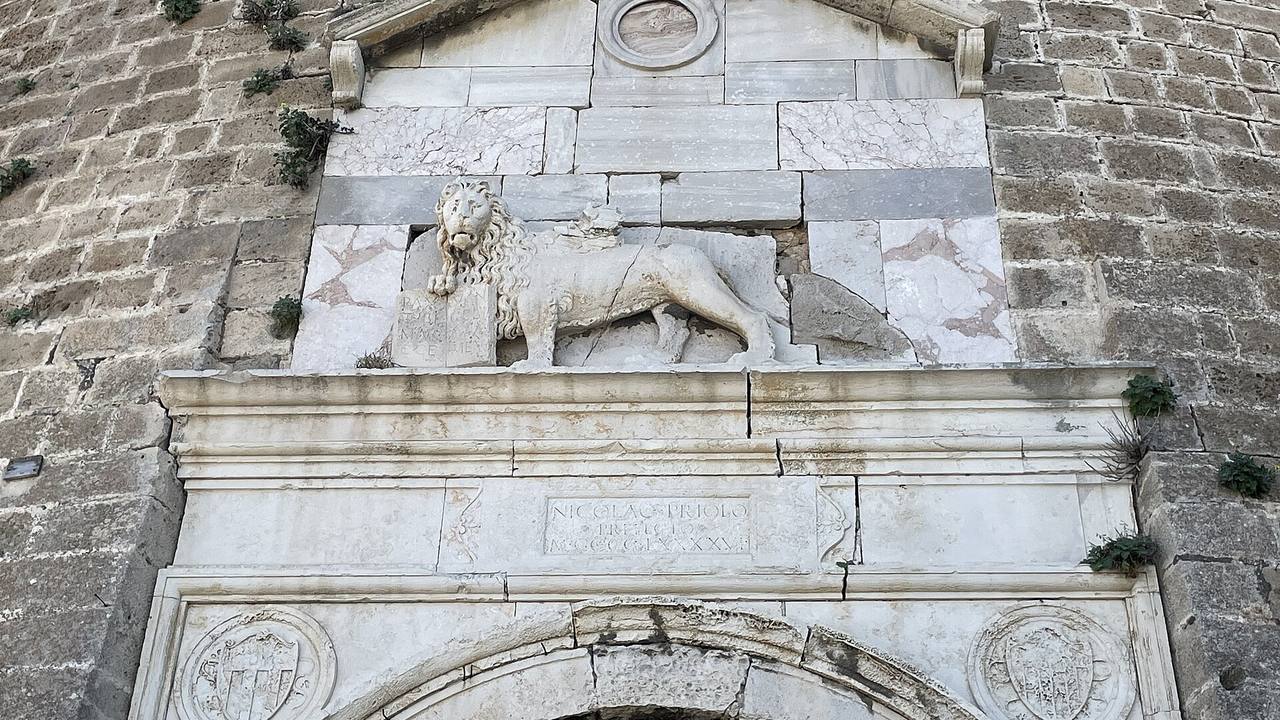
Deniz Kapısı (Sea Gate, Porta del Mare)
Visit North Cyprus lists the Porta del Mare as one of the two original entrances and calls it well preserved. Wikipedia dates the original Sea Gate to 1310 and says it is no longer used.
Source: visitncy.com
1 / 4

Museums
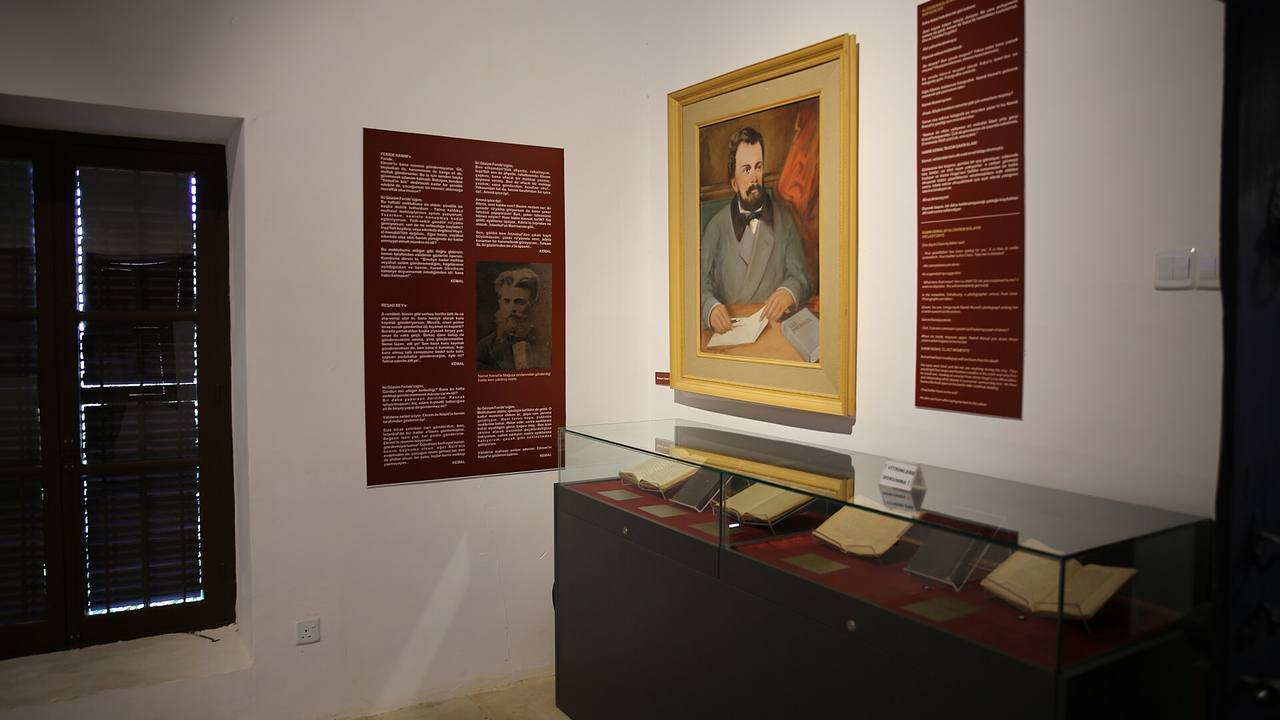
The Department of Antiquities and Museums describes the Namık Kemal Dungeon and Museum as a two-storey cut-stone Ottoman building raised over the remains of the Venetian Palace. It states that the writer Namık Kemal was held there for 38 months after being exiled to Cyprus in April 1873 and returned to Istanbul on 29 June 1876. The Department says the museum first opened in 1993 and was reorganised on 9 May 2023.
On the Canbulat Museum, the Department says it occupies a stone tomb beneath the Venetian-era Arsenal bastion. The Italian marble tomb now seen was rebuilt in 1968, and the Department's account is that Canbulat Bey died attacking the bastion during the Ottoman siege. It lists archaeological finds and Ottoman objects, including weapons, plates, wall tiles and the wooden tomb inscription of Kutup Osman. Wikipedia names the Venetian governor's palace as the Palazzo del Provveditore.
Biologg · CC BY-SA 4.0 · Wikimedia Commons Museum
Namık Kemal Zindanı ve Müzesi (Namık Kemal Dungeon and Museum)
The Department says this two-storey Ottoman dungeon stands on the remains of the Venetian Palace, held Namık Kemal for 38 months, opened as a museum in 1993 and was reorganised on 9 May 2023.
Source: eemd.gov.ct.tr
Biologg · CC BY-SA 4.0 · Wikimedia Commons Museum
Canbulat Müzesi (Canbulat Museum)
The Department says it sits under the Arsenal bastion, around a tomb rebuilt in 1968, and displays archaeological finds with Ottoman weapons, plates, wall tiles and the wooden tomb inscription of Kutup Osman.
Source: eemd.gov.ct.tr
Yakubu Sabo · CC BY-SA 4.0 · Wikimedia Commons Museum
Venedik Sarayı (Venetian Palace, Palazzo del Provveditore)
Wikipedia says the Venetian governor's palace stands on the site of the earlier Lusignan royal palace inside the walls. The Department says the Namık Kemal dungeon was built over its remains.
Source: en.wikipedia.org
1 / 3
Ancient sites and a monastery outside the walls
The Department of Antiquities and Museums says research traces Salamis to the 11th century BC and that, according to archaeologists, people left Enkomi after an earthquake in 1075 BC and founded it. It states that the first coins were minted in the 6th century BC and that most surviving ruins are Roman. After earthquakes Emperor Constantius rebuilt the city as Constantia, and the Department says the last residents moved to Arsinoe after a pirate raid in 648. Visit North Cyprus adds that large-scale excavation began in the 1950s and that the theatre, found in 1959, faces inland.
Visit North Cyprus describes Enkomi, near Tuzla, as a copper-working town with an inland harbour, rebuilt on a grid plan after destruction around 1200 BCE and abandoned around 1000 BCE. It says about 1,800 objects from the site are in the British Museum. The Department states that the St Barnabas Monastery stands at the western end of the Salamis necropolis, was built in AD 477, took its present form in 1756, and was restored from August 1991, with an icon museum opened in 1992.
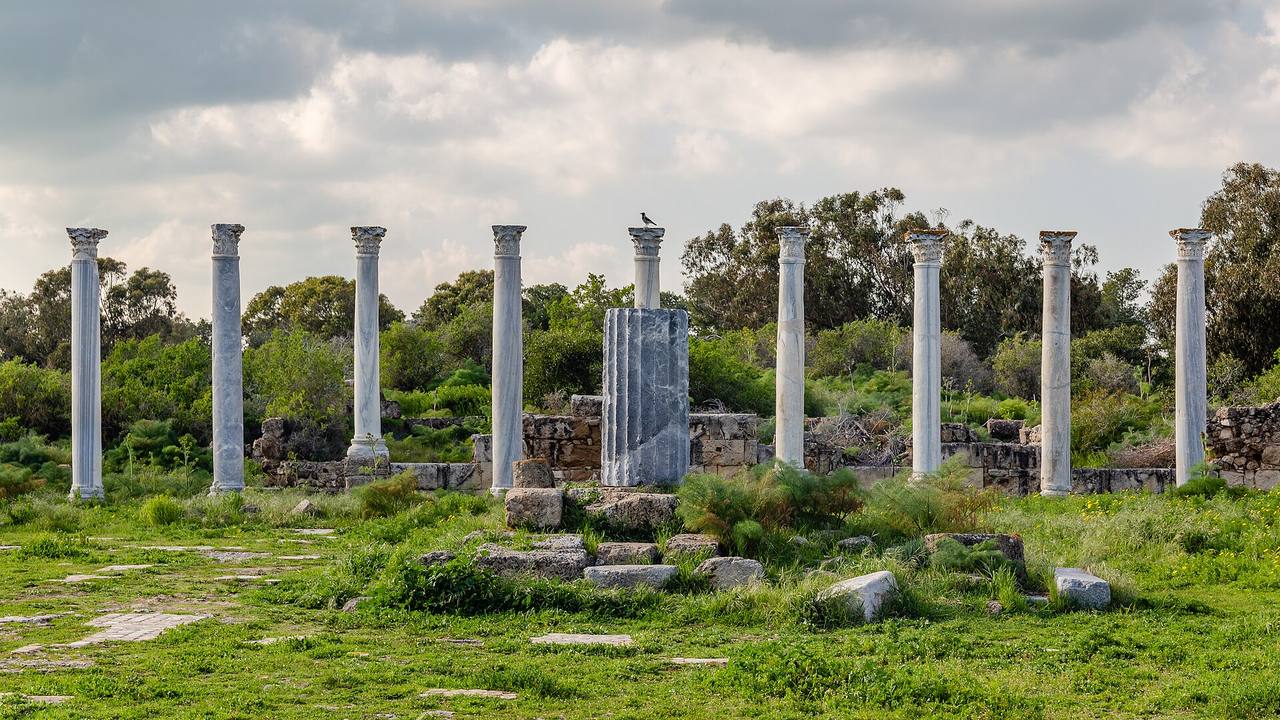
Michal Klajban · CC BY-SA 4.0 · Wikimedia Commons Archaeological site
Salamis Ören Yeri (Salamis Archaeological Site)
The Department says finds reach back to the 11th century BC, coins appear in the 6th century BC, and most surviving ruins are Roman. The last residents are said to have left for Arsinoe after a 648 raid.
Source: eemd.gov.ct.tr
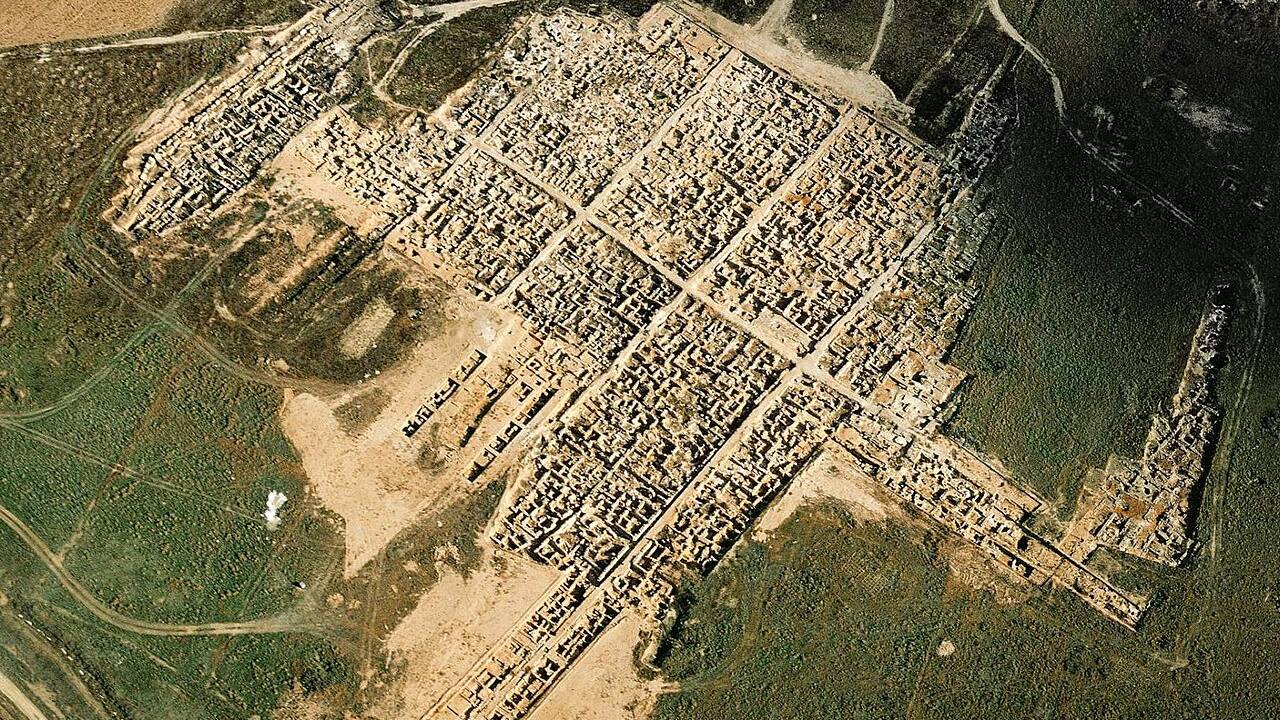
Cypern20 · CC BY-SA 4.0 · Wikimedia Commons Archaeological site
Enkomi (Enkomi, also called Alasiya)
Visit North Cyprus describes a copper-working Bronze Age town near Tuzla on the Pedieos River, with finds from the 1896 British Museum expedition and about 1,800 objects now in the British Museum.
Source: visitncy.com
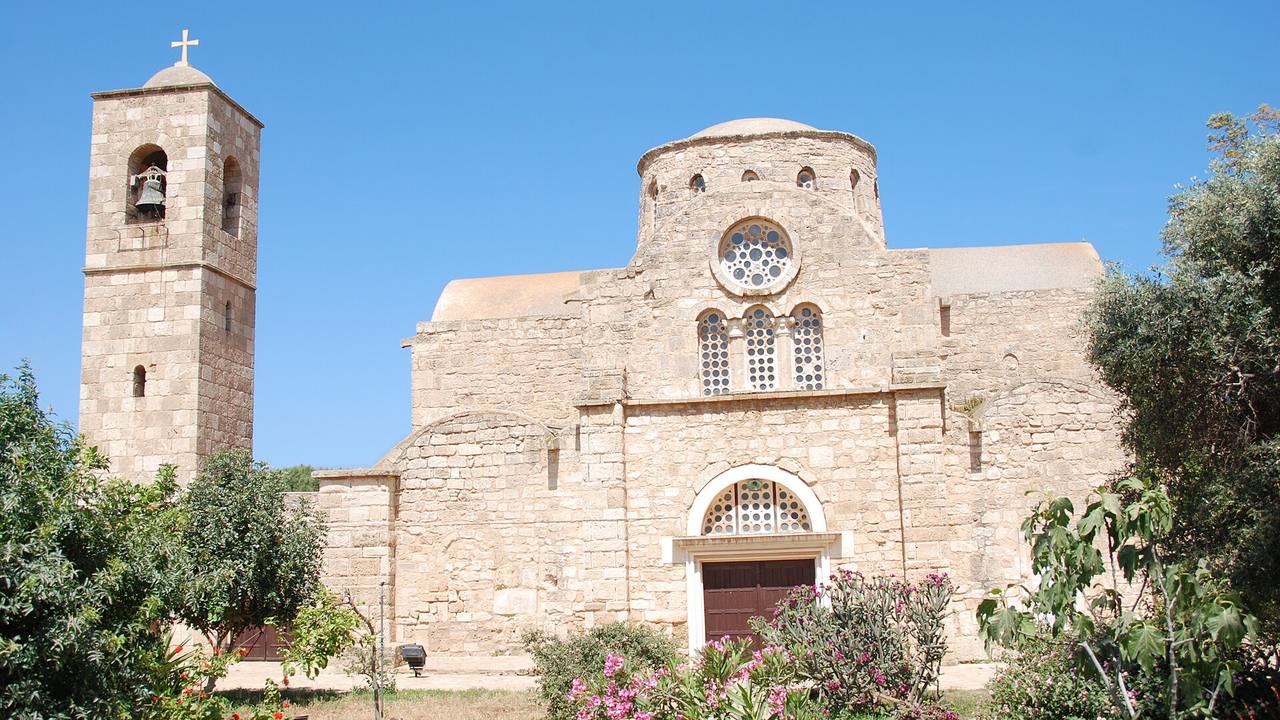
George M. Groutas from Dali, Nicosia, Cyprus · CC BY 2.0 · Wikimedia Commons Museum
St Barnabas İkon ve Arkeoloji Müzesi (St Barnabas Icon and Archaeology Museum)
The Department says the monastery was built in AD 477, took its present form in 1756, and was restored from 1991. The church became an icon museum and the monastery rooms an archaeology museum.
Source: eemd.gov.ct.tr
1 / 3
Beaches
Sources on beaches near Famagusta are thin. North Cyprus Education, an education consultancy that promotes university programmes and so has a commercial interest, published a page on 27 May 2026 about Glapsides Beach. It says the beach is about 5.5 km north of the city on the road toward Salamis, is long and sandy, and has water that stays shallow for a long way out. It reports that students, residents and families use it, and that opening arrangements and seasonal activities should be checked with the Famagusta municipality.
1 / 1
Names and university town context
According to Wikipedia, the Greek name Ammochostos first appears in the 3rd-century Stadiasmus Maris Magni and means hidden in sand. It lists Fama Augusta, Famagouste and Famagosta as medieval forms of the name, and Famagusta as the English one. Mağusa is the informal modern Turkish name, and Gazimağusa the formal Turkish name since 25 December 1975, when gazi, meaning veteran, was added by act of parliament. The ancient name was Arsinoe.
On the university, Eastern Mediterranean University says its predecessor, the Institute of Higher Technology, was set up in 1979 with 105 students, and that the institute became a state university in 1986. The university's history page gives its address in Famagusta. According to Wikipedia, the Church of St George the Exiler has served as an EMU cultural centre since 1989, and the North Cyprus Education page calls Glapsides Beach the closest public beach to the EMU campus.
Practical notes
- Opening times, fees and current access are not stated on this page. Lala Mustafa Pasha Mosque restoration was reported by Kıbrıs Postası on 7 July 2026, so access may differ from what older guides say.
- Sources disagree on some points: the date of Othello Castle's first construction (12th century per the Department, 14th century per Cyprus Mail), and the date and position of the Nestorian Church. Where they differ, no single figure is given.
- Wikipedia is a secondary source. The Department of Antiquities and Museums, Eastern Mediterranean University and the dated press reports are the main basis for specific dates.
- The Glapsides Beach source is published by a commercial education consultancy, so its description is treated as one view and not as an official record.
Frequently asked questions
What are the places to see in Famagusta?
Sources describe the walled old city with the Lala Mustafa Pasha Mosque, Othello Castle, the Land Gate, the Namık Kemal Dungeon and Museum and the Canbulat Museum, plus Salamis, Enkomi and the St Barnabas Monastery north of the city. Access conditions change, so check locally.
What is Kaleiçi?
Kaleiçi, also called Suriçi, is the Turkish name used for Famagusta's walled old city. Wikipedia describes a historic centre inside roughly rectangular Venetian-era fortifications, built mainly in the 15th and 16th centuries, containing Othello Castle, the governor's palace site and many churches and mosques.
Is Othello Castle in Famagusta?
Yes. Wikipedia places Othello Castle inside Famagusta's walled city, and the Department of Antiquities and Museums lists it under its Gazimağusa region. The Department says the name dates from British rule and comes from Shakespeare's play, not from a documented historical person.
Where is Salamis?
Visit North Cyprus describes Salamis as a large ancient city on the east side of Cyprus, north of Famagusta, and the Department lists it under the Gazimağusa region. The St Barnabas Monastery stands at the western end of its necropolis, according to the Department.
What is the Lala Mustafa Pasha Mosque?
Visit North Cyprus and Cyprus Mail describe it as the former Latin Cathedral of St Nicholas in the walled city, later the Saint Sophia (Ayasofya) Mosque of Famagusta. Kıbrıs Postası reported restoration work there on 7 July 2026, so confirm access locally.
Why is Famagusta also called Mağusa?
Wikipedia says Mağusa is the informal modern Turkish form of the same root as Ammochostos and Famagusta. Gazimağusa has been the formal Turkish name since 25 December 1975, when gazi, meaning veteran, was added by act of parliament. Greek sources use Ammochostos.
Sources
- Department of Antiquities and Museums, TRNC: Othello Kalesi
- Department of Antiquities and Museums, TRNC: Namık Kemal Zindanı ve Müzesi
- Department of Antiquities and Museums, TRNC: Canbulat Müzesi
- Department of Antiquities and Museums, TRNC: Salamis Ören Yeri
- Department of Antiquities and Museums, TRNC: St Barnabas İkon ve Arkeoloji Müzesi
- Visit North Cyprus: Salamis Ruins
- Visit North Cyprus: St George Church Greek
- Visit North Cyprus: Enkomi
- Wikipedia: Famagusta (secondary source)
- Wikipedia: Land Gate, Famagusta (secondary source)
- Wikipedia: Nestorian Church, Famagusta (secondary source)
- Kültür Envanteri: Lala Mustafa Paşa Camii
- Cyprus Mail: Varosha, the story of Cyprus's ghost town and what you can see (13 Oct 2026)
- Cyprus Mail: Historic bastion in Famagusta fully restored (19 Nov 2023)
- Cyprus Mail: Restoration work to begin at Famagusta's St George of the Latins church (30 Dec 2024)
- Kıbrıs Postası: Gazimağusa Suriçi'nde Mahmut Celaleddin Sokak trafiğe kapatıldı (7 Jul 2026)
- Eastern Mediterranean University: history
- North Cyprus Education: Glapsides Beach (27 May 2026)
Questions about North Cyprus?
Write to NORTHEA for a private conversation about areas, hotels or property.