
About North Cyprus · Wildlife
Birds, sea turtles and reptiles of North Cyprus
As of 24 October 2026, BirdLife Cyprus counts the Kyrenia (Beşparmak) range, the Karpaz peninsula and the Famagusta lakes among the 34 Important Bird Areas of Cyprus, and the TRNC Environmental Protection Department gives May to October as the sea turtle nesting season. A Republic of Cyprus Department of Forests poster describes one snake on the island, the blunt-nosed viper, as having a bite extremely dangerous to people. This page goes deeper than [flora and fauna](/about-north-cyprus/flora-and-fauna): bird areas, turtle beaches and rules, snakes with venom status, WHO first aid and lizards, each attributed to its source.
Checked 24 October 2026 against the sources named in the text and listed below. Positions of parties are attributed to them.

Endemic birds, migration and bird ringing
BirdLife Cyprus describes Cyprus as lying on one of the major bird migration routes across the Mediterranean, a stopover for birds travelling between Africa and Europe twice a year. The Migration Atlas profile of KUŞKOR, the North Cyprus Society for the Protection of Birds and Nature, places the island on the Eastern Mediterranean flyway and says its resident, breeding, passage and wintering bird populations are not well studied.
According to the same profile, KUŞKOR officials and British ringers founded a bird-ringing scheme in North Cyprus in 2001. It follows British Trust for Ornithology rules, joined EURING in 2015 and has ringed over 6,500 birds of 132 species with volunteers. BirdLife Cyprus says the Cyprus wheatear is common from March to October and winters in countries such as Ethiopia and Sudan, while most Cyprus warblers stay on the island all year.
This section adds migration and monitoring detail to the short bird list on flora and fauna. Where a source describes the island as a whole, the text says so; claims about the north are limited to what the sources place there.
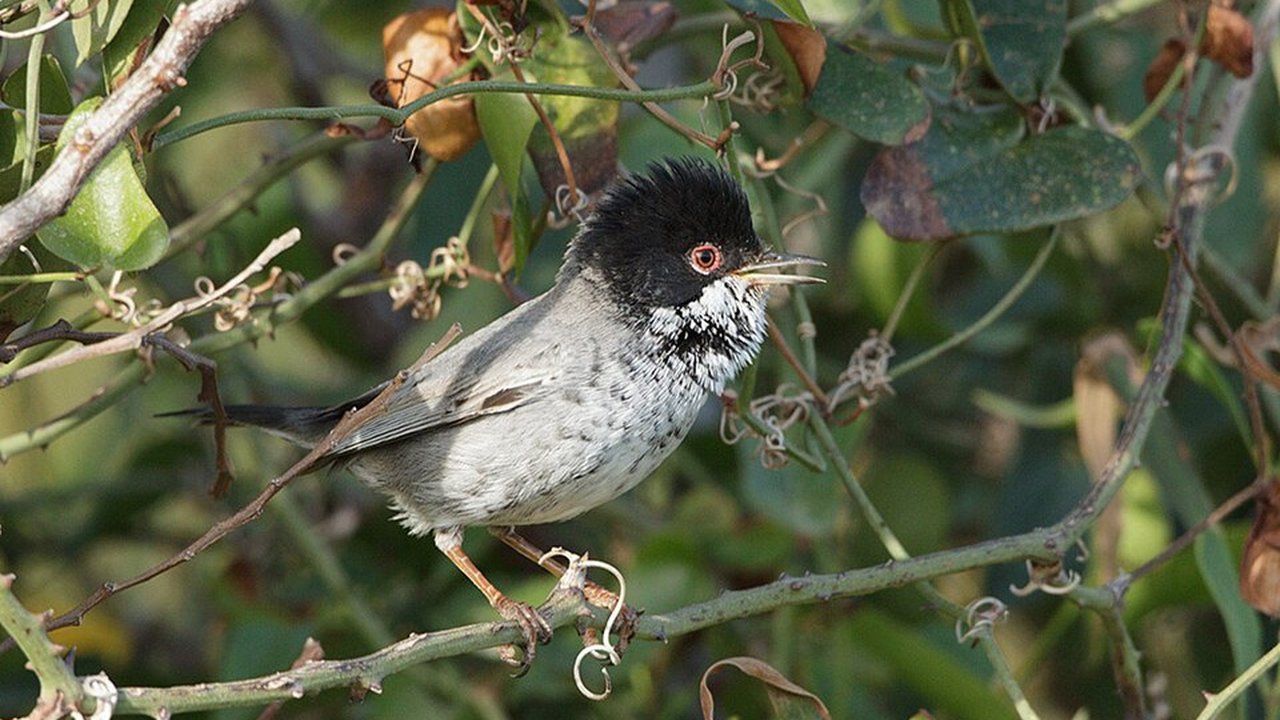
Ensind · CC BY-SA 4.0 · Wikimedia Commons Endemic bird
Cyprus warbler (Kıbrıs ötleğeni, Curruca melanothorax)
Wikipedia, citing the IUCN Red List (2017), gives Least Concern and the current genus Curruca, formerly Sylvia. BirdLife Cyprus says most birds stay all year, while some winter in Israel, Jordan, Lebanon and Egypt.
Source: en.wikipedia.org
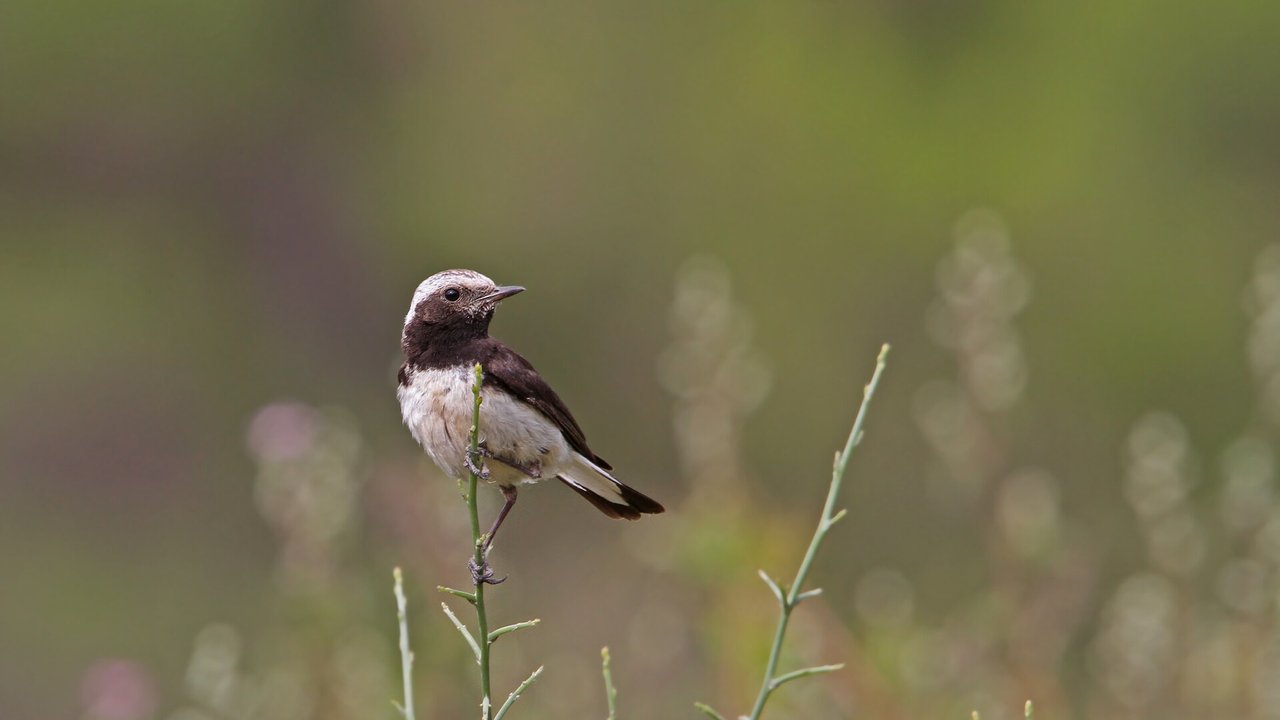
Christoph Moning · CC BY 4.0 · Wikimedia Commons Endemic bird
Cyprus wheatear (Kıbrıs kuyrukkakanı, Oenanthe cypriaca)
BirdLife Cyprus: common across the island from March to October, usually nesting from April to June in holes in walls, trees or between stones, and wintering in countries such as Ethiopia and Sudan. Wikipedia cites IUCN Least Concern (2019).
Source: birdlifecyprus.org
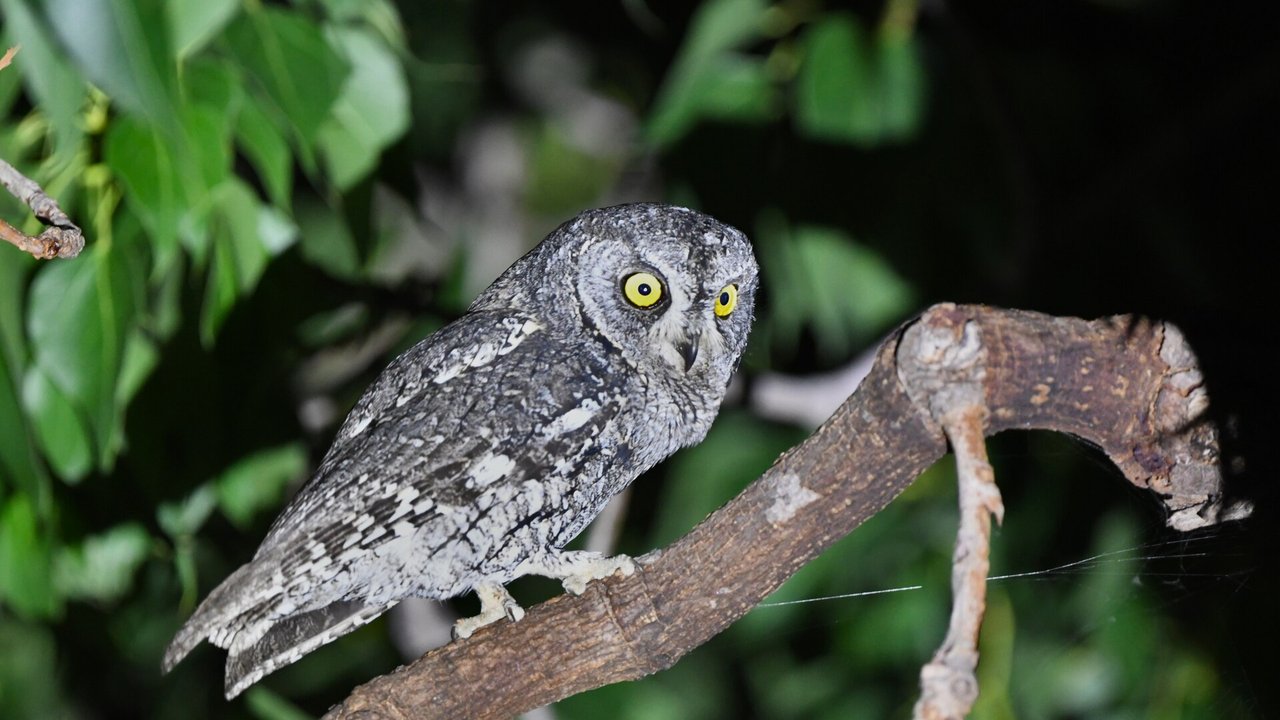
Julien Renoult · CC BY 4.0 · Wikimedia Commons Endemic bird
Cyprus scops owl (Otus scops cyprius)
The Migration Atlas profile says findings of the KUŞKOR ringing scheme helped establish the Cyprus scops owl as a separate species. OSME reports it as the highlight of evening ringing demonstrations at Tatlısu in 2021 and 2023.
Source: migrationatlas.org
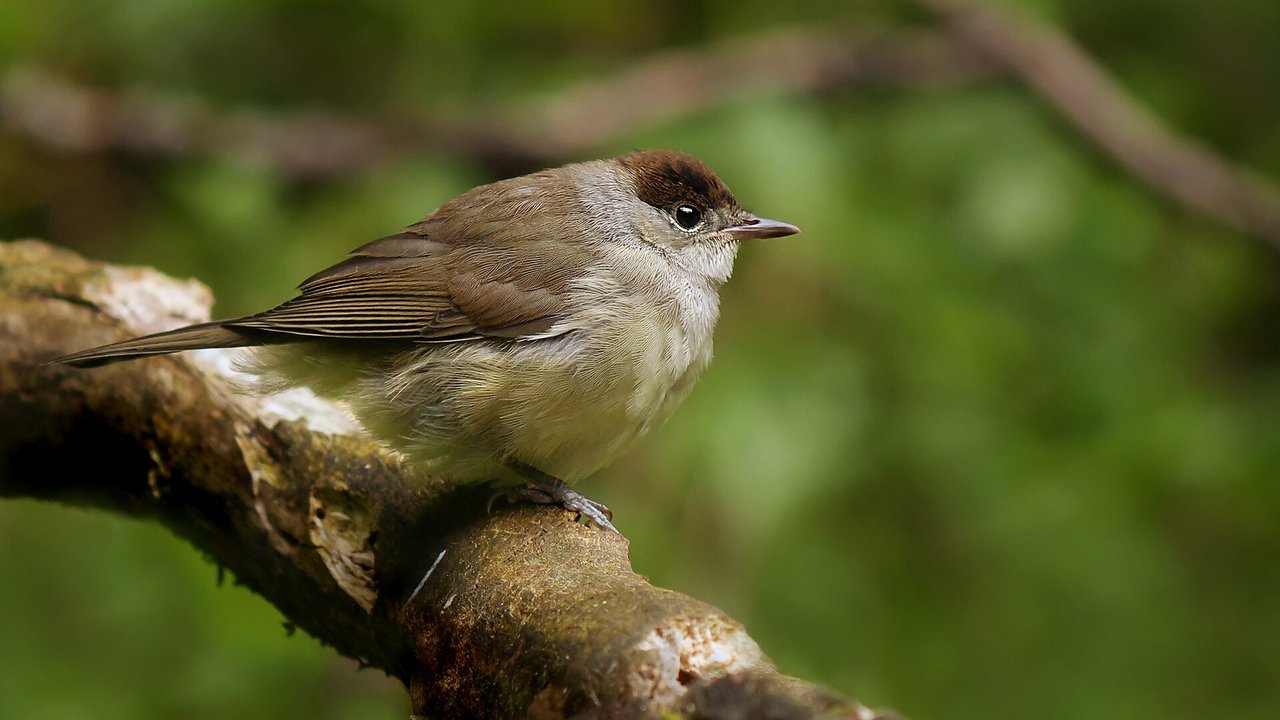
Frank Vassen from Brussels, Belgium · CC BY 2.0 · Wikimedia Commons Threat
Blackcap
OSME (2021) reports 47 blackcaps ringed during the Tatlısu demonstration and says the species is trapped illegally with mist nets in large numbers across Cyprus.
Source: osme.org
1 / 7

Important Bird Areas and birdwatching sites in the north
The 2014 inventory Important Bird Areas of Cyprus (Hellicar, Anastasi, Beton and Snape, BirdLife Cyprus) was compiled with KUŞKOR under a 2010-2011 EU-funded bi-communal project. It includes the Pentadaktylos (Kyrenia or Beşparmak) mountains, the Kormakitis and Karpasia peninsulas, the Mesaoria plain, the Famagusta lakes and the Mia Milia sewage treatment ponds north of the UN-controlled buffer zone near Nicosia. For these sites the report notes that EU law is suspended under Protocol 10 of the Accession Treaty of Cyprus, so Special Protection Area designation is not currently possible.
The report describes the Kyrenia range as rich in qualifying species, with breeding numbers of Cyprus warbler "as high as anywhere", breeding Bonelli's eagles and peregrine falcons, and non-breeding raptors such as honey buzzard, black kite, pallid harrier, red-footed falcon and Eleonora's falcon. It names quarries as the main threat and illegal shooting and poison baits as potential threats to raptors.
Outside the inventory, OSME reports KUŞKOR bird hides at the Kukla wetlands and greater flamingos in the salt marshes at Silverbeach on the east coast. The Birdingplaces site describes Cape Apostolos Andreas (Zafer Burnu) as a migration point in spring and autumn. Coastal access is covered on beaches and coast.
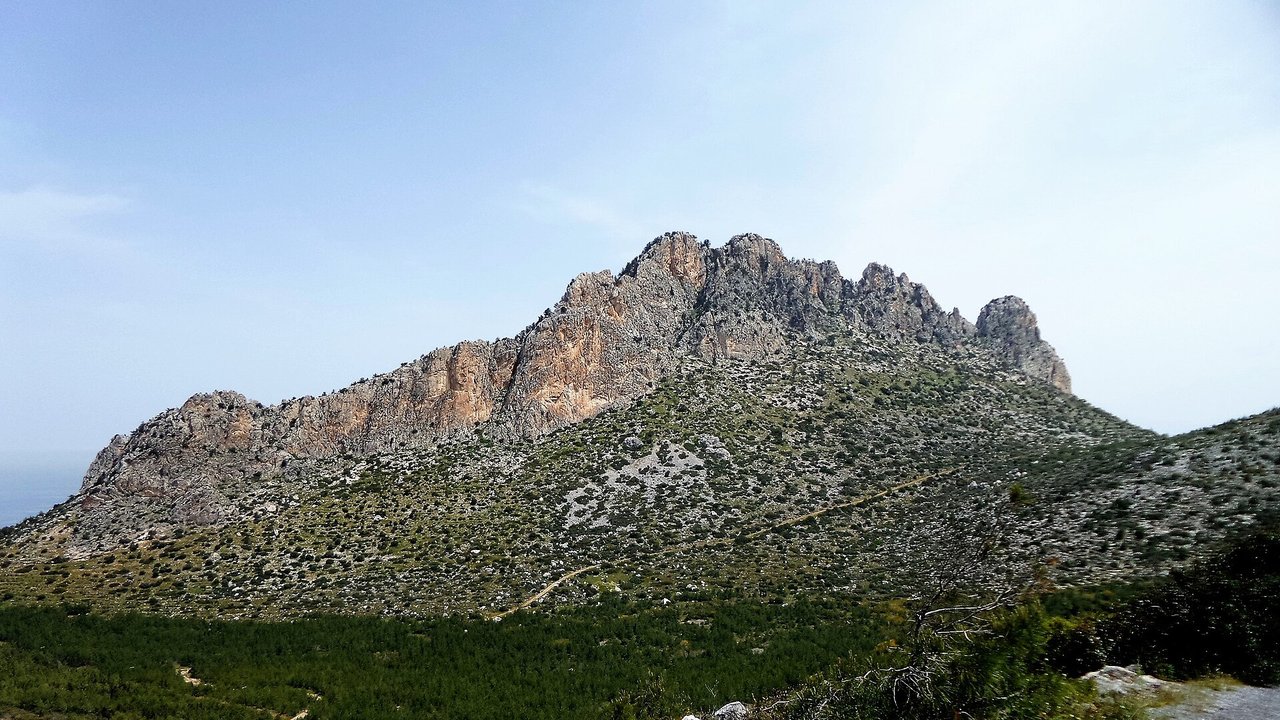
Xxlstier · CC BY-SA 4.0 · Wikimedia Commons Important Bird Area
Pentadaktylos Mountains (Beşparmak range)
BirdLife Cyprus (2014): 26,376 ha across the Kyrenia, Famagusta and Nicosia districts. Qualifying species include European roller, masked shrike and Cretzschmar's bunting; the range is also listed as an Endemic Bird Area site for the two endemic songbirds.
Source: birdlifecyprus.org
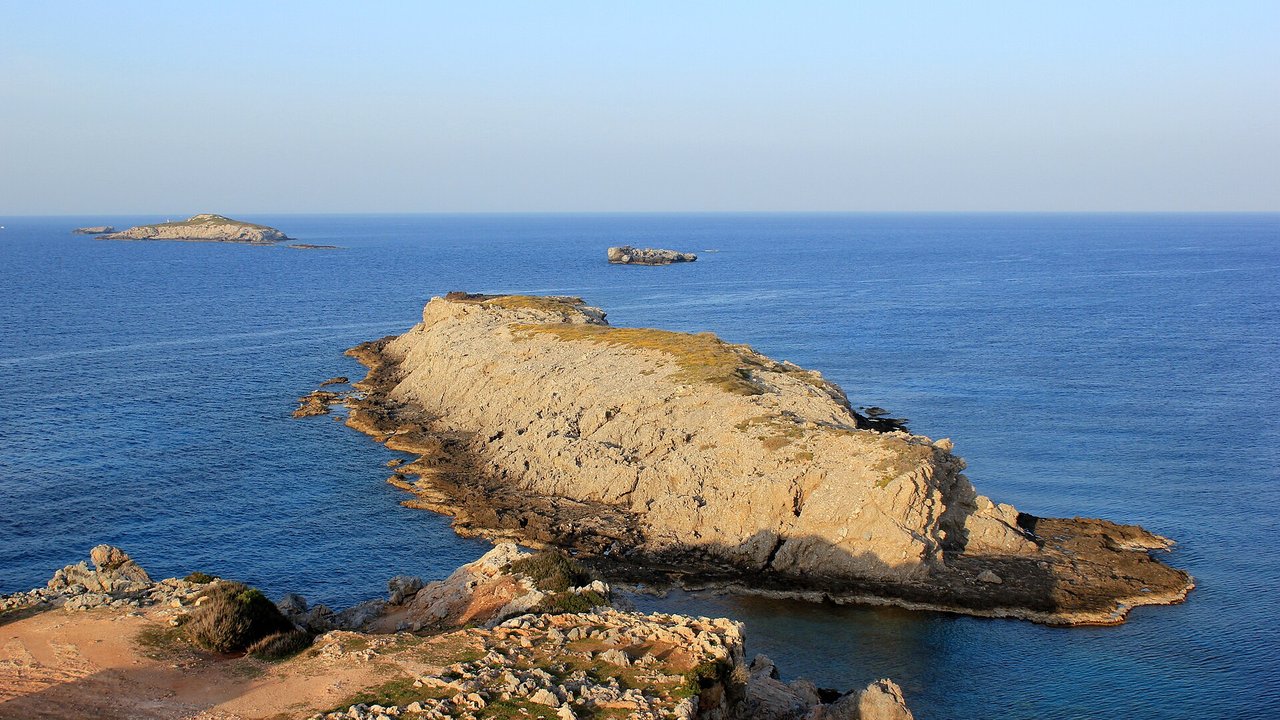
Julian Nyča · CC BY-SA 3.0 · Wikimedia Commons Important Bird Area
Karpasia Peninsula and Kleides Islands (Karpaz)
BirdLife Cyprus (2014): 58,861 ha, of which 44,720 ha marine. The report names the Kleides islands, and more recently the islet of Lefkonisos, as the only breeding sites of Audouin's gull in Cyprus, and lists fishermen and anglers as a disturbance risk there.
Source: birdlifecyprus.org
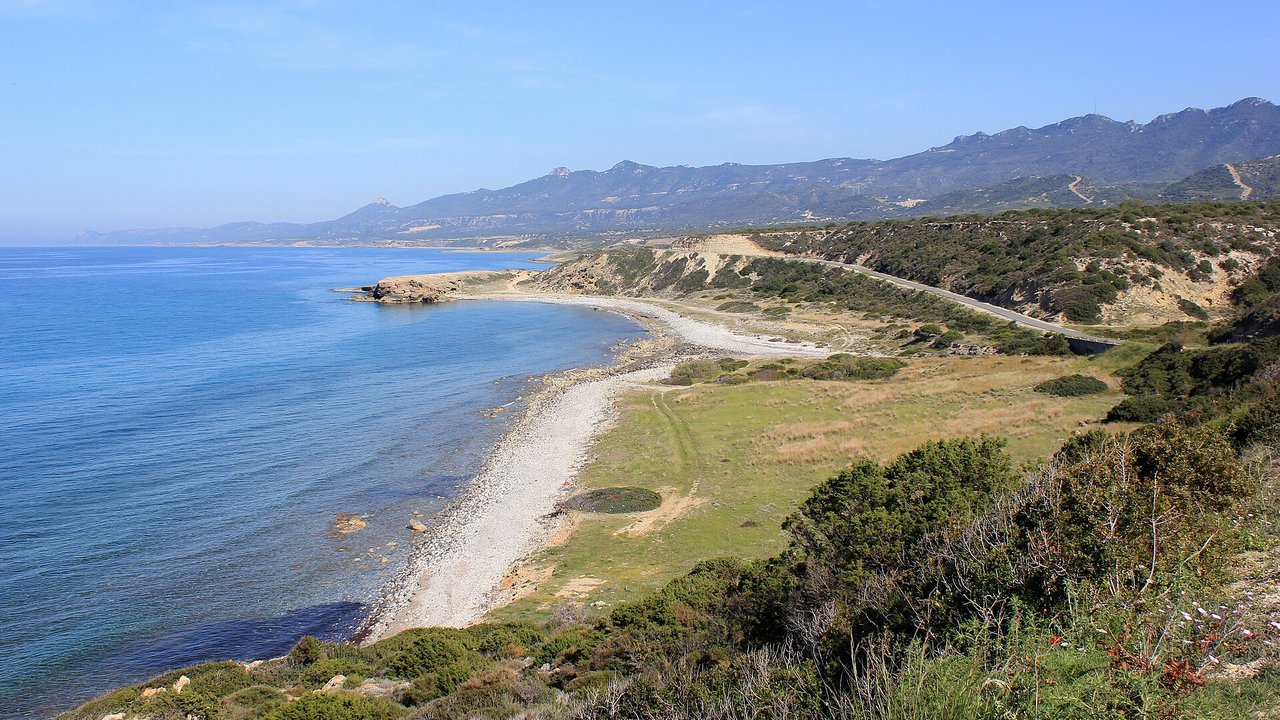
Julian Nyča · CC BY-SA 3.0 · Wikimedia Commons Key Biodiversity Area
Karpasia Peninsula and Kleides Islands KBA
The Key Biodiversity Areas factsheet (last assessed 2012) gives 588.8 km² and lists European roller, Audouin's gull and the migrant red-footed falcon and pallid harrier as trigger species of global conservation concern.
Source: keybiodiversityareas.org
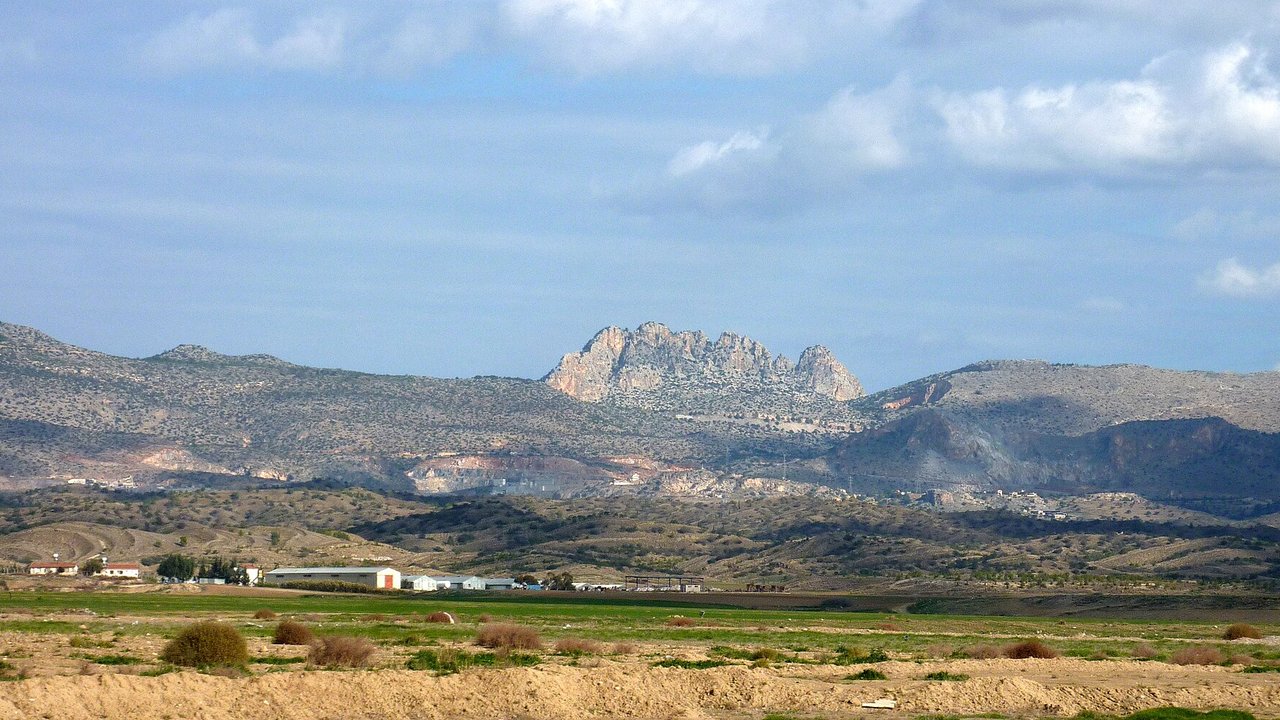
muffinn · CC BY 2.0 · Wikimedia Commons Important Bird Area
Mesaoria Plain (Mesarya)
BirdLife Cyprus (2014): 18,217 ha, almost entirely cereal fields, described as the key breeding site on the island for stone curlew, crested lark and calandra lark, and important for black francolin.
Source: birdlifecyprus.org
Zairon · CC BY-SA 4.0 · Wikimedia Commons Birdwatching site
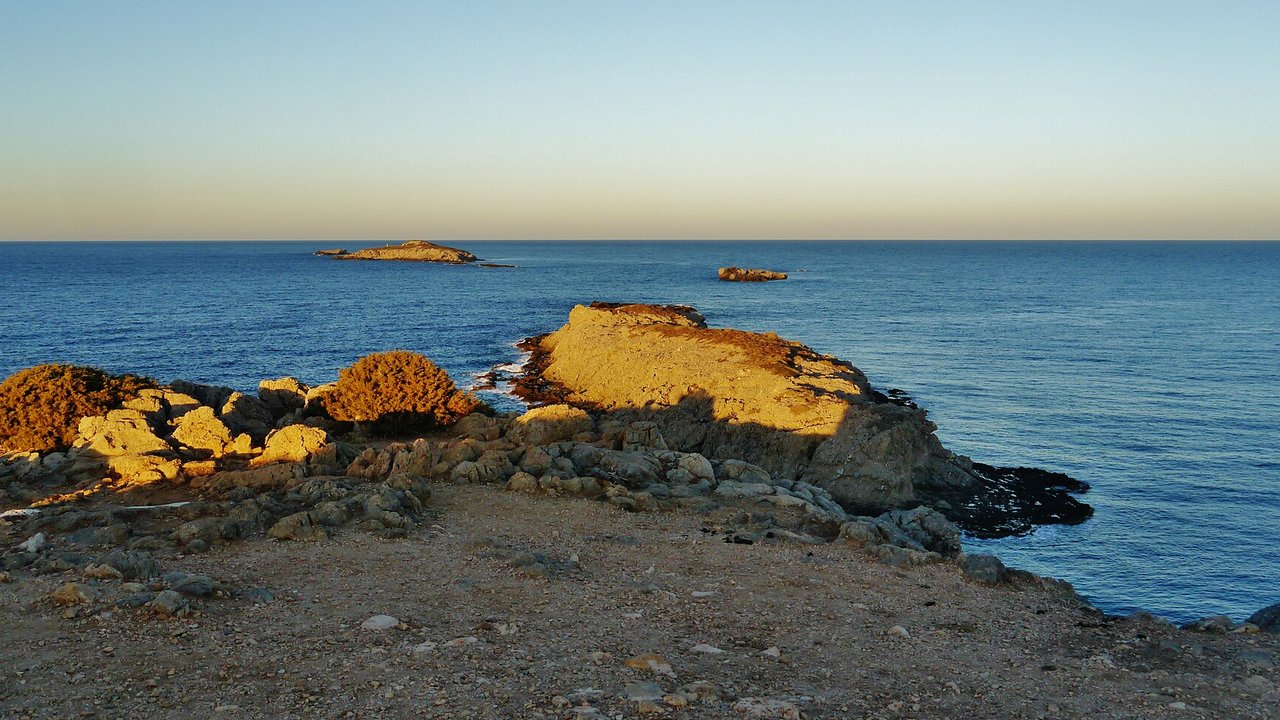
Cape Apostolos Andreas (Zafer Burnu)
Birdingplaces (updated December 2022) says herons and waders pass in spring and raptors such as pallid harrier pass over. OSME recorded Cyprus wheatear, peregrine and Bonelli's eagle there in 2021.
Source: birdingplaces.eu
1 / 10

Sea turtle nesting beaches and the season
According to the TRNC Environmental Protection Department (Çevre Koruma Dairesi, release of 9 December 2024), the nesting season runs from May to October. Turtles lay from May to mid-July, a nest holds about 100 eggs on average, and hatchlings emerge after about two months of incubation. The department says nesting beaches lie within the biodiversity network created by the Environment Law, and cites the IUCN categories Vulnerable for Caretta caretta and Endangered for Chelonia mydas.
For 2024 the department reports 1,834 nests on the Karpaz beaches between 11 May and 14 August, 94.1% of them green turtle nests; 1,585 nests on the Akdeniz and Alagadi beaches; 77 at Karşıyaka (Güzelyalı); and 314 loggerhead nests in Famagusta bay. Monitoring was carried out by Taşkent Nature Park (Karşıyaka and Karpaz), SPOT (Akdeniz and Alagadi) and the Eastern Mediterranean University Underwater Research Centre (Famagusta bay).
Mongabay (March 2021) reports that SPOT, the Society for the Protection of Turtles, works with University of Exeter scientists and the department. The beaches themselves are described on beaches and coast.
Brocken Inaglory · CC BY-SA 3.0 · Wikimedia Commons Sea turtle
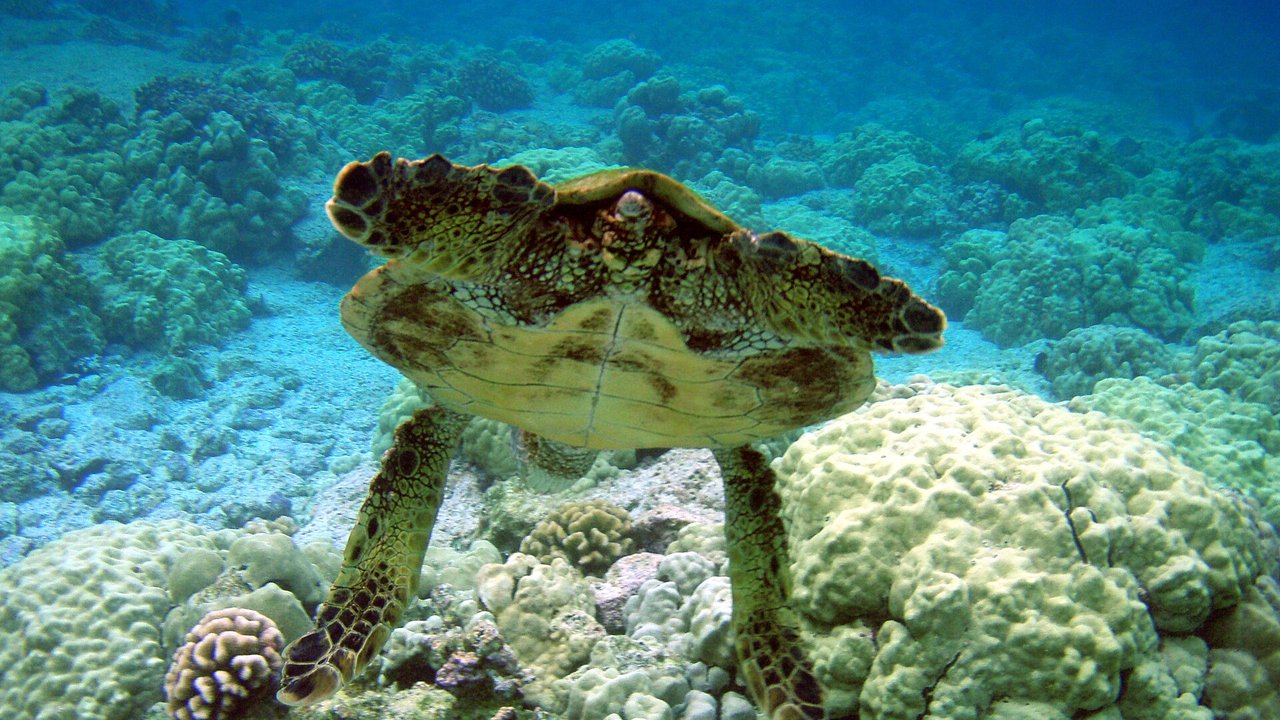
Yeşil deniz kaplumbağası (green turtle, Chelonia mydas)
Environmental Protection Department: 1,726 of the 1,834 Karpaz nests in 2024 (94.1%), and the first Alagadi nest of 2024 was laid by a green turtle on 10 May. The department cites IUCN Endangered.
Source: cevrekorumadairesi.org
Savvas Michaelides · CC BY-SA 4.0 · Wikimedia Commons Sea turtle
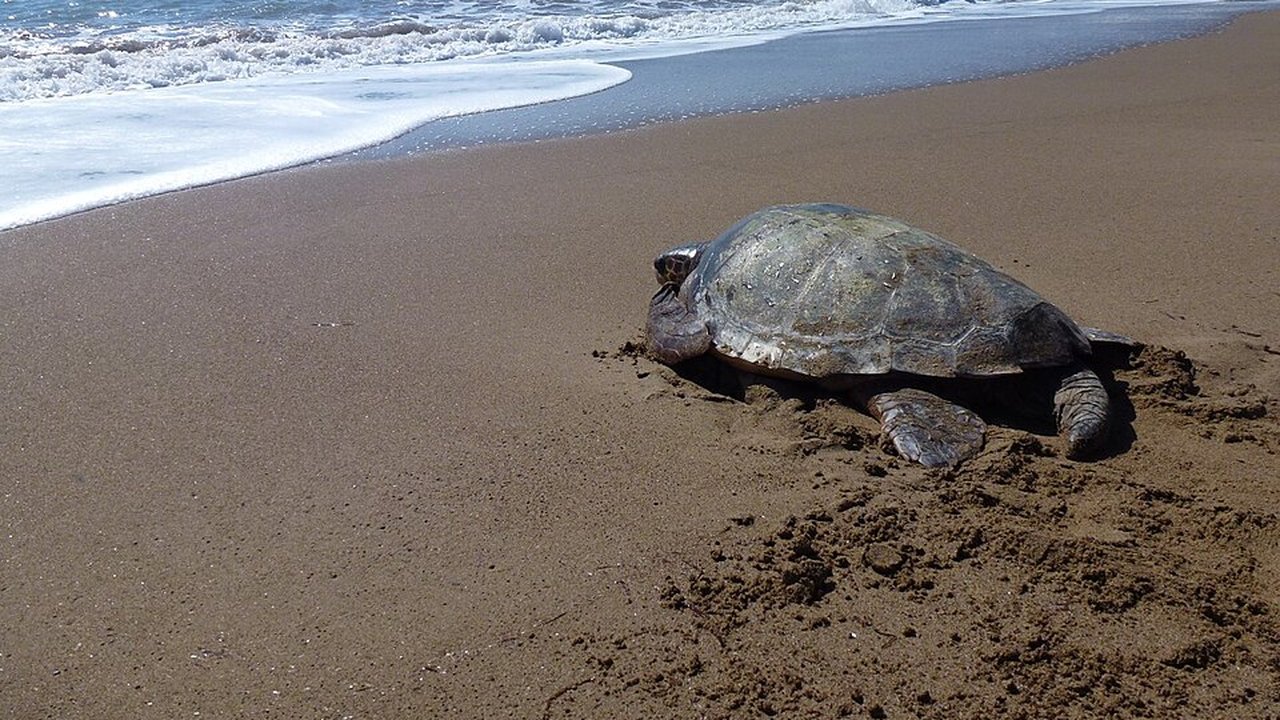
İribaş deniz kaplumbağası (loggerhead turtle, Caretta caretta)
Environmental Protection Department: 20 Karpaz nests in 2024 (1.1%), 59 of the 77 nests at Karşıyaka and 314 nests in Famagusta bay. The department cites IUCN Vulnerable.
Source: cevrekorumadairesi.org
CAPTAIN RAJU · CC BY-SA 4.0 · Wikimedia Commons Nesting beach
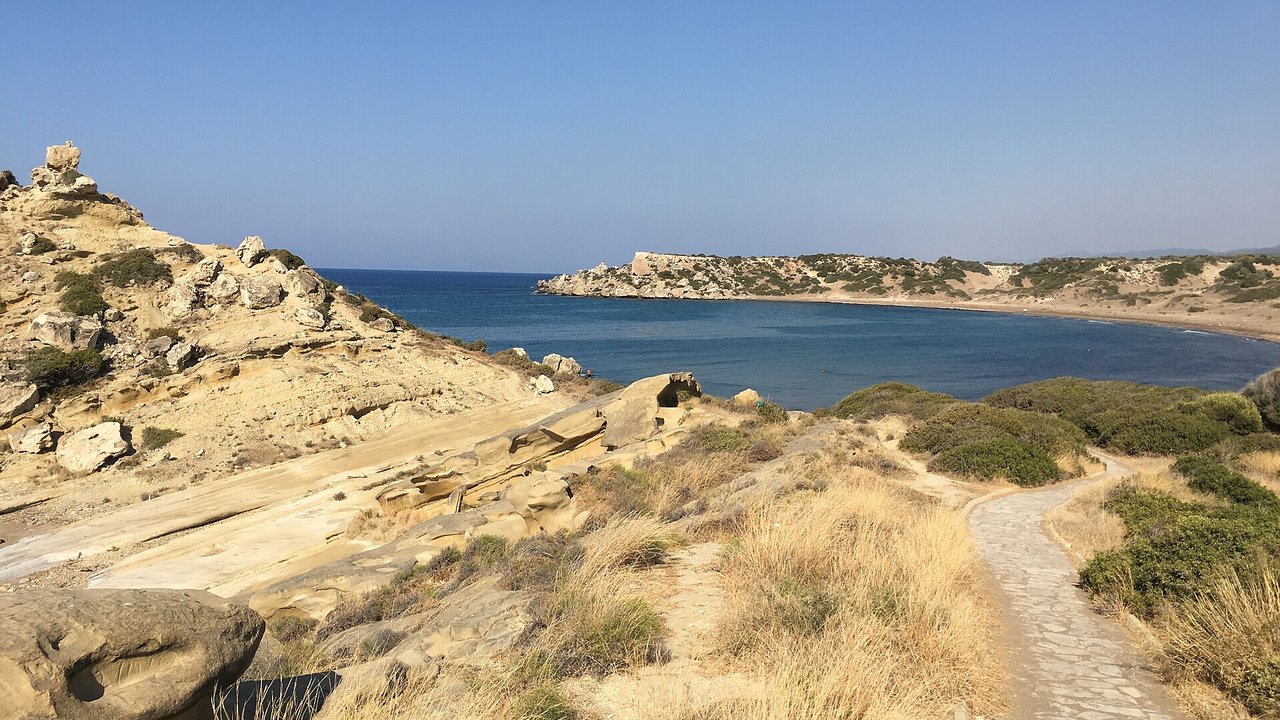
Alagadi and Akdeniz beaches (zones 4 and 5)
The department reports 1,585 nests in 2024, up from 1,061 in 2023, with monitoring by SPOT. Mongabay (2021) says volunteers patrol Alagadi nightly in the season.
Source: cevrekorumadairesi.org
1 / 8

Rules on nesting beaches and what visitors are asked to do
The Environmental Protection Department lists rules for beaches used by turtles during the May to October season: no umbrellas within 35 metres of the sea and no digging; screen lights visible from the beach; leave no belongings or litter; no boat speeds above 5 miles per hour within 1 mile of the shore; no motor vehicles on the beach; no walking on the beach with lights at night; no pets left loose; and no fires.
Mongabay (2021) reports that visitors can watch nest excavations on Alagadi beach and that volunteers avoid torches so as not to disturb turtles. It names drowning in fishing nets and plastic waste as threats. For injured turtles found at sea, the department names the Taşkent Nature Park Rehabilitation Centre (telephone 1190) and the Meritta Sea Turtle Rehabilitation Centre.
1 / 7

Snakes recorded in Cyprus and their venom status
A poster by the Republic of Cyprus Department of Forests, published by the Press and Information Office, describes eight snakes of the island: the blunt-nosed viper, whose bite it calls "extremely dangerous for humans"; the Montpellier snake, "poisonous but not extremely dangerous"; the cat snake, "poisonous but not dangerous to humans"; and five non-venomous species. The contents of Baier, Sparrow and Wiedl's book The Amphibians and Reptiles of Cyprus (2009) list accounts for eleven snakes, adding the Levantine dwarf snake, the dice snake and Dahl's whip snake.
For the north, Göçmen and colleagues (North-Western Journal of Zoology, 2008) report nine snake species found during three trips in 2007, at localities from Gönyeli and the Karpaz peninsula to Selvili Tepe on the Kyrenia range. They write that the endemic Cyprus whip snake is known only from the south, while Dahl's whip snake and the dice snake are found only in the north. The local name gufi is explained on flora and fauna.
Taşkent Nature Park, quoted by Gündem Kıbrıs, says these snakes are protected and that walking away without disturbing a snake met in the wild is enough. For a snake near homes, it asks people to keep it in sight and call the 1190 Wildlife Support Line.
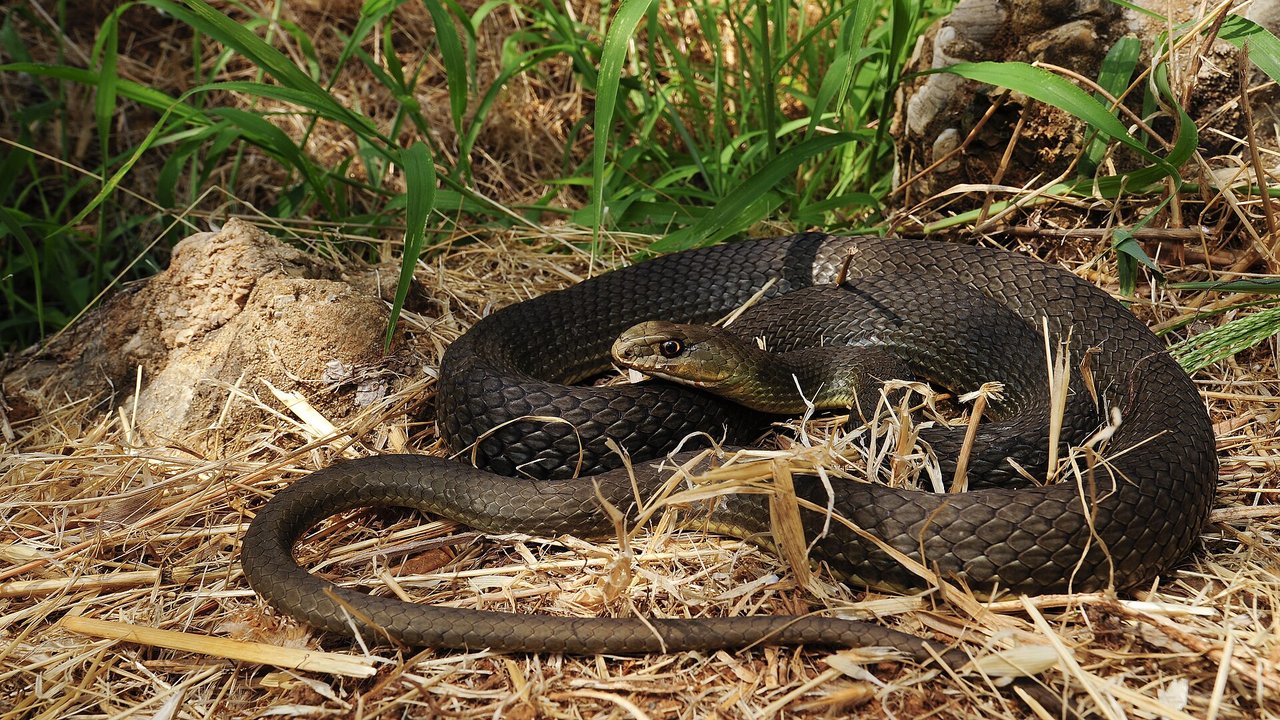
Benny Trapp · CC BY 3.0 · Wikimedia Commons Venomous: not extremely dangerous
Eastern Montpellier snake (Malpolon insignitus)
The poster (as Malpolon monspessulanus): about 2 m, in dry stony places with many lizards; "poisonous but not extremely dangerous for humans". Baier et al. (2009) use the name Malpolon insignitus; Göçmen et al. (2008) recorded it near Gönyeli, at Golden Beach and at Selvili Tepe.
Source: moa.gov.cy
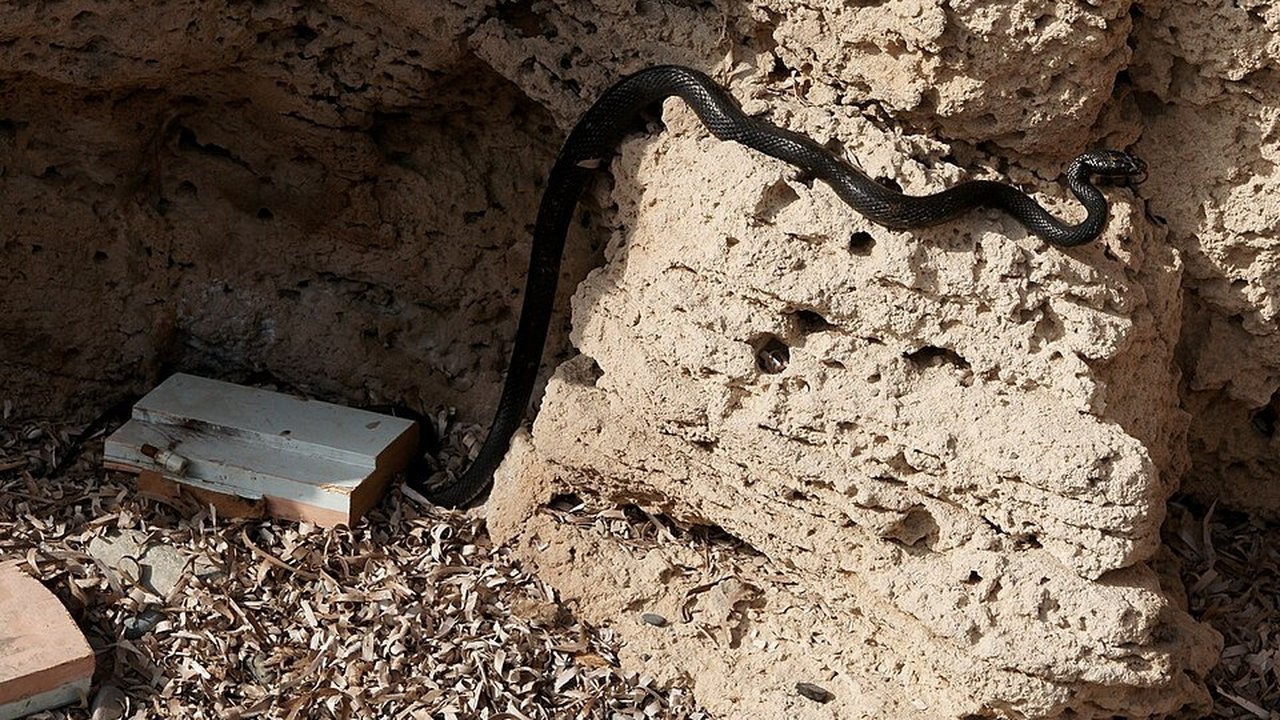
Mboesch · CC BY-SA 4.0 · Wikimedia Commons Non-venomous
Large whip snake (Dolichophis jugularis)
Poster: about 3 m, in open pasture with groups of trees and bushes, feeding on small mammals, birds, lizards and snakes; not venomous. Göçmen et al. (2008) recorded it at many of the localities surveyed, including the Asidere stream in Nicosia.
Source: moa.gov.cy
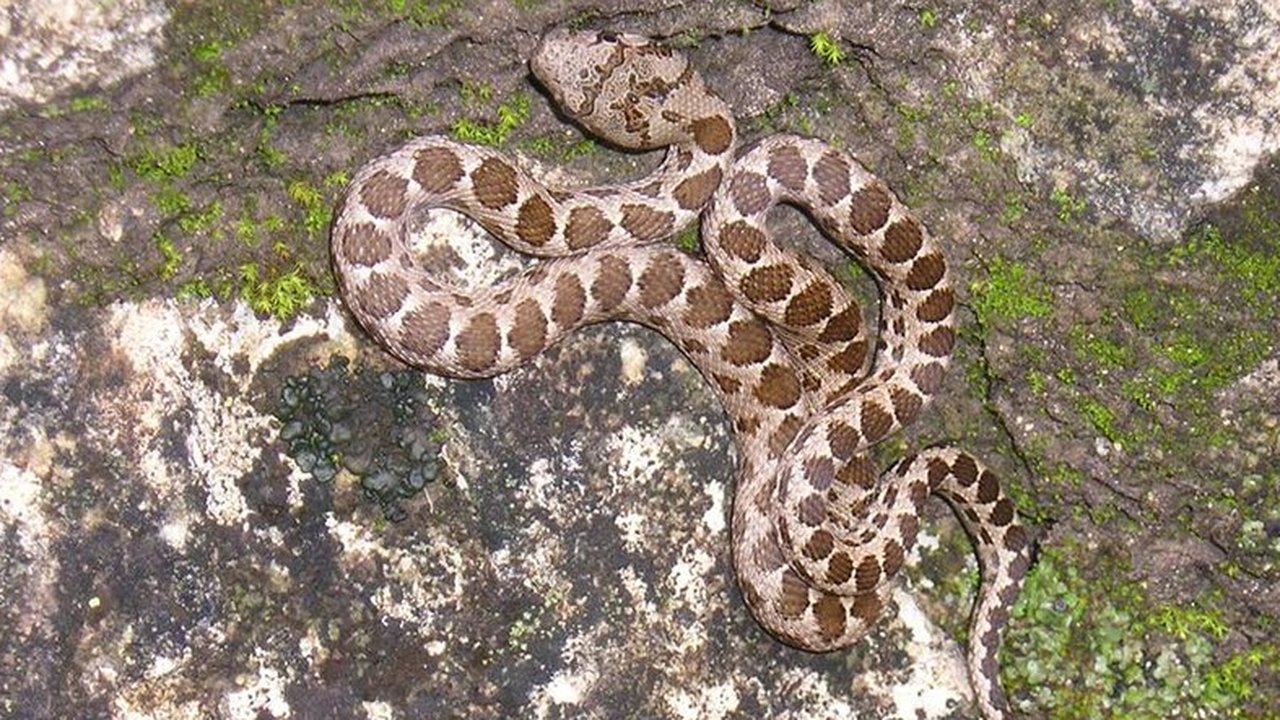
Alon Granot · CC BY-SA 3.0 · Wikimedia Commons Non-venomous
Coin snake (Hemorrhois nummifer)
Poster: found in habitats including forested and urban areas, feeding on small mammals and lizards; "not poisonous and harmless to humans". Göçmen et al. (2008) recorded it on Ateştepe hill near Gönyeli lakelet.
Source: moa.gov.cy
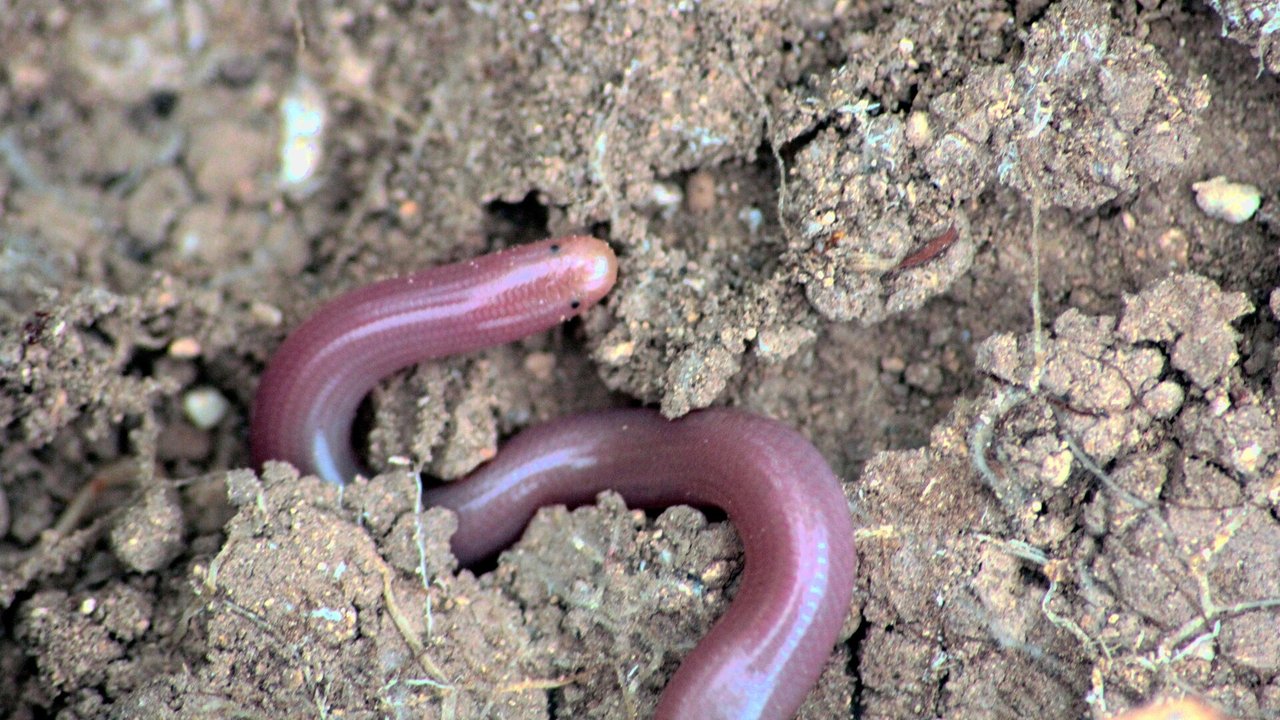
Lennart Hudel · CC BY 4.0 · Wikimedia Commons Non-venomous
Worm snake (Typhlops vermicularis)
Poster: up to 35 cm, spends most of the day under stones or in burrows and feeds almost entirely on ant pupae; harmless. Göçmen et al. (2008) recorded it on Ateştepe hill.
Source: moa.gov.cy
Olaf Tausch · CC BY 3.0 · Wikimedia Commons Non-venomous
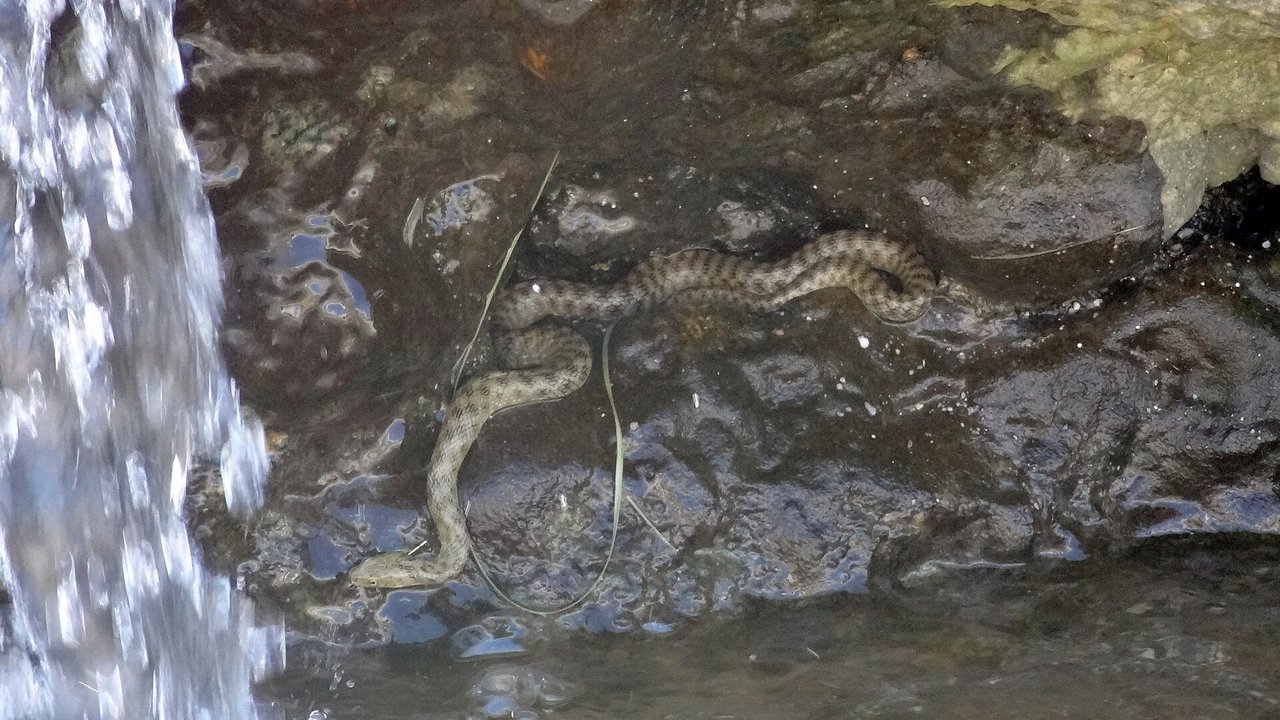
Dice snake (Natrix tessellata)
Göçmen et al. (2008): known from two juveniles collected in 1960 in northern Cyprus; a living adult found at Gönyeli lakelet in 2007 reconfirmed a relict population. Wikipedia describes the species as considered non-venomous.
Source: lacerta.de
Benny Trapp · CC BY 3.0 · Wikimedia Commons Non-venomous
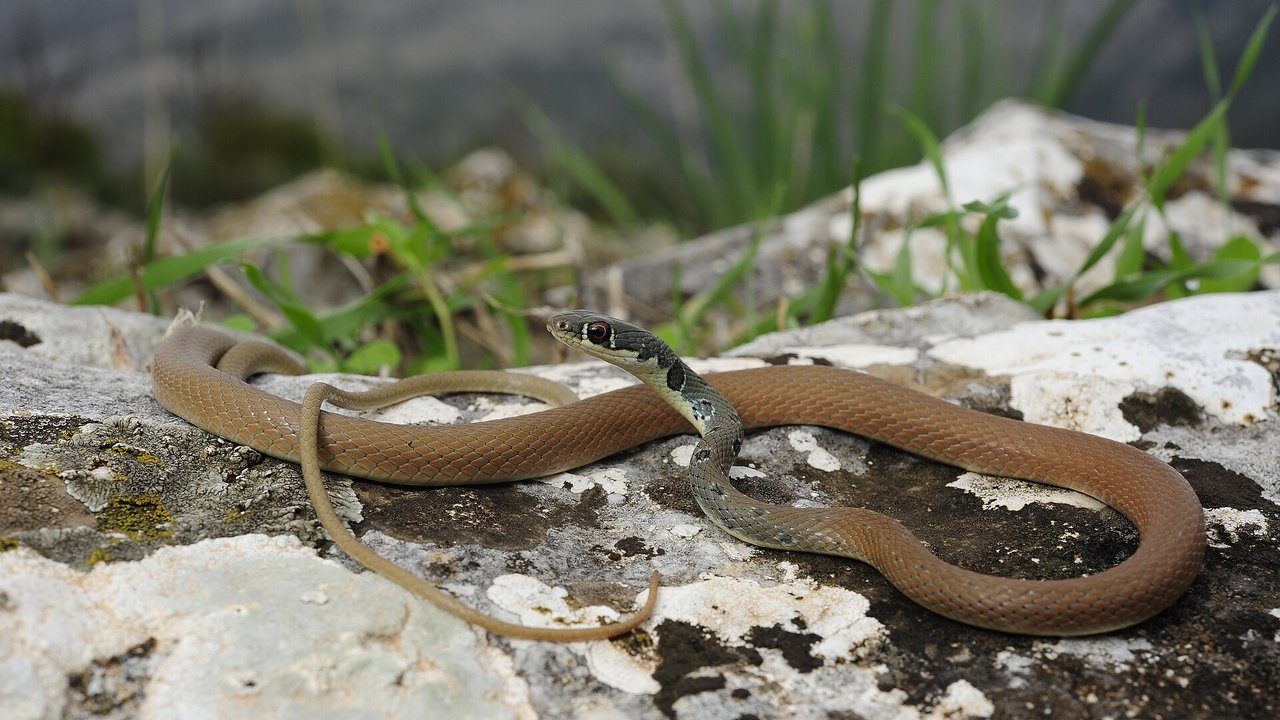
Dahl's whip snake (Platyceps najadum)
Göçmen et al. (2008): one seen at Selvili Tepe in 2007, the second actual report from northern Cyprus, and a rare species with a small range. Wikipedia describes it as a non-venomous colubrid whose range includes Cyprus.
Source: lacerta.de
1 / 11

Snakebite first aid as stated by WHO
This section paraphrases the World Health Organization's snakebite first-aid guidance and does not replace medical care. WHO says high-quality antivenoms are the most effective treatment, so the priority is to reach a health facility as soon as possible. Emergency medicine specialist Dr Öykü Bakalım Akdöner, quoted by Haber Kıbrıs (26 June 2025), advises going to the nearest health facility or calling 112.
WHO's first-aid guidance says to move away from where the bite happened, reassure the person, remove anything tight from the bitten part, keep the person completely still, splint the limb and transport them to a health facility. It says never to use a tight arterial tourniquet, and to avoid wound incision, suction, "black stones", herbal medicines and other traditional or unproven methods. Taşkent Nature Park, quoted by Gündem Kıbrıs, advises going to the nearest health facility without delay after a Cyprus viper bite.
1 / 8

Lizards, chameleon, geckos and freshwater turtles
Svana and colleagues (Ecologia Balkanica, 2025) record eleven lizard species on Cyprus in five families. Two are endemic species, the Cyprus rock agama (Laudakia cypriaca) and the Troodos lizard (Phoenicolacerta troodica), and four are endemic subspecies; they note that Schreiber's fringe-fingered lizard is listed as Endangered on the IUCN Red List. Their field survey covered only areas under the effective control of the Republic of Cyprus.
For the north, Göçmen and colleagues (2008) report eleven lizards and three turtles found in 2007. In their table, Kotschy's gecko, the Turkish gecko, the agama, the snake-eyed lizard and the striped skink appear at many of the localities surveyed, and the text places the Balkan terrapin at the Asidere stream in Nicosia. They describe Schneider's skink as very rare, seen at Gönyeli and Çayırova.
Mar(c) · CC BY-SA 3.0 · Wikimedia Commons Lizard, endemic species
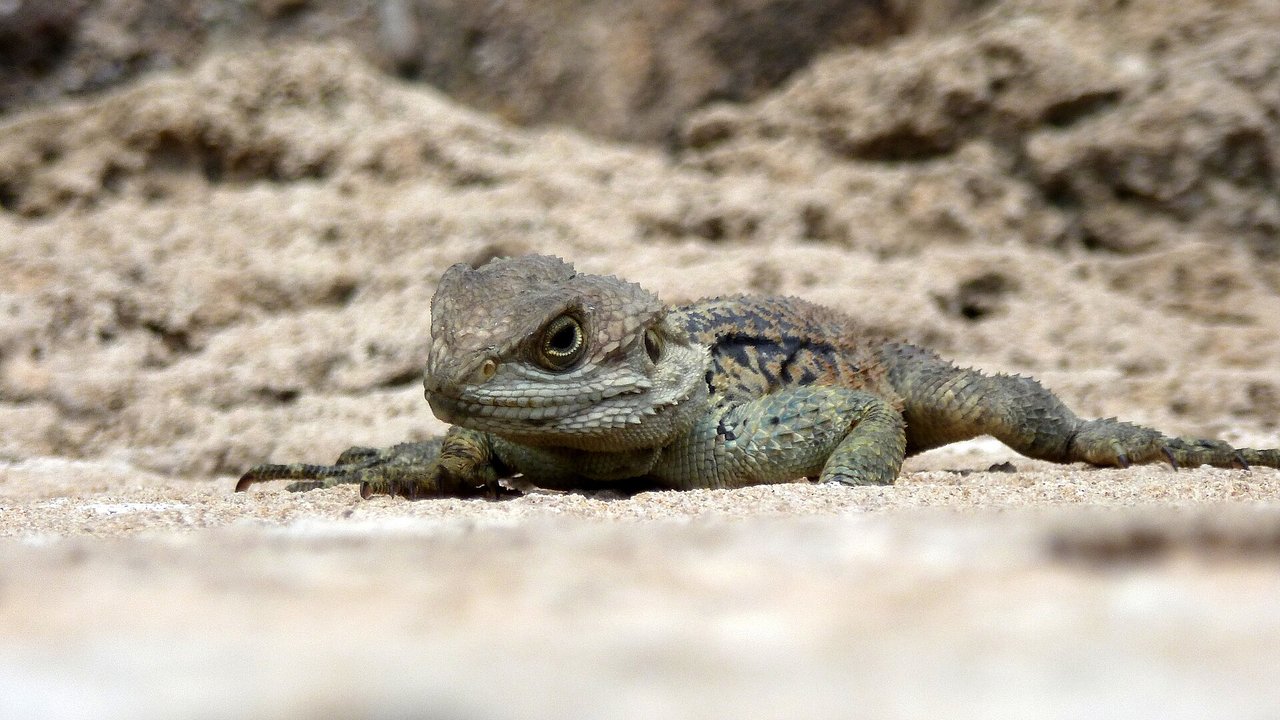
Cyprus rock agama, hardun (Laudakia cypriaca)
Svana et al. (2025): endemic species, found in open areas and sparse pine forest, sheltering on tree trunks or in rock crevices. Göçmen et al. (2008) recorded it, as Laudakia stellio cypriaca, widely in the north.
Source: eb.bio.uni-plovdiv.bg
Benny Trapp · CC BY 3.0 · Wikimedia Commons Lizard
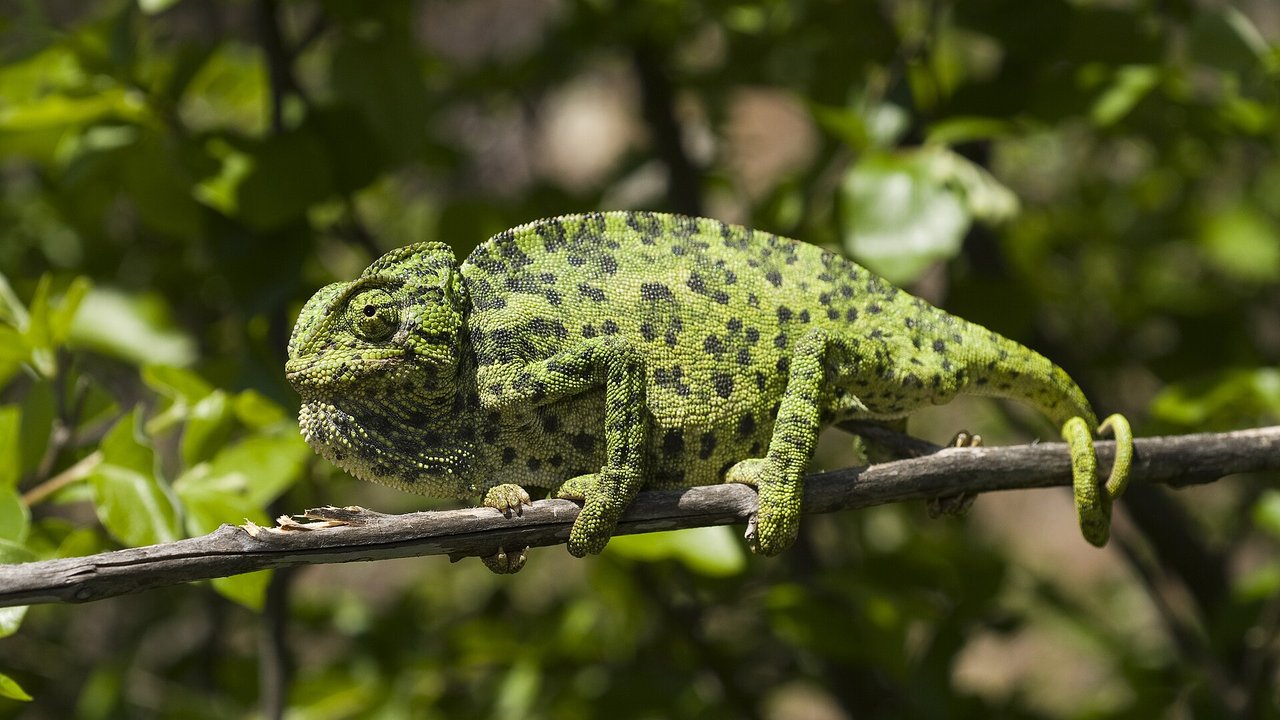
Mediterranean chameleon (Chamaeleo chamaeleon)
Göçmen et al. (2008) recorded Chamaeleo chamaeleon recticrista in 2007, including in the rocky riverbed at Yeşilırmak. Svana et al. (2025) list it among the eleven lizards of Cyprus.
Source: lacerta.de
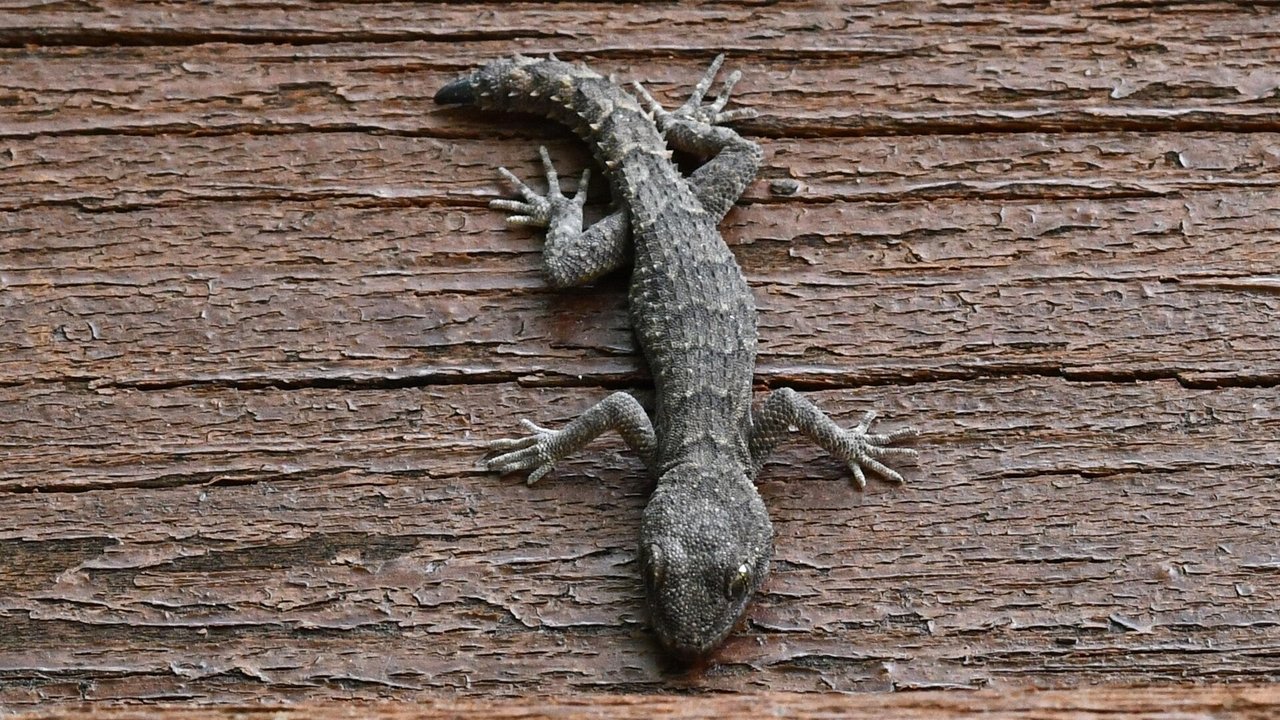
TOUROULT Julien · CC BY 4.0 · Wikimedia Commons Gecko, endemic subspecies
Kotschy's gecko (Mediodactylus orientalis fitzingeri)
Svana et al. (2025) list it as an endemic subspecies. Göçmen et al. (2008), as Cyrtopodion kotschyi fitzingeri, found it under stones at Yeşilırmak and Taşpınar.
Source: eb.bio.uni-plovdiv.bg
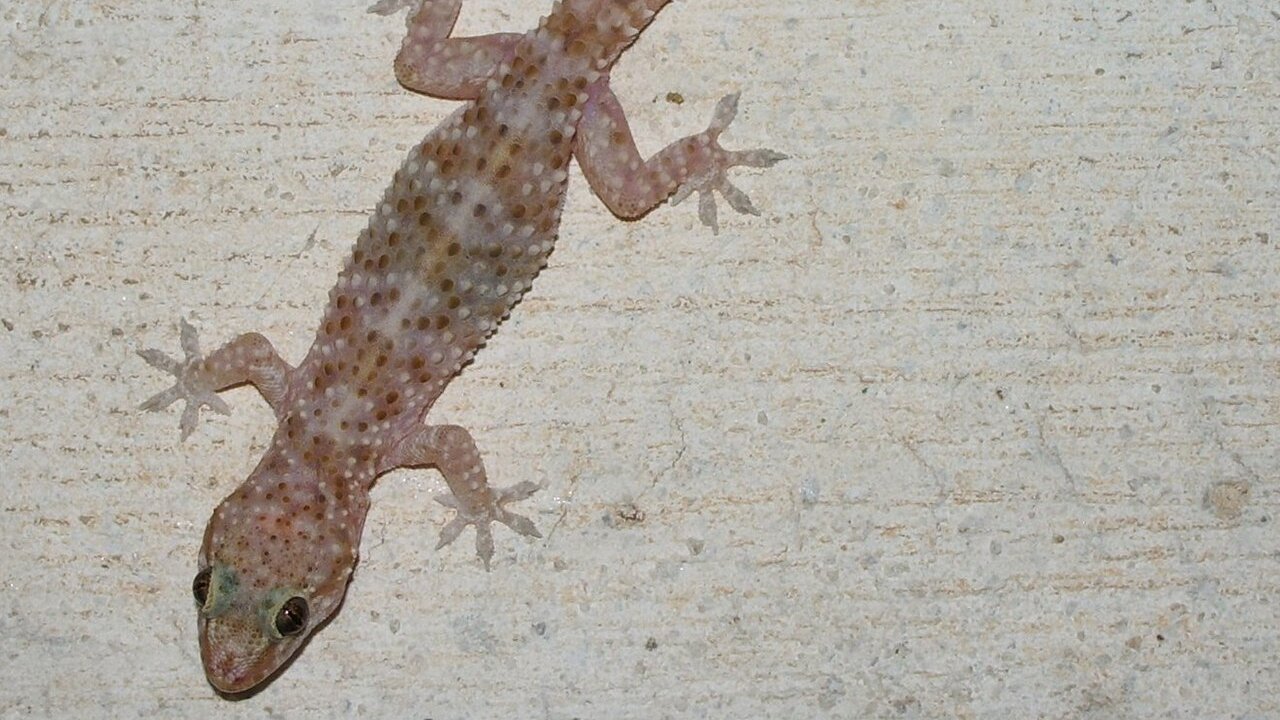
Koppi2 · CC BY-SA 3.0 · Wikimedia Commons Gecko
Turkish gecko (Hemidactylus turcicus)
Göçmen et al. (2008) found it under stones at Yeşilırmak, Taşpınar and Ateştepe; Svana et al. (2025) list it among the lizards of Cyprus.
Source: lacerta.de
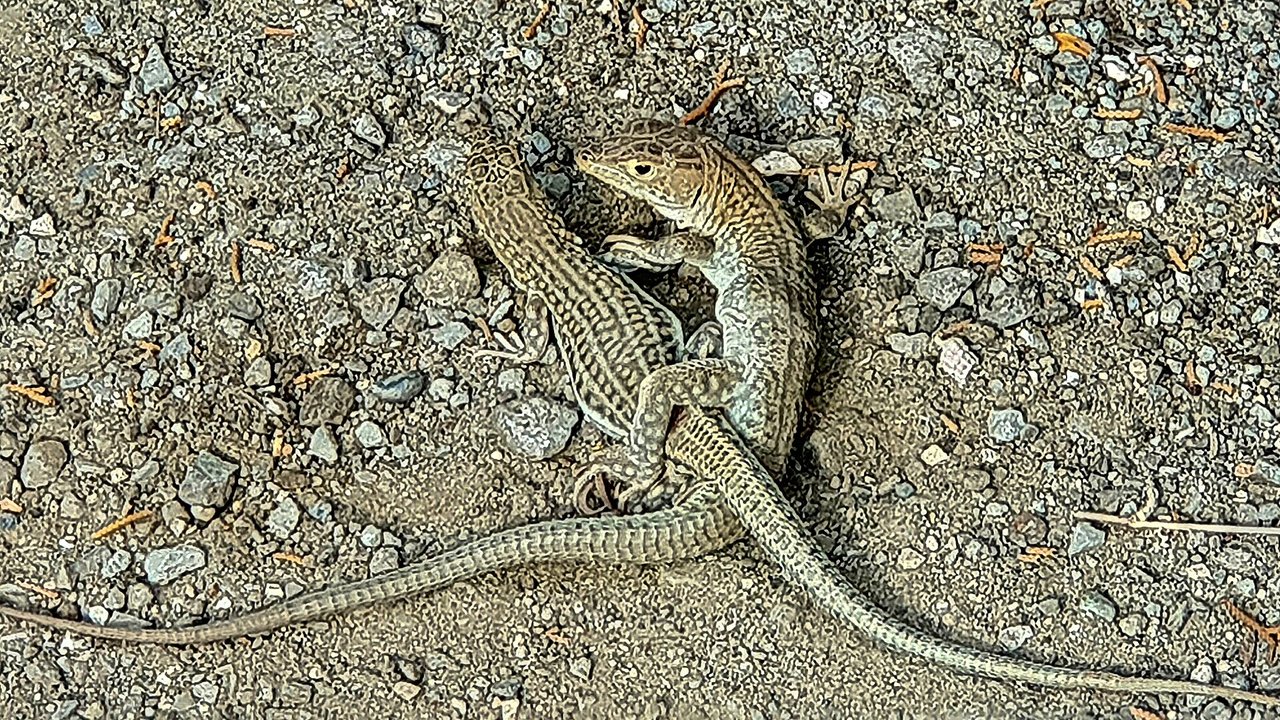
Rolf Dietrich Brecher from Germany · CC BY 2.0 · Wikimedia Commons Lizard, IUCN Endangered
Schreiber's fringe-fingered lizard (Acanthodactylus schreiberi)
Svana et al. (2025): listed as Endangered by the IUCN, with suitable habitat mainly on coasts, low ground and sand dunes. Göçmen et al. (2008) report it as abundant on Golden Beach in the Karpaz.
Source: eb.bio.uni-plovdiv.bg
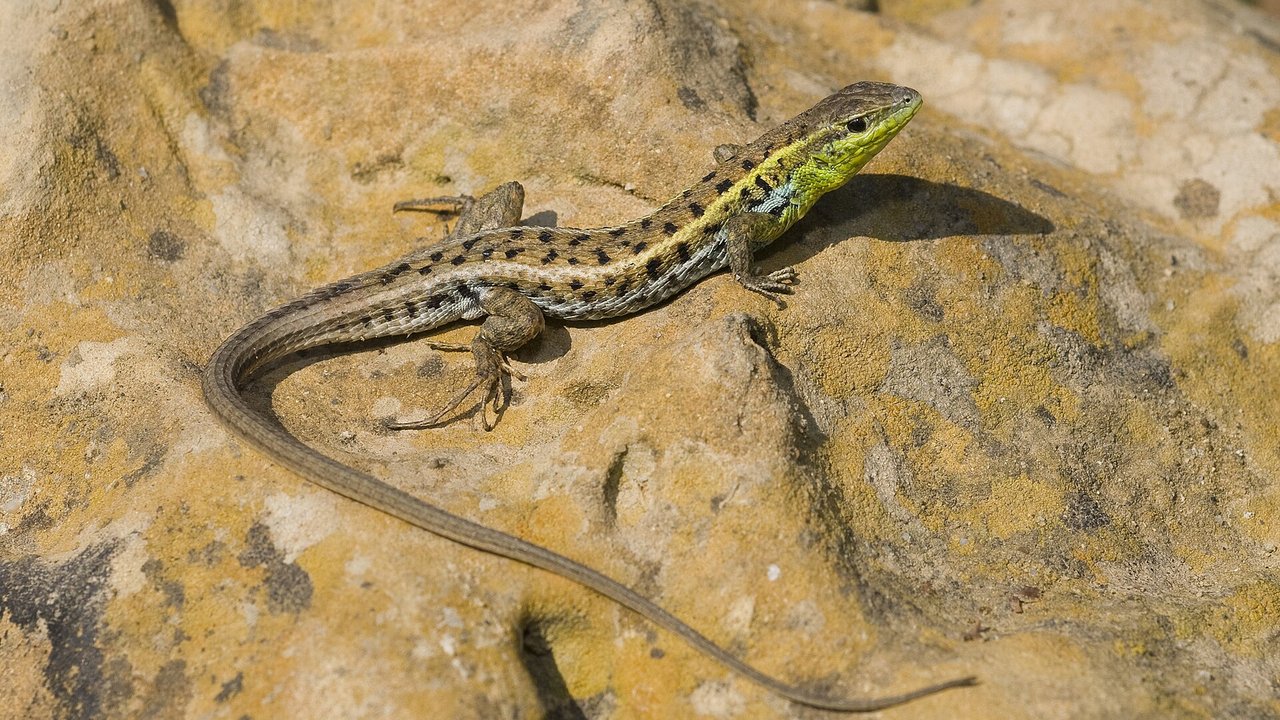
Benny Trapp · CC BY 3.0 · Wikimedia Commons Lizard, endemic subspecies
Snake-eyed lizard (Ophisops elegans schlueteri)
Svana et al. (2025): an endemic subspecies expected to occur almost everywhere on the island and in many habitats. Göçmen et al. (2008) recorded it widely in the north.
Source: eb.bio.uni-plovdiv.bg
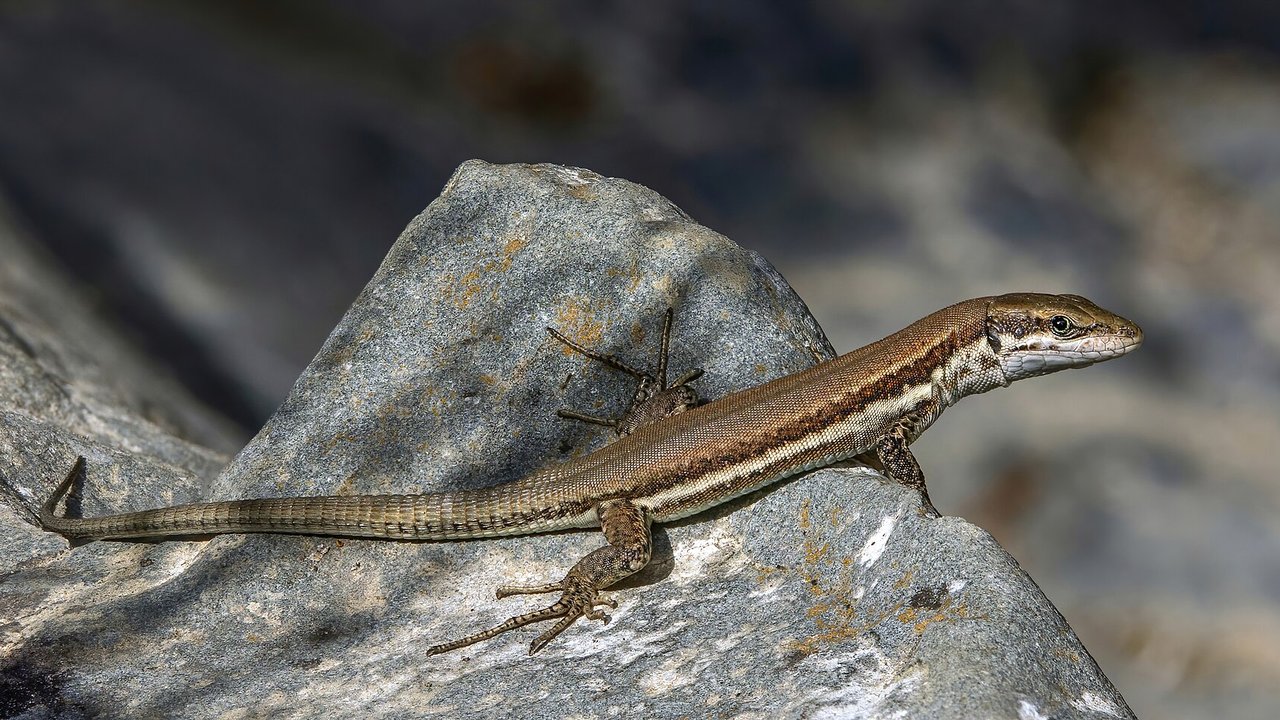
Charles J. Sharp · CC BY-SA 4.0 · Wikimedia Commons Lizard, endemic species
Troodos lizard (Phoenicolacerta troodica)
Svana et al. (2025): endemic species favouring denser maquis, forest or riverside habitats. Göçmen et al. (2008) recorded it in the north, including at Yeşilırmak.
Source: eb.bio.uni-plovdiv.bg
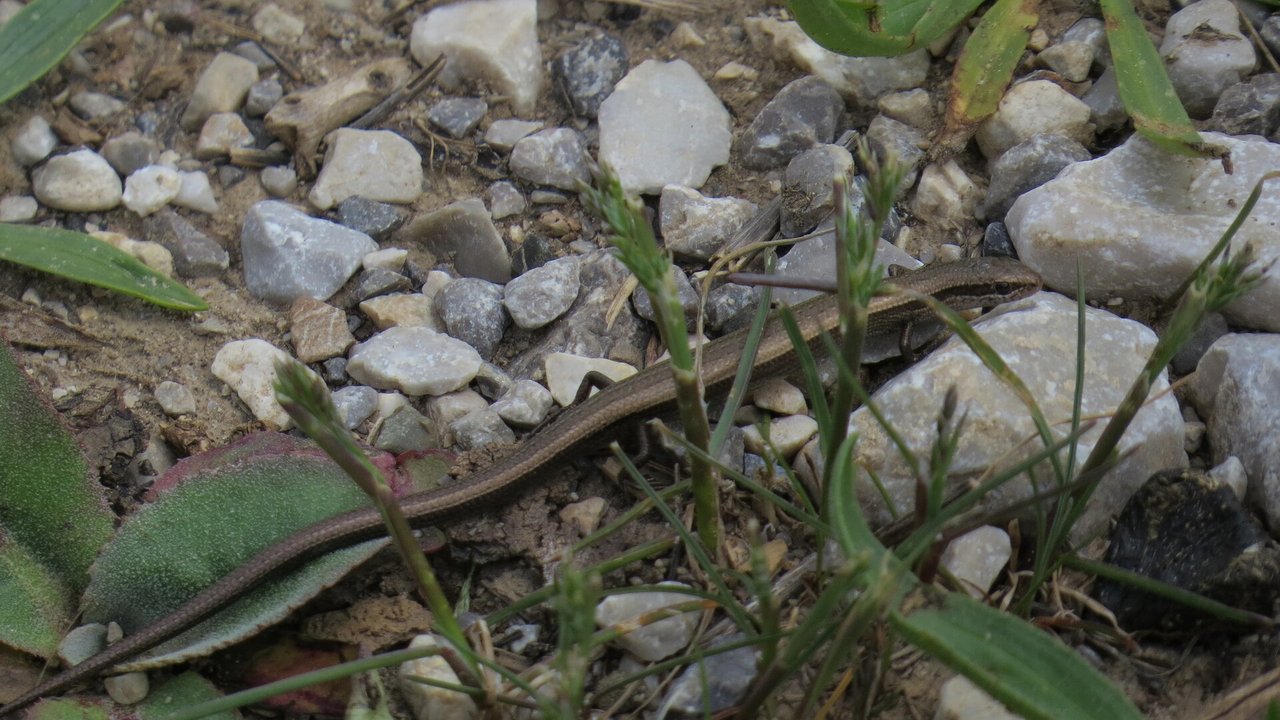
iNaturalist user: yvesbas · CC BY 4.0 · Wikimedia Commons Skink, endemic subspecies
Budak's snake-eyed skink (Ablepharus budaki budaki)
Göçmen et al. (2008) cite its description as a new subspecies from northern Cyprus in 1996. Svana et al. (2025) say it prefers wetter habitats with dense vegetation and leaf litter.
Source: lacerta.de
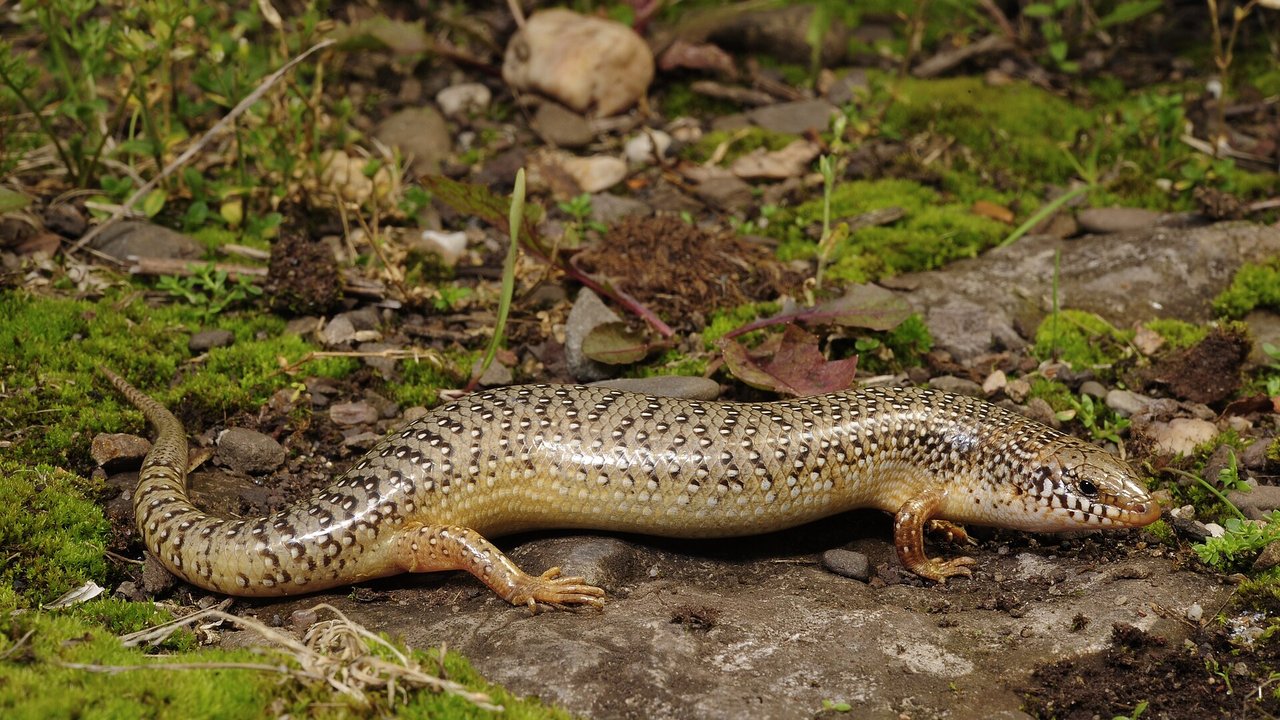
Benny Trapp · CC BY-SA 3.0 · Wikimedia Commons Skink
Ocellated skink (Chalcides ocellatus)
Göçmen et al. (2008) recorded Chalcides ocellatus ocellatus in 2007, including on Ateştepe hill and at Golden Beach in the Karpaz.
Source: lacerta.de
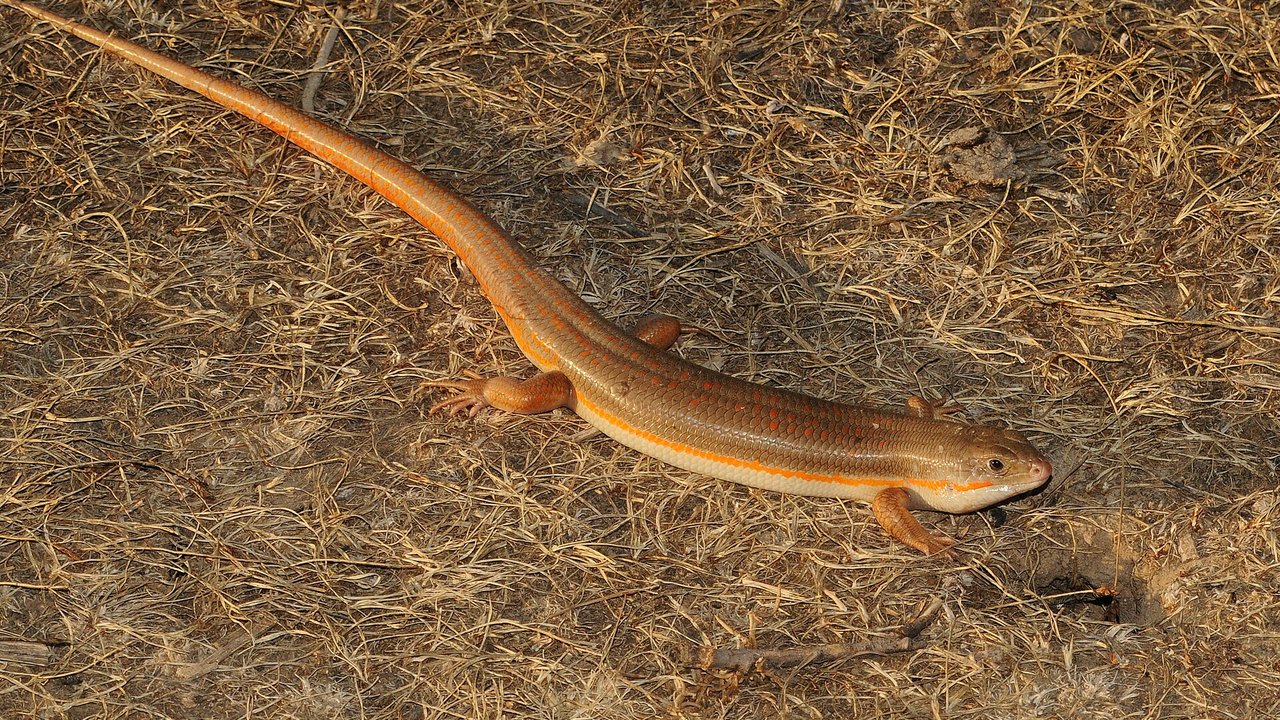
Dûrzan Cîrano · CC BY-SA 4.0 · Wikimedia Commons Skink
Schneider's skink (Eumeces schneiderii)
Göçmen et al. (2008): a very rare skink in Cyprus, first reported from the north in 2002, and seen during the 2007 trips at Gönyeli and Çayırova.
Source: lacerta.de
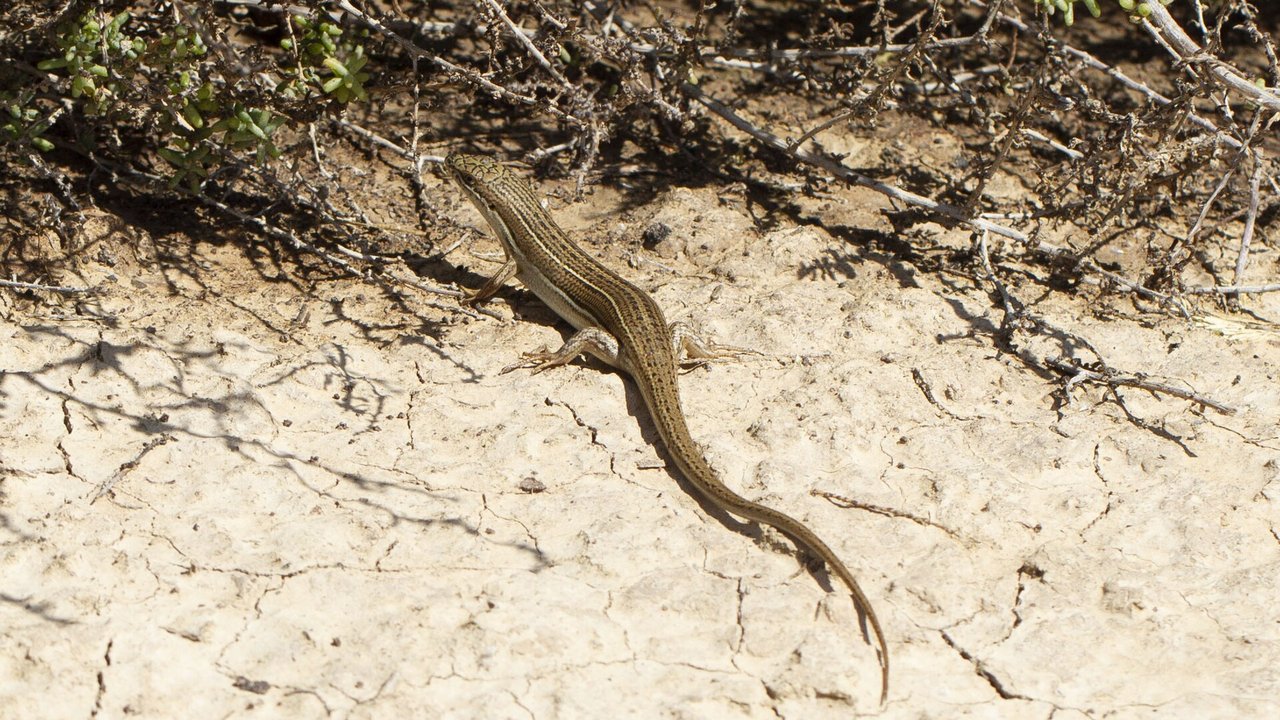
Kristof Zyskowski & Yulia Bereshpolova · CC BY 2.0 · Wikimedia Commons Skink
Bridled skink (Heremites vittatus)
Svana et al. (2025) list it among the eleven lizards of Cyprus. Göçmen et al. (2008), as Trachylepis vittata, recorded it at many of the northern localities surveyed.
Source: eb.bio.uni-plovdiv.bg
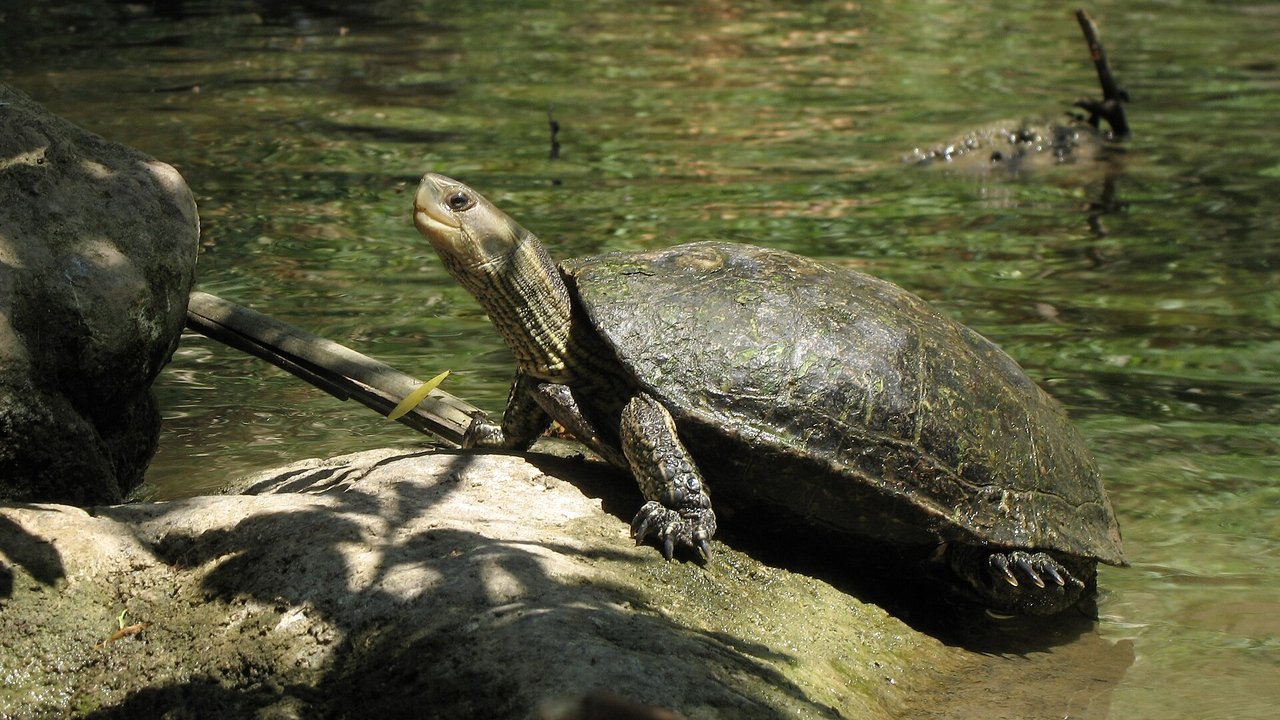
Yuvalr · CC BY-SA 3.0 · Wikimedia Commons Freshwater turtle
Balkan terrapin (Mauremys rivulata)
Baier et al. (2009) include an account of the Balkan terrapin. Göçmen et al. (2008) observed it at the Asidere stream in Nicosia, together with frogs and the large whip snake.
Source: lacerta.de
1 / 12
Practical notes
- Distribution claims for the north come mainly from Göçmen et al. (2008), based on three trips in 2007; Svana et al. (2025) surveyed only areas under the effective control of the Republic of Cyprus, and the Department of Forests poster describes the whole island.
- Scientific names have changed between sources: Sylvia and Curruca melanothorax, Malpolon monspessulanus and M. insignitus, Cyrtopodion kotschyi and Mediodactylus orientalis, Trachylepis vittata and Heremites vittatus, Eirenis modestus and E. levantinus.
- Venom status comes from the Department of Forests poster for eight species and from Wikipedia for the dice snake and Dahl's whip snake; no source opened gives it for the Levantine dwarf snake.
- Turtle figures are from the Environmental Protection Department release of 9 December 2024; no 2025 season figures from the department were found (not yet verified).
- Give no medicine, including painkillers, unless medical staff advise it.
- Do not handle, disturb or harm snakes, turtles or nests; Taşkent Nature Park asks people to call the 1190 Wildlife Support Line instead.
Frequently asked questions
When is sea turtle nesting season in North Cyprus?
The TRNC Environmental Protection Department gives May to October. It says turtles lay from May to mid-July and hatchlings emerge after about two months of incubation; in 2024 the first Karpaz nest was recorded on 11 May and the last on 14 August.
Where do sea turtles nest in North Cyprus?
The department's 2024 release lists the Karpaz beaches (1,834 nests), Alagadi and Akdeniz (1,585), Karşıyaka or Güzelyalı (77) and Famagusta bay (314 loggerhead nests). Green turtles made 94.1% of the Karpaz nests.
What are the rules on Alagadi and other turtle beaches?
The department asks for no umbrellas within 35 metres of the sea, no digging, screened lights, no walking with lights at night, no vehicles, pets, fires or litter on the beach, and boats below 5 miles per hour within 1 mile of the shore.
Are there venomous snakes in North Cyprus?
Göçmen et al. (2008) recorded the blunt-nosed viper, Montpellier snake and cat snake in the north in 2007. A Republic of Cyprus Department of Forests poster calls the viper's bite extremely dangerous, the Montpellier snake venomous but not extremely dangerous and the cat snake venomous but not dangerous to people.
What should I do if a snake bites me in North Cyprus?
WHO advises moving away, staying calm and still, removing tight items, splinting the limb and getting to a health facility as soon as possible, without a tight tourniquet, cutting or suction. An emergency doctor quoted by Haber Kıbrıs (2025) says to go to the nearest health facility or call 112.
What should I do if I see a snake?
Taşkent Nature Park, quoted by Gündem Kıbrıs, says walking away without disturbing a snake in the wild is enough, and that the snakes are protected. For a snake near homes, it asks people to keep it in sight and call the 1190 Wildlife Support Line.
Which endemic birds can be seen in North Cyprus?
BirdLife Cyprus lists the Cyprus warbler, Cyprus wheatear and Cyprus scops owl as endemic. Its 2014 inventory says the warbler and wheatear breed on the Kyrenia range and the Karpasia and Kormakitis peninsulas.
Where can I go birdwatching in North Cyprus?
BirdLife Cyprus (2014) lists the Kyrenia range, the Karpasia and Kormakitis peninsulas, the Mesaoria plain, the Famagusta lakes and the Mia Milia ponds as Important Bird Areas. OSME mentions the Kukla wetlands, and Birdingplaces describes Cape Apostolos Andreas as a migration point.
Are there chameleons in North Cyprus?
Yes. Göçmen et al. (2008) recorded the Mediterranean chameleon, Chamaeleo chamaeleon recticrista, in the north in 2007, including in the riverbed at Yeşilırmak, and Svana et al. (2025) list it among the eleven lizard species of Cyprus.
Sources
- BirdLife Cyprus: Important Bird Areas of Cyprus (Hellicar, Anastasi, Beton and Snape, 2014)
- Key Biodiversity Areas: Karpasia Peninsula - Kleides Islands factsheet
- BirdLife Cyprus: Cyprus birds
- Wikipedia: Cyprus warbler (secondary)
- Wikipedia: Cyprus wheatear (secondary)
- Migration Atlas: North Cyprus Society for the Protection of Birds and Nature (KUŞKOR)
- OSME: A Bird Camp on Cyprus (December 2021)
- OSME: Cyprus Bird Camp, October 2023 (April 2024)
- Birdingplaces: Cape Apostolos Andreas (updated December 2022)
- TRNC Environmental Protection Department: 2024 sea turtle monitoring and protection (9 December 2024)
- Mongabay: Turtle conservation hits the SPOT in North Cyprus (March 2021)
- Republic of Cyprus Department of Forests / Press and Information Office: Snakes of Cyprus poster
- Göçmen et al., North-Western Journal of Zoology 4(1), 2008: Results of the herpetological trips to Northern Cyprus
- Baier, Sparrow and Wiedl (2009): The Amphibians and Reptiles of Cyprus, front matter and contents
- Svana et al., Ecologia Balkanica 17(1), 2025: Cyprus lizards
- Wikipedia: Dice snake (secondary)
- Wikipedia: Platyceps najadum (secondary)
- Wikipedia: Eirenis levantinus (secondary)
- World Health Organization: Snakebite envenoming, treatment and first aid
- World Health Organization: Snakebite envenoming fact sheet
- Haber Kıbrıs: Kıbrıs'ta yılanlarla yaşam, Gufi'yi tanıyın (26 June 2025)
- Gündem Kıbrıs: 'Gufi' hakkında bilinmesi gerekenler (Taşkent Doğa Parkı)
Questions about North Cyprus?
Write to NORTHEA for a private conversation about areas, hotels or property.